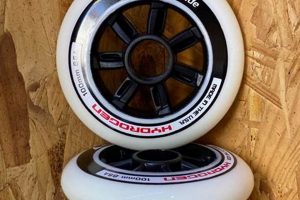
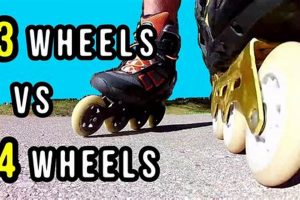
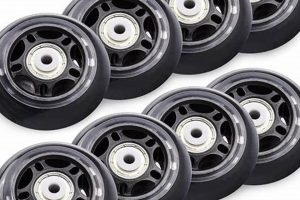
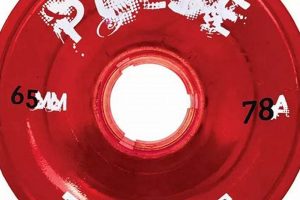
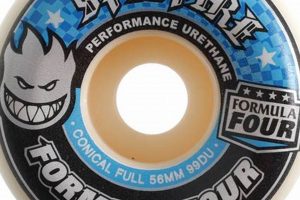
The component attached to the frame of an inline skate, enabling movement across a surface, is a circular object typically made of polyurethane. Its size, hardness, and profile influence the skater’s speed, grip, and maneuverability. A harder option rolls faster and lasts longer, while a softer one provides better grip and a smoother ride on rough surfaces. The diameter, measured in millimeters, and durometer, measured on the A scale, are key specifications defining its performance characteristics.
These rolling elements are crucial for efficient skating, dictating the overall experience and performance. Their evolution from early metal and clay designs to modern polyurethane formulations has significantly enhanced skate control, speed, and durability. This development has broadened the appeal of inline skating for recreational, fitness, and competitive purposes, creating a thriving industry with specialized equipment for various skill levels and skating styles. This also affects the overall safety of skaters and the longevity of the skates themselves.
The following sections will delve into the specific types available, factors influencing the selection of a suitable product, maintenance procedures for optimal lifespan, and an overview of prominent manufacturers in the field.
Essential Guidance for Optimal Performance
Selecting the appropriate rolling component for an inline skate is paramount to ensuring both performance and safety. The following guidelines outline critical considerations when evaluating and maintaining these crucial components.
Tip 1: Durometer Assessment. Evaluate the durometer, or hardness, based on the intended skating environment. Softer variants (74A-82A) provide superior grip on slick surfaces, while harder variants (84A-90A+) maximize speed and durability on smoother terrain.
Tip 2: Diameter Consideration. Select the diameter according to skating style and skill level. Larger sizes (80mm+) facilitate higher speeds, while smaller sizes (72mm-76mm) enhance maneuverability and are suitable for beginners.
Tip 3: Bearing Compatibility. Ensure compatibility between the rolling component and the bearings. Standard 608 bearings are commonly used, but verifying the correct size and fit is crucial for smooth rotation and longevity.
Tip 4: Regular Rotation Practices. Implement a routine rotation schedule to distribute wear evenly. Rotating positions can extend the lifespan and maintain consistent performance across all locations.
Tip 5: Surface Inspection Protocols. Regularly inspect the surface for signs of wear, such as flat spots or cracks. Replace when these indicators appear to maintain optimal performance and safety during use.
Tip 6: Proper Cleaning Techniques. Remove dirt and debris regularly to prevent bearing contamination and maintain smooth rolling action. Use a soft cloth and mild cleaning solution, avoiding harsh chemicals.
Tip 7: Frame Clearance Verification. Confirm adequate clearance between the component and the skate frame. Insufficient clearance can impede rotation and compromise performance.
By adhering to these recommendations, skaters can maximize their skating performance and mitigate the risk of accidents, thereby ensuring a safer and more enjoyable experience.
The subsequent sections will discuss different types of frames and bearings to maximize your understanding of skating dynamics.
1. Durometer

Durometer, a measure of a material’s hardness, is a critical factor in determining the performance characteristics. Its impact on grip, speed, and wear resistance is significant. Selecting the correct durometer is essential for optimizing a skater’s experience based on their style, terrain, and skill level.
- Grip and Surface Adhesion
A lower durometer indicates a softer material, offering enhanced grip, particularly on slick or uneven surfaces. This is advantageous for skaters prioritizing control and stability, such as those performing tricks or navigating rough terrain. A softer roller conforms more readily to the irregularities of the skating surface, increasing the contact area and, consequently, improving grip. For example, a durometer of 78A would provide substantial grip in an indoor skate park.
- Speed and Rolling Resistance
Conversely, a higher durometer signifies a harder material, which reduces rolling resistance and increases speed on smooth surfaces. This is beneficial for skaters seeking maximum velocity, such as speed skaters or those covering long distances on smooth pavement. The reduced deformation of the harder roller translates to less energy loss and a faster roll. A durometer of 86A or higher is often preferred for speed skating.
- Wear Resistance and Longevity
Harder compounds generally exhibit greater resistance to wear and tear, extending the lifespan. This is particularly important for skaters who frequently skate on abrasive surfaces or subject their equipment to heavy use. The increased durability of harder components translates to a reduced need for frequent replacement. A durometer of 84A-88A is often a good balance between speed and durability for outdoor recreational skating.
- Vibration Absorption and Comfort
Softer offerings provide superior vibration absorption, leading to a more comfortable skating experience, especially on rough surfaces. This can reduce fatigue and improve overall ride quality, allowing skaters to skate for longer periods. The increased damping properties of softer materials help to cushion the impact of bumps and irregularities on the road. A durometer of 80A-82A is often preferred for recreational skaters prioritizing comfort.
In summary, the durometer rating is a key factor in determining the suitability of an inline skate’s rolling component for a specific application. Skaters should carefully consider their skating style, the surfaces they typically skate on, and their desired balance of grip, speed, durability, and comfort when selecting a product with an appropriate durometer.
2. Diameter

The diameter, measured in millimeters (mm), is a primary determinant of an inline skate’s rolling characteristics. It directly influences speed, acceleration, and maneuverability. Larger diameters generally equate to higher top speeds due to increased roll distance per revolution. However, this increase in speed often comes at the cost of slower acceleration and reduced agility. Conversely, smaller diameters offer quicker acceleration and enhanced maneuverability, making them suitable for tighter turns and more technical skating styles. An example of this trade-off can be observed in speed skating, where larger diameters (e.g., 110mm or 125mm) are preferred for maximizing velocity on straightaways, while smaller diameters (e.g., 80mm or 84mm) are favored in aggressive skating for enhanced control and responsiveness in skate parks.
The practical significance of diameter is further highlighted by its interaction with frame design. Frame length and wheel configuration dictate the maximum diameter that can be accommodated. Aggressive skates typically feature shorter frames designed for smaller diameters (e.g., 55mm-72mm), prioritizing maneuverability for grinding and trick execution. Recreational and fitness skates often incorporate longer frames capable of housing larger diameters (e.g., 80mm-100mm), balancing speed and stability for distance skating. The choice of diameter, therefore, must align with the skate’s intended purpose and the skater’s skill level. Incorrect selection can compromise performance and increase the risk of instability or injury.
In conclusion, diameter is a critical specification impacting the overall functionality. Its selection must be based on a clear understanding of its effects on speed, agility, and the compatibility of the skate frame. While larger diameters offer speed advantages, smaller ones enhance maneuverability, demanding careful consideration of skating style and environment to achieve optimal performance. Skaters should evaluate these factors to mitigate potential challenges associated with inappropriate sizing and ensure a safe, efficient, and enjoyable skating experience.
3. Profile
The profile, referring to the cross-sectional shape, significantly impacts the performance of a rolling component. A more rounded profile facilitates easier turning and greater agility, allowing the skater to initiate and execute maneuvers with less effort. This is due to the reduced contact patch between the wheel and the skating surface when leaned into a turn. Conversely, a flatter profile provides a larger contact patch, resulting in enhanced stability and increased speed on straightaways. The profile, therefore, becomes a critical design element that dictates the intended use and skating style for which a component is best suited.
Consider the distinction between aggressive skating and speed skating. Aggressive skates typically employ a rounded profile to enhance maneuverability in skate parks and for trick execution. The rounded shape allows skaters to quickly transition between edges and maintain control during complex maneuvers. Speed skates, on the other hand, favor a flatter profile to maximize the contact area with the ground, reducing rolling resistance and achieving higher velocities. This difference in profile directly reflects the distinct demands of each skating discipline, emphasizing the profile’s practical significance.
In conclusion, the profile is a defining attribute impacting handling and speed characteristics. Selection should align with the intended skating style. While a rounder profile offers enhanced agility, a flatter profile maximizes speed. Proper selection ensures optimized performance and a more tailored skating experience. Misapplication of profile characteristics can lead to reduced efficiency and compromised control.
4. Material
The composition of an inline skate’s rolling component is a primary determinant of its performance, durability, and overall suitability for various skating styles and environments. The selection of material directly impacts factors such as grip, speed, wear resistance, and vibration absorption.
- Polyurethane (PU) Composition
Polyurethane is the predominant material used in modern inline skate wheels due to its versatility and ability to be tailored to specific performance requirements. The specific formulation of the PU compound influences its durometer, rebound characteristics, and resistance to abrasion. High-quality PU formulations exhibit superior grip and resilience, while lower-grade materials may compromise performance and longevity. For instance, wheels intended for aggressive skating typically incorporate PU compounds with enhanced durability to withstand impacts and grinding, whereas wheels designed for speed skating prioritize formulations that minimize rolling resistance.
- Hub Material and Design
While the outer rolling surface is typically polyurethane, the hub, which provides structural support and houses the bearings, is usually constructed from either plastic or aluminum. Plastic hubs offer a cost-effective and lightweight solution, suitable for recreational skating. Aluminum hubs, on the other hand, provide superior strength and rigidity, enhancing power transfer and improving overall performance, especially in high-performance applications such as speed skating and aggressive skating. The hub design also affects the weight distribution and responsiveness; a well-designed hub can contribute to a smoother and more efficient skating experience.
- Impact of Fillers and Additives
Manufacturers often incorporate fillers and additives into the PU compound to modify its properties and enhance specific performance characteristics. For example, the addition of silica can improve grip, while other additives may increase resistance to heat buildup and degradation. The type and concentration of these fillers and additives can significantly impact the overall performance and lifespan of the component. The selection of appropriate fillers and additives is a crucial aspect of the design process, requiring careful consideration of the intended application and performance objectives.
- Bonding Integrity
The bond between the PU outer layer and the hub is critical to the integrity. A failure in this bond can result in catastrophic failure. The manufacturing process must ensure a robust connection, resistant to shear and tensile forces experienced during skating. This can be achieved through chemical bonding, mechanical interlocking, or a combination of both. A high-quality bonding process is essential for ensuring the longevity and safety.
The material composition of inline skate wheels is a multifaceted consideration, demanding careful attention to the properties of the PU compound, hub material, and the integration of fillers and additives. The selection of appropriate materials and manufacturing processes is crucial for optimizing performance, durability, and safety, ultimately enhancing the skating experience.
5. Bearings

Bearings, integral components within an inline skate, are housed within the hub of the rolling component, enabling smooth and efficient rotation. Their quality and design directly influence the skater’s speed, glide, and overall performance. Proper maintenance and selection are essential for optimizing the functionality of rolling components.
- ABEC Rating and Precision
The Annular Bearing Engineers’ Committee (ABEC) rating system, ranging from ABEC 1 to ABEC 9, defines the tolerances and precision of bearings. Higher ABEC ratings indicate tighter tolerances, resulting in smoother and faster rolling characteristics. However, higher ABEC ratings are not necessarily indicative of superior durability or suitability for all skating applications. Skaters should consider their skating style and the intended environment when selecting bearings based on ABEC rating. For example, ABEC 5 or ABEC 7 bearings are often preferred for recreational and fitness skating, balancing performance and durability. In contrast, speed skaters may opt for ABEC 9 bearings to maximize velocity.
- Bearing Size and Compatibility
Standard 608 bearings, with an 8mm inner diameter, a 22mm outer diameter, and a 7mm width, are the most commonly used in inline skate wheels. However, some skates may utilize smaller 688 bearings, which offer reduced weight and rolling resistance. Ensuring compatibility between the bearing size and the wheel hub is crucial for proper fit and function. Incorrect sizing can lead to premature wear, reduced performance, and potential safety hazards. Careful attention to bearing dimensions is essential when replacing or upgrading bearings.
- Bearing Materials and Construction
Bearings are typically constructed from steel, ceramic, or hybrid materials. Steel bearings are the most common and cost-effective option, offering reasonable performance and durability. Ceramic bearings provide superior hardness, corrosion resistance, and reduced friction, resulting in faster and smoother rolling characteristics. Hybrid bearings combine steel races with ceramic balls, offering a balance of performance and cost. The choice of bearing material depends on the skater’s budget, performance requirements, and intended use. Ceramic and hybrid bearings are often preferred in high-performance applications where speed and efficiency are paramount.
- Maintenance and Lubrication
Proper maintenance, including regular cleaning and lubrication, is essential for prolonging the lifespan and maintaining the performance. Dirt, debris, and moisture can contaminate bearings, increasing friction and reducing rolling efficiency. Cleaning bearings with a solvent and re-lubricating them with a suitable lubricant can significantly improve their performance and lifespan. Different types of lubricants, such as oil-based and grease-based lubricants, offer varying levels of protection and performance. The selection of an appropriate lubricant depends on the skating environment and the skater’s preferences. Regular maintenance ensures optimal performance and prevents premature failure, enhancing the overall skating experience.
The selection and maintenance of bearings are crucial aspects of optimizing the performance of inline skate wheels. The correct choice, combined with consistent upkeep, will directly contribute to a smoother, faster, and more efficient skating experience. Improperly maintained or selected bearings compromise functionality and potentially pose safety risks.
6. Hub design

The hub, serving as the core of an inline skate wheel, dictates structural integrity and influences overall performance. Its design affects weight distribution, bearing support, and the wheel’s ability to withstand stress, directly impacting the skater’s experience.
- Spoke Configuration and Weight Distribution
The arrangement of spokes within the hub impacts weight distribution and the wheel’s responsiveness. A hub with strategically placed spokes can reduce rotational inertia, allowing for quicker acceleration and enhanced maneuverability. Conversely, a hub with a solid or less intricate spoke pattern may offer greater durability but at the expense of responsiveness. For instance, speed skating wheels often feature lightweight hubs with minimal spoke material to minimize weight and maximize speed.
- Bearing Seat Precision and Stability
The precision of the bearing seat is crucial for ensuring proper bearing alignment and stability. A precisely machined bearing seat minimizes play and vibration, contributing to a smoother and more efficient roll. Conversely, a poorly designed bearing seat can cause bearings to wobble, increasing friction and reducing speed. High-quality hubs feature tight tolerances and precise machining to ensure optimal bearing performance. This is especially important in aggressive skating, where wheels are subjected to high impact forces.
- Material Composition and Durability
The material from which the hub is constructed directly influences its strength, stiffness, and resistance to deformation. Hubs are typically made from either plastic or aluminum. Plastic hubs are more cost-effective and lightweight, suitable for recreational skating. Aluminum hubs, on the other hand, offer superior strength and rigidity, improving power transfer and enhancing overall performance in high-performance applications. The choice of material should align with the intended use and the skater’s skill level. Aluminum hubs are often preferred by speed skaters and aggressive skaters due to their increased durability and responsiveness.
- Aerodynamic Considerations
In speed skating, hub design can also play a role in aerodynamic efficiency. Some hubs are designed with aerodynamic profiles to reduce drag and improve overall speed. These designs often incorporate smooth surfaces and streamlined shapes to minimize air resistance. While the aerodynamic benefits of hub design may be marginal compared to other factors such as skating technique and body position, they can still contribute to improved performance in competitive speed skating events.
In conclusion, the hub design is a critical aspect of an inline skate wheel, influencing weight distribution, bearing stability, material composition, and even aerodynamic properties. Optimal performance requires careful consideration of these design factors to ensure the wheel meets the specific demands of the intended skating style and environment. A well-designed hub enhances power transfer and promotes a smooth rotation.
Frequently Asked Questions
The following section addresses common inquiries regarding inline skate wheel specifications, maintenance, and selection. The information is presented to provide clarity on this essential skate component.
Question 1: What is the durometer, and how does it affect performance?
Durometer is a measure of the material’s hardness, typically polyurethane. A lower durometer provides enhanced grip, while a higher durometer offers increased speed and durability. The appropriate durometer depends on the skating style and surface.
Question 2: How does wheel diameter influence skating?
Diameter affects speed, acceleration, and maneuverability. Larger diameters provide higher top speeds, while smaller diameters enhance acceleration and agility. Frame design limits the maximum diameter.
Question 3: What is the significance of the wheel profile?
The profile, or cross-sectional shape, influences handling. A rounded profile facilitates easier turning, while a flatter profile enhances stability and speed on straightaways.
Question 4: How should wheels be maintained for optimal lifespan?
Regular maintenance includes rotation to distribute wear, cleaning to remove debris, and inspection for damage. Proper maintenance extends the lifespan and ensures consistent performance.
Question 5: What are the key considerations when selecting bearings?
Important factors are the ABEC rating, size compatibility with the hub, material composition (steel, ceramic, or hybrid), and proper lubrication. Different bearings have different levels of performance capabilities.
Question 6: What role does the hub play in performance?
The hub provides structural support and influences weight distribution. Material quality, spoke configuration, and bearing-seat precision all impact overall rolling efficiency.
Careful consideration of these factors enables informed decisions, contributing to a better skating experience.
The following section provides a comprehensive overview of the leading manufacturers in the inline skate roller industry.
Conclusion
This exposition has detailed the intricacies of the device that enables propelled movement in inline skating. Key performance characteristics, including durometer, diameter, profile, material composition, bearing selection, and hub design, have been examined. These elements directly impact the skater’s performance, safety, and overall experience. Careful consideration of these factors is crucial for selecting the appropriate component for a given skating style and environment.
Continued innovation in materials and design promises to further enhance performance. As technology advances, expect improvements in rolling resistance, durability, and responsiveness. Understanding and applying the principles outlined here will enable informed decisions, optimizing the functionality and longevity of inline skates.