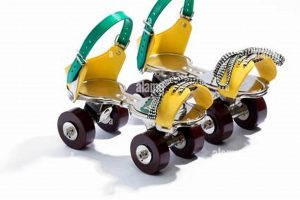
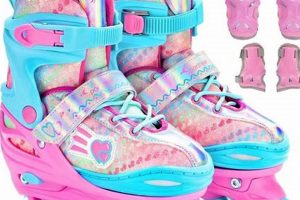
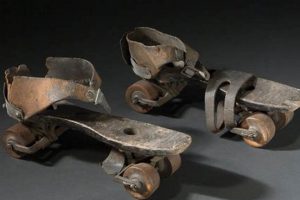
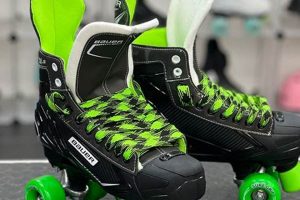
The query refers to instructional guidance on the practice of using wheeled boots for locomotion. This encompasses a range of techniques and information, from basic balancing and forward movement to more advanced maneuvers such as turns, stops, and jumps. For example, accessing resources that provide step-by-step instructions on initially standing up and maintaining balance on roller skates falls under this category.
Understanding fundamental usage contributes significantly to physical fitness, improves balance and coordination, and offers a recreational activity. Historically, the pursuit of proficiency in this skill has provided avenues for exercise and social interaction, while also leading to the development of roller derby as a competitive sport. Mastering the core competencies allows participation in various activities, from casual skating to organized roller skating events.
The following discussion will address essential elements related to learning and improving the foundational skills. Topics covered include selection of appropriate equipment, mastering the initial stages of balance and movement, effective stopping techniques, and strategies for skill progression.
Guidance for Acquiring Roller Skating Proficiency
The subsequent points provide essential advice for individuals seeking to learn the use of wheeled boots, aimed at fostering safe and efficient progress.
Tip 1: Acquire Appropriate Safety Gear: Prior to attempting to roller skate, ensure the availability of protective equipment. This includes a helmet, wrist guards, elbow pads, and knee pads. Proper use of these items significantly mitigates the risk of injury, especially during initial learning stages.
Tip 2: Practice Balancing on Stationary Skates: Familiarize yourself with the sensation of wearing roller skates by practicing balance while stationary. Identify a stable surface and attempt to maintain an upright posture. This allows acclimation to the altered center of gravity.
Tip 3: Master the “Duck Walk”: Begin forward movement with a “duck walk,” placing feet in a “V” shape and pushing outwards with each step. This approach fosters stability and control, allowing individuals to develop a feel for propulsion.
Tip 4: Practice Controlled Falls: Learn to fall safely by crouching low and attempting to land on protective pads. This minimises the risk of serious injury and builds confidence during early skating experiences.
Tip 5: Develop the “T-Stop”: The “T-stop” provides an effective means of decelerating. Position one foot behind the other in a perpendicular “T” shape, applying pressure to the rear wheel to slow down. Consistent practice enhances stopping capabilities.
Tip 6: Seek a Smooth, Flat Surface: Practice on a level, smooth surface such as a paved path or an empty parking lot. Uneven or rough surfaces increase the risk of falls and impede progress.
Tip 7: Emphasize Gradual Progression: Avoid attempting advanced maneuvers prematurely. Focus on mastering fundamental skills before moving on to more complex techniques. This minimizes frustration and maximizes skill acquisition.
Consistent application of these recommendations allows the development of competence in the skill while prioritizing personal safety. A progressive approach, combined with dedicated practice, maximizes the likelihood of achieving proficiency.
The subsequent sections will further discuss considerations for enhancing these fundamental skills and exploring additional aspects of roller skating.
1. Balance

The act of maintaining equilibrium constitutes a foundational element within the skill. Without stable upright posture, forward movement, turns, and stopping maneuvers become significantly more challenging, or impossible. A direct causal relationship exists: reduced equilibrium results in compromised maneuverability and increased likelihood of falls. Therefore, the acquisition of effective techniques directly corresponds to improvement in the ability to maintain proper bodily alignment while in motion.
Effective maintenance of posture, particularly a low center of gravity, allows for greater stability and quicker reactions to imbalances. For example, a skater with a lowered posture can more readily adjust to uneven surfaces or sudden changes in direction than one with a high center of gravity. Practicing static balancing exercises, like standing on one foot or performing slow squats while wearing the skates, can improve overall stability. Proper weight distribution and core strength contribute to consistent balance during all aspects of activity on wheels.
In summary, equilibrium dictates the capacity to execute skills safely and effectively. Challenges in balance translate directly to difficulties with every other aspect, while improved stability leads to greater control and confidence. Understanding the relationship between body positioning, center of gravity, and external forces is key to progressing from a novice to a more accomplished individual in wheeled footwear.
2. Propulsion

Propulsion, in the context of learning to use wheeled footwear, is defined as the mechanism by which forward motion is generated. Its understanding and effective execution are paramount for individuals seeking competence in the activity. The ability to propel oneself efficiently and controllably directly impacts speed, endurance, and overall enjoyment.
- The Push-Off Technique
The push-off technique involves transferring weight from one skate to the other, using the inner or outer edges of the wheels to generate a lateral force against the ground. This lateral force, in turn, propels the individual forward. The angle and force of the push-off determine the acceleration and efficiency of movement. Incorrect push-off techniques result in wasted energy and reduced speed. For example, a novice skater may use short, choppy push-offs, while an experienced skater will employ longer, more fluid motions for greater efficiency.
- Weight Transfer and Balance
Effective propulsion relies heavily on proper weight transfer. As one skate pushes off, the skater must shift their weight onto the opposite skate to maintain balance and continue forward momentum. Smooth and controlled weight transfer minimizes energy loss and maximizes stability. Failure to properly shift weight results in wobbling, instability, and inefficient energy use. Training drills that focus on weight transfer, such as skating in a straight line while alternating weight distribution, are crucial for developing this skill.
- Stride Length and Frequency
Stride length and frequency play a vital role in determining speed and efficiency. A longer stride covers more ground with each push-off, while a higher stride frequency allows for rapid acceleration. The optimal balance between stride length and frequency depends on the skater’s skill level, fitness, and the skating environment. Beginners often benefit from shorter, more frequent strides to maintain control, while advanced skaters may utilize longer strides for increased speed.
- Core Engagement and Posture
Core engagement and proper posture are essential for efficient propulsion. A strong core provides stability and allows for the transfer of power from the legs to the upper body, maximizing the effectiveness of each push-off. Maintaining an upright posture prevents slouching, which can restrict movement and reduce efficiency. Strengthening core muscles through exercises such as planks and abdominal crunches contributes to improved balance, stability, and propulsion efficiency.
The aforementioned elements coalesce to form the basis of effective and controlled forward movement in the skill. Mastery of these techniques allows for increased efficiency, speed, and enjoyment. Consistent practice and attention to detail are crucial for developing proficiency in propelling oneself forward. Further refinement of these core tenets will inevitably lead to advanced techniques.
3. Stopping

Safe and controlled deceleration represents a critical facet of wheeled footwear operation. The ability to halt forward momentum effectively directly impacts safety and the capacity to navigate diverse environments. Instruction on techniques forms a core component of resources providing guidance on the skill. The consequences of inadequate stopping proficiency range from minor collisions to severe injuries, highlighting the practical necessity of its inclusion in any comprehensive instructional material.
Various methods exist for achieving deceleration, each with its own advantages and disadvantages. The “T-stop,” as previously mentioned, is a commonly taught technique, involving dragging one foot perpendicularly behind the other. Alternatively, the plow stop involves angling both feet inward, creating a wedge shape to generate friction. The choice of technique depends on factors such as speed, surface conditions, and the skater’s skill level. For example, a novice may find the T-stop easier to execute at lower speeds, while a more experienced individual may utilize the plow stop for controlled deceleration on a downhill slope.
In conclusion, the capacity to reliably and predictably reduce speed is fundamental to the responsible execution of the activity. Instructional materials that omit or inadequately address stopping techniques fail to provide a complete and safe introduction. Mastery of deceleration methods is essential for minimizing risk, preventing accidents, and enabling individuals to participate confidently in a variety of settings.
4. Turning

Effective change of direction is a fundamental skill in wheeled footwear usage. The capacity to execute turns safely and efficiently expands maneuverability, enhances control, and contributes significantly to the overall experience. Guidance on directional changes constitutes a crucial element in comprehensive instructional resources.
- Weight Distribution and Edge Control
Turning is primarily achieved through a combination of weight distribution and edge control. Shifting weight towards the inside edge of the skates, in the direction of the intended turn, initiates the change in trajectory. Precise control over the edges of the wheels allows for varying degrees of turning sharpness. Insufficient weight transfer leads to wide, uncontrolled turns, while improper edge control results in instability and potential loss of balance. For example, a wide, sweeping turn necessitates subtle weight transfer and controlled edge engagement, whereas a sharp, tight turn requires more pronounced weight shift and aggressive edge application.
- Body Lean and Counter-Rotation
Body lean and counter-rotation play a crucial role in maintaining balance and control during turns. Leaning the body in the direction of the turn helps to counteract the centrifugal force, preventing the skater from leaning outwards and potentially losing balance. Counter-rotation, involving a slight twisting of the upper body in the opposite direction of the turn, aids in maintaining stability and control, particularly during sharp turns. Failure to properly lean or counter-rotate results in instability and difficulty executing smooth turns.
- Crossovers and Parallel Turns
Crossovers and parallel turns represent more advanced turning techniques that allow for greater speed and efficiency. Crossovers involve stepping one foot over the other to navigate a turn, allowing for continuous momentum and faster directional changes. Parallel turns involve keeping both skates parallel throughout the turn, requiring precise weight distribution and edge control. Mastery of these techniques enables skaters to navigate complex terrain and execute rapid directional changes. Attempting these maneuvers without sufficient foundational skill will result in an increased likelihood of falls.
- Looking in the Direction of the Turn
A seemingly simple but crucial aspect of effective turning involves directing the gaze in the intended direction. Subconsciously, the body tends to follow the direction of the eyes. Consistently focusing vision on the intended path throughout the turn enhances balance, facilitates smoother transitions, and improves overall control. Neglecting to look in the direction of travel can lead to delayed reactions, misjudged turns, and a higher probability of losing balance.
Proficiency in these core techniques directly correlates to enhanced control and enjoyment of the activity. Mastery allows individuals to navigate various environments, respond effectively to obstacles, and execute complex maneuvers safely. Resources dedicated to the skill must incorporate clear and comprehensive instruction on these essential elements.
5. Maintenance
The longevity, performance, and safety of wheeled boots are inextricably linked to consistent and thorough upkeep. Consequently, instructional resources addressing the practice invariably incorporate sections dedicated to maintenance procedures. This inclusion is not merely advisory but essential, as neglecting regular maintenance can lead to equipment malfunctions, increased risk of injury, and a diminished overall experience. The cause-and-effect relationship is clear: proper maintenance yields optimal performance and safety, while neglect leads to degradation and potential hazards.
Maintenance encompasses a range of activities, from routine cleaning and lubrication to more in-depth inspections and component replacements. Bearings, wheels, and fastening mechanisms are particularly susceptible to wear and tear and require periodic attention. For example, dirt and debris can accumulate within bearings, hindering their smooth operation and increasing friction, which in turn reduces speed and efficiency. Similarly, worn-down wheels can compromise grip and stability, making it more difficult to control movement and execute turns. A real-life example would be a skater experiencing a sudden wheel failure due to lack of inspection, leading to a fall and potential injury. Regular inspection and timely replacement of worn components are crucial for maintaining safe operation.
In summary, the connection between equipment upkeep and the successful practice is undeniable. Resources providing practical guidance inherently include maintenance protocols as a non-negotiable element. This emphasis reflects the understanding that safety, performance, and the lifespan of the equipment depend heavily on the diligence with which maintenance is performed. Challenges in maintaining equipment are met with consistent inspection and repair schedules. Instruction on basic maintenance operations is essential to those seeking to master the skill.
6. Safety
The integration of safety protocols represents an indispensable element within the acquisition of wheeled footwear skills. It is not merely an ancillary consideration but a fundamental prerequisite, informing every aspect of technique and practice. A comprehensive understanding of safety measures directly mitigates the risk of injury and fosters a more secure learning environment. Resources detailing “roller skates how to” must prioritize these measures to ensure responsible engagement.
- Protective Gear: Mitigating Impact Forces
The utilization of appropriate protective gear, encompassing helmets, wrist guards, elbow pads, and knee pads, serves as the primary defense against impact-related injuries. These items are engineered to absorb and dissipate forces generated during falls and collisions, thereby reducing the severity of potential trauma. A real-world instance involves a skater who avoids a head injury due to the consistent wearing of a helmet during practice. The absence of such gear significantly elevates the likelihood of serious harm; therefore, emphasis on consistent use is essential in educational materials.
- Environmental Awareness: Hazard Identification and Mitigation
Effective navigation necessitates heightened environmental awareness. Identifying potential hazards, such as uneven surfaces, obstacles, and vehicular traffic, is crucial for preventing accidents. Proactive hazard mitigation involves selecting appropriate skating locations, maintaining a safe distance from potential threats, and adjusting speed according to environmental conditions. For example, a skater may choose to avoid skating on a cracked and uneven sidewalk to reduce the risk of a fall. Instruction should highlight the importance of environmental assessment and responsible decision-making.
- Skill-Appropriate Progression: Gradual Skill Acquisition
Adopting a skill-appropriate progression strategy minimizes the risk of overexertion and reduces the likelihood of attempting maneuvers beyond one’s current capabilities. Attempting advanced techniques before mastering fundamental skills can lead to errors in execution and increased risk of injury. A novice should focus on mastering basic balance and forward movement before attempting complex turns or jumps. Emphasis on gradual skill acquisition fosters confidence and promotes safer learning.
- Equipment Maintenance: Ensuring Functional Integrity
Regular equipment maintenance is essential for ensuring the functional integrity of wheeled boots. Properly maintained bearings, wheels, and brakes contribute to smooth operation and reliable performance. Neglecting maintenance can lead to equipment malfunctions, such as wheel lockup or brake failure, increasing the risk of accidents. A skater should routinely inspect equipment for wear and tear and perform necessary repairs or replacements. This practice ensures that the equipment functions as intended and contributes to a safer experience.
These facets collectively underscore the integral role of safety considerations within “roller skates how to”. Incorporating these measures into instructional materials ensures that participants are equipped with the knowledge and practices necessary for responsible and secure participation, contributing to an enjoyable, injury-free experience. A failure to incorporate safety procedures represents an unacceptable oversight in providing practical guidance.
Frequently Asked Questions
The following section addresses prevalent inquiries regarding the effective learning and practice of utilizing wheeled boots. These questions are answered with the intent of providing clear, concise, and informative guidance.
Question 1: What is the minimum recommended age for learning to roller skate?
There is no definitive minimum age; however, developmental readiness plays a crucial role. Adequate motor skills, balance, and coordination are essential. Typically, children around the age of five or six may possess the necessary physical and cognitive abilities to begin learning under supervision. It is important to gauge individual readiness rather than adhering to a strict age requirement.
Question 2: How frequently should roller skates be serviced?
Service intervals depend on usage frequency and environmental conditions. For casual use (1-2 times per week), a comprehensive inspection and cleaning should be conducted every three months. For more frequent or intense use, monthly servicing is recommended. This includes checking and lubricating bearings, inspecting wheels for wear, and ensuring secure fastening mechanisms.
Question 3: What constitutes an appropriate surface for practice?
The ideal surface is smooth, flat, and free from obstructions. Paved pathways, empty parking lots, and indoor skating rinks offer suitable environments. Avoid surfaces with cracks, gravel, or excessive debris, as these increase the risk of falls and equipment damage. The selected surface should provide adequate traction without being excessively abrasive.
Question 4: What are the key indicators of worn bearings that require replacement?
Worn bearings exhibit several telltale signs, including increased noise (grinding or squealing), reduced speed, and difficulty maintaining momentum. Visual inspection may reveal corrosion, deformation, or excessive play. If these indicators are present, bearing replacement is necessary to ensure smooth and safe operation.
Question 5: Is professional instruction necessary for learning to roller skate?
While not strictly mandatory, professional instruction offers significant benefits. A qualified instructor can provide personalized guidance on technique, balance, and safety protocols, accelerating the learning process and minimizing the risk of developing bad habits. Professional instruction is particularly beneficial for individuals who struggle with balance or coordination, or those who seek to advance to more complex maneuvers.
Question 6: What are the potential consequences of neglecting safety gear?
Neglecting safety gear significantly increases the risk of injury. Head injuries, wrist fractures, elbow dislocations, and knee abrasions are common consequences of skating without adequate protection. The severity of injuries can range from minor discomfort to long-term disability. The cost of protective gear is minimal compared to the potential medical expenses and long-term effects of injuries sustained without it.
These answers provide foundational knowledge addressing common concerns. Applying this information promotes effective and responsible skill acquisition.
The subsequent discussion will address selecting appropriate equipment.
Concluding Remarks
This discourse has presented a structured examination of the fundamentals associated with acquiring competence in wheeled footwear operation. From emphasizing the critical role of safety equipment to delineating effective techniques for propulsion, stopping, and turning, the information offered is intended to provide a comprehensive foundation for individuals seeking to learn and improve their abilities. Essential elements such as equipment maintenance, balance, and environmental awareness have also been addressed.
Mastering the complexities of “roller skates how to” demands diligent practice, unwavering commitment to safety, and a willingness to acquire foundational knowledge. The information offered herein serves as a starting point, and continued skill development requires dedicated effort. Individuals are encouraged to approach this pursuit with a measured and responsible approach, understanding the inherent risks associated with the activity and consistently prioritizing safety above all else. Continued learning and consistent safety are encouraged.