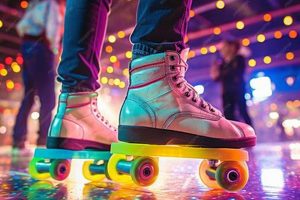
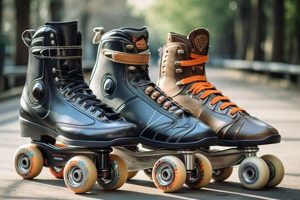
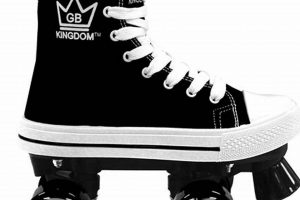
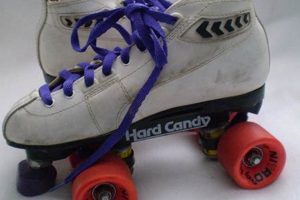
Selecting appropriate recreational footwear for novice participants in the activity of roller skating involves prioritizing several key features. This type of equipment facilitates initial learning and minimizes potential injuries. For example, models with enhanced ankle support and controlled wheel speed are often recommended for those new to the sport.
The acquisition of properly designed equipment plays a significant role in fostering a positive initial experience, potentially leading to long-term engagement in physical activity. Historically, the evolution of skate design has consistently addressed the needs of individuals with varying skill levels, contributing to broader accessibility and increased participation.
The subsequent discussion will address specific aspects of skate construction, encompassing boot design, wheel composition, bearing quality, and frame materials. These components collectively determine the overall performance characteristics and suitability of equipment for introductory use.
Guidance for Selecting Initial Recreational Footwear
The following recommendations offer guidance for individuals procuring their first set of roller skates. These insights prioritize safety, stability, and ease of use to facilitate a positive learning experience.
Tip 1: Ankle Support is Paramount. Seek skates with rigid or semi-rigid boots that provide substantial ankle support. This reduces the risk of ankle sprains and promotes proper balance during initial skating attempts.
Tip 2: Wheel Durometer Matters. Opt for wheels with a lower durometer rating (softer wheels). Softer wheels offer better grip and control, particularly on uneven surfaces, making them more forgiving for beginners.
Tip 3: Bearing Quality Affects Performance. Consider skates equipped with ABEC-rated bearings, specifically ABEC 3 or ABEC 5. These bearings offer a balance between speed and control, suitable for learning basic skating techniques.
Tip 4: Brake Placement and Accessibility. Ensure the skates feature readily accessible and easily operable brakes. Practice using the brakes extensively in a controlled environment before attempting to skate in more challenging settings.
Tip 5: Frame Material Considerations. Select skates with durable frames, preferably constructed from aluminum or high-impact plastic. A sturdy frame contributes to overall stability and responsiveness.
Tip 6: Prioritize Fit and Comfort. The skates should fit snugly but comfortably, allowing for adequate toe room. Ill-fitting skates can lead to discomfort, blisters, and reduced control.
Tip 7: Start with Protective Gear. Always wear a helmet, knee pads, elbow pads, and wrist guards when learning to skate. Protective gear significantly reduces the risk of injury during falls.
Adhering to these recommendations will contribute significantly to a safer and more enjoyable initial skating experience, fostering confidence and promoting skill development. Selecting appropriate equipment is a fundamental aspect of learning to roller skate.
The subsequent sections will explore advanced features and maintenance procedures for roller skates, catering to individuals who have progressed beyond the introductory phase.
1. Ankle Support

Ankle support constitutes a critical feature in roller skates designed for beginners. Its presence directly influences stability, control, and the potential for injury during the initial learning phase. Adequate support compensates for the lack of developed muscle strength and coordination typically observed in novice skaters.
- Lateral Stability Enhancement
The primary function of ankle support is to provide lateral stability, preventing excessive pronation or supination of the ankle joint. This minimizes the risk of sprains and other ankle injuries, especially when encountering uneven surfaces or attempting basic maneuvers. A rigid or semi-rigid boot effectively restricts unwanted lateral movement.
- Improved Balance and Control
By stabilizing the ankle, the skater gains enhanced balance and control. This is particularly important for beginners who are still developing their sense of equilibrium on skates. The support allows the skater to focus on other aspects of skating, such as propulsion and steering, without constantly fighting to maintain balance.
- Muscle Fatigue Mitigation
Effective ankle support reduces muscle fatigue in the lower leg. Without adequate support, the muscles surrounding the ankle joint must work harder to stabilize the foot, leading to premature fatigue and potentially increasing the risk of injury. Supported ankles allow for more efficient energy expenditure during skating sessions.
- Proper Technique Development
Sufficient ankle support promotes the development of proper skating technique. By preventing the ankle from collapsing inwards or outwards, it encourages a more aligned and efficient skating stride. This, in turn, contributes to improved performance and reduces the likelihood of developing incorrect habits.
In summary, ankle support directly impacts the overall experience of beginner roller skaters. It provides a foundation for safety, stability, and control, enabling novices to learn and progress with greater confidence and reduced risk of injury. Therefore, it represents a fundamental component of well-designed recreational footwear for those new to the sport.
2. Wheel Durometer

Wheel durometer, a measurement of hardness, plays a critical role in determining the suitability of roller skates for beginner users. The durometer scale, typically measured in “A” units, indicates the wheel’s resistance to indentation. Lower durometer values denote softer wheels, while higher values indicate harder wheels. The selection of an appropriate durometer directly impacts grip, control, and overall skating experience, especially for those new to the activity.
Softer wheels, characterized by a lower durometer rating (e.g., 78A-82A), provide enhanced grip, particularly on outdoor surfaces or less-than-ideal skating environments. This increased grip offers greater stability and control, crucial for beginners who are still developing their balance and coordination. The enhanced friction also allows for easier stopping and controlled speed reduction. Conversely, harder wheels (e.g., 85A and above) offer less grip but greater speed and durability, making them more suitable for experienced skaters on smooth, indoor surfaces. The typical beginner lacks the skill to effectively manage the reduced grip offered by harder wheels.
The selection of an inappropriate durometer can hinder progress and increase the risk of falls. Harder wheels on outdoor surfaces can lead to slippage and loss of control, while excessively soft wheels may wear down quickly and feel sluggish, impeding the development of proper technique. For beginner roller skates, a wheel durometer in the range of 78A to 82A generally offers the optimal balance of grip, control, and durability, fostering a more positive and safer learning experience. This facilitates the development of foundational skating skills and builds confidence, essential elements for continued engagement in the sport.
3. Bearing Quality

Bearing quality significantly influences the performance of roller skates, particularly for beginners. It impacts speed, smoothness of roll, and the overall ease with which a novice skater can learn and maneuver. Selecting appropriate bearings contributes directly to a positive initial skating experience.
- ABEC Rating and Precision
The Annular Bearing Engineers’ Committee (ABEC) rating system, while not the sole determinant of bearing quality, provides a standardized measure of manufacturing tolerances. Higher ABEC ratings (e.g., ABEC 5, ABEC 7) indicate tighter tolerances and greater precision. However, for beginners, an ABEC 3 or ABEC 5 bearing typically provides an adequate balance between performance and cost. Excessively high ABEC ratings are generally unnecessary for introductory use and may not offer a discernible benefit to a new skater. Precision in bearing manufacture directly affects the smoothness and efficiency of the wheel’s rotation.
- Material Composition and Durability
The materials used in bearing construction, particularly the steel grade of the races and balls, influence durability and resistance to wear. Chrome steel is a common and suitable material for roller skate bearings, providing a reasonable lifespan under typical recreational use conditions. Ceramic bearings, while offering potential performance advantages, are generally not required for beginner skates due to their higher cost and increased maintenance requirements. The integrity of the bearing material is crucial for maintaining consistent performance over time.
- Lubrication and Maintenance
Proper lubrication is essential for maintaining bearing performance and extending their lifespan. Bearings typically come pre-lubricated with grease or oil. The type of lubricant can affect speed and smoothness. Regular cleaning and re-lubrication are necessary to remove dirt and debris that can impede performance and cause premature wear. While beginner skates may require less frequent maintenance, understanding basic bearing care practices is beneficial.
- Impact on Rolling Resistance
Bearing quality directly affects rolling resistance, the force that opposes the motion of the wheels. Lower rolling resistance translates to smoother, faster rolling and requires less effort from the skater. High-quality bearings minimize friction, allowing the skater to maintain momentum more easily. This is particularly advantageous for beginners, as it reduces the amount of force required to propel themselves forward, making skating less physically demanding.
Therefore, bearing quality represents a critical factor in the overall design and functionality of beginner roller skates. While high-end bearings are not essential, selecting models with reasonable ABEC ratings, durable materials, and proper lubrication ensures a smoother, more efficient, and ultimately more enjoyable learning experience. Attending to this detail enhances the ease with which novice skaters can acquire fundamental skills and fosters a positive introduction to the sport.
4. Brake Accessibility
Effective brake accessibility constitutes a fundamental safety feature in roller skates designed for novice users. The ability to quickly and reliably initiate braking maneuvers directly mitigates the risk of collisions and injuries, particularly during the initial learning phase when coordination and control are still developing. Skates lacking easily accessible and responsive brakes present a significantly elevated hazard for beginners.
The design and placement of the brake significantly influence its accessibility. A brake positioned too high or requiring excessive force to engage can be problematic for beginners, who may lack the strength or coordination to activate it effectively in critical situations. Conversely, a well-designed brake, typically located at the rear of one skate and easily activated by a slight heel lift, offers a more intuitive and reliable braking mechanism. This design allows the skater to maintain balance while decelerating, reducing the likelihood of falls. A real-world example involves a beginner encountering an unexpected obstacle; readily accessible brakes enable a swift response, potentially preventing a collision. The practicality of this design is evident in the reduced incidence of injuries among beginners using skates equipped with accessible braking systems.
In summary, brake accessibility represents a non-negotiable component of appropriately designed roller skates for beginners. Its direct impact on safety and control underscores its importance in fostering a positive and injury-free learning environment. Skates that prioritize brake accessibility empower novice skaters to confidently develop their skills while minimizing the inherent risks associated with the activity. Overlooking this critical design element undermines the overall safety and suitability of skates intended for introductory use. The ease and reliability of braking directly translate to increased safety and enhanced learning outcomes.
5. Frame Material

Frame material directly influences the performance and suitability of roller skates for beginners. The frame serves as the structural foundation connecting the wheels to the boot, transferring energy from the skater to the ground. Its properties dictate stability, responsiveness, and durability, all critical factors for a positive learning experience. Inadequate frame material compromises control and increases the risk of injury. For instance, a frame constructed from flimsy plastic may flex excessively under load, reducing energy transfer and making it difficult for the beginner to maintain a straight line. This lack of responsiveness can hinder the development of proper skating technique and lead to frustration. Therefore, appropriate frame material is not merely a component but an essential determinant of appropriate recreational footwear for those new to roller skating.
Common frame materials for beginner skates include reinforced plastic and aluminum. Reinforced plastic offers a balance of affordability and adequate stiffness for low-impact recreational use. Aluminum frames, while more expensive, provide superior strength and responsiveness, making them a better choice for skaters who anticipate progressing to more advanced techniques or skating on varied surfaces. A real-world scenario demonstrates the difference: a beginner using skates with plastic frames on a slightly uneven surface may experience significant vibrations and a loss of control, whereas a skater using aluminum frames would maintain greater stability and ease of maneuverability. This illustrates the tangible impact of frame material on the skating experience.
In summary, the frame material is a critical consideration when selecting roller skates for beginners. Its influence on stability, responsiveness, and durability directly affects the learning curve and safety. While reinforced plastic offers a viable entry-level option, aluminum frames provide enhanced performance and are recommended for individuals seeking long-term engagement and skill development. The selection of appropriate frame material contributes significantly to a safer, more enjoyable, and ultimately more successful introduction to roller skating.
6. Proper Fit

The attainment of a precise and comfortable fit constitutes a paramount factor in the effective selection and utilization of roller skates for beginner participants. It directly influences safety, control, and the overall learning experience. Inadequate fit compromises stability, increases the risk of injury, and impedes the development of proper skating technique. Therefore, the correlation between appropriate fit and the utility of recreational footwear is critical for those new to the sport.
- Ankle Support Engagement
Proper fit ensures optimal engagement of the skate’s ankle support system. If the skate is too large, the ankle is not adequately supported, increasing the risk of sprains. If the skate is too small, it may restrict movement and cause discomfort. The ankle should be firmly but comfortably secured within the boot to maximize stability and control. A real-world example involves a beginner whose ankle rolls inward during skating due to improperly fitted skates, increasing the likelihood of injury. Adequate ankle support engagement minimizes this risk, promoting safer skating practice.
- Toe Box Accommodation
The toe box of the skate must provide sufficient room for the toes to move freely without being constricted. Overcrowding the toes can lead to numbness, blisters, and reduced circulation. However, excessive space can compromise control and stability. The ideal toe box fit allows for slight wiggle room while maintaining a secure and responsive connection between the foot and the skate. A practical example demonstrates that beginners experiencing toe numbness often compensate by altering their skating technique, which compromises balance and increases the risk of falls. Proper toe box accommodation mitigates this issue, enhancing comfort and control.
- Heel Lock-Down Effectiveness
Effective heel lock-down is essential for preventing heel slippage within the skate. Heel slippage reduces power transfer during skating, increases friction, and leads to discomfort and blisters. A properly fitted skate secures the heel firmly in place, preventing excessive movement and maximizing energy transfer. A practical example highlights a beginner who struggles to maintain speed and direction due to heel slippage caused by poorly fitted skates. Effective heel lock-down resolves this issue, enabling more efficient skating and improved control.
- Lacing System Integrity
The lacing system plays a crucial role in achieving a customized and secure fit. Proper lacing ensures that the skate conforms to the shape of the foot, providing uniform support and preventing pressure points. Overly tight lacing can restrict circulation, while loose lacing compromises stability. The lacing system should be adjusted to provide a snug but comfortable fit, allowing for a responsive and secure connection between the foot and the skate. A beginner who experiences foot pain due to uneven lacing demonstrates the importance of proper lacing system integrity. Correctly adjusting the laces distributes pressure evenly, enhancing comfort and control throughout the skating session.
These facets collectively illustrate the inextricable link between proper fit and the efficacy of beginner roller skates. The attributes detailed above are essential for novice skaters for safety, control, and performance. An ill-fitting skate detracts from the experience, impeding learning and increasing the risk of injury.
Frequently Asked Questions
The following section addresses common inquiries regarding the selection and usage of roller skates specifically designed for individuals new to the activity.
Question 1: What constitutes a suitable durometer rating for wheels on beginner roller skates?
A wheel durometer rating between 78A and 82A is generally recommended for introductory use. This range provides an optimal balance between grip and roll for novice skaters.
Question 2: How important is ankle support in the context of beginner roller skates?
Ankle support is paramount. Skates with rigid or semi-rigid boots offer enhanced stability and minimize the risk of ankle injuries during the learning process.
Question 3: Are higher ABEC-rated bearings always preferable for beginner roller skates?
Higher ABEC ratings do not necessarily translate to improved performance for beginners. An ABEC 3 or ABEC 5 bearing typically provides adequate performance for introductory use.
Question 4: What role does frame material play in the overall performance of beginner roller skates?
Frame material significantly impacts stability and responsiveness. While reinforced plastic is an acceptable entry-level option, aluminum frames offer superior performance and durability.
Question 5: How should beginner roller skates fit to ensure optimal safety and comfort?
Skates should fit snugly but comfortably, allowing for adequate toe room and secure heel lock-down. A proper fit prevents slippage and enhances control.
Question 6: Is protective gear essential for beginner roller skaters?
Protective gear, including a helmet, knee pads, elbow pads, and wrist guards, is non-negotiable. These items significantly reduce the risk of injury during falls, a common occurrence for novice skaters.
In summary, the proper selection and utilization of these components will facilitate a safer and more enjoyable initial skating experience.
The subsequent section will address maintenance procedures for roller skates, ensuring longevity and optimal performance.
Conclusion
The preceding discussion has comprehensively explored the critical attributes that define adequate recreational footwear for individuals new to roller skating. Ankle support, wheel durometer, bearing quality, brake accessibility, frame material, and proper fit all contribute significantly to the safety, ease of use, and overall enjoyment experienced by novice skaters. The interrelationship of these elements determines the suitability of equipment for introductory use.
Prospective participants are encouraged to apply the outlined guidelines when selecting their initial set of skates. Careful consideration of these factors not only enhances the learning experience but also promotes long-term engagement in a physically active lifestyle. Investment in appropriately designed equipment represents a commitment to safety and skill development.