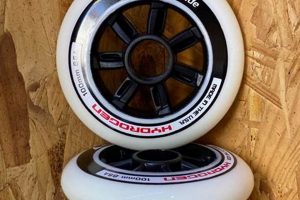
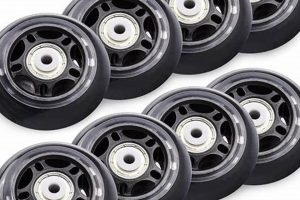
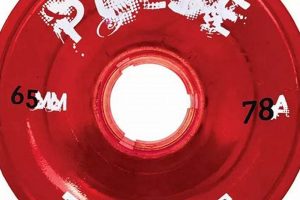
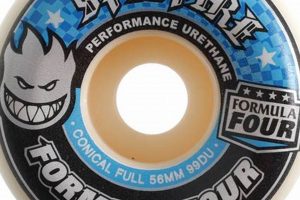
Aftermarket caster replacements designed to improve the mobility and aesthetics of office chairs frequently incorporate polyurethane wheels similar to those found on roller skates. These components aim to provide a smoother, quieter rolling experience compared to traditional hard plastic casters, while also minimizing potential damage to flooring surfaces.
The increasing adoption of these specialized chair casters reflects a growing awareness of ergonomics and workplace comfort. Benefits associated with their use include reduced rolling resistance, improved maneuverability on various floor types, and a decreased risk of scratching or marring delicate surfaces such as hardwood or tile. Historically, office chairs relied on basic, often rigid casters, leading to user dissatisfaction and floor damage. The introduction of softer, more adaptable materials addresses these concerns.
The subsequent sections will delve into the specific types of these replacement casters available, factors to consider when selecting them, installation procedures, and long-term maintenance recommendations.
Essential Considerations for Selecting Chair Casters
This section offers guidance on selecting appropriate aftermarket chair casters to enhance office chair performance and protect flooring.
Tip 1: Verify Stem Dimensions: Prior to purchase, confirm compatibility by accurately measuring the stem diameter and length of existing casters. Mismatched dimensions can result in instability or installation difficulties.
Tip 2: Assess Flooring Type: Different materials require varying levels of wheel hardness. Softer polyurethane is generally recommended for hard surfaces like hardwood or tile to prevent scratches, while slightly harder compounds may suffice for carpeted areas.
Tip 3: Determine Load Capacity: Ensure the replacement casters’ combined load capacity exceeds the chair’s weight plus the user’s weight. Overloading can lead to premature wear or failure.
Tip 4: Evaluate Rolling Resistance: Consider the desired level of mobility. Lower rolling resistance facilitates easier movement but may reduce stability on inclines.
Tip 5: Inspect Bearing Quality: Higher-quality bearings contribute to smoother, quieter rolling. Seek casters with precision bearings for optimal performance and longevity.
Tip 6: Research Brand Reputation: Opt for established brands with positive customer reviews regarding durability and customer support.
Tip 7: Account for Chair Style: Aesthetic considerations may influence caster selection. Match the caster’s design and finish to the chair’s overall appearance.
Following these guidelines helps ensure the selection of suitable chair casters, resulting in improved chair functionality and floor protection.
The following section addresses the installation process for aftermarket chair casters.
1. Polyurethane Composition

Polyurethane composition is a critical determinant of performance and durability in replacement casters designed for office chairs. The properties of the polyurethane material directly influence rolling resistance, noise levels, and the potential for floor damage. Softer polyurethane formulations offer enhanced grip and reduced rolling resistance on hard surfaces, mitigating the risk of scratches and scuffs. Conversely, harder polyurethane may be more suitable for carpeted environments, providing sufficient rigidity to overcome the resistance of the carpet fibers.
Variations in polyurethane blends exist, each exhibiting distinct characteristics. Some formulations incorporate additives to enhance abrasion resistance, extending the lifespan of the caster. Others may be engineered to dampen vibrations, further reducing noise during movement. The durometer rating, a measure of material hardness, provides a quantitative assessment of these differences, enabling informed selection based on specific application requirements. For example, a low durometer rating (e.g., 75A) indicates a softer material ideal for delicate hardwood floors, while a higher rating (e.g., 90A) denotes a more rigid compound suited for thicker carpets.
The selection of an appropriate polyurethane composition is paramount for optimizing the user experience and preserving floor integrity. Incorrect selection may lead to premature caster wear, increased noise levels, or, most significantly, irreversible damage to flooring surfaces. Therefore, a thorough understanding of polyurethane properties and durometer ratings is essential for ensuring the effective application of these replacement casters within various office environments.
2. Stem Dimensions

Stem dimensions are a critical factor when considering replacement casters that use roller skate-style wheels for office chairs. The stem, the cylindrical or pin-shaped protrusion that connects the wheel assembly to the chair base, must match the receiving socket’s diameter and depth. A mismatch results in instability, potential damage to the chair base, or complete inability to install the replacement caster. The standard stem sizes for office chairs vary, typically measured in millimeters, and include common diameters like 7/16″ (11mm) and 10mm. Stem length is also important, ensuring sufficient engagement for secure retention.
An example illustrates the practical significance: An individual purchases roller skate-style wheels believing they will improve their chair’s mobility, only to discover that the stem diameter is too large for the chair base’s caster sockets. This necessitates a return, resulting in wasted time and resources. Conversely, a stem that is too short might initially fit, but could easily dislodge during use, posing a safety hazard. Many online retailers provide detailed specifications, including stem dimensions, for their replacement casters. Measuring the existing casters before ordering is thus vital. Adapters exist for minor size discrepancies, but their use is not universally recommended due to potential compromises in stability.
In summary, proper stem dimensions are not merely a detail; they are a fundamental requirement for the safe and effective use of roller skate-style wheels on office chairs. Failure to consider this aspect renders the benefits of improved rolling performance, flooring protection, and aesthetic enhancement unattainable. Challenges arise from the lack of universal standardization in stem sizes across different chair manufacturers, emphasizing the need for precise measurement and careful selection.
3. Load Capacity

Load capacity is a critical specification for replacement casters using roller skate-style wheels intended for office chair applications. Exceeding the stated load capacity of a caster set can lead to premature failure, compromised mobility, and potential safety hazards.
- Individual Caster Rating
Each caster within a set possesses an individual load rating, typically expressed in pounds or kilograms. The combined rating of the set dictates the maximum weight the chair and occupant can safely bear. Ignoring this individual rating can result in uneven weight distribution, causing individual casters to buckle or break under stress. An office chair rated for 250 lbs but fitted with casters each rated for only 50 lbs (totaling 200 lbs for a set of four) is likely to experience caster failure, particularly if subjected to frequent movement or uneven surfaces.
- Dynamic vs. Static Load
Load capacity specifications generally differentiate between static and dynamic load. Static load refers to the weight the casters can support while the chair is stationary. Dynamic load represents the weight the casters can bear while the chair is in motion. Dynamic load capacity is often significantly lower than static load capacity due to the added stress from movement and impacts. Repeatedly exceeding the dynamic load limit will result in accelerated wear and potential caster failure.
- Floor Type and Load Distribution
The type of flooring significantly influences load distribution across the casters. Hard surfaces distribute weight more evenly, while softer surfaces, such as carpets, can cause concentrated pressure on individual casters. This uneven distribution increases the risk of exceeding the load capacity of specific casters within the set. A heavier individual using an office chair with roller skate-style wheels on a thick carpet might experience caster deformation or breakage sooner than the same individual using the chair on a hard floor.
- Material Composition and Load Capacity
The materials used in caster construction directly impact their load-bearing capabilities. Casters constructed from high-quality steel or reinforced polymers generally offer higher load capacities than those made from cheaper materials. The polyurethane composition of the roller skate-style wheels also contributes to load-bearing performance; denser, more rigid polyurethane formulations typically support greater weight. Selecting casters with appropriate material properties is essential for ensuring long-term reliability and preventing premature failure under heavy loads.
Understanding these facets of load capacity allows for informed selection of roller skate-style wheels for office chairs, ensuring user safety, chair longevity, and sustained mobility. Failure to adequately assess load capacity requirements can lead to costly repairs, compromised ergonomics, and potential workplace accidents.
4. Bearing Quality
Bearing quality significantly influences the performance and longevity of roller skate wheels used in office chair applications. The bearings, housed within the wheel hub, facilitate smooth rotation and dictate the overall rolling experience. Inferior bearings compromise mobility, increase noise, and necessitate more frequent replacement, impacting user satisfaction and operational costs.
- ABEC Rating and Precision
The Annular Bearing Engineering Committee (ABEC) rating is a common industry standard used to classify the manufacturing tolerances of bearings. Higher ABEC ratings (e.g., ABEC 5, ABEC 7, ABEC 9) indicate tighter tolerances and greater precision. While higher ABEC ratings do not guarantee superior performance in all applications, they typically correlate with smoother rolling and reduced friction. For roller skate wheels on office chairs, precision bearings contribute to effortless movement and minimal resistance, particularly on hard flooring surfaces. However, excessively high ABEC ratings may be unnecessary for typical office environments where extreme speeds are not a factor.
- Bearing Material and Durability
The materials used in bearing construction directly impact their durability and resistance to wear. Stainless steel bearings offer enhanced corrosion resistance compared to carbon steel bearings, making them suitable for environments with high humidity or potential exposure to liquids. Ceramic bearings, though more expensive, provide superior hardness and lower friction, resulting in smoother rolling and extended lifespan. The choice of bearing material should align with the anticipated usage conditions and desired level of performance for the roller skate wheels.
- Lubrication and Maintenance
Proper lubrication is essential for maintaining bearing performance and preventing premature failure. The lubricant reduces friction between the bearing components, dissipating heat and minimizing wear. Over time, lubricant can degrade or become contaminated with dust and debris, reducing its effectiveness. Regular cleaning and re-lubrication of bearings are recommended to maintain optimal performance. The type of lubricant used should be compatible with the bearing material and the operating conditions. Silicone-based lubricants are often preferred for their low viscosity and resistance to temperature variations.
- Impact Resistance and Load Capacity
Bearings used in roller skate wheels for office chairs are subjected to both static and dynamic loads, as well as occasional impacts from uneven surfaces or sudden movements. Bearings with robust construction and high load capacity are better equipped to withstand these stresses without deformation or failure. The load capacity of the bearings should be sufficient to support the weight of the chair and occupant, as well as any additional forces generated during movement. Selecting bearings with adequate impact resistance and load capacity ensures long-term reliability and prevents unexpected breakdowns.
The selection of roller skate wheels for office chairs necessitates careful consideration of bearing quality, encompassing ABEC rating, material composition, lubrication, and load capacity. Investing in higher-quality bearings translates to smoother rolling, reduced noise, increased durability, and ultimately, a more satisfying user experience. Neglecting bearing quality can lead to compromised mobility, frequent replacements, and potential damage to flooring surfaces.
5. Flooring Compatibility
Flooring compatibility is a paramount consideration when selecting roller skate wheels for office chairs. Incompatible combinations can lead to floor damage, reduced mobility, and increased noise levels, undermining the intended benefits of these specialized casters. The interaction between wheel material and floor surface dictates the overall performance and longevity of both components.
- Hardwood and Resilient Flooring
Hardwood, laminate, and vinyl flooring surfaces are particularly susceptible to scratching and marring from abrasive caster materials. Polyurethane wheels with a lower durometer rating (softer composition) are generally recommended for these surfaces. These softer wheels provide greater grip and reduce the risk of damage. Conversely, harder plastic or metal casters should be avoided as they can inflict irreversible damage, necessitating costly repairs or replacements. The use of chair mats provides an additional layer of protection but can detract from the aesthetic appeal of the flooring.
- Carpeted Surfaces
Carpeted floors present a different set of challenges. Softer wheels may sink into the carpet pile, increasing rolling resistance and making it difficult to maneuver the chair. Wheels with a larger diameter and a slightly harder durometer rating are often preferred for carpeted surfaces. These features allow the wheels to roll more easily over the carpet fibers without becoming bogged down. However, excessively hard wheels can still damage certain types of carpeting, especially those with delicate fibers. Regular cleaning and maintenance of both the carpet and the wheels are essential to prevent the buildup of debris that can further exacerbate these issues.
- Tile and Stone Flooring
Tile and stone flooring, while durable, can be susceptible to chipping or cracking from concentrated pressure or abrasive materials. Polyurethane wheels are generally suitable for these surfaces, provided they are clean and free of embedded debris. Harder wheels should be avoided, especially on softer stone tiles such as marble or limestone. The presence of grout lines can also create challenges, as smaller wheels may become trapped or experience increased wear. Larger diameter wheels with a rounded profile can help to mitigate these issues. Periodic inspection of the wheels is recommended to ensure they are free of sharp objects or debris that could scratch or damage the flooring.
- Specialized Flooring Types
Certain office environments may incorporate specialized flooring types such as epoxy or rubber. These surfaces may require specific caster materials to ensure optimal performance and prevent damage. Epoxy flooring, for example, can be susceptible to discoloration or staining from certain chemicals. Rubber flooring may be damaged by abrasive materials or excessive pressure. It is essential to consult with the flooring manufacturer or a qualified flooring professional to determine the most appropriate caster material for these specialized surfaces.
In summary, careful consideration of flooring compatibility is crucial when selecting roller skate wheels for office chairs. The optimal choice depends on the specific flooring material, the intended use of the chair, and the desired balance between mobility and protection. Failure to account for these factors can result in costly damage, reduced user satisfaction, and compromised workplace safety. Regular inspection and maintenance of both the wheels and the flooring are essential for ensuring long-term performance and preserving the aesthetic appeal of the office environment.
6. Installation Process
The installation process is a critical determinant of the successful integration and performance of roller skate wheels on office chairs. Proper installation ensures stability, smooth operation, and the prevention of premature wear or damage to both the chair and the flooring. Conversely, an incorrect installation can lead to instability, difficulty in movement, and potential safety hazards. For instance, failure to fully seat the stem of the caster into the chair base socket can result in the caster dislodging during use, posing a risk of injury to the user.
The installation typically involves removing the existing casters, which may require the application of force or the use of a specialized tool, and inserting the stem of the roller skate-style replacement wheels into the receiving socket. The proper stem size must align with the socket dimensions; otherwise, installation is impossible or results in a compromised connection. For example, attempting to force an oversized stem into the socket can damage the chair base. An illustrative scenario would be a user who purchases roller skate wheels advertised as “universal fit” but finds they do not securely lock into their chair’s base because the stem diameter is slightly smaller. This leads to wobbling and instability, negating the intended benefits of the upgrade. Further, the installation process can vary depending on the chair design, some requiring no tools, while others necessitate screwdrivers or pliers.
In summary, the installation process is not merely a perfunctory step but an integral component of successfully utilizing roller skate wheels for office chairs. A careful and accurate installation guarantees the intended benefits of improved mobility and floor protection, while a flawed installation can render the upgrade ineffective and potentially dangerous. Adherence to manufacturer instructions and verification of compatibility are essential to prevent installation-related complications.
Frequently Asked Questions
This section addresses common inquiries regarding the selection, use, and maintenance of roller skate wheels designed for office chair applications.
Question 1: Are roller skate wheels suitable for all office chairs?
Roller skate wheels are generally compatible with most standard office chairs. However, verifying the stem size and load capacity is crucial to ensure proper fit and safe operation. Some chairs may have unique caster attachment mechanisms, requiring specific adapter hardware.
Question 2: Will roller skate wheels damage hardwood floors?
High-quality roller skate wheels constructed from soft polyurethane are designed to minimize the risk of scratching or marring hardwood floors. However, regular inspection and cleaning of the wheels are necessary to remove any embedded debris that could cause damage. Using chair mats provides additional protection.
Question 3: How do I determine the correct stem size for replacement casters?
The stem size can be determined by measuring the diameter and length of the existing casters’ stems. Common stem sizes are 7/16″ (11mm) and 10mm. Measurement tools, such as calipers, provide accurate readings. Online retailers typically provide detailed stem dimensions for their replacement casters.
Question 4: What is the significance of the ABEC rating for bearings in roller skate wheels?
The ABEC rating indicates the manufacturing tolerances of the bearings. Higher ABEC ratings generally correlate with smoother rolling and reduced friction. However, for typical office chair applications, excessively high ABEC ratings may be unnecessary. A rating of ABEC 5 or ABEC 7 is often sufficient.
Question 5: How often should roller skate wheels be cleaned and maintained?
The frequency of cleaning and maintenance depends on the usage environment. In general, regular cleaning (e.g., monthly) is recommended to remove dust, hair, and other debris. Lubricating the bearings periodically (e.g., every six months) can help to maintain smooth rolling performance. Inspect the wheels regularly for signs of wear or damage.
Question 6: What is the maximum weight capacity of roller skate wheels for office chairs?
The maximum weight capacity varies depending on the specific caster model. It is essential to select casters with a combined weight capacity that exceeds the weight of the chair and the occupant. Exceeding the weight capacity can lead to premature wear, compromised mobility, and potential safety hazards.
Careful selection and proper maintenance of roller skate wheels for office chairs contribute significantly to enhanced mobility, floor protection, and user satisfaction.
The following section will cover troubleshooting common problems encountered with roller skate wheels for office chairs.
Concluding Remarks
The preceding analysis has detailed the salient aspects of incorporating roller skate wheels for office chair use. Key considerations include material composition, stem dimensions, load capacity, bearing quality, flooring compatibility, and the installation process. Proper attention to these factors contributes to enhanced mobility, floor protection, and overall user experience. Neglecting these considerations can result in compromised performance, potential damage, and safety risks.
The implementation of roller skate wheels on office chairs represents a deliberate choice with tangible implications. Prudent selection and diligent maintenance are crucial for realizing the intended benefits. A proactive approach ensures the long-term functionality and value derived from this adaptation. Further research and development in materials and design may lead to even more refined solutions for office seating mobility.