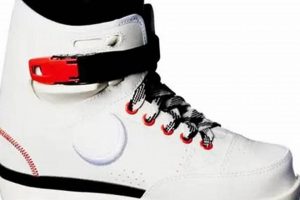
These skates, designed for recreational use, represent a popular choice for individuals seeking an enjoyable and accessible entry point into the world of inline skating. Characterized by their comfortable fit, stable design, and moderate speed capabilities, these skates are frequently utilized on paved trails, sidewalks, and other relatively smooth surfaces. A person enjoying a leisurely skate along a boardwalk is a typical example of the intended use case.
The significance of this style of skate lies in its ability to provide a low-impact cardiovascular workout, enhance balance and coordination, and offer an engaging outdoor activity for individuals of various skill levels. Historically, these skates have played a pivotal role in popularizing inline skating as a recreational pursuit, fostering a sense of community and promoting physical well-being among its enthusiasts. Their accessibility and ease of use contribute significantly to their widespread appeal.
The following sections will delve further into specific features, considerations for selecting the appropriate model, maintenance practices that ensure longevity, and comparisons with other skate types, providing a detailed overview for anyone interested in participating in this recreational activity.
Tips for Recreational Inline Skating
The following tips are designed to enhance the experience and safety of individuals engaging in recreational inline skating. Adherence to these guidelines contributes to a more enjoyable and secure skating session.
Tip 1: Prioritize Proper Protective Gear: Helmet use is paramount. Wrist guards, elbow pads, and knee pads are also strongly recommended to mitigate the risk of injury from falls. Ensure the gear fits correctly and is in good working condition.
Tip 2: Select Appropriate Skating Locations: Begin on smooth, paved surfaces free from traffic, pedestrians, and debris. Avoid skating on uneven terrain, gravel, or areas with excessive cracks or potholes. Gradually progress to more challenging environments as proficiency increases.
Tip 3: Master Fundamental Skating Skills: Practice basic skills such as forward skating, stopping, turning, and maintaining balance before attempting advanced maneuvers. Consistent practice builds confidence and control.
Tip 4: Maintain a Safe Skating Posture: Bend the knees slightly, maintain a balanced stance with weight distributed evenly over the feet, and keep the back straight. This posture enhances stability and maneuverability.
Tip 5: Practice Controlled Stopping Techniques: Familiarize oneself with various stopping methods, including the heel brake and T-stop. Practice these techniques regularly to ensure proficiency in emergency situations.
Tip 6: Be Aware of Surroundings: Remain vigilant and attentive to the surrounding environment. Scan for obstacles, pedestrians, and traffic. Communicate intentions clearly to other skaters and pedestrians.
Tip 7: Regular Maintenance: Inspect the skates before each use. Check for loose wheels, worn-out bearings, and damage to the boot or frame. Perform necessary maintenance to ensure optimal performance and safety.
By implementing these practical recommendations, skaters can significantly improve their overall experience and reduce the likelihood of accidents. Safe skating practices contribute to a more rewarding and sustainable recreational activity.
The succeeding sections will address common misconceptions and advanced techniques for enthusiasts seeking to further refine their skating abilities.
1. Comfortable Boot Design

The boot’s design is intrinsically linked to the user experience. Ill-fitting boots can lead to blisters, chafing, and overall discomfort, thereby detracting from the enjoyment of the activity and potentially leading to abandonment of the sport. This design impacts the skater’s ability to maintain proper form and control, increasing the risk of injury. For example, a boot that is too loose can cause the foot to slide within the skate, reducing responsiveness and stability. Conversely, a boot that is too tight can restrict blood flow and cause pain.
Manufacturers address these concerns through various design elements. Padded liners, often constructed from breathable materials, cushion the foot and wick away moisture. Articulated ankle supports enhance stability and prevent ankle strain. Lacing systems, buckles, and power straps work in concert to provide a secure and customizable fit. Furthermore, heat-moldable liners allow for personalized shaping, adapting the boot to the individual contours of the skater’s foot. Examples include using materials such as gel inserts and custom-fit padding. The correct sizing and materials directly impact comfort and performance.
Selecting rec inline skates with a comfortable boot design is not merely a matter of preference, but a fundamental requirement for safe and enjoyable skating. Overlooking this aspect can lead to negative consequences, including injury and discouragement. By prioritizing fit, support, and material quality, skaters can maximize the benefits of this recreational activity. This element should be carefully considered, along with others, for a well-rounded skate.
2. Durable Frame Construction

The frame, forming the structural foundation of recreational inline skates, directly impacts performance, stability, and longevity. Frame construction materials and design influence the skate’s ability to withstand stress, absorb vibrations, and transmit power efficiently. A robust frame enhances the overall skating experience and contributes to user safety.
- Material Composition and Strength
Frames are commonly constructed from materials such as aluminum alloys, reinforced plastics, or composite materials. Aluminum frames provide a balance of strength, stiffness, and weight, making them suitable for intermediate to advanced skaters. Plastic frames, typically found on entry-level models, offer a cost-effective option but may lack the rigidity and durability of aluminum. Composite frames, such as those incorporating carbon fiber, offer excellent strength-to-weight ratios and vibration damping. The material’s tensile strength and resistance to deformation directly influence the frame’s ability to withstand impacts and maintain its shape over time. An example includes high-grade aluminum frames on higher-end models used for extended recreational skating.
- Frame Length and Wheel Configuration
Frame length affects maneuverability and stability. Shorter frames offer greater agility and responsiveness, while longer frames provide increased stability at higher speeds. Wheel configuration, such as inline or tri-skate (three-wheel) setups, also influences performance characteristics. Inline configurations are traditional and provide a balance of speed and maneuverability. Tri-skate setups offer enhanced agility and shock absorption, making them suitable for rougher surfaces. Recreational skates generally use four-wheel configurations for stable, predictable handling. An example of frame configurations is varying wheelbases for different user experience from beginners to advanced.
- Mounting Systems and Energy Transfer
The frame’s mounting system, which connects it to the skate boot, plays a crucial role in energy transfer. A secure and rigid mounting system minimizes energy loss during each stride, maximizing efficiency and responsiveness. Some frames feature adjustable mounting points, allowing skaters to fine-tune the frame’s position relative to the boot for optimal comfort and performance. Proper alignment between the boot and frame ensures efficient power transfer. A real-world example is comparing frames with enhanced energy transfer to those with energy loss, highlighting user experience.
- Impact Resistance and Vibration Damping
Recreational skates are often subjected to impacts from uneven surfaces or accidental collisions. A durable frame should be capable of absorbing these impacts without cracking or deforming. Vibration damping properties are also desirable, as they reduce fatigue and enhance comfort during extended skating sessions. Frames with shock-absorbing inserts or composite construction can effectively minimize vibrations. An example includes frames designed with impact-resistant features that reduce wear and tear over time.
The interplay of material composition, frame length, mounting systems, and impact resistance determines the overall durability and performance of the recreational inline skate. A well-constructed frame provides a stable, responsive, and comfortable platform for skating, while a poorly designed frame can compromise safety and detract from the skating experience. Therefore, selecting skates with a durable frame construction is crucial for ensuring a safe and enjoyable recreational activity.
3. Smooth Wheel Bearings

Wheel bearings, integral to recreational inline skates, directly influence rolling efficiency, speed, and overall user experience. Reduced friction within the bearings translates to less effort required for propulsion and sustained momentum. This connection has a significant impact, particularly for recreational skaters covering longer distances or seeking a more effortless glide. The relationship is one of direct causation: smoother bearings lead to easier skating. For instance, bearings rated higher on the ABEC scale (Annular Bearing Engineers’ Committee) generally exhibit tighter tolerances and smoother operation, resulting in enhanced performance compared to lower-rated bearings commonly found in budget skates.
The practical significance of understanding this relationship lies in informed purchasing decisions and appropriate maintenance practices. Selecting recreational inline skates with high-quality bearings (e.g., ABEC 5 or ABEC 7) is a worthwhile investment for individuals prioritizing speed and efficiency. Regular cleaning and lubrication of bearings are essential for maintaining their smoothness and extending their lifespan. Debris and contaminants can increase friction and degrade performance. As an example, skaters operating in dusty or sandy environments may need to clean and lubricate their bearings more frequently than those skating on clean, paved surfaces. Skates with well-maintained bearings also provide a more controlled and predictable ride, enhancing safety and confidence, particularly for novice skaters.
In summary, smooth wheel bearings are a crucial component contributing to the performance and enjoyment of recreational inline skates. Their ability to minimize friction directly translates to improved rolling efficiency and reduced skating effort. Understanding the relationship between bearing quality and performance allows skaters to make informed purchasing decisions and adopt appropriate maintenance practices. While high-quality bearings often command a higher price, the enhanced skating experience and extended bearing lifespan represent a worthwhile investment for serious recreational users. Challenges involve ensuring the quality of stated ABEC ratings, as inconsistencies can occur across manufacturers, underscoring the need for reputable brands.
4. Reliable Braking System

The braking system on recreational inline skates is a crucial safety component. Its reliable function directly impacts a skater’s ability to control speed and avoid collisions. The connection between a reliable braking system and safety is undeniable. Poorly designed or maintained braking systems can lead to increased stopping distances, reduced control, and a higher risk of accidents. A common example includes heel brakes, frequently found on recreational skates. A worn or improperly adjusted heel brake renders the skate less safe, potentially leading to injury. The practicality of understanding this connection lies in the skater’s ability to assess brake functionality, maintain the system, and react appropriately to changing conditions.
Beyond the immediate safety implications, the braking system’s reliability also affects the skater’s confidence and enjoyment. A dependable brake instills a sense of security, allowing skaters to explore their skills and push their limits without undue apprehension. Regular inspection of the brake pad for wear and timely replacement are essential maintenance tasks. For example, brake pads made of higher-quality materials tend to offer better stopping power and last longer. Skaters should also practice emergency stopping techniques in a controlled environment to develop muscle memory and ensure they can react effectively when faced with unexpected obstacles.
In summary, a reliable braking system is not merely an accessory on recreational inline skates, but a vital element for safety, control, and confidence. Its proper function necessitates regular inspection, maintenance, and skillful execution. The understanding of this necessity underscores the importance of informed purchasing decisions, diligent maintenance practices, and a commitment to safe skating techniques. The challenge often involves skaters neglecting to check the braking system regularly, highlighting the need for increased awareness and proactive safety measures.
5. Proper Ankle Support

Adequate ankle support is a critical feature in recreational inline skates, influencing stability, control, and the prevention of injuries. The connection between ankle support and safe, enjoyable skating experiences is direct and consequential.
- Lateral Stability and Control
Sufficient ankle support restricts excessive lateral movement, enabling the skater to maintain balance and control, particularly during turns and maneuvers. Insufficient support can lead to ankle rolling or instability, increasing the risk of sprains. Skates with rigid cuffs and reinforced ankle areas provide enhanced lateral stability. An example includes a skater maintaining a stable posture while navigating a turn, owing to the skate’s robust ankle support.
- Energy Transfer and Efficiency
Effective ankle support facilitates efficient energy transfer from the skater’s legs to the wheels. When the ankle is properly supported, less energy is lost due to unwanted movement or instability. This efficient transfer leads to improved skating performance and reduced fatigue. Skates with adjustable straps or lacing systems near the ankle allow for customizable support levels. An example would be a skater experiencing less muscle fatigue after a long skating session because of a well-supported ankle.
- Injury Prevention
Proper ankle support significantly reduces the likelihood of ankle injuries, such as sprains and strains. The ankle joint is particularly vulnerable to injury during skating due to the repetitive nature of the activity and the potential for uneven surfaces. Skates with supportive cuffs and secure closure systems help stabilize the ankle and protect it from excessive stress. An example includes a skater avoiding an ankle sprain after encountering a small obstacle, thanks to the supportive design of the skate.
- Comfort and Fit Considerations
While providing support, the ankle area of the skate should also offer a comfortable fit. Excessive pressure or chafing can lead to discomfort and blisters. Skates with padded liners and adjustable closures allow for a balance of support and comfort. Heat-moldable liners further enhance the fit by conforming to the individual contours of the skater’s ankle. For instance, a skater experiencing no discomfort or chafing even after prolonged use of skates with customizable, padded ankle support.
The level of ankle support required may vary depending on individual skating ability and terrain. Beginner skaters often benefit from more rigid support, while experienced skaters may prefer a more flexible design that allows for greater freedom of movement. Regardless of skill level, prioritizing proper ankle support is essential for safe, efficient, and enjoyable recreational inline skating. Failure to provide adequate ankle support compromises performance and elevates the risk of injury.
6. Responsive Maneuverability

Responsive maneuverability is a crucial attribute of recreational inline skates, influencing the skater’s ability to navigate varied terrain, execute turns, and maintain control. The degree of responsiveness directly affects the overall skating experience, contributing to safety and enjoyment.
- Frame Length and Agility
Shorter frames enhance agility, allowing for quicker turns and tighter maneuvers. Recreational skates designed for beginners often feature shorter frames to facilitate learning fundamental skills. Conversely, longer frames offer greater stability at higher speeds, but may reduce responsiveness in confined spaces. Frame length directly influences the skate’s turning radius and overall maneuverability. An example includes navigating crowded pathways with greater ease on skates with a shorter wheelbase.
- Wheel Configuration and Turning Performance
The arrangement of wheels affects the skate’s ability to initiate and maintain turns. Traditional four-wheel setups offer a balance of stability and maneuverability, suitable for general recreational skating. Tri-skate configurations, with three larger wheels, can provide enhanced agility and shock absorption, but may require more effort to control at lower speeds. Wheel diameter also plays a role, with smaller wheels generally promoting quicker turning. A practical illustration involves comparing the turning response of inline skates with four 80mm wheels versus those with three 110mm wheels.
- Boot Stiffness and Energy Transfer
The stiffness of the skate boot influences the skater’s ability to transfer energy efficiently to the wheels, impacting responsiveness. Stiffer boots provide greater support and control, enabling quicker reactions and more precise movements. Softer boots offer more comfort but may sacrifice some degree of responsiveness. An example would be feeling a more direct connection to the skates and increased control with a stiffer boot during sharp turns.
- Bearing Quality and Rolling Resistance
High-quality bearings reduce rolling resistance, allowing the skater to accelerate and decelerate more smoothly and respond quickly to changes in direction. Bearings with tighter tolerances and superior lubrication contribute to a more responsive skating experience. Regular maintenance of bearings is essential for maintaining their performance. An example is experiencing a smoother, more effortless glide and quicker acceleration due to well-maintained, high-quality bearings.
The interplay of these elements collectively determines the responsiveness of recreational inline skates. Factors such as frame length, wheel configuration, boot stiffness, and bearing quality must be carefully considered to optimize maneuverability. The selection should align with the skater’s skill level, preferred skating style, and the intended environment. Skates with enhanced responsiveness empower skaters to confidently navigate diverse terrains and execute maneuvers with precision, leading to a more rewarding and safe recreational activity.
7. Adequate Ventilation

Adequate ventilation in recreational inline skates directly influences comfort, hygiene, and overall performance. Prolonged use of skates without sufficient airflow leads to increased foot temperature and perspiration. The resulting moisture creates an environment conducive to bacterial growth, increasing the risk of foot odor and infections. Furthermore, accumulated sweat can degrade the materials of the skate boot, reducing its lifespan and compromising structural integrity. Sufficient ventilation mitigates these issues by facilitating air circulation and promoting the evaporation of moisture, keeping the foot cooler and drier. The design features that enable this include strategically placed mesh panels, ventilation ports in the shell and liner, and moisture-wicking materials. For example, recreational skaters engaging in extended outdoor sessions, especially during warm weather, directly benefit from skates equipped with effective ventilation systems. Lack of these systems may lead to discomfort, skin irritation, and reduced skating enjoyment.
The practical application of understanding the importance of ventilation translates into informed purchasing decisions. Skaters should prioritize models with demonstrable ventilation features, considering the materials and design elements that promote airflow. Regular cleaning and maintenance of the skate boots, including removing and airing out the liners after each use, further enhances the benefits of adequate ventilation. For instance, opting for skates with removable and washable liners allows for thorough cleaning, minimizing bacterial buildup and odor. Conversely, neglecting proper ventilation practices can lead to the premature deterioration of the skates, increasing replacement costs. Proper ventilation contributes not only to user comfort but also to the durability and longevity of the equipment. The features are more than stylistic design elements and should be considered critical features for maintaining hygiene and optimizing the skating experience.
In summary, adequate ventilation is a vital component of recreational inline skates, impacting comfort, hygiene, and the lifespan of the equipment. Its absence leads to adverse effects, including increased foot temperature, bacterial growth, and material degradation. Purchasing decisions and maintenance practices should prioritize ventilation to optimize the skating experience and preserve the integrity of the skates. A common challenge involves recognizing the subtle differences in ventilation design and assessing their effectiveness, requiring careful evaluation of product specifications and user reviews. This element contributes significantly to overall usability and satisfaction.
Frequently Asked Questions
The following section addresses common inquiries regarding recreational inline skates, providing concise and informative answers to assist in understanding their features, selection, and maintenance.
Question 1: What differentiates recreational inline skates from other types of inline skates?
Recreational inline skates are primarily designed for casual use on smooth, paved surfaces. They typically feature a comfortable boot, a stable frame, and moderate speed capabilities. In contrast, other types, such as aggressive skates, speed skates, or fitness skates, are designed for specific purposes and possess features tailored to those activities.
Question 2: What are the key features to consider when purchasing recreational inline skates?
Essential features to consider include a comfortable boot design, durable frame construction, smooth wheel bearings, a reliable braking system, and proper ankle support. Adequate ventilation is also important for maintaining comfort during extended use.
Question 3: How should recreational inline skates be properly sized?
Proper sizing is crucial for comfort and performance. It is generally recommended to select skates that fit snugly but not too tightly, allowing for slight toe movement. Consulting manufacturer sizing charts and, if possible, trying on skates before purchase is advisable.
Question 4: What is the recommended maintenance schedule for recreational inline skates?
Regular maintenance includes inspecting the skates before each use, cleaning the wheels and bearings periodically, and replacing worn brake pads. Proper storage in a dry environment is also essential for preventing damage.
Question 5: Are recreational inline skates suitable for all skill levels?
Recreational inline skates are generally suitable for beginner to intermediate skill levels. Advanced skaters may prefer specialized skate types that offer enhanced performance characteristics. Beginner models typically prioritize stability and ease of use.
Question 6: What safety precautions should be taken when using recreational inline skates?
Wearing appropriate protective gear, including a helmet, wrist guards, elbow pads, and knee pads, is paramount. Skating in designated areas and being aware of surroundings is also crucial. Mastering basic skating skills, such as stopping and turning, is essential before attempting more advanced maneuvers.
Understanding the distinctions, key features, sizing considerations, maintenance practices, suitability, and safety precautions associated with recreational inline skates enhances the user experience and promotes responsible participation in the activity.
The following section delves into advanced techniques and common misconceptions associated with recreational inline skating.
Conclusion
This exploration has illuminated various facets of rec inline skates, from essential design elements like boot comfort and frame durability to performance-enhancing features such as smooth bearings and responsive maneuverability. The importance of safety considerations, including reliable braking systems and proper ankle support, has also been emphasized. Understanding these aspects enables informed decision-making, promoting safer and more enjoyable recreational skating experiences.
Ultimately, the value of rec inline skates extends beyond mere recreation; it fosters physical activity, enhances coordination, and provides an accessible means of outdoor engagement. Responsible selection, diligent maintenance, and adherence to safety guidelines maximize the benefits derived from this activity, ensuring its continued appeal for years to come. Further investigation into advancements in skate technology and the development of safer skating environments remains crucial for the sustained growth and safety of the recreational skating community.

![Top Best Inline Skate Brands in [Year]: Expert Picks | How to Skateboard: A Beginner's Guide to Your First Board & Tricks](https://cruzskateshop.com/wp-content/uploads/2026/03/th-163-300x200.jpg "Top Best Inline Skate Brands in [Year]: Expert Picks How to Skateboard: A Beginner's Guide to Your First Board & Tricks")