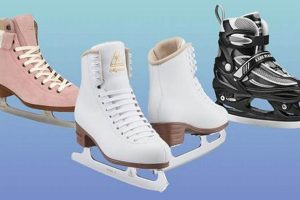
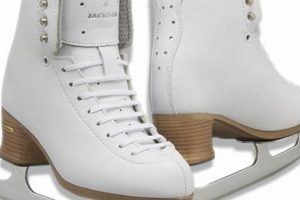
Well-used ice skates represent equipment that has seen considerable use and may exhibit signs of wear and tear. These implements, utilized for gliding across ice surfaces, often bear the marks of their history through aesthetic blemishes or mechanical adjustments accumulated over time. For example, a pair of figure skates displaying scuffs, replaced blades, or softened leather would fall under this category.
Such items can offer intrinsic value and utility. Their well-worn nature may provide enhanced comfort and familiarity for the skater. In some cases, vintage or antique examples hold significant historical importance, representing particular eras in the sport or technological advancements in skate design. Furthermore, acquiring pre-owned skates can present a cost-effective option for individuals entering the sport or requiring a backup pair.
The following discussion will delve into the aspects of assessing the condition, maintaining the usability, and appreciating the potential worth associated with used ice skating equipment. Focus will be placed on evaluating structural integrity, optimizing performance, and considering the historical significance of aged skates.
Guidance Regarding Pre-Owned Ice Skates
The following recommendations address the responsible evaluation, maintenance, and utilization of ice skates that have experienced prior usage. These tips aim to maximize safety, performance, and longevity.
Tip 1: Thorough Inspection. Prior to use, conduct a comprehensive examination of the skates. Scrutinize the boot for structural weaknesses, such as tears or separation of components. Inspect the blade attachment for signs of looseness or corrosion.
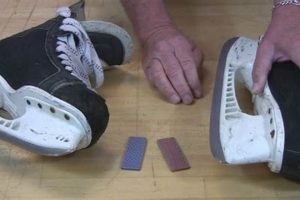
Tip 2: Blade Assessment. The blades should be sharpened to a suitable edge for optimal performance. Uneven wear or significant rust indicate the need for professional attention or possible replacement.
Tip 3: Boot Support Evaluation. Assess the rigidity of the boot. Excessive flexibility compromises ankle support and increases the risk of injury. Consider reinforcement or replacement if structural integrity is lacking.
Tip 4: Lacing System Integrity. Evaluate the condition of the laces and eyelets. Worn or damaged laces can snap unexpectedly, while compromised eyelets reduce lacing effectiveness. Replace components as necessary.
Tip 5: Professional Fitting. Although the skates are pre-owned, a professional fitting remains crucial. Modifications, such as heat molding, may be required to ensure a secure and comfortable fit.
Tip 6: Hygiene Considerations. Prior to use, disinfect the interior of the boots to minimize the risk of bacterial or fungal infections. Allow the boots to air dry thoroughly after each skating session.
Tip 7: Gradual Acclimation. Individuals unaccustomed to the specific characteristics of older skates should engage in a gradual acclimation period. This allows for adjustment to the skate’s fit and performance characteristics, reducing the risk of injury.
Adhering to these guidelines enhances the safe and effective utilization of previously used ice skates, promoting a positive skating experience while mitigating potential risks.
The subsequent section will explore common issues encountered with older skates and strategies for remediation.
1. Material Degradation

Material degradation in aged ice skates is a critical factor affecting their safety, performance, and value. The passage of time and environmental exposure contribute to the deterioration of various components, necessitating careful evaluation and maintenance.
- Leather Deterioration
Leather boots, a common feature in older skates, are susceptible to drying, cracking, and weakening. The natural oils in leather evaporate over time, leading to stiffness and reduced flexibility. Cracks can form in areas of high stress, such as the ankle support. Weakened leather compromises the boot’s ability to provide adequate support, increasing the risk of injury.
- Metal Corrosion
Metal components, including the blades and mounting hardware, are prone to corrosion. Rust weakens the metal, reducing its structural integrity and affecting the blade’s sharpness. Corrosion on the mounting hardware can loosen the blade’s attachment to the boot, creating instability and posing a safety hazard. Regular cleaning and protective coatings are essential to mitigate corrosion.
- Rubber and Plastic Decay
Rubber and plastic components, such as padding and outsoles, can become brittle and degrade over time. Rubber loses its elasticity, leading to cracking and reduced cushioning. Plastic can become discolored, brittle, and prone to fracturing. Deteriorated padding compromises comfort and support, while a cracked outsole can compromise the skate’s stability.
- Adhesive Failure
Adhesives used in the construction of skates can weaken over time, leading to delamination of components. The bond between the boot and the sole or between layers of the boot can fail, compromising the skate’s structural integrity. Delamination can result in instability and reduced performance. Re-gluing may be possible, but often requires professional expertise.
Addressing material degradation is crucial for preserving the functionality and safety of aged ice skates. Regular inspection, proper maintenance, and timely repairs can extend their lifespan and ensure continued usability. Ignoring signs of degradation can lead to catastrophic failure and potential injury.
2. Blade Wear

Blade wear, an inevitable consequence of use, serves as a key indicator of an ice skate’s history and remaining utility. In the context of older skates, the extent and nature of blade wear provide valuable insights into the equipment’s past usage patterns and potential future performance limitations.
- Profile Alteration
Repeated sharpening and general use gradually alter the blade’s original profile. The rocker, the curved portion of the blade, flattens over time, affecting maneuverability and gliding efficiency. An experienced skater may adapt to these changes, but the altered profile reduces the skate’s responsiveness, impacting performance. Regular profiling, when feasible, can restore the blade’s original characteristics.
- Edge Degradation
The edges of the blade, crucial for gripping the ice, experience constant wear. Nicks, burrs, and rounding diminish the blade’s ability to hold an edge, resulting in reduced control and increased slippage. Frequent sharpening is necessary to maintain sharp edges, but each sharpening removes material, gradually reducing the blade’s overall lifespan. Extensive edge degradation necessitates blade replacement.
- Blade Thickness Reduction
Each sharpening process removes a small amount of metal from the blade, leading to a gradual reduction in thickness. As the blade thins, it becomes more susceptible to bending and breakage, especially under high stress. A severely thinned blade poses a safety hazard and compromises the skate’s structural integrity. Regular monitoring of blade thickness is essential.
- Rust and Corrosion
Exposure to moisture and improper storage accelerate rust and corrosion on the blade’s surface. Rust weakens the metal, making it more prone to damage and affecting its ability to hold an edge. Deep rust can be difficult to remove completely and may necessitate blade replacement. Proper drying and protective coatings are crucial for preventing rust and corrosion.
Blade wear is a significant consideration when evaluating older ice skates. The type and extent of wear impact performance, safety, and longevity. Skaters and collectors should carefully assess blade wear to determine the skate’s suitability for continued use or its value as a historical artifact.
3. Boot Construction

Boot construction, a fundamental aspect of antique ice skates, significantly influences comfort, performance, and longevity. Analyzing the materials, design, and manufacturing techniques employed in older skate boots reveals insights into their historical context and functional capabilities.
- Material Composition
Older skate boots frequently utilized natural materials, such as leather and wood. The quality and type of leather (e.g., calfskin, cowhide) influenced durability, flexibility, and water resistance. Wooden soles or shanks provided structural support, though they were susceptible to moisture damage and cracking. The selection and preparation of these materials directly affected the boot’s overall performance and lifespan.
- Stitching and Assembly Techniques
Traditional boot construction relied heavily on hand stitching and meticulous assembly. Skilled artisans shaped and joined the various components, creating a durable and supportive structure. The density and type of stitching impacted the boot’s resistance to wear and tear. Imperfections in the stitching or assembly could lead to premature failure, particularly in areas subjected to high stress.
- Support and Reinforcement Structures
Internal support structures, such as ankle reinforcements and counters, played a crucial role in providing stability and preventing injury. These structures were often crafted from stiff leather or other rigid materials. The effectiveness of these reinforcements directly impacted the skater’s control and ability to execute maneuvers. Degradation or failure of these structures compromised the boot’s functionality and safety.
- Fastening Systems
Early ice skate boots employed various fastening systems, including laces, straps, and buckles. The design and construction of these systems influenced the boot’s adjustability and security. Laces, typically made of leather or cotton, could stretch or break over time. Buckles and straps were prone to corrosion and mechanical failure. A secure and reliable fastening system was essential for maintaining proper fit and preventing slippage.
The boot construction of used ice skates reflects the technological and material limitations of their era. Understanding these historical techniques and assessing the condition of the materials and assembly are crucial for evaluating the skate’s suitability for restoration, collection, or limited recreational use. Modern skaters should consider the limitations of older boot designs and prioritize safety when utilizing vintage equipment.
4. Historical Significance
The historical significance of aged ice skates lies in their representation of technological evolution, societal trends, and the development of ice sports. The artifacts themselves serve as tangible links to past eras, offering insights into the materials, manufacturing processes, and design philosophies prevalent during their creation. Consequently, these skates embody a cultural legacy, reflecting changes in recreational activities, sporting equipment, and industrial capabilities. For example, a pair of early 20th-century clamp-on skates reveals the rudimentary technology of the time, contrasting sharply with the sophisticated designs of modern composite boots.
The importance of historical significance as a component of used ice skates resides in its ability to elevate these objects beyond mere sporting equipment. Skates once used by prominent figures, or those associated with significant historical events, acquire substantial value as collectible items and historical documents. Consider the potential value of skates used in the early Winter Olympics or those crafted by renowned skate makers of the past. Documented provenance further enhances their significance, transforming them into valuable assets for museums, collectors, and historians.
Understanding the historical significance of aged ice skates carries practical implications for preservation, restoration, and appreciation. Proper identification, documentation, and conservation methods are crucial to safeguarding these artifacts for future generations. Furthermore, recognizing their historical value promotes a deeper understanding of the evolution of ice skating and its cultural impact. The insights gained can inform modern skate design and encourage the preservation of skating heritage. The analysis highlights the critical relationship between these skates and the broader context of cultural and technological history.
5. Collectibility

The collectibility of used ice skates is directly tied to factors such as their age, rarity, condition, historical significance, and association with notable individuals or events. A skate’s age, within a certain range, often enhances its value, particularly if it represents a distinct technological or design era. Rarity, stemming from limited production runs or unique features, contributes significantly to increased demand among collectors. Condition is a critical determinant, as well-preserved examples command higher prices, although signs of authentic wear are often preferred over extensive restoration. Historical significance, connecting the skate to a particular period or technological advancement, elevates its appeal. Association with renowned skaters or historical occurrences exponentially increases its desirability among collectors.
Instances exist where seemingly ordinary pairs of used skates have achieved considerable value due to unforeseen circumstances. For example, a pair of turn-of-the-century skates, discovered in an attic and originally valued modestly, were later authenticated as having belonged to a pioneering figure skater, resulting in a substantial increase in market value. Similarly, mass-produced skates from the mid-20th century, identified as being used during a pivotal moment in ice hockey history, experienced a surge in collectibility. These examples underscore the importance of thorough research and authentication when assessing the value of antique skating equipment.
Understanding the factors driving collectibility is crucial for both buyers and sellers. Collectors can make informed acquisition decisions by considering rarity, historical relevance, and condition. Sellers can accurately appraise and market their skates by highlighting their unique attributes and verifying their provenance. Challenges in this area include accurately determining age and authenticity and preserving items in a way that enhances their value, balancing preservation with acceptable amounts of wear and tear. Ultimately, the collectibility of used ice skates represents a nuanced intersection of history, sport, and material culture.
6. Restoration Potential

The restoration potential of aged ice skates represents a critical consideration for collectors, historians, and skaters seeking to preserve or revive these artifacts. The degree to which a used skate can be successfully restored depends on several interconnected factors, including the extent of material degradation, the availability of replacement parts, the historical integrity that must be maintained, and the intended use of the restored item. For example, skates suffering from extensive rust or leather rot may require extensive intervention, potentially compromising their originality. Conversely, skates with minor cosmetic damage and structurally sound components offer greater restoration possibilities. The primary cause determining how much restoration potential there is to be considered is how degraded or usable the current skates are.
The significance of restoration potential stems from the desire to balance preservation with functionality. Collectors may prioritize maintaining historical accuracy, opting for minimal intervention to retain the skate’s original character. Skaters, on the other hand, may prioritize performance and safety, necessitating more extensive repairs or component replacements. Reconciling these conflicting objectives presents a challenge. For instance, replacing a rusted blade with a modern equivalent can improve performance but diminish the skate’s historical value. Successful restoration requires a clear understanding of the skate’s historical context, original construction techniques, and the desired outcome. A well-executed restoration can enhance the skate’s aesthetic appeal, extend its lifespan, and potentially increase its value.
Understanding the restoration potential of used ice skates enables informed decision-making. Collectors can assess the feasibility of preserving historically significant items, while skaters can determine whether restoration is a viable alternative to purchasing new equipment. Challenges include sourcing appropriate replacement parts, replicating historical manufacturing techniques, and mitigating the risk of further damage during the restoration process. Skilled craftspeople with expertise in leatherwork, metalworking, and skate construction are essential for achieving successful outcomes. The analysis highlights the intersection of historical preservation, craftsmanship, and practical utility in the context of aged ice skates.
7. Safety Considerations
The utilization of aged ice skates introduces inherent safety considerations directly linked to the degradation and potential structural weaknesses accumulated over time. Material fatigue, corrosion, and compromised construction techniques common in antique skates elevate the risk of equipment failure during use. This risk manifests in several forms, including blade detachment, boot collapse, and compromised ankle support, potentially leading to falls, lacerations, and fractures. The use of skates predating modern safety standards presents an elevated hazard compared to contemporary equipment engineered with enhanced protective features. Therefore, a thorough assessment of safety-related factors is paramount before employing these items.
A real-world example illustrates the potential dangers: A skater using a pair of early 20th-century clamp-on skates experienced a blade detachment during a routine maneuver, resulting in a severe ankle sprain. This incident underscores the importance of rigorously inspecting the integrity of the blade mounting system and the overall structural soundness of older skates. Practical significance arises from understanding that relying solely on the aesthetic appeal or historical value of these items disregards the fundamental requirement for safe and reliable performance. Mitigation strategies include professional inspection, reinforcement of vulnerable areas, and, when necessary, the replacement of critical components with modern equivalents, balancing preservation with functionality.
In summary, the utilization of aged ice skates necessitates a heightened awareness of safety considerations due to the inherent risks associated with material degradation and outdated construction. Thorough inspection, reinforcement, and, in some cases, component replacement are crucial for mitigating these risks. Challenges remain in balancing the desire for historical preservation with the imperative to ensure user safety. A responsible approach demands prioritizing the well-being of the skater while acknowledging the historical significance of these artifacts.
Frequently Asked Questions
This section addresses common inquiries regarding antique or well-used ice skates. The information provided aims to clarify concerns and misconceptions surrounding their condition, usage, and value.
Question 1: What are the primary safety concerns associated with using vintage ice skates?
Principal safety concerns include compromised structural integrity due to material degradation (e.g., rusted blades, weakened leather), inadequate ankle support, and outdated fastening systems. Such factors increase the risk of blade detachment, boot collapse, and instability, potentially leading to injuries.
Question 2: How can the age of ice skates be accurately determined?
Dating ice skates involves examining manufacturing marks, construction techniques, and material composition. Consulting historical catalogs, skate manufacturing databases, and expert appraisers can provide valuable insights. Identifying patented components or design features can also narrow the timeframe.
Question 3: What factors contribute to the collectibility and value of used ice skates?
Factors influencing collectibility encompass age, rarity, condition, historical significance (e.g., association with notable skaters or events), and provenance. Skates manufactured by renowned companies, featuring unique designs, or exhibiting exceptional craftsmanship command higher values.
Question 4: Is it advisable to restore aged ice skates for regular use?
The feasibility of restoration depends on the skate’s condition and intended purpose. Skates intended for display or limited recreational use may benefit from restoration, while those destined for rigorous skating may require extensive component replacement, potentially compromising their historical integrity. Consultation with a qualified skate restorer is recommended.
Question 5: What are the appropriate methods for storing and preserving vintage ice skates?
Proper storage involves cleaning and drying the skates thoroughly, applying protective coatings to metal components, and storing them in a cool, dry environment away from direct sunlight and humidity. Employing acid-free tissue paper and archival-quality boxes can further mitigate degradation.
Question 6: How can the risk of injury be minimized when using older ice skates?
Prior to use, thoroughly inspect the skates for any signs of damage or weakness. Ensure the blades are sharp and securely attached. Consider reinforcing the boot with additional support and wearing appropriate safety gear, including ankle braces and a helmet. Engage in a gradual acclimation period to adjust to the skate’s unique characteristics.
In summary, using or collecting well-used ice skates involves careful consideration of safety, authenticity, and preservation. Seeking expert advice and adhering to best practices can mitigate risks and maximize the enjoyment and value derived from these historical artifacts.
The subsequent section explores case studies of aged ice skate restoration and collection.
Conclusion
The preceding exploration of “ice skates old” has illuminated the multifaceted nature of these artifacts, encompassing their historical significance, material properties, collectibility, restoration potential, and, critically, safety implications. Analysis has revealed the importance of assessing material degradation, blade wear, and boot construction to understand the overall condition and potential utility of used skates. The discussion has underscored the necessity of balancing historical preservation with practical safety considerations, particularly when contemplating their reuse.
As custodians of these relics of sporting history, careful evaluation and responsible preservation are paramount. Whether pursued as a collector’s endeavor, a historical inquiry, or a cautious return to the ice, engaging with aged ice skates demands a deep understanding of their inherent limitations and potential. Prioritizing safety, preserving historical integrity, and seeking expert guidance will ensure that these vestiges of the past continue to inform and inspire future generations.