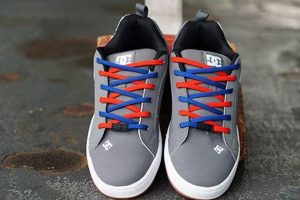
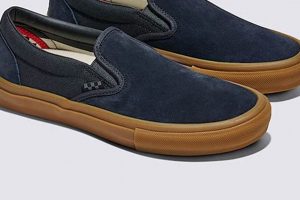
The optimal footwear selection for skateboarding directly influences performance, safety, and the longevity of both the shoes and the skater’s feet. Considerations for impact absorption, board feel, durability, and grip are paramount when selecting appropriate footwear. An example would be vulcanized rubber-soled shoes with reinforced stitching in high-wear areas.
The appropriate footwear significantly reduces the risk of injuries such as ankle sprains and bruised heels. Furthermore, the specific design and materials used impact the skater’s ability to maintain board control and execute tricks effectively. Historically, canvas shoes were common, but advancements in materials science have led to specialized footwear incorporating advanced features like shock-absorbing midsoles and abrasion-resistant overlays.
This analysis will delve into the key characteristics that define suitable skateboarding shoes, encompassing construction techniques, material composition, and design features that enhance the overall skating experience. The subsequent discussion will explore specific shoe attributes and their respective benefits within the context of skateboarding.
Guidance on Footwear Selection for Skateboarding
Optimizing footwear selection is critical for skateboarding performance, safety, and equipment longevity. The following guidelines address crucial aspects of shoe selection.
Tip 1: Prioritize Durable Construction: Select shoes featuring reinforced stitching, particularly in areas subjected to high abrasion, such as the toe and ollie patch. This enhances resistance to wear and tear from board contact.
Tip 2: Evaluate Sole Construction: Vulcanized soles offer superior board feel and grip, essential for control. Cupsole designs provide increased impact protection, advantageous for skaters performing high-impact maneuvers.
Tip 3: Assess Material Composition: Leather or suede uppers provide enhanced durability compared to canvas. Reinforced synthetic materials can offer a balance of durability and flexibility.
Tip 4: Consider Ankle Support: High-top designs offer increased ankle stability and protection, beneficial for skaters prone to ankle injuries or engaging in aggressive skating styles.
Tip 5: Inspect Cushioning Technology: Shoes incorporating impact-absorbing midsoles, such as those utilizing polyurethane or EVA foam, mitigate impact forces and reduce stress on joints.
Tip 6: Assess Grip Pattern: The outsole tread pattern directly affects grip. Herringbone or geometric patterns provide optimal traction on various surfaces.
Tip 7: Ensure Proper Fit: Select shoes that provide a snug, secure fit without restricting movement. Adequate toe room is crucial to prevent discomfort and injury.
These considerations represent fundamental guidelines for selecting footwear that maximizes performance, protection, and longevity in the context of skateboarding.
Following the application of these guidelines, subsequent sections will address specific shoe models and their suitability for various skating styles.
1. Durability

In the context of skateboarding footwear, durability represents the shoe’s capacity to withstand the considerable stress and abrasion inherent in the activity. The longevity of a skateboarding shoe is directly proportional to its capacity to resist damage from board contact, repeated impacts, and varied environmental conditions. Enhanced durability directly correlates with the overall suitability and cost-effectiveness of footwear for skateboarding.
- Material Composition
The selection of materials significantly dictates a shoe’s durability. Leather and suede uppers, for example, offer increased abrasion resistance compared to canvas. Similarly, reinforced rubber compounds used in soles enhance their lifespan and resistance to wear from constant contact with the skateboard deck and ground.
- Reinforced Stitching
Strategic reinforcement of stitching, particularly in high-stress areas such as the ollie patch and toe cap, is crucial. Reinforced stitching prevents premature separation of components and enhances the shoe’s ability to withstand repeated friction and impact forces. Double or triple stitching is commonly employed in areas prone to wear.
- Sole Construction Techniques
The method of attaching the sole to the upper is a critical determinant of durability. Vulcanized soles, which are chemically bonded to the upper, are generally more resistant to separation compared to glued soles. Cupsole designs, while offering greater impact protection, can be prone to delamination if not constructed with high-quality adhesives and robust stitching.
- Abrasion-Resistant Overlays
The inclusion of abrasion-resistant overlays, typically made of materials like TPU or reinforced rubber, in areas prone to wear significantly extends the lifespan of the shoe. These overlays provide an additional layer of protection against abrasion from grip tape and other abrasive surfaces encountered during skateboarding.
The interplay of these durability-enhancing features directly impacts a skateboarder’s experience. Shoes with superior durability require less frequent replacement, resulting in long-term cost savings and reduced environmental impact. Furthermore, durable shoes maintain their structural integrity, providing consistent support and protection, which is essential for performance and injury prevention. Footwear lacking these durability features compromises performance and places the skater at increased risk of injury.
2. Board Feel
In skateboarding, “board feel” denotes the tactile sensitivity a skater experiences between their feet and the skateboard. This sensation is vital for control, balance, and the execution of technical maneuvers. Footwear design significantly influences board feel, making it a key criterion in the selection of suitable skateboarding shoes. The “best shoes to skate in” are often those that maximize this connection.
- Sole Thickness
Thinner soles generally enhance board feel. Minimal padding between the foot and the board allows for a more direct transmission of tactile information, enabling subtle adjustments in balance and pressure. For instance, vulcanized soles, known for their flexibility and low profile, are often preferred by skaters prioritizing board feel. Conversely, thicker cupsole designs, while offering superior impact protection, can diminish board feel due to increased separation from the board.
- Sole Material and Flexibility
The material composition and flexibility of the sole significantly affect board feel. Softer, more pliable materials, such as certain rubber compounds, conform to the concave shape of the board, enhancing grip and tactile feedback. A less flexible sole may create a rigid barrier, reducing sensitivity and control. Professional skaters often cite sole flexibility as a crucial factor in their choice of footwear, as it allows them to “feel” the board’s response during intricate tricks.
- Insole Design
The insole contributes to the overall sensory experience. While providing cushioning and support, an overly thick or dense insole can dampen board feel. Low-profile insoles, or those made from responsive materials like polyurethane, can enhance sensitivity without sacrificing comfort. The insole’s surface texture also plays a role, affecting the grip between the foot and the shoe and indirectly influencing board feel.
- Upper Construction
While the sole is the primary determinant of board feel, the upper construction also contributes. A snug-fitting upper ensures the foot remains securely positioned within the shoe, preventing slippage and maximizing the transmission of subtle movements to the board. Loose or ill-fitting uppers can create a disconnect, hindering the skater’s ability to precisely control the board.
The optimal balance between board feel and other factors like impact protection and durability depends on individual preferences and skating style. However, understanding the interplay between footwear design and tactile sensitivity is crucial for selecting “best shoes to skate in” that enhance performance and control. Consideration of sole thickness, flexibility, insole design, and upper construction will aid in identifying footwear that provides the desired level of board feel.
3. Grip

In skateboarding, grip refers to the frictional force between the shoe’s outsole and both the skateboard deck’s grip tape and the ground. Adequate grip is paramount for maintaining control, executing tricks, and preventing slippage, directly influencing safety and performance. Footwear designed with superior grip characteristics is intrinsically linked to its classification as an optimal choice for skateboarding. A lack of sufficient grip results in compromised board control, increasing the risk of falls and hindering the execution of technical maneuvers. For example, a skater attempting an ollie on a smooth surface with worn-out soles will experience a significantly reduced ability to generate the necessary friction for a successful maneuver.
The effectiveness of grip is influenced by several factors, including outsole material, tread pattern, and surface conditions. Outsoles constructed from specialized rubber compounds engineered for high friction coefficients provide enhanced adhesion to grip tape and varying ground surfaces. The tread pattern, often featuring herringbone or geometric designs, channels away water and debris, maintaining consistent contact. Furthermore, the skater’s weight distribution and the angle of the shoe relative to the board impact the available frictional force. A skater leaning too far forward or backward, or using a shoe with a smooth, worn-down sole, will experience diminished grip, potentially leading to a loss of balance and control.
Therefore, the selection of skateboarding shoes with superior grip characteristics is critical for maximizing control and mitigating the risk of falls. The outsole material and tread pattern are primary considerations, with specialized rubber compounds and carefully designed tread patterns offering the best performance. Consistent inspection and timely replacement of worn-out footwear are essential for maintaining optimal grip performance. Ultimately, understanding the physics of friction and its relationship to footwear design is fundamental to selecting skateboarding shoes that provide the necessary level of grip, ensuring safety and enhancing the overall skating experience.
4. Impact Absorption
Impact absorption in skateboarding footwear is a critical factor directly influencing the mitigation of stress on the skater’s musculoskeletal system. The effectiveness of impact absorption directly correlates with reduced risk of injuries, enhanced comfort, and improved long-term joint health. Therefore, impact absorption capabilities are a key determinant when evaluating the suitability of footwear for skateboarding. The following facets delineate the critical elements of impact absorption in skateboarding shoes.
- Midsole Material Composition
The midsole, situated between the outsole and the insole, serves as the primary impact-absorbing component. Materials such as Ethylene-Vinyl Acetate (EVA) and polyurethane (PU) are commonly employed due to their energy-dissipating properties. PU midsoles generally offer superior durability and impact absorption compared to EVA, though they may be heavier. The density and thickness of the midsole material directly influence the level of impact protection. For example, a thicker PU midsole will provide greater cushioning during high-impact landings than a thinner EVA midsole. Selecting a material appropriate for the skater’s weight and skating style is crucial.
- Heel Cushioning Technologies
The heel region is particularly vulnerable to impact forces during skateboarding. Specialized cushioning technologies, such as encapsulated air units or gel inserts, are often incorporated into the heel to provide targeted impact absorption. These technologies function by compressing under pressure, dissipating energy, and reducing the force transmitted to the heel bone and ankle joint. Skaters performing large drops or gaps benefit significantly from footwear featuring advanced heel cushioning systems. An example would be shoes incorporating Nike’s Zoom Air or Adidas’ Boost technology in the heel.
- Insole Contribution
While the midsole provides the primary impact absorption, the insole also plays a role. Insoles constructed from materials like open-cell foam or orthotic-grade polymers offer additional cushioning and support. Furthermore, contoured insoles that conform to the foot’s arch can improve weight distribution and reduce stress on specific pressure points. The insole’s impact absorption capacity is generally less significant than the midsole’s, but it contributes to overall comfort and reduces fatigue, especially during extended skating sessions.
- Sole Construction and Distribution
The overall construction of the sole unit contributes to impact force distribution. Cupsole designs, where the outsole wraps around the entire perimeter of the foot, provide a stable platform and distribute impact forces more evenly compared to vulcanized soles. The thickness and density of the outsole material also influence impact absorption, with thicker, denser outsoles providing greater protection against ground impact. However, excessively thick outsoles can reduce board feel, necessitating a balance between impact protection and tactile sensitivity.
The cumulative effect of these impact-absorbing features is crucial in determining the suitability of skateboarding footwear. Effective impact absorption not only enhances comfort and reduces fatigue but also mitigates the risk of chronic injuries such as heel bruises, stress fractures, and joint pain. Selecting shoes that prioritize appropriate impact absorption technology, tailored to the skater’s individual needs and skating style, is essential for long-term musculoskeletal health and optimal performance.
5. Ankle Support
Ankle support is a critical feature of footwear deemed suitable for skateboarding, acting as a prophylactic measure against common skateboarding-related injuries. The inherent instability of the activity, coupled with the frequent impact forces encountered during tricks and landings, places considerable stress on the ankle joint. Insufficient ankle support contributes directly to an elevated risk of sprains, strains, and more severe ligament damage. For instance, a skater attempting a kickflip without adequate ankle stabilization is far more susceptible to inverting the ankle upon landing, resulting in a lateral ankle sprain. Therefore, shoes offering robust ankle support are prioritized within the category of “best shoes to skate in”.
High-top designs, featuring an extended collar that wraps around the ankle, provide increased stability and limit excessive range of motion. Reinforced padding around the ankle further enhances protection against impact and abrasion. Mid-top designs offer a compromise between flexibility and support, suitable for skaters who prioritize freedom of movement while still requiring a degree of ankle stabilization. The material composition of the upper also influences ankle support; stiffer materials like leather or reinforced synthetics offer greater structural rigidity compared to more flexible materials like canvas. Consider a skater navigating a sloped or uneven surface; the shoe’s ankle support minimizes the likelihood of the ankle rolling inward or outward, thereby preserving balance and preventing injury. Therefore, footwear selection should match skateboarding style and personal injury history.
Ultimately, the presence and quality of ankle support serve as a key differentiator between suitable and unsuitable skateboarding footwear. While individual preferences and skating styles vary, the demonstrable link between ankle support and injury prevention underscores its importance. Prioritizing shoes that incorporate effective ankle support mechanisms is essential for mitigating the risk of ankle injuries and promoting long-term participation in skateboarding. Ignoring this aspect elevates the risk of injury and compromises overall performance.
6. Flexibility

Flexibility, in the context of skateboarding footwear, denotes the shoe’s capacity to conform to the natural movements of the foot during various maneuvers. Appropriate flexibility is paramount for maintaining board feel, executing technical tricks, and preventing undue stress on the foot’s joints. A shoe’s flexibility influences its suitability as an element of “best shoes to skate in”.
- Sole Construction and Bending Points
The construction of the sole significantly impacts overall flexibility. Vulcanized soles, characterized by their inherent flexibility due to the chemical bonding process, allow for greater freedom of movement compared to stiffer cupsole designs. The strategic placement of bending points, often achieved through grooves or segmented patterns on the outsole, further enhances flexibility. For instance, a skater performing a manual requires the shoe to flex at the ball of the foot; a sole with well-defined bending points facilitates this movement, enabling better control and board feel.
- Upper Material Composition
The materials comprising the upper directly affect the shoe’s capacity to conform to the foot’s contours. Softer, more pliable materials, such as suede or certain types of canvas, allow for greater flexibility compared to stiffer materials like leather or reinforced synthetics. The presence of perforations or strategically placed stretch panels can further enhance flexibility. Consider a skater executing a kickflip; a flexible upper allows the foot to move freely within the shoe, facilitating the flicking motion and enhancing board feel.
- Insole Design and Thickness
The insole, while primarily contributing to cushioning and support, also influences flexibility. Overly thick or rigid insoles can restrict foot movement and reduce overall flexibility. Low-profile insoles made from flexible materials allow for a more natural range of motion. The presence of arch support, while beneficial for some skaters, can also limit flexibility if not properly designed. For example, a skater performing a flatground trick will appreciate a flexible insole that allows the foot to bend and flex naturally with the board.
- Break-In Period and Adaptability
The break-in period, the time required for a shoe to adapt to the wearer’s foot, is directly related to its inherent flexibility. Shoes constructed from more flexible materials typically require a shorter break-in period compared to stiffer shoes. The shoe’s ability to adapt to the unique contours of the foot over time contributes to enhanced comfort and performance. Consider a skater who has just purchased a new pair of shoes; a shorter break-in period allows them to quickly adapt to the shoe’s feel and perform tricks without discomfort or restriction.
The ideal degree of flexibility in skateboarding footwear depends on individual preferences and skating style. However, understanding the interplay between sole construction, upper material, insole design, and break-in period is crucial for selecting shoes that offer the optimal balance between flexibility, support, and board feel. Shoes that impede natural foot movement will compromise performance and increase the risk of injury, whereas shoes that provide adequate flexibility will enhance board feel and allow for the execution of technical maneuvers with greater precision. Such considerations are crucial to identify “best shoes to skate in”.
7. Construction

The structural design and manufacturing processes, collectively termed “construction,” represent a fundamental determinant of a skateboarding shoe’s performance, durability, and overall suitability. The manner in which a shoe is assembled directly impacts its ability to withstand the rigors of skateboarding, influencing its classification among footwear deemed “best shoes to skate in.”
- Sole Attachment Method
The technique used to attach the sole to the upper is a critical element. Vulcanized construction, involving a chemical bonding process, generally yields a more flexible and durable bond compared to adhesive-based methods. Cupsole construction, where the outsole is stitched or glued to the upper, often provides enhanced impact protection but may sacrifice flexibility. The selection of construction method directly affects the shoe’s ability to withstand repeated stress and abrasion from board contact. As an example, vulcanized shoes often withstand high-impact landings when executed correctly.
- Stitching and Reinforcement
The quality and placement of stitching are paramount for structural integrity. Reinforced stitching in high-stress areas, such as the ollie patch and toe cap, prevents premature separation of components. Double or triple stitching is commonly employed in these areas to enhance resistance to wear. The lack of adequate stitching leads to rapid deterioration of the shoe, rendering it unsuitable for skateboarding. Consider a shoe failing to withstand the pressure from constant, repetitive kickflips; such stitching compromises long term usability.
- Material Selection and Integration
The compatibility and integration of different materials are essential for cohesive construction. Leather or suede uppers offer enhanced durability compared to canvas, while reinforced rubber compounds used in soles provide abrasion resistance. The manner in which these materials are joined and reinforced influences the shoe’s overall structural integrity. Poor material selection or improper integration compromises the shoe’s ability to withstand the demands of skateboarding. Shoes made with flimsy materials will not last long term.
- Internal Support Structures
Internal support structures, such as heel counters and arch supports, contribute to stability and foot alignment. Heel counters provide rearfoot stability, preventing excessive pronation or supination during landings. Arch supports improve weight distribution and reduce stress on specific pressure points. The absence of adequate internal support can lead to discomfort, fatigue, and an increased risk of injury. Footwear should be supportive and have appropriate integration in interior to assist with skateboarding activities.
The interplay of these construction elements ultimately determines a skateboarding shoe’s suitability. Robust construction techniques and high-quality materials are essential for withstanding the stresses of skateboarding, while proper integration of these elements ensures a comfortable and supportive fit. Footwear lacking in these aspects will inevitably fail to provide the necessary level of performance, protection, and durability, precluding it from classification within the range of “best shoes to skate in”.
Frequently Asked Questions
The following addresses common inquiries concerning optimal skateboarding footwear, providing guidance on selection criteria and performance characteristics.
Question 1: What distinguishes skateboarding shoes from general athletic footwear?
Skateboarding shoes are specifically engineered to withstand the unique stresses associated with skateboarding. This includes reinforced construction, durable materials, and design features tailored to enhance board feel, grip, and impact absorption, features generally absent in standard athletic shoes.
Question 2: How does sole construction influence skateboarding performance?
Sole construction significantly affects board feel, grip, and impact protection. Vulcanized soles offer superior board feel and flexibility, while cupsole designs provide increased impact absorption and support. The optimal choice depends on individual preferences and skating style.
Question 3: What materials are most suitable for skateboarding shoe uppers?
Leather and suede uppers provide enhanced durability and abrasion resistance compared to canvas. Synthetic materials can offer a balance of durability and flexibility. The selection should prioritize the skater’s need for longevity and comfort.
Question 4: How important is ankle support in skateboarding shoes?
Ankle support is crucial for preventing ankle injuries, particularly for skaters prone to sprains or engaging in aggressive skating styles. High-top designs offer greater ankle stability, while mid-top designs provide a compromise between support and flexibility.
Question 5: How should a skateboarding shoe fit?
A skateboarding shoe should fit snugly and securely without restricting movement. Adequate toe room is essential to prevent discomfort and injury. A proper fit enhances board control and reduces the risk of blisters.
Question 6: How often should skateboarding shoes be replaced?
The lifespan of skateboarding shoes depends on the frequency and intensity of use. Regular inspection for wear and tear is crucial. Replacement is recommended when structural integrity is compromised, grip is diminished, or cushioning is significantly reduced.
Selecting appropriate skateboarding footwear requires careful consideration of construction, materials, fit, and individual skating style. Prioritizing durability, board feel, grip, and impact protection will contribute to enhanced performance and reduced risk of injury.
The subsequent section will offer a comparative analysis of leading skateboarding shoe models, highlighting their strengths and weaknesses based on the criteria discussed above.
Determining Optimal Footwear for Skateboarding
This exploration of “best shoes to skate in” has underscored the critical interplay between design, materials, and performance. Durability, board feel, grip, impact absorption, ankle support, flexibility, and construction emerge as the key determinants in identifying suitable skateboarding footwear. Prioritizing these factors demonstrably contributes to enhanced performance, reduced risk of injury, and prolonged equipment lifespan.
The informed selection of skateboarding shoes necessitates a comprehensive understanding of individual skating style and biomechanical needs. Continued advancements in materials science and footwear technology promise further refinement of skateboarding-specific designs. Diligent consideration of these aspects will ultimately contribute to a safer and more rewarding skateboarding experience.