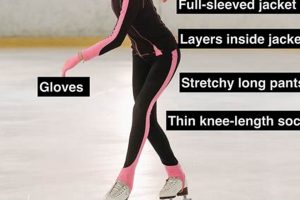
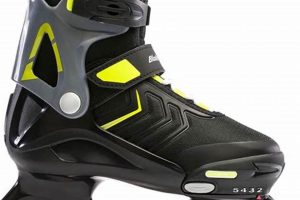
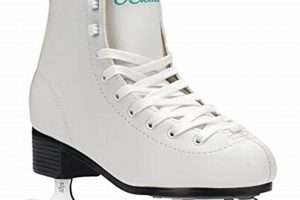
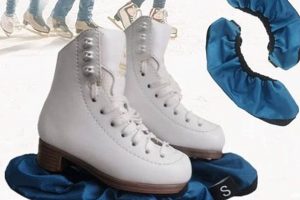
Protective footwear designed for gliding across ice surfaces are widely used in recreational and competitive ice skating. These implements typically feature a supportive boot attached to a blade made of hardened steel. The rigid boot provides ankle stability and control, while the blade facilitates movement across the ice. Different styles exist, tailored to specific skating disciplines such as figure skating, hockey, and recreational skating, each possessing unique blade geometries and boot characteristics.
The use of such equipment offers numerous benefits, including enhanced maneuverability and speed on ice. The hardened steel blade minimizes friction, allowing for efficient gliding. Furthermore, appropriate footwear provides critical support and protection, mitigating the risk of ankle injuries during activities that involve jumps, turns, and rapid movements. Historically, these items have evolved from rudimentary bone and wooden designs to sophisticated, performance-engineered models.
The following sections will delve deeper into the specific attributes, construction materials, and performance characteristics that differentiate various models of these types of specialized footwear available in the market.
Tips for Selecting Ice Skates
Selecting appropriate ice skates requires careful consideration to ensure both performance and safety. The following tips offer guidance on choosing a suitable pair.
Tip 1: Assess Intended Use. Different skating disciplines necessitate different skate characteristics. Figure skates feature a toe pick for jumps and spins, while hockey skates prioritize maneuverability and protection. Recreational skates offer a balance of comfort and support for general use.
Tip 2: Prioritize Proper Fit. A snug, but not overly tight, fit is essential. Ensure adequate ankle support to prevent injuries. Ill-fitting skates can cause blisters, discomfort, and compromise performance.
Tip 3: Evaluate Blade Quality. Higher-quality blades, often made of hardened steel, maintain their edges longer and provide superior glide. Inspect the blade for any imperfections or signs of damage before purchase.
Tip 4: Consider Boot Material. Leather boots offer durability and mold to the foot over time. Synthetic materials often provide enhanced support and water resistance. The choice depends on individual preferences and skating frequency.
Tip 5: Inspect Lacing System. A secure and reliable lacing system is crucial for maintaining ankle stability. Ensure the laces are strong and that the eyelets are firmly attached to the boot.
Tip 6: Seek Professional Advice. Consulting with a knowledgeable skate technician can provide valuable insights into selecting the most appropriate skates for individual needs and skill levels. A professional fitting ensures optimal comfort and performance.
Tip 7: Sharpen Blades Regularly. Sharpening the blades at regular intervals ensures optimal grip and control on the ice. The frequency of sharpening depends on usage and ice conditions.
By carefully considering these factors, individuals can select ice skates that provide both comfort and performance, enabling a safe and enjoyable skating experience.
The subsequent sections will explore the maintenance and care of ice skates to prolong their lifespan and maintain optimal performance.
1. Blade Material

The selection of blade material is a critical factor influencing the performance and durability of ice skates. The material properties directly affect the skater’s ability to glide, maneuver, and maintain control on the ice surface. Understanding these properties is essential when choosing appropriate equipment.
- Steel Hardness and Edge Retention
The hardness of the steel used in the blade directly impacts its ability to retain a sharp edge. Harder steels require less frequent sharpening, reducing maintenance requirements and ensuring consistent performance over time. However, excessively hard steels may be more brittle and prone to chipping under impact. For instance, high-carbon steel alloys are often selected to balance hardness and durability.
- Corrosion Resistance
Ice skate blades are constantly exposed to moisture, making corrosion resistance a crucial attribute. Stainless steel alloys are frequently employed to mitigate rust formation, extending the lifespan of the blade and maintaining its structural integrity. Regular drying and proper storage further contribute to corrosion prevention.
- Blade Flexibility and Vibration Dampening
The flexibility of the blade material influences its ability to absorb vibrations generated during skating. Excessive vibrations can reduce comfort and control. Certain materials, or blade designs, may incorporate features to dampen vibrations, leading to a smoother skating experience. A balance between flexibility and stiffness is required to optimize both comfort and performance.
- Manufacturing Process and Material Purity
The manufacturing process used to create the blade, including forging, casting, and heat treatment, significantly affects its final properties. Impurities within the steel can weaken the blade and compromise its performance. High-quality manufacturing processes ensure material purity and consistent mechanical properties throughout the blade.
Ultimately, the choice of blade material represents a trade-off between hardness, corrosion resistance, flexibility, and manufacturing costs. Understanding these trade-offs allows skaters to select equipment that aligns with their specific needs and skating style, contributing to enhanced performance and a more enjoyable experience. Selecting an ice skate requires consideration of the blade for optimal use and life.
2. Ankle Support

Ankle support is a critical design element in ice skates, directly influencing stability, control, and injury prevention. Its efficacy is determined by the skate’s construction and material properties, impacting the skater’s ability to execute maneuvers and maintain balance.
- Boot Height and Stiffness
The height of the skate boot, coupled with its inherent stiffness, provides resistance to ankle flexion and extension. Higher boots offer greater support, restricting range of motion and minimizing the risk of sprains. Stiffer materials, such as reinforced polymers, enhance this effect. However, excessive stiffness can limit mobility, hindering certain skating techniques. The appropriate balance depends on the skater’s skill level and skating style. Hockey skates generally have increased support than Figure skates.
- Lacing System Design
The lacing system plays a pivotal role in achieving a secure and customized fit, directly influencing ankle support. A well-designed system distributes pressure evenly across the foot and ankle, minimizing slippage and maximizing stability. Features such as power straps or reinforced eyelets further enhance security. Conversely, a poorly designed system can lead to pressure points, discomfort, and compromised ankle stability. A lace system can be simple like traditional laces or complex like BOA systems.
- Internal Padding and Liners
The internal padding and liners within the skate boot contribute to both comfort and support. Strategically placed padding around the ankle area provides cushioning and reduces friction, minimizing the risk of blisters and chafing. Additionally, supportive liners can enhance ankle stability by conforming to the shape of the foot and providing additional reinforcement. Advanced materials, such as heat-moldable foams, allow for a customized fit, further optimizing support and comfort.
- Hinge and Articulation Systems
In certain specialized skate designs, hinge or articulation systems may be incorporated to provide a controlled range of motion while maintaining ankle support. These systems allow for greater flexibility in specific directions, enabling advanced skating techniques while still limiting excessive or potentially injurious movements. The design and implementation of such systems require careful engineering to balance flexibility and stability effectively.
The integration of these design elements directly affects the overall performance and safety of ice skates. Understanding the relationship between ankle support and skate construction is crucial for selecting appropriate equipment and optimizing the skating experience. The trade-offs between stiffness, mobility, and comfort must be carefully considered to meet individual needs and preferences.
3. Boot Stiffness
Boot stiffness in ice skates significantly impacts performance, control, and protection. The rigidity of the boot dictates how effectively a skater can transfer energy to the blade and maintain stability during movements on the ice surface.
- Energy Transfer and Responsiveness
Stiffer boots facilitate a more direct transfer of energy from the skater’s leg muscles to the blade. This results in increased responsiveness and acceleration. Conversely, softer boots absorb more energy, reducing the skater’s efficiency and making it more difficult to execute powerful movements. Hockey skates, for example, often feature stiffer boots to enable rapid acceleration and quick turns.
- Ankle Support and Injury Prevention
A stiffer boot provides enhanced ankle support, minimizing the risk of sprains and other ankle injuries. The rigidity of the boot restricts excessive ankle movement, providing stability during jumps, turns, and other demanding maneuvers. However, excessively stiff boots can limit mobility and potentially lead to discomfort or chafing. Figure skates often have a balance of stiffness and flexibility to allow for complex movements while maintaining support.
- Skating Style and Skill Level
The optimal boot stiffness depends on the skater’s style and skill level. Beginner skaters may benefit from more flexible boots, which provide greater comfort and allow for a wider range of motion. Advanced skaters typically prefer stiffer boots, which offer greater control and responsiveness. Different skating disciplines, such as figure skating, hockey, and speed skating, often require different levels of boot stiffness to optimize performance.
- Material Composition and Construction
The material composition and construction of the skate boot significantly influence its stiffness. Boots made from stiff materials, such as carbon fiber or reinforced polymers, provide greater rigidity than those made from softer materials, such as leather. The construction of the boot, including the thickness and layering of materials, also affects its overall stiffness. Manufacturers often use advanced materials and construction techniques to optimize boot stiffness for specific skating styles and skill levels.
Boot stiffness represents a critical design consideration in ice skates. A well-chosen boot stiffness can enhance performance, improve control, and reduce the risk of injuries. By understanding the relationship between boot stiffness and skating dynamics, skaters can select the appropriate equipment to meet their specific needs and maximize their potential.
4. Blade Radius

The blade radius of ice skates, including those marketed under brand names, such as Franklin, significantly affects maneuverability, stability, and glide efficiency. This curvature, often referred to as the “rocker,” influences the contact area between the blade and the ice. A smaller radius creates a more pronounced curve, resulting in a smaller contact area and enhanced agility for quick turns and spins. Conversely, a larger radius yields a flatter blade profile, increasing the contact area and promoting greater stability and glide efficiency. Manufacturers consider intended use and skater skill level when determining the optimal blade radius for their products. For example, recreational skates and those designed for beginner ice skaters might feature a larger blade radius for added stability.
The selection of an appropriate blade radius is critical for optimizing performance in various skating disciplines. Figure skates typically exhibit a smaller radius to facilitate intricate footwork and jumps. Hockey skates often feature a more moderate radius, balancing maneuverability with speed and stability. A skater’s weight, skating style, and personal preference further influence the ideal blade radius. Improper radius selection can lead to instability, reduced control, and increased fatigue. Therefore, understanding the relationship between blade radius and skating dynamics is essential for selecting equipment that aligns with individual needs.
The understanding of blade radius is applicable across all brands and types of ice skates, including those marketed under “Franklin.” The effective use of the skates requires understanding how the radius affects performance and control. Altering the blade radius through professional sharpening or profiling can fine-tune performance characteristics. Consulting with experienced skate technicians or coaches is advisable for determining the most suitable blade radius and maintaining it through proper sharpening techniques. The careful consideration of blade radius contributes significantly to a safe, efficient, and enjoyable skating experience.
5. Lacing System
The lacing system is an integral component of ice skates, including models marketed under the “Franklin” brand, serving as the primary mechanism for securing the boot to the foot and providing crucial ankle support. A properly functioning lacing system ensures a snug and customizable fit, minimizing foot movement within the boot and maximizing energy transfer during skating. Insufficient or poorly designed lacing systems can lead to discomfort, reduced control, and an elevated risk of ankle injuries. In the context of youth hockey, where “Franklin” ice skates are often targeted, a secure and supportive lacing system is paramount for enabling young players to develop proper skating technique and prevent injuries.
Variations in lacing system design exist across different models and brands of ice skates. Traditional lacing systems involve fabric laces threaded through eyelets or hooks, allowing for precise adjustments along the entire length of the boot. Alternative systems, such as speed lacing or BOA systems, offer quicker and more convenient tightening mechanisms. However, the effectiveness of any lacing system hinges on the quality of the materials, the design of the eyelets or hooks, and the user’s ability to properly tighten and secure the laces. Consider a youth hockey player using “Franklin” ice skates with a subpar lacing system; the insufficient ankle support could hinder their ability to perform sharp turns and maintain balance, ultimately impacting their performance and increasing the likelihood of a fall.
In summary, the lacing system constitutes a crucial element of “Franklin” ice skates, contributing significantly to comfort, performance, and safety. Understanding the principles of effective lacing and selecting skates with a reliable lacing system are essential for optimizing the skating experience. Maintaining proper lacing tension and replacing worn or damaged laces are critical steps in ensuring the continued functionality and safety of the equipment. The appropriate choice and maintenance of the system promotes safety and enjoyment of the sport.
6. Size Precision
Size precision is a foundational element in ice skate selection, significantly impacting comfort, performance, and safety, especially concerning products like “Franklin ice skate,” often geared towards recreational use or youth hockey. An accurate fit ensures proper foot support and alignment within the boot, preventing slippage and minimizing the risk of blisters, chafing, or more severe injuries, such as ankle sprains. A “Franklin ice skate” purchased without careful consideration to size may lead to compromised control and instability on the ice, thereby affecting the user’s ability to learn and enjoy skating or effectively participate in hockey. For example, a skate that is too large forces the foot to compensate for the excess space, leading to fatigue and reduced maneuverability, whereas a skate that is too small can cause discomfort and restrict circulation.
The consequences of inaccurate sizing extend beyond immediate comfort. Over time, consistently wearing ill-fitting “Franklin ice skate” models can contribute to foot deformities or exacerbate pre-existing conditions. Precise sizing allows for optimal energy transfer from the skater’s leg to the blade, maximizing efficiency and control. A proper fit ensures that the foot remains securely positioned within the boot, enabling the skater to execute turns, stops, and other maneuvers with precision and confidence. Therefore, it is essential to consult sizing charts and, ideally, have the foot professionally measured to determine the correct size when purchasing “Franklin ice skate” models. This is crucial, as sizes can vary between brands and models.
In conclusion, size precision is not merely a matter of comfort but a critical determinant of performance, safety, and long-term foot health for users of “Franklin ice skate” and other ice skate brands. Challenges in achieving precise sizing may arise due to variations in foot shape and individual preferences, but adherence to sizing guidelines and professional fitting assistance can mitigate these challenges. Understanding the practical significance of size precision is paramount for ensuring a positive and safe skating experience.
Frequently Asked Questions About Franklin Ice Skates
The following questions address common inquiries and concerns related to the usage and maintenance of Franklin ice skates.
Question 1: What is the expected lifespan of Franklin ice skates?
The lifespan of Franklin ice skates is contingent upon usage frequency, ice conditions, and maintenance practices. With proper care, including regular blade sharpening and drying after each use, a pair of Franklin ice skates can typically last for several seasons of recreational or light competitive use. However, heavy or prolonged use may necessitate more frequent replacement.
Question 2: How should Franklin ice skate blades be sharpened?
Sharpening Franklin ice skate blades requires specialized equipment and expertise. It is recommended to have the blades professionally sharpened by a qualified skate technician. Attempting to sharpen the blades without proper training can damage the blade and compromise its performance. Frequency of sharpening depends on usage, but typically every 10-20 hours of ice time is sufficient.
Question 3: What is the appropriate method for cleaning and storing Franklin ice skates?
After each use, Franklin ice skates should be thoroughly dried with a clean cloth to prevent rust and corrosion. Remove the insoles to allow for complete drying. Store the skates in a well-ventilated area away from direct sunlight and extreme temperatures. Blade guards should be used to protect the blades during storage and transportation.
Question 4: How can the fit of Franklin ice skates be adjusted?
The fit of Franklin ice skates can be adjusted primarily through the lacing system. Ensure the laces are tightened evenly to provide adequate ankle support. For minor adjustments, consider using thicker or thinner socks. If significant fit issues persist, consult a skate technician for professional advice on adjustments or potential boot modifications.
Question 5: What types of activities are Franklin ice skates suitable for?
The suitability of Franklin ice skates depends on the specific model. Some models are designed for recreational skating, while others are geared towards youth hockey. Refer to the manufacturer’s specifications to determine the intended use of a particular model. Using skates for activities beyond their intended purpose can compromise safety and performance.
Question 6: Are replacement parts available for Franklin ice skates?
The availability of replacement parts for Franklin ice skates varies. Contact the manufacturer or authorized retailers to inquire about the availability of specific parts, such as laces, blades, or buckles. It is important to use only genuine replacement parts to ensure compatibility and maintain the integrity of the skates.
Proper care and maintenance are essential for maximizing the lifespan and performance of Franklin ice skates. Understanding the intended use and limitations of the skates is crucial for ensuring a safe and enjoyable skating experience.
The subsequent section will provide information on troubleshooting common issues encountered with Franklin ice skates.
Conclusion
This document has provided a comprehensive exploration of the multifaceted aspects inherent in ice skates, with a particular, though not exclusive, focus on “Franklin ice skate” products. From an analysis of materials and design to practical considerations of maintenance and fit, the objective has been to furnish readers with an informed perspective on equipment selection and usage. Understanding of these elements is crucial for optimal performance, safety, and longevity of use.
As ice skating continues to evolve as both a recreational pursuit and a competitive sport, the importance of informed decision-making regarding equipment remains paramount. Continued research and development in skate technology will undoubtedly yield further advancements, demanding ongoing diligence in understanding and adapting to these improvements to maximize user benefit.