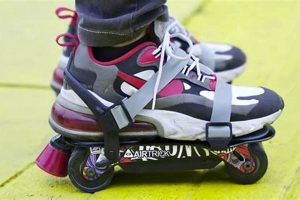
The action of affixing bladed footwear to one’s existing shoes allows for movement across frozen surfaces. This adaptation provides a temporary and often less stable alternative to traditional ice skates. A common example is the use of adjustable ice skate blades that can be secured to boots or shoes with straps.
This approach can provide a convenient entry point to ice skating, particularly for recreational use or when specialized skating boots are unavailable. Historically, such adaptations allowed for winter travel and resource acquisition in regions with frozen waterways. The ease of converting ordinary footwear into makeshift skates offered accessibility and practicality.
The subsequent sections will address the safety considerations, appropriate shoe types, and available designs when employing this method of ice traversal. Specific focus will be given to the limitations and suitability for various ice conditions and skating activities.
Guidance on Using Adaptable Ice Skates
This section provides crucial advice for individuals considering the use of adjustable bladed footwear for navigating frozen surfaces. Prioritize safety and proper equipment selection.
Tip 1: Footwear Integrity: Ensure the chosen shoe or boot provides firm ankle support. Avoid flexible footwear as it compromises stability and increases the risk of ankle injury. Leather boots or sturdy hiking shoes are preferable to running shoes.
Tip 2: Secure Attachment: Confirm the binding mechanism is adequately tightened and properly fitted to the footwear. Loose straps or buckles significantly reduce control and pose a safety hazard. Regularly check the tightness during use.
Tip 3: Ice Condition Assessment: Evaluate the ice surface for thickness, smoothness, and stability before venturing onto it. Avoid areas with thin ice, cracks, or uneven surfaces. The use of an ice pick for testing thickness is recommended.
Tip 4: Gradual Acclimation: Start with short periods of use on the ice to familiarize oneself with the altered balance and reduced control. Practice basic maneuvers near the edge before attempting more challenging movements.
Tip 5: Emergency Preparedness: Carry ice picks or similar safety devices to aid in self-rescue should a fall occur or the ice break. Familiarize oneself with self-rescue techniques beforehand.
Tip 6: Avoid Overconfidence: Recognize the limitations inherent in using adaptable ice skates. These devices do not offer the same level of performance or control as traditional ice skates. Refrain from attempting advanced skating techniques.
Tip 7: Supervision and Assistance: When possible, skate with a companion or within sight of others. This provides an additional layer of safety in case of an accident.
Adherence to these guidelines can significantly reduce the risk of injury and enhance the safety of using adaptable bladed footwear.
The following sections will delve into the regulatory aspects and long-term maintenance associated with these devices.
1. Attachment Security

Attachment security is a primary determinant of the operational safety and effectiveness of affixing bladed runners to shoes. Inadequate or compromised attachment directly translates into reduced stability, diminished control, and a significantly increased likelihood of falls. The method by which the blade is secured to the footwear must withstand the dynamic forces exerted during skating, including lateral movements, sudden stops, and weight shifts. Failure to maintain a secure attachment point can lead to unpredictable movements, hindering the user’s ability to maintain balance and control direction.
A practical example of the importance of attachment security is observed in emergency stopping situations. A securely fastened blade allows for the effective application of braking techniques, enabling the skater to arrest their momentum in a controlled manner. Conversely, a loose or improperly secured blade may shift unexpectedly, rendering braking maneuvers ineffective and potentially exacerbating the risk of collision or injury. Furthermore, variations in ice surface conditions, such as encountering a patch of rough ice, place additional stress on the attachment mechanism. A robust and reliable attachment system is essential to absorb these shocks and maintain blade alignment.
In summary, the integrity of the attachment between the bladed runner and the shoe is paramount for safe and effective use. Any compromise in attachment security undermines the user’s ability to control movement and increases the risk of injury. Therefore, diligent inspection and maintenance of the attachment mechanism are critical responsibilities for anyone employing this method of ice traversal. The challenges in ensuring secure attachment stem from the variability in shoe types and sizes, emphasizing the need for adjustable and adaptable designs. This understanding directly links to the broader theme of responsible and informed use of adapted ice skating equipment.
2. Ankle Support

Ankle support plays a critical role when bladed runners are affixed to shoes, acting as a fundamental component for safe and efficient ice skating. The structural integrity of the footwear directly impacts the skater’s ability to maintain balance, control movement, and execute maneuvers. Inadequate ankle support can lead to instability, increasing the risk of ankle sprains, fractures, and falls. For instance, using running shoes with adaptable ice skates significantly compromises ankle stability due to the shoe’s inherent flexibility, leading to diminished control during turns and increased susceptibility to injuries on uneven ice surfaces.
The rigid support provided by a sturdy boot, when combined with secure straps, effectively transfers the skater’s weight and movements to the blade. This enhances responsiveness and control, allowing for more precise turns, stops, and overall maneuverability. Conversely, without adequate ankle support, the skater may compensate by overusing other muscle groups, leading to fatigue and potential strain. A practical example lies in the use of hiking boots as a foundation. Their inherent ankle support, combined with adaptable ice skates, offers a more secure and controlled skating experience compared to less supportive footwear. This understanding is particularly relevant for individuals new to ice skating or those seeking a less specialized and more versatile option.
In conclusion, the quality of ankle support is inextricably linked to the safe and effective use of adapted ice skating equipment. The selection of appropriate footwear, characterized by robust ankle support, mitigates the risk of injury and enhances the overall skating experience. The challenge lies in identifying footwear that provides sufficient support while also accommodating the adaptable binding mechanism. Recognizing the importance of ankle support and selecting footwear accordingly is therefore paramount for responsible use.
3. Ice Conditions

Ice conditions represent a crucial factor affecting the safe and effective operation of adaptable ice skating devices. The integrity and surface characteristics of the ice directly dictate the feasibility and potential hazards associated with their use. Thin ice, exhibiting insufficient thickness to support weight, presents a significant risk of breakage and submersion. Uneven ice, characterized by cracks, ridges, or debris, impairs maneuverability and increases the likelihood of falls. For example, attempting to traverse thin ice with bladed runners affixed to shoes carries the immediate and severe risk of falling through, potentially leading to hypothermia or drowning. Similarly, navigating rough ice significantly elevates the risk of losing balance and sustaining injuries. The assessment and understanding of ice conditions are therefore not merely advisable, but fundamental to safe operation.
The choice of footwear employed in conjunction with adaptable ice skates should also be informed by prevailing ice conditions. Sturdy, waterproof boots offer greater protection against cold and moisture compared to standard shoes, enhancing comfort and mitigating the risk of frostbite when encountering wet or slushy ice. The sharpness of the blade must also be considered in relation to the ice’s hardness. Softer ice may require a less aggressively sharpened blade to prevent excessive digging and loss of control. Real-world examples include instances where experienced individuals assess ice thickness using ice picks before venturing out and alter their skating technique based on surface irregularities.
In summary, the suitability of using adaptable ice skating devices is heavily dependent on the prevailing ice conditions. Thorough evaluation of ice thickness, surface quality, and environmental factors is paramount to mitigating risk and ensuring safe operation. Challenges arise from the inherent variability of natural ice formations and the potential for rapid changes in conditions. Emphasizing the link between ice conditions and the specific limitations of adapted equipment is essential for promoting responsible and informed use.
4. Blade Sharpness

Blade sharpness directly impacts the performance and safety of adaptable ice skating devices. Insufficiently sharp blades hinder the ability to grip the ice, resulting in reduced control and increased effort to maintain momentum. Conversely, excessively sharp blades may “dig” into the ice, creating instability and potentially causing falls. Therefore, maintaining an optimal blade sharpness is critical for efficient and safe utilization. Consider the example of navigating a turn; a dull blade will slide laterally, making it difficult to execute a controlled curve, while an overly sharp blade might catch, causing a sudden loss of balance. The optimal sharpness represents a balance between these two extremes, allowing for a controlled grip and smooth glide.
The type of ice encountered also influences the desired blade sharpness. Softer ice may require a less aggressive edge, while harder, colder ice may benefit from a sharper profile. Regularly assessing the blade’s condition and adjusting sharpness accordingly is crucial. This is often achieved through the use of specialized sharpening tools and techniques. Moreover, the frequency of sharpening depends on the quality of the blade material and the intensity of use. High-quality steel blades retain their edge longer than cheaper alternatives, requiring less frequent maintenance. A practical application is regular blade checks before and after each use, along with occasional professional sharpening to maintain the correct profile and edge.
In conclusion, blade sharpness is an essential element in the safe and effective utilization of adaptable ice skating devices. The interaction between blade sharpness, ice conditions, and user skill dictates the overall skating experience. The challenge lies in achieving and maintaining the optimal sharpness for the specific ice and equipment being used. Recognizing the importance of blade sharpness and implementing a consistent maintenance routine is thus imperative for responsible ice skating with these devices.
5. Adjustability Range
The adjustability range of bladed runners designed for attachment to shoes is a critical factor influencing their versatility, safety, and overall suitability for diverse users. This parameter dictates the range of shoe sizes and styles the device can accommodate, thereby impacting its accessibility and performance.
- Shoe Size Compatibility
The primary facet of adjustability range pertains to the spectrum of shoe sizes that the binding mechanism can securely accommodate. A broader range increases the likelihood that the device can be used with existing footwear, reducing the need for specialized equipment. Limited adjustability necessitates precise matching of shoe size to the device, potentially excluding users with shoe sizes outside the specified range. For example, an adjustable skate designed for childrens sizes may be wholly unsuitable for adult footwear.
- Shoe Style Accommodation
Different shoe styles present varying profiles and dimensions, affecting the secureness of the attachment. The adjustability range must account for variations in sole thickness, toe box height, and heel shape. A system designed solely for low-profile athletic shoes may prove incompatible with bulky winter boots, compromising stability and control. Adjustable straps or ratcheting mechanisms contribute to accommodating diverse shoe styles.
- Attachment Security Maintenance
As shoe size or style varies, the tightness and security of the attachment must be maintained. A well-designed adjustment mechanism will allow for precise fine-tuning of the fit, ensuring that the bladed runner remains firmly affixed to the shoe throughout use. Inadequate adjustment can lead to slippage or loosening of the attachment, significantly increasing the risk of falls and injuries.
- Ankle Support Considerations
The adjustability range must not compromise the level of ankle support provided by the footwear. Over-tightening straps to compensate for inadequate adjustment can restrict circulation and discomfort, while under-tightening can lead to instability. The adjustability features should ideally enhance, or at least not detract from, the inherent ankle support of the user’s footwear.
In summary, the adjustability range significantly influences the practicality and safety of affixing bladed runners to shoes. A well-engineered adjustment system maximizes compatibility with diverse footwear, maintains attachment security, and preserves adequate ankle support. The inherent limitations of adjustability range underscore the importance of careful product selection and adherence to manufacturer guidelines for optimal performance and risk mitigation.
6. User Skill
The effective and safe operation of bladed runners affixed to shoes is fundamentally linked to user skill. Competency in ice skating techniques, including balance, propulsion, turning, and stopping, directly correlates with the user’s ability to control the equipment and mitigate the risk of injury. The inherent instability associated with attaching blades to standard footwear, as opposed to purpose-built ice skates, amplifies the importance of a pre-existing skill set. For instance, an individual with no prior skating experience attempting to use these devices on a busy frozen pond is significantly more likely to fall and sustain injuries than someone with years of skating practice.
The relationship between user skill and the success of using adaptable ice skates can be observed in various real-world scenarios. Recreational skaters with a background in figure skating or hockey often find it easier to adapt to the limitations of these devices due to their established balance and edge control. Conversely, novices may struggle to maintain their balance even on relatively smooth ice surfaces, necessitating a period of supervised practice and instruction. The ability to assess ice conditions and adjust skating techniques accordingly is another critical skill that influences the safety and effectiveness of this equipment. Experienced skaters can instinctively modify their stride and weight distribution to compensate for uneven or slippery patches of ice, minimizing the risk of falls. An understanding of basic first aid and self-rescue techniques is also vital, particularly when skating on natural ice formations.
In conclusion, user skill is a non-negotiable component of safe and effective ice skating with adaptable devices. While the equipment itself plays a role, it cannot compensate for a lack of fundamental skating proficiency. The challenge lies in accurately assessing one’s own skill level and engaging in appropriate training and practice before venturing onto the ice. Recognizing the limitations of both the equipment and one’s own abilities is crucial for minimizing risk and ensuring a positive skating experience. Emphasis on skill development, coupled with responsible equipment selection, should be prioritized to promote safety and enjoyment.
Frequently Asked Questions
The following section addresses common inquiries regarding the practice of attaching bladed runners to standard footwear for ice skating.
Question 1: What are the primary safety concerns when utilizing bladed runners affixed to shoes?
The principal hazards include inadequate ankle support, compromised attachment security, and the inherent instability resulting from the non-rigid connection between the blade and the foot. Ice conditions, user skill, and blade sharpness contribute significantly to the overall risk profile.
Question 2: Is there a recommended type of footwear for use with adaptable ice skates?
Sturdy boots offering substantial ankle support are preferable. Leather hiking boots or work boots often provide a suitable foundation. Flexible footwear, such as running shoes, is strongly discouraged due to the lack of ankle stability.
Question 3: How does one ensure a secure attachment of the blade to the footwear?
The binding mechanism must be appropriately tightened and fitted to the footwear. Regular inspection of straps, buckles, and other fastening components is essential. Periodic adjustments during use may be necessary to maintain a secure connection.
Question 4: What ice conditions are considered unsafe for skating with adaptable ice skates?
Thin ice, characterized by insufficient thickness to support weight, presents an obvious hazard. Uneven ice surfaces, containing cracks, ridges, or debris, also increase the risk of falls. Always assess ice conditions before venturing onto the surface.
Question 5: Are adaptable ice skates suitable for all skill levels?
These devices are generally more suitable for individuals with some prior ice skating experience. Novices may find it challenging to maintain balance and control due to the inherent instability of the setup. Supervised practice is recommended for beginners.
Question 6: What is the recommended frequency for sharpening the blades on adaptable ice skates?
The frequency of sharpening depends on the blade material, ice conditions, and usage intensity. Regular inspection of the blade’s edge is recommended. Professional sharpening should be performed as needed to maintain optimal performance.
These FAQs serve to highlight the critical factors requiring consideration when using adaptable ice skates. Responsible use requires careful attention to safety precautions and equipment maintenance.
The subsequent section will address regulatory considerations and legal aspects associated with these devices.
Considerations for Using Bladed Runners Affixed to Footwear
This article has explored critical factors surrounding the practice of “strap on ice skates for shoes.” Emphasis has been placed on safety, encompassing footwear selection, attachment security, ice condition assessment, and user skill. The inherent limitations of this approach, compared to traditional ice skates, have been consistently underscored, particularly concerning ankle support and maneuverability. Blade sharpness and adjustability have been highlighted as vital elements influencing performance and safety. These combined aspects should inform a comprehensive risk assessment prior to utilization.
In light of these factors, the decision to “strap on ice skates for shoes” should not be taken lightly. It necessitates a thorough understanding of the equipment’s capabilities and limitations, coupled with a realistic appraisal of one’s own skating proficiency and environmental conditions. The information presented serves as a foundation for responsible decision-making, encouraging a balanced approach that prioritizes safety and mitigates potential hazards. Further research and adherence to local regulations are encouraged before engaging in this activity.