



The divergence between quad skates and inline skates centers primarily on wheel arrangement and boot design. Quad skates, traditionally known as roller skates, feature two wheels in the front and two in the back, providing a wider, more stable base. Conversely, inline skates, often called rollerblades, arrange all wheels in a single line down the center of the boot. This fundamental structural difference impacts maneuverability, balance, and intended use.
Understanding the distinctions provides individuals with insights for informed equipment selection aligned with specific recreational or athletic pursuits. Historically, quad skates were initially prevalent, offering relative ease of use for beginners. Inline skates emerged later, facilitating greater speed and agility, appealing to those seeking fitness training, hockey, or aggressive skating styles. The evolutionary path highlights advancements in design and functionality tailored to diverse user needs.
Subsequent sections will elaborate on specific design features, performance characteristics, and recommended usage scenarios for each type of skate, providing a detailed comparison of wheel configuration, boot support, braking mechanisms, and intended applications. This comprehensive examination aims to equip the reader with a complete understanding of the key factors to consider when choosing between quad and inline skates.
Essential Considerations for Choosing Between Quad and Inline Skates
Selecting the appropriate skate requires careful assessment of individual skill level, intended use, and preferred skating style. The following considerations provide guidance for informed decision-making.
Tip 1: Assess Skill Level: Quad skates offer greater inherent stability due to their wider base, making them suitable for beginners or those prioritizing balance. Inline skates demand more initial stability and coordination.
Tip 2: Consider Intended Use: For recreational skating on smooth surfaces, either skate type is viable. For fitness training, speed skating, or hockey, inline skates are generally preferred due to their enhanced speed and maneuverability.
Tip 3: Evaluate Ankle Support: Inline skates typically offer more rigid ankle support, crucial for high-impact activities or those with ankle stability concerns. Quad skates often provide greater freedom of movement.
Tip 4: Examine Wheel Hardness: Softer wheels offer better grip and a smoother ride on rough surfaces, while harder wheels provide greater speed and durability on smooth surfaces. The optimal hardness depends on the skating environment.
Tip 5: Prioritize Braking System: Quad skates traditionally feature a toe stop brake, while inline skates typically utilize a heel brake. Each system requires practice to master, and personal preference should guide the selection.
Tip 6: Evaluate Comfort and Fit: Proper fit is paramount to prevent blisters and injuries. Try on skates with appropriate socks and ensure a snug, but not restrictive, fit. Check for pressure points and ensure adequate toe room.
Tip 7: Consider Wheel Configuration: Inline skates offer various wheel configurations, such as triskates (three wheels) for maneuverability or skates with larger wheels for increased speed. Selecting the appropriate configuration optimizes performance.
By thoughtfully addressing these considerations, individuals can maximize their skating experience and minimize the risk of injury. The informed selection process is fundamental to achieving optimal performance and enjoyment.
The subsequent sections will delve into advanced techniques, maintenance procedures, and safety protocols applicable to both quad and inline skates, offering a comprehensive guide for skaters of all levels.
1. Wheel Arrangement
Wheel arrangement is a primary differentiator, fundamentally shaping the performance characteristics and intended applications of quad and inline skates. The configuration directly influences stability, maneuverability, and the learning curve associated with each skate type. Examination of this aspect reveals core aspects of the distinctions.
- Quad Skates: Two-by-Two Configuration
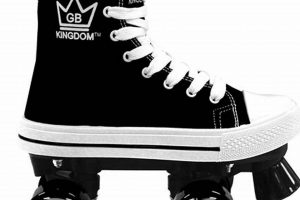
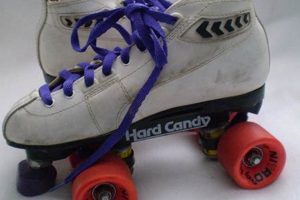
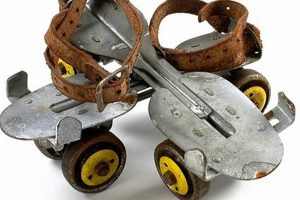
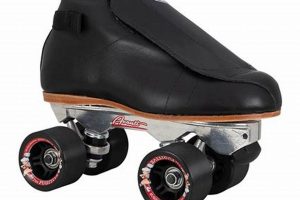
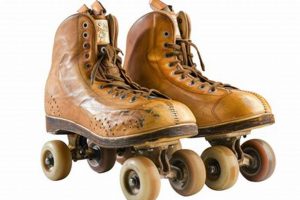
Quad skates feature two wheels positioned at the front and two at the rear of the boot, forming a rectangular or square base. This arrangement provides a wider contact area with the surface, resulting in increased lateral stability. The two-by-two configuration makes quad skates generally easier for beginners to learn, as the broader base requires less initial balancing skill. This design is prevalent in recreational skating, rink skating, and roller derby.
- Inline Skates: In-Line Configuration
Inline skates arrange all wheels in a single line along the center of the boot. This configuration reduces the contact area with the surface, promoting increased speed and agility. However, it necessitates greater balancing skill and ankle strength. Inline skates are favored for fitness skating, speed skating, hockey, and aggressive skating disciplines where maneuverability and speed are paramount.
- Impact on Stability and Maneuverability
The distinct wheel arrangements directly influence stability and maneuverability. The two-by-two configuration of quad skates enhances lateral stability, making them less prone to tipping. The inline configuration prioritizes maneuverability, enabling sharper turns and quicker acceleration at the expense of initial stability. Skaters accustomed to one configuration may experience a noticeable difference when transitioning to the other.
- Adaptations and Variations
While the basic quad and inline configurations are standard, variations exist. Some inline skates utilize three wheels (triskates) for increased maneuverability, while others employ larger wheel diameters for enhanced speed and roll-over capability. Similarly, quad skates may feature adjustable toe stops or different wheel hardness levels to tailor performance characteristics. These adaptations further illustrate how wheel arrangement can be optimized for specific skating styles and preferences.
The contrasting wheel arrangements between quad and inline skates dictate their respective strengths and weaknesses, shaping the user experience and influencing suitability for various skating disciplines. These disparities underscore why wheel arrangement is a crucial consideration when differentiating between the two skate types.
2. Boot Structure

The boot structure constitutes a critical element differentiating quad skates and inline skates. It directly impacts ankle support, comfort, performance, and the overall skating experience. Variations in design and materials contribute significantly to the unique characteristics of each skate type.
- Ankle Support and Cuff Height
Inline skates typically incorporate a higher, more rigid cuff that extends further up the ankle, providing substantial lateral support. This design is conducive to maintaining proper alignment and preventing ankle roll, particularly during high-impact activities or when executing sharp turns. Quad skates often feature a lower-cut boot, allowing for greater ankle flexibility. While this enhances maneuverability for certain skating styles, it provides less direct ankle support. The selection of boot height and cuff rigidity hinges on the skater’s needs and the desired skating style.
- Materials and Construction
The materials employed in boot construction vary considerably between quad and inline skates, influencing weight, durability, and overall comfort. Inline skate boots commonly integrate a combination of hard plastic shells, reinforced nylon, and padded liners to provide a secure, responsive fit. Quad skate boots often utilize leather or synthetic materials, prioritizing flexibility and a traditional aesthetic. The internal padding and moisture-wicking properties of the liner also differ, affecting breathability and comfort during extended use. These material choices directly impact the skate’s overall weight and the level of protection afforded to the skater’s foot.
- Closure Systems and Fit Adjustments
Closure systems differ noticeably between the two skate types, affecting the precision and ease of securing the boot to the foot. Inline skates frequently incorporate a combination of laces, buckles, and power straps to achieve a snug, customizable fit that minimizes heel lift and maximizes power transfer. Quad skates typically rely primarily on laces for closure, allowing for a more adaptable fit. The ability to fine-tune the fit is essential for both comfort and performance. Adjustable features like heat-moldable liners, common in some inline skate models, further enhance customization.
- Sole and Frame Integration
The manner in which the boot integrates with the sole and frame (the chassis holding the wheels) differs substantially. Inline skates typically feature a tightly integrated boot and frame, often riveted or bolted together to maximize energy transfer and responsiveness. Quad skates generally involve a boot mounted onto a separate plate, allowing for some degree of flex and vibration absorption. The rigidity or flexibility of this connection point influences the skate’s overall handling characteristics and the skater’s ability to feel the surface.
These factors are interdependent, contributing to the distinct performance profiles of quad and inline skates. Consequently, boot structure is a pivotal point of divergence between the two skate types, influencing everything from stability and control to comfort and longevity. Understanding these differences is key to making an informed choice aligned with individual skating objectives and preferences.
3. Maneuverability

Maneuverability, defined as the capacity to change direction and speed efficiently, constitutes a significant differentiating factor between quad skates and inline skates. The distinct wheel configurations and boot designs directly impact the agility and responsiveness of each skate type.
- Wheelbase and Turning Radius
Inline skates, with their single line of wheels, generally possess a shorter wheelbase than quad skates. This reduced wheelbase allows for tighter turning radii and quicker directional changes. Quad skates, due to their wider wheel configuration, exhibit a larger turning radius, necessitating more deliberate movements for directional shifts. Examples include executing slalom maneuvers or navigating crowded environments where rapid adjustments are critical. The shorter wheelbase of inline skates provides an advantage in these scenarios.
- Edge Control and Lean Angle
Inline skates facilitate greater edge control, enabling skaters to lean into turns more aggressively. The in-line wheel arrangement concentrates pressure along the edges of the wheels, providing enhanced grip and responsiveness. This allows for carving turns with precision and maintaining higher speeds while cornering. Quad skates offer a different type of edge control characterized by a more stable, less agile feel. This distinction is apparent in disciplines like roller hockey, where inline skates’ superior edge control translates to quicker transitions and enhanced puck handling.
- Agility in Confined Spaces
Inline skates excel in navigating confined spaces and executing abrupt changes in direction. The compact wheel arrangement permits greater freedom of movement and responsiveness, making them well-suited for urban environments or areas with obstacles. Quad skates, with their wider footprint, can be less maneuverable in such situations, requiring more space for turning and navigating obstacles. This difference becomes evident in freestyle skating or jam skating, where inline skates’ agility provides a competitive edge.
- Impact on Skating Style
The maneuverability characteristics of each skate type influence the skater’s style and technique. Inline skaters often adopt a more dynamic, fluid style characterized by sharp turns and rapid transitions. Quad skaters tend to employ a more stable, controlled approach, emphasizing balance and smooth movements. Ultimately, the choice between quad and inline skates depends on individual preferences and the desired skating style. Some skaters may prioritize agility and responsiveness, while others value stability and control.
The interplay between wheel configuration, boot design, and skating technique results in distinct maneuverability profiles for quad and inline skates. These differences in agility and responsiveness are significant considerations when selecting equipment for specific skating disciplines or personal preferences. Evaluating these aspects of maneuverability provides a clearer understanding of the fundamental divergence between the two skate types.
4. Stability
Stability, a crucial aspect of the skating experience, is intrinsically linked to the structural differences between quad skates and inline skates. It determines the ease of maintaining balance and control, significantly impacting the learning curve and the suitability of each skate type for various skill levels and activities.
- Wheel Configuration and Balance
Quad skates, characterized by their two-by-two wheel arrangement, offer a wider base of support, inherently increasing lateral stability. This configuration reduces the likelihood of tipping sideways, providing a more secure feel, particularly for beginners. Inline skates, with all wheels aligned in a single line, necessitate greater core strength and balance to maintain upright posture. The reduced contact area with the ground requires constant adjustments to prevent instability. The wheel configuration is the cornerstone of understanding these stability differences.
- Ankle Support and Control
Inline skates generally provide more rigid ankle support through their higher cuffs, aiding in maintaining proper ankle alignment and preventing unwanted lateral movement. This increased support can improve stability, especially during high-speed maneuvers or uneven surfaces. Quad skates often feature lower-cut boots, offering greater ankle flexibility but less direct support. While this enhances maneuverability for certain skating styles, it can compromise stability for individuals with weaker ankles or those new to skating.
- Surface Contact and Equilibrium
The broader surface contact area of quad skates enhances equilibrium, particularly on less-than-ideal skating surfaces. Minor imperfections in the terrain are less likely to cause instability due to the distributed weight. Inline skates, with their narrower contact patch, are more sensitive to uneven surfaces, requiring greater attentiveness and balance adjustments to maintain stability. This difference in surface contact directly affects the skater’s ability to maintain equilibrium and control, particularly in outdoor environments.
- Learning Curve and Skill Acquisition
Due to the inherent stability provided by their design, quad skates generally present a gentler learning curve for novice skaters. The wider base makes it easier to develop fundamental balance skills. Inline skates, requiring more initial balancing skill, can present a steeper learning curve. Mastering the techniques for maintaining stability and control on inline skates demands dedication and practice. This difference in the learning curve directly influences the initial appeal and accessibility of each skate type.
The interplay between wheel configuration, ankle support, surface contact, and the learning curve underscores the fundamental differences in stability between quad and inline skates. The inherent stability of quad skates makes them well-suited for beginners and recreational skaters, while the enhanced maneuverability and potential for speed of inline skates cater to more experienced individuals seeking a greater challenge. This distinction in stability is a crucial consideration when determining which type of skate best aligns with individual needs and preferences.
5. Intended Use

The intended application of roller skates or rollerblades significantly influences the selection process. Varied design elements cater to distinct activities, rendering one skate type more suitable than the other depending on the specific context. This dictates equipment choice, skating style, and performance optimization.
- Recreational Skating
For casual recreational skating on smooth, paved surfaces, either quad or inline skates may be appropriate. Quad skates offer stability and a retro aesthetic, appealing to beginners and those prioritizing leisurely enjoyment. Inline skates provide speed and maneuverability, suiting individuals seeking a more active workout. Therefore, the selection for recreational use hinges on individual preference for stability versus agility.
- Fitness and Speed Skating
Inline skates are generally preferred for fitness and speed skating due to their streamlined design and ability to achieve higher velocities. The in-line wheel configuration minimizes rolling resistance, allowing for efficient energy transfer. Specialized inline speed skates further enhance performance through aerodynamic boot designs and larger wheel diameters. Quad skates, while usable for fitness, are less efficient for sustained high-speed skating.
- Roller Hockey and Aggressive Skating
Roller hockey predominantly utilizes inline skates due to the need for agility, rapid acceleration, and precise edge control. The inline design facilitates quick stops, sharp turns, and efficient power transfer essential for competitive play. Aggressive skating, involving jumps, grinds, and other technical maneuvers, also favors inline skates for their superior impact absorption and specialized frame designs capable of withstanding extreme forces.
- Roller Derby and Rink Skating
Roller derby is primarily performed on quad skates, capitalizing on their stability and maneuverability within the confines of a roller rink. The wider base of support offered by quad skates facilitates blocking and strategic positioning within the pack. Rink skating, encompassing various styles such as artistic skating and jam skating, often incorporates both quad and inline skates depending on the specific discipline and individual preference.
The correlation between intended use and skate type highlights the performance-oriented design of each platform. While personal preference plays a role, certain activities inherently favor specific characteristics offered by either quad or inline skates. Matching the equipment to the intended use is paramount for optimizing performance, enhancing safety, and maximizing enjoyment of the skating experience.
6. Braking System

The braking system constitutes a fundamental divergence between quad skates and inline skates, impacting control, safety, and the learning curve. This distinction extends beyond mere mechanism; it influences skating style and the user’s perception of safety. The effect of braking mechanism design on the usability and accessibility of each skate type illustrates a core difference.
Quad skates traditionally utilize a toe stop brake, positioned at the front of the skate. Activation requires tilting the skate forward, applying pressure to the toe stop against the skating surface. While seemingly simple, mastering this technique necessitates practice and coordination. In contrast, inline skates predominantly employ a heel brake, located at the rear of the skate. Activating the heel brake involves extending one leg forward and pressing the heel brake against the ground. This method, often perceived as more intuitive, is typically easier for beginners to learn and use. This difference in braking mechanism has a direct influence on the learning curve for each skate type. For example, a beginner using quad skates might struggle initially with the toe stop brake, leading to a slower pace of skill acquisition compared to a beginner on inline skates using the heel brake.
The practical significance of understanding these differences lies in informed equipment selection and safe skating practices. Recognizing the strengths and limitations of each braking system allows skaters to choose the type that best aligns with their skill level, skating environment, and personal preferences. Whether prioritizing the familiar heel brake of inline skates or the potentially more versatile toe stop of quad skates, awareness of these distinctions contributes to a safer and more controlled skating experience. It is essential to understand that both braking systems require practice to master, and the choice between them can significantly impact the skater’s confidence and control, representing a substantial element in what delineates the experience of using each type of skate.
Frequently Asked Questions
The following section addresses common inquiries regarding the distinctions between quad skates (roller skates) and inline skates (rollerblades), providing concise and informative answers.
Question 1: Are roller skates (quad skates) easier to learn than rollerblades (inline skates)?
Quad skates generally offer greater inherent stability due to their wider base, potentially facilitating an easier initial learning experience for beginners. However, individual aptitude and prior experience can significantly influence the learning curve for either skate type.
Question 2: Which type of skate is faster, roller skates or rollerblades?
Inline skates typically achieve higher speeds compared to quad skates. The in-line wheel configuration minimizes rolling resistance, enabling more efficient energy transfer and greater velocity. Specialized inline speed skates further enhance this capability.
Question 3: What are the primary benefits of using rollerblades for fitness?
Rollerblades provide a full-body workout, engaging multiple muscle groups and promoting cardiovascular fitness. The activity also enhances balance, coordination, and lower body strength. The high-impact nature necessitates proper technique and protective gear.
Question 4: Are roller skates suitable for outdoor use, or are they primarily designed for indoor rinks?
Roller skates are adaptable to both indoor and outdoor environments. The choice of wheel hardness influences performance; softer wheels offer better grip on rough surfaces, while harder wheels excel on smooth surfaces. Outdoor skating may require more frequent maintenance.
Question 5: Is one type of braking system (toe stop vs. heel brake) inherently safer than the other?
Neither braking system is inherently safer. The effectiveness of each depends on the skater’s skill, experience, and the specific situation. Both toe stop and heel brakes require practice to master proper technique and ensure reliable stopping power. Personal preference also dictates brake system selection.
Question 6: How does ankle support differ between roller skates and rollerblades, and why is this important?
Rollerblades typically offer more rigid ankle support due to their higher cuffs. This provides greater stability and reduces the risk of ankle injuries, particularly during high-impact activities. Roller skates often feature lower-cut boots, allowing for greater ankle flexibility but less direct support. Ankle support is crucial for maintaining proper alignment and preventing ankle roll.
In summary, the selection between quad and inline skates depends on factors such as desired speed, intended use, and individual skill level. Understanding the inherent characteristics of each skate type facilitates an informed decision, promoting a safe and enjoyable skating experience.
Subsequent sections will explore the historical evolution of roller skating and rollerblading, providing a context for their current popularity and diverse applications.
Conclusion
The examination reveals that “what’s the difference between roller skates and rollerblades” extends beyond mere aesthetics. The divergence in wheel configuration, boot structure, maneuverability, stability, intended use, and braking systems fundamentally defines the distinct performance characteristics of each skate type. This understanding allows for informed equipment selection aligned with specific skating objectives and skill levels.
The continuous evolution of both quad and inline skates suggests an ongoing refinement of design and functionality. As technology advances, these improvements will likely further optimize performance and enhance user experience. Readers are encouraged to consider their individual needs and preferences when selecting between these two distinct forms of recreational and athletic equipment, ultimately contributing to a safer and more fulfilling skating journey.
![Rolling Fun: Roller Skate Minnie Mouse Toy [Review] | How to Skateboard: A Beginner's Guide to Your First Board & Tricks](https://cruzskateshop.com/wp-content/uploads/2026/05/th-364-300x200.jpg "Rolling Fun: Roller Skate Minnie Mouse Toy [Review] How to Skateboard: A Beginner's Guide to Your First Board & Tricks")