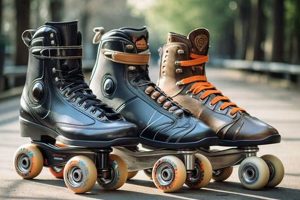
These components are essential safety and performance features found on most roller skates, typically situated at the front of the boot. They are designed as braking mechanisms and aids for performing specific maneuvers. A standard application involves pressing them against the skating surface to decelerate or halt movement.
Their presence significantly enhances control and stability, particularly beneficial for beginners and skaters navigating varied terrains. Historically, their design has evolved from simple rubber blocks to sophisticated, adjustable systems employing diverse materials to optimize grip and durability. The implementation of these devices expands the range of achievable skating techniques and contributes substantially to user safety by facilitating rapid and controlled stops.
The following sections will delve into the different types available, the materials used in their construction, and crucial considerations for selecting the most suitable option based on individual skating styles and needs. Furthermore, proper installation and maintenance procedures will be outlined to ensure optimal performance and longevity.
Tips for Optimal Use and Maintenance
The following recommendations will aid in maximizing the performance and lifespan of these crucial skating components.
Tip 1: Selection Based on Skating Style: Choose models specifically designed for the intended skating discipline. Artistic skaters often require smaller, more agile designs, while roller derby necessitates durable, high-grip options.
Tip 2: Regular Inspection: Examine for wear and tear before each skating session. Cracked, excessively worn, or loose components should be replaced immediately to prevent accidents.
Tip 3: Proper Adjustment: Ensure correct height adjustment. Too low, and they will drag; too high, and braking effectiveness is compromised. Aim for minimal clearance when the skater is in a neutral stance.
Tip 4: Material Considerations: Polyurethane compounds offer a balance of grip and longevity. Softer compounds provide superior grip but may wear down faster, while harder compounds offer increased durability at the expense of grip.
Tip 5: Consistent Cleaning: Remove dirt and debris after each use. Accumulated grime can reduce grip and accelerate wear. A simple wipe-down with a damp cloth is typically sufficient.
Tip 6: Thread Maintenance: Periodically check the mounting threads for damage or looseness. Use appropriate tools to tighten securely, avoiding over-tightening, which can strip the threads.
Tip 7: Consider the Surface: Different surfaces will affect wear rates. Skating on rough asphalt will wear them down more quickly than skating on a smooth rink surface.
Adhering to these guidelines will promote safety, improve performance, and extend the usable life of these critical components.
The next section will address common problems encountered with these items and offer troubleshooting solutions.
1. Material Composition

The performance and lifespan of these components are inextricably linked to their material composition. The choice of materials directly impacts attributes such as grip, durability, and responsiveness. For example, natural rubber, while offering exceptional grip on smooth surfaces, exhibits relatively low wear resistance and degrades quickly under UV exposure. This makes it a less suitable choice for outdoor skating applications.
Polyurethane, a synthetic polymer, represents a widely used alternative. Its versatility allows for tailoring of durometer (hardness) and resilience. Higher-quality polyurethane formulations offer a superior balance of grip and wear resistance compared to natural rubber. Furthermore, the inclusion of additives, such as reinforcing fibers or specialized lubricants, can further enhance specific performance characteristics. An instance of this is seen in roller derby, where polyurethane components with high-grip additives are prevalent due to the demands of rapid acceleration and deceleration.
Ultimately, the ideal material composition depends on the intended use case. Skaters must weigh the trade-offs between grip, durability, and cost when selecting components. Understanding the properties of different materials enables informed decisions that optimize performance and extend the usable life of these essential skating elements.
2. Thread Compatibility

Thread compatibility is a critical, yet often overlooked, aspect of these components, significantly impacting both safety and performance. Mismatched threads can lead to instability, premature wear, and, in extreme cases, complete failure of the braking system. The selection of components must, therefore, consider the specific threading of the skate plate to ensure secure and reliable attachment.
- Standardization and Variations
While certain thread standards exist within the roller skate industry, variations are present, particularly across different manufacturers and skate plate types. North American and European standards may differ, leading to compatibility issues if components are interchanged without careful consideration. Understanding these nuances is crucial to avoid cross-threading or insecure connections.
- Impact on Installation Torque
Incorrect thread matching necessitates greater installation torque to achieve a secure fit, potentially damaging the threads on either the component or the skate plate. Conversely, a loose fit can cause the component to vibrate or detach during use, creating a significant safety hazard. Precise thread compatibility ensures the recommended torque range is effective, preventing both over-tightening and under-tightening.
- Material Degradation and Wear
Incompatible threads can accelerate material degradation due to increased stress concentrations and friction. This premature wear not only shortens the lifespan of the component but also affects braking performance. Regular inspection of the threads for signs of damage, such as stripping or corrosion, is vital for maintaining safety and optimal functionality. Selecting components with compatible threads minimizes these risks.
- Long-Term Maintenance and Replacement
Maintaining a record of thread specifications for each skate plate facilitates easier replacement of components. When replacing a worn component, adherence to the original thread specifications ensures a seamless fit and avoids potential compatibility issues. Documenting this information is particularly important for skaters who frequently replace these items or use vintage skate equipment.
The importance of thread compatibility extends beyond initial installation. It is a long-term consideration that directly affects the safety, performance, and longevity of the skating equipment. Diligence in selecting components with matching threads minimizes risks, optimizes performance, and contributes to a safer skating experience.
3. Adjustability Range

The adjustability range of toe stops for roller skates is a critical design parameter directly influencing a skater’s control, balance, and overall performance. This parameter refers to the vertical distance through which the position of the toe stop can be altered relative to the skate plate. A greater adjustability range allows for finer customization to suit various skating styles, skill levels, and terrain conditions. For instance, a shorter adjustment may be preferred by speed skaters who prioritize a low center of gravity and minimal interference during strides. Conversely, artistic skaters often require a greater adjustment range to facilitate intricate footwork and complex maneuvers. This range is directly tied to the distance the skater must move their foot to engage the braking mechanism. Therefore the proper range will affect the performance and safety of the skaters.
The practical significance of a wide adjustability range extends to accommodating individual anatomical differences and preferences. Skaters with longer legs or different boot heights may require a higher toe stop position to maintain optimal braking leverage. Moreover, as skaters progress and refine their techniques, the ability to fine-tune the toe stop position becomes increasingly important for maximizing efficiency and comfort. Real-world examples include roller derby athletes, who frequently adjust their toe stops to achieve the precise angle and height necessary for quick stops and agile movements, and recreational skaters who may adjust the height to compensate for uneven surfaces or personal comfort. Each skater must make sure the toe stops are adjusted properly and must inspect them regularly for any changes during use.
In conclusion, the adjustability range of these components is not merely a convenience but a fundamental aspect of skate customization that directly impacts performance, safety, and comfort. The ability to precisely position them allows skaters to optimize their setup for specific skating disciplines and personal preferences. A limited adjustment range can restrict a skater’s potential, while an adequately adjustable system promotes better control, balance, and overall skating experience. While considering replacement of the components it will be important to measure the range of adjustability to be sure to get the range needed.
4. Durometer Rating

The durometer rating of these components signifies their hardness, a critical factor influencing grip, wear resistance, and overall performance. The durometer scale, typically measured in “A,” quantifies the material’s resistance to indentation. A lower durometer value denotes a softer compound, offering enhanced grip but reduced durability. Conversely, a higher durometer value indicates a harder compound, prioritizing longevity at the expense of grip. This inherent trade-off dictates the selection of the component based on intended skating style and surface conditions. For instance, roller derby, demanding rapid acceleration and deceleration, benefits from softer compounds (e.g., 78A-84A) that provide superior traction. These softer compositions allow for quicker stops and more agile maneuvering on the rink surface.
Conversely, outdoor skating on abrasive surfaces, such as asphalt or concrete, necessitates harder compounds (e.g., 88A-95A) to withstand the increased wear and tear. While sacrificing some grip, these harder materials extend the lifespan of the component, preventing premature degradation. The durometer rating also affects the “feel” of skating. Softer materials provide a more cushioned and forgiving experience, absorbing vibrations and reducing impact stress on joints. This is particularly advantageous for recreational skaters or those with sensitive joints. Harder materials offer a more direct and responsive feel, preferred by advanced skaters who prioritize precision and control. A mid-range durometer (e.g., 85A) often serves as a versatile compromise, balancing grip and durability for various skating applications.
In summary, the durometer rating is a primary consideration when selecting these items. Understanding the relationship between durometer, grip, and wear resistance enables skaters to make informed decisions tailored to their specific needs and preferences. Choosing an appropriate durometer optimizes performance, enhances safety, and extends the lifespan of these essential skating components. Improper selection of the Durometer Rating can lead to premature wear or slippage when braking.
5. Surface Grip

Surface grip, in the context of these components, refers to the coefficient of friction generated between the component’s material and the skating surface. This characteristic is paramount for effective braking and maneuverability. Insufficient grip compromises stopping power, potentially leading to accidents. Conversely, excessive grip can hinder smooth transitions and reduce control during advanced skating techniques. The material composition, durometer, and contact area of the component all contribute to the overall surface grip. For example, polyurethane compounds with a lower durometer rating generally offer superior grip on smooth surfaces like indoor rinks, while harder compounds provide better wear resistance on abrasive outdoor surfaces, albeit at the cost of reduced grip. Skaters should select components based on the intended skating environment to optimize safety and performance.
The effectiveness of surface grip directly impacts the execution of various skating maneuvers. In roller derby, for instance, quick stops and agile turns are critical for strategic gameplay. Athletes in this discipline often prioritize components with high surface grip to achieve the necessary responsiveness and control. In contrast, artistic skaters may prefer a balance between grip and slide to facilitate smooth transitions between spins, jumps, and other technical elements. The surface upon which the skating is taking place also needs to be considered. Indoor rinks will have an established even and flat surface for consistent friction, which outdoor surface will have variations in friction and will alter the surface grip. Therefore skaters must consider the surface which they are skating on to improve their experience.
Ultimately, understanding the relationship between surface grip and performance is essential for all roller skaters. The correct surface grip ensures that skaters are in a safe position and able to accelerate and decelerate easily. The careful selection of components based on skating style, surface conditions, and individual preferences is crucial for maximizing control, minimizing risks, and enhancing the overall skating experience. The correct Surface Grip can make all of the difference between victory and catastrophic failure.
6. Wear Resistance
Wear resistance, in the context of components used for roller skates, denotes a material’s ability to withstand degradation caused by friction, abrasion, and impact during regular use. This property directly influences the lifespan and performance of these safety devices. Lower wear resistance leads to more frequent replacements, increased maintenance costs, and potentially compromised safety due to diminished braking effectiveness. For instance, a component constructed from a material with poor wear resistance will degrade rapidly when used on rough asphalt surfaces, resulting in a reduced stopping distance and an increased risk of falls. This is particularly crucial in high-speed disciplines like roller derby or aggressive skating. Wear Resistance is one of the most important features of these crucial components.
The selection of materials for these components directly impacts their wear resistance. Polyurethane compounds, often favored for their balance of grip and durability, exhibit varying degrees of wear resistance depending on their formulation and durometer (hardness). Softer compounds, while providing superior grip, typically exhibit lower wear resistance compared to harder compounds. Manufacturers often incorporate additives such as reinforcing fibers or specialized lubricants to enhance wear resistance without significantly compromising grip. Real-world applications demonstrate the practical significance of this consideration: recreational skaters may prioritize wear resistance for longevity, while professional skaters might accept reduced wear resistance in exchange for enhanced grip and performance during competitions. The balance between the Wear Resistance and other performance metrics should be properly weighted by the skaters.
Understanding wear resistance is critical for skaters of all levels. By selecting components with appropriate wear resistance characteristics for their intended use and skating environment, skaters can optimize performance, minimize maintenance requirements, and enhance safety. Regular inspection of components for signs of wear, such as flat spots or excessive material loss, is also essential for proactive maintenance. Replacement of worn components before they reach a critical failure point is a vital safety precaution. Ultimately, prioritizing wear resistance ensures that these crucial safety devices function reliably and effectively throughout their intended lifespan. When Wear Resistance starts to diminish, the skaters are at risk.
7. Installation Torque

Installation torque, concerning components attached to roller skates, refers to the specific rotational force applied when tightening the securing mechanism. This force, typically measured in inch-pounds or Newton-meters, is crucial for ensuring a secure and reliable connection between the component and the skate plate. Insufficient torque can result in loosening during use, leading to instability and potential failure of the braking or maneuvering system. Conversely, excessive torque can damage the threads or the component itself, also compromising the integrity of the connection. A properly torqued component will maintain its position under the stresses of skating, providing consistent performance and enhancing skater safety. The amount of torque can differ between component style and it is up to the skater to check manufacturer guidelines for the proper amount of torque to be applied.
The recommended installation torque for these components is typically specified by the manufacturer. Adhering to these specifications is vital for preventing both loosening and damage. Real-world examples highlight the consequences of improper torque: a component that is not tightened sufficiently may vibrate loose during a roller derby bout, causing a skater to lose control and potentially collide with another player. Conversely, over-tightening can strip the threads on the skate plate, requiring costly repairs or replacement of the entire plate. The correct torque setting depends on several factors, including the thread size, the material of the component and skate plate, and the presence of any locking mechanisms. As such, it is important to consult the manufacturer’s guidelines for the specific component and skate plate being used. Correct installation torque is paramount for skater safety, so care should always be taken to properly secure the hardware.
In summary, installation torque is a critical factor affecting the performance and safety of the hardware used for roller skates. Proper torque ensures a secure connection, preventing loosening or damage. By following the manufacturer’s recommendations and using appropriate tools, skaters can maximize the reliability and lifespan of these components, minimizing the risk of accidents and maintaining optimal control. When in doubt, consult a professional skate technician to guarantee correct installation and torque application, ensuring a safe and enjoyable skating experience. If damage is seen on the threads of the hardware, the skaters should consult with a professional technician to see how to move forward.
Frequently Asked Questions
This section addresses common inquiries and misconceptions regarding these critical components of roller skates, providing clear and concise answers.
Question 1: What constitutes a suitable durometer rating for roller derby applications?
For roller derby, a durometer rating ranging from 78A to 88A is generally recommended. Softer compounds (lower values) provide enhanced grip for rapid acceleration and deceleration maneuvers. However, individual preferences and rink surface conditions may influence the optimal selection.
Question 2: How frequently should roller skate components be replaced?
Replacement frequency depends on several factors, including skating frequency, intensity, and surface conditions. Regular inspection for signs of wear, such as flat spots or cracks, is crucial. Replacement is warranted when performance noticeably degrades or structural integrity is compromised.
Question 3: Is compatibility between components and skate plates universally guaranteed?
Compatibility is not universally guaranteed. Thread sizes and standards may vary across different manufacturers and skate plate models. Verifying compatibility prior to installation is essential to prevent damage and ensure secure attachment.
Question 4: What are the potential consequences of over-tightening the hardware?
Over-tightening can strip the threads on the skate plate or the component itself, compromising the integrity of the connection. This can lead to instability, premature wear, and potentially hazardous situations. Adhering to the manufacturer-recommended torque specifications is crucial.
Question 5: How does the skating surface affect the lifespan of these components?
Abrasive surfaces, such as asphalt or concrete, accelerate wear compared to smoother surfaces like indoor rinks. Selecting components with higher wear resistance is recommended for prolonged use on rough terrains.
Question 6: Is professional installation of toe stops for roller skates necessary?
While not always necessary, professional installation is advisable for individuals lacking experience or confidence in their mechanical skills. A qualified technician can ensure proper installation, torque application, and overall safety.
The information provided in these FAQs serves as a valuable resource for understanding the intricacies of these components, promoting informed decision-making, and enhancing overall skating safety.
The subsequent section will explore advanced considerations for selecting and maintaining these components.
Conclusion
This exposition has elucidated the multifaceted nature of toe stops for roller skates, emphasizing their role as critical components influencing both safety and performance. Topics addressed encompassed material composition, adjustability, durometer, surface grip, wear resistance, and proper installation, each contributing to a comprehensive understanding of their function. Careful consideration of these factors enables informed selection and maintenance practices.
Recognizing the significance of toe stops for roller skates, skaters should prioritize informed decision-making. Diligent selection and maintenance are not merely matters of preference but essential for safe and optimal skating. Continued research and development in materials and design will undoubtedly further enhance the performance and longevity of these vital components.