



Elements designed and constructed specifically for skateboarding, BMX riding, and inline skating constitute a skate park. These components range from simple flat surfaces to complex arrangements of ramps, rails, and bowls, intended to provide diverse challenges for riders of varying skill levels. An example includes a quarter pipe, which is a ramp curved at 90 degrees, allowing skaters to gain height and perform aerial maneuvers.
The presence of well-designed and maintained environments supports the growth of action sports communities. They provide a safe and controlled space for practitioners to develop skills, fostering physical activity and social interaction. The evolution of these areas has seen a shift from rudimentary, often hazardous, DIY constructions to professionally designed facilities incorporating safety standards and durable materials. This transition has significantly reduced injuries and increased accessibility for a broader range of participants.
Understanding the categorization and function of these various elements is crucial for designing effective and safe skate parks. The subsequent sections will detail the different types of ramps, grind surfaces, and other structures that comprise a typical facility, exploring their construction, intended use, and suitability for different skill levels.
Skate Park Element Usage
The following guidelines aim to enhance the experience and safety of users when engaging with the various elements within a designated area. These suggestions are intended for individuals of all skill levels and should be considered alongside established park rules and personal safety protocols.
Tip 1: Prioritize Proper Protective Gear: Helmets, knee pads, elbow pads, and wrist guards are essential. The consistent employment of this equipment minimizes the severity of potential injuries during falls or collisions.
Tip 2: Conduct Thorough Pre-Use Inspection: Prior to initiating activity, examine the surface and structure of the intended element. Identify and report any defects, such as cracks, loose fittings, or debris, to park authorities to prevent accidents.
Tip 3: Assess Personal Skill Level Realistically: Choose elements that align with demonstrable proficiency. Attempting maneuvers beyond one’s capabilities significantly increases the risk of injury. Beginners should commence with flatter surfaces and gradually progress to more complex configurations.
Tip 4: Maintain Awareness of Surrounding Environment: Be cognizant of other individuals utilizing the area. Adhere to established traffic patterns and avoid obstructing the flow of movement. Clear communication and spatial awareness are critical to preventing collisions.
Tip 5: Utilize Proper Technique: Execute maneuvers with controlled movements and appropriate body positioning. Seek guidance from experienced practitioners or qualified instructors to refine technique and minimize the potential for errors.
Tip 6: Adhere to Posted Signage: Observe and comply with all posted regulations, warnings, and instructions. These guidelines are implemented to maintain a safe and orderly environment for all users.
Tip 7: Avoid Use During Inclement Weather: Wet or icy surfaces significantly compromise traction and increase the risk of falls. Refrain from utilizing the elements under adverse weather conditions.
The implementation of these practices contributes to a safer and more enjoyable experience for all participants. Responsible element usage fosters a positive environment and promotes the continued development of action sports within the community.
This guidance serves as a foundation for understanding safe practices. The following sections will expand upon specific types of elements and their optimal utilization.
1. Ramps

Within the context of skate park construction, ramps represent a fundamental category of element designed to facilitate aerial maneuvers and enhance the overall flow of movement. Their configuration directly impacts the difficulty and versatility of the space, influencing the experience of both beginner and advanced skaters.
- Quarter Pipes
Quarter pipes, characterized by a single curved surface transitioning from horizontal to vertical, are a staple in skate parks. They enable skaters to gain altitude for performing tricks and provide a means of returning to ground level. Variations exist in height and radius, catering to different skill levels and preferred riding styles. The integration of coping, a metal or concrete edge at the top of the ramp, allows for grinding and stalling maneuvers.
- Half Pipes
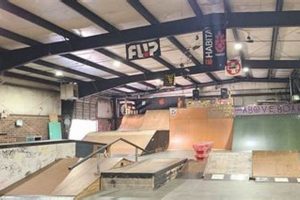
Half pipes comprise two opposing quarter pipes connected by a flat transition. This structure enables skaters to generate momentum and perform continuous runs, executing tricks at each end. The height, width, and transition radius of a half pipe significantly affect its difficulty and suitability for different types of riding. A variation, the mini ramp, features reduced dimensions and a shallower transition, making it more accessible to beginners.
- Spines
Spines are essentially two quarter pipes placed back-to-back, creating a sharp transition between them. These elements present a unique challenge, requiring skaters to transfer from one ramp face to the other while airborne. The steepness and height of the spine dictate the level of difficulty, demanding precision and control. Spines are often incorporated into larger bowl configurations or street-inspired sections.
- Jump Ramps
Jump ramps, also known as kickers, are smaller, less curved ramps designed primarily for launching skaters into the air. They are typically used to clear obstacles, such as gaps or rails, or to gain height for performing tricks over flat ground. The angle and length of a jump ramp determine the trajectory and distance of the jump. These elements are often portable, allowing for flexible placement within the skate park.
The proper selection and placement of ramp structures is crucial for creating a well-balanced and engaging skating environment. The integration of various ramp types, each offering distinct challenges and opportunities, contributes to a park’s overall appeal and its ability to cater to a diverse range of skill levels and riding styles. These various ramps contribute significantly to the broader functionality of a skate park as a whole.
2. Rails

Rails, integral components of modern facilities, facilitate a variety of grinding and sliding maneuvers. Their presence significantly expands the technical possibilities within these spaces, allowing skaters and other action sports participants to execute complex tricks. The selection of materials, dimensions, and placement profoundly impacts both the difficulty and safety associated with rail use. A well-designed rail configuration can cater to a spectrum of skill levels, from beginner to professional, while a poorly designed or maintained rail poses a significant risk of injury. Examples include flat rails, located close to the ground for easier access, and handrails, positioned at varying heights to replicate urban environments and increase the challenge.
The installation of these features necessitates adherence to established safety standards and best practices. Proper anchoring to the underlying surface is critical to prevent movement or instability during use. The material used for rail construction, typically steel or aluminum, must possess sufficient durability to withstand repeated impacts and environmental conditions. Furthermore, the surrounding area should be free of obstructions to minimize the risk of collisions. The presence of a smooth, consistent surface on the rail itself is essential for preventing snags or abrupt stops that could lead to falls. Considerations such as the shape, whether round, square, or angled, also play a key role in determining the type of trick possible.
In summary, rails represent a fundamental aspect of comprehensive design, offering a diverse range of challenges and opportunities for skill development. Attention to detail in their design, construction, and maintenance is paramount to ensuring user safety and maximizing the potential for creative expression. The effective integration of these elements contributes significantly to the overall functionality and appeal of a well-designed facility, solidifying their importance within these recreational spaces.
3. Bowls

Bowls, as integral formations within park design, represent a distinct category of skateable terrain characterized by curved transitions and varying depths. These structures directly influence the flow and difficulty of the skating experience, impacting both skill progression and stylistic expression. The presence of bowls within a park broadens the range of available maneuvers and contributes significantly to the overall complexity and appeal of the facility. Examples include kidney bowls, full pipes, and clover bowls, each offering unique challenges and lines. Improper construction or design of these elements can lead to increased risk of injury and reduced usability.
The importance of bowls lies in their ability to replicate the fluid movements of surfing and adapt them to skateboarding. This allows skaters to generate speed and momentum while executing continuous lines and aerial maneuvers. Their design can be further enhanced through strategic placement of coping, extensions, and other features that introduce additional difficulty and creative potential. For instance, the construction of pools in California during the drought of the 1970s directly led to the development and popularity of bowl skating, demonstrating the lasting influence of these features on the sport’s evolution. Bowls provide a key space for practicing flow and learning vert skating.
Understanding the design principles and construction techniques associated with bowls is crucial for creating effective and safe areas. Careful consideration must be given to the transitions, depths, and overall shape of the bowl to ensure that it caters to a range of skill levels and offers a challenging yet rewarding experience. The appropriate selection and placement of these elements within the larger context of the facility is vital for maximizing their impact and enhancing the overall quality of park.
4. Transitions

Transitions, within the context of elements designed for wheeled sports, denote the curved surfaces linking horizontal planes to vertical or near-vertical planes. Their presence enables smooth changes in direction and momentum, facilitating aerial maneuvers and complex lines. Their design directly influences flow, speed, and the difficulty of tricks achievable within that specific section of the park. Examples include quarter pipes connecting flat ground to a vertical wall and roll-ins leading into bowls. The quality and placement of transitions are critical determinants of a park’s usability and the potential for a satisfying skating experience.
The absence of well-designed transitions limits the possibilities for riders to maintain speed and execute fluid sequences. Abrupt or poorly shaped transitions can cause loss of control, increasing the risk of falls. Conversely, well-crafted transitions allow skaters to build momentum, access higher features, and perform advanced tricks. Consider the difference between a steep, abruptly curved quarter pipe and one with a gradual, well-blended transition. The latter offers a smoother ride, allowing skaters to maintain speed and control, while the former can be jarring and difficult to navigate safely. Well designed ones improve the safety of the ride.
In conclusion, transitions are a fundamental design consideration that affect both functionality and safety. Understanding their impact is essential for creating accessible and challenging spaces that promote skill development and creative expression. Improper transition design can negate the benefits of other elements, whereas well-designed transitions enhance the overall park experience, making them invaluable aspects. Their integration should be prioritized in the design and maintenance phases.
5. Surfaces

The surface of a is a critical determinant of its usability, safety, and overall performance. The selected material directly affects the speed, grip, and durability experienced by users, influencing the type of tricks that can be performed and the longevity of the structure. The most common surfaces are concrete and asphalt, each possessing distinct characteristics suitable for different applications. Concrete, known for its smoothness and durability, is favored for elements requiring precise control and consistent performance. Asphalt, while less expensive, offers a rougher texture and lower lifespan, typically employed in less demanding areas. The selection of an appropriate surface is a foundational element in the design process, directly impacting the user experience.
The specific finish applied to a surface further refines its performance characteristics. Polished concrete, for instance, provides a frictionless surface ideal for high-speed maneuvers, while textured concrete offers enhanced grip for technical tricks. Inadequate surface preparation or maintenance can lead to cracks, unevenness, and debris accumulation, all of which compromise safety and reduce the usability of the area. Consider the impact of a poorly maintained surface on a ramp, where cracks and debris can cause a sudden loss of control, increasing the risk of falls and injuries. Conversely, a well-maintained, smooth surface allows for consistent and predictable performance, promoting skill development and creative expression.
In conclusion, the surface is not merely a passive background; it is an active component that significantly influences the functionality and safety of all other . Proper consideration of surface materials, finishes, and maintenance practices is essential for creating effective spaces that cater to a wide range of skill levels and ensure long-term usability. Neglecting the importance of surfaces can negate the benefits of even the most well-designed ramps, rails, and bowls, underscoring the need for careful planning and execution in the creation of these recreational environments.
6. Obstacles
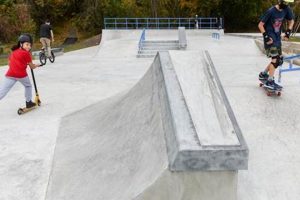
Obstacles constitute a critical subset within the broader category of ” elements,” directly shaping the challenges and opportunities available to users. These features introduce complexity and require technical skill, influencing both the design and usage patterns within such facilities. Ledges, handrails, stairs, and gaps serve as examples of commonly incorporated obstacles, each presenting unique demands related to balance, precision, and control. The strategic placement and configuration of these features dictate the flow of movement through the park and the potential for creative expression among practitioners. A well-designed obstacle effectively balances risk and reward, encouraging progression while minimizing the likelihood of injury. For instance, a low, smooth ledge allows novice skaters to practice grinding techniques, while a taller, more challenging handrail caters to experienced riders seeking to refine their skills.
The integration of obstacles into is not merely an aesthetic consideration; it profoundly affects the functionality and pedagogical value of the space. The deliberate introduction of progressively difficult challenges fosters skill development and encourages users to push their boundaries within a controlled environment. Furthermore, obstacles can mimic elements found in urban landscapes, allowing skaters to translate their skills from the park to real-world environments. Consider the example of a set of stairs with a handrail, a common feature in many facilities. Mastering tricks on this obstacle within the park allows skaters to confidently navigate similar structures encountered in public spaces. Their placement can mimic real world items.
In summary, obstacles are essential in shaping the user experience and promoting skill progression. Their careful design and integration into are paramount to creating dynamic and engaging recreational spaces. The effective use of obstacles enhances the value of and contributes to the overall development of action sports practitioners. Ignoring obstacle design can negate positive aspects of an otherwise functional , therefore should be carefully implemented for maximum benefits.
Frequently Asked Questions About Skate Park Features
The following questions address common inquiries regarding the design, construction, and utilization of elements within skate parks. The information provided is intended to offer clarity and promote a better understanding of these recreational spaces.
Question 1: What factors determine the suitability of a particular for different skill levels?
The dimensions, transitions, and complexity of an significantly impact its appropriateness for varying skill levels. Lower heights, gentler transitions, and simpler designs are generally more suitable for beginners, while advanced skaters typically seek larger, more challenging features with steeper transitions and complex configurations.
Question 2: How does the surface material impact the performance and safety within a ?
Surface material significantly influences speed, grip, and durability. Concrete, prized for its smooth surface and longevity, offers optimal performance for most skaters. Asphalt, though less expensive, provides a rougher texture and reduced durability, potentially impacting safety and skill execution.
Question 3: What role does coping play in the functionality of ramps and bowls?
Coping, typically constructed of metal or concrete, is installed along the edge of ramps and bowls. It allows skaters to perform grinding and stalling maneuvers. The material, radius, and protrusion of the coping influence the difficulty and feel of these maneuvers.
Question 4: What safety considerations should be prioritized when designing a ?
Safety considerations include adequate spacing between elements, clear sightlines, proper surface maintenance, and adherence to established safety standards. The design should minimize potential collision points and provide ample run-off areas to reduce the risk of injury.
Question 5: How does the arrangement impact the flow and usability of the overall facility?
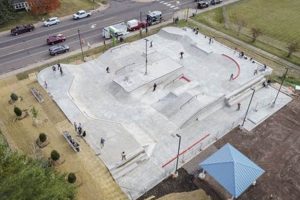
The arrangement significantly affects the flow of movement and the types of lines that can be executed. The strategic placement of elements, such as linking ramps with rails or incorporating bowls into street-inspired sections, enhances the overall usability and creates a more dynamic skating experience.
Question 6: What are the primary maintenance requirements for ensuring the longevity and safety of a ?
Regular maintenance includes surface cleaning, crack repair, replacement of damaged components, and inspection of anchoring systems. Addressing these issues promptly prevents further deterioration and ensures user safety.
Understanding these questions and their answers provides a foundation for appreciating the complexities involved in the design, construction, and maintenance of these facilities. Thoughtful consideration of these aspects contributes to safer and more enjoyable recreational environments.
The subsequent section will explore case studies of well-designed , highlighting successful strategies and innovative approaches to park design.
Conclusion
The preceding discussion has detailed the constituent elements, emphasizing the crucial interplay between design, construction, and maintenance. Each component, from ramps and rails to bowls and surfaces, contributes uniquely to the functionality and safety of these facilities. Ignoring the nuanced requirements of each can lead to compromised user experiences and increased risk of injury.
Continued research, rigorous adherence to safety standards, and investment in proper maintenance are paramount for ensuring that these spaces remain valuable community assets. The evolution of recreational areas depends on a commitment to innovation and a deep understanding of the principles outlined above. Future development should prioritize user safety, accessibility, and creative expression, furthering their role as vital resources.
![PhET Skate Park Energy: Worksheet & Key PDF [Answers!] | How to Skateboard: A Beginner's Guide to Your First Board & Tricks](https://cruzskateshop.com/wp-content/uploads/2026/05/th-395-300x200.jpg "PhET Skate Park Energy: Worksheet & Key PDF [Answers!] How to Skateboard: A Beginner's Guide to Your First Board & Tricks")