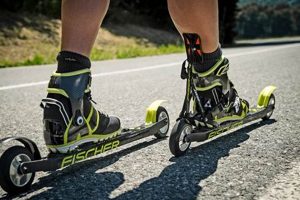
The comparison between quad skates and inline skates highlights a fundamental distinction in recreational and athletic footwear. One design features two pairs of wheels arranged in a side-by-side configuration, offering a stable platform. The other employs a single line of wheels, prioritizing speed and maneuverability. This difference in wheel arrangement significantly impacts balance, control, and the overall skating experience.
Understanding the nuances between these two skate types is crucial for both beginners and experienced skaters. The choice directly influences learning curves, agility, and the suitability for various skating disciplines, from recreational cruising to competitive sports. Historically, the evolution of skating technology has seen both designs rise and fall in popularity, each leaving a lasting impact on skating culture.
The following sections will delve into specific aspects that differentiate these two skate designs, examining their construction, performance characteristics, and ideal usage scenarios. These include comparisons of stability, speed, maneuverability, braking systems, and overall user-friendliness, providing a comprehensive guide for prospective skaters to make informed decisions.
Essential Considerations
Selecting between the two designs necessitates careful evaluation of individual skill levels and intended use. Prioritizing stability versus speed is a key factor in this decision.
Tip 1: Assess Skill Level. New skaters often find the quad design easier to master due to its inherent stability. Inline skates require a greater degree of balance and coordination initially.
Tip 2: Define Intended Use. Consider the primary purpose: recreational skating, fitness training, artistic expression, or competitive sports. The chosen design should align with the desired activity.
Tip 3: Evaluate Surface Conditions. Quad skates perform well on a variety of surfaces, including less-than-perfect pavement. Inline skates generally require smoother surfaces for optimal performance and safety.
Tip 4: Prioritize Safety Equipment. Regardless of the design chosen, appropriate safety gear, including helmets, wrist guards, elbow pads, and knee pads, is essential to mitigate the risk of injury.
Tip 5: Consider Maintenance Requirements. Both types require periodic maintenance, including cleaning wheels and bearings, and inspecting for wear and tear. Understand the maintenance needs associated with each design.
Tip 6: Research Braking Systems. Quad skates typically feature a toe stop brake, while inline skates often utilize a heel brake. Familiarize oneself with the operation and effectiveness of each braking system.
Tip 7: Seek Professional Guidance. Consulting with experienced skaters or instructors can provide valuable insights and personalized recommendations based on individual needs and goals.
Careful consideration of these factors will contribute to a safer and more enjoyable skating experience. Ultimately, the ideal choice depends on individual preferences and priorities.
The following sections will summarize the key distinctions and offer a definitive conclusion regarding the comparative advantages of each design.
1. Stability versus Speed

The dichotomy of stability versus speed represents a fundamental trade-off in the realm of wheeled footwear, directly influencing the choice between quad skates and inline skates. Quad skates, characterized by their two pairs of laterally arranged wheels, inherently offer greater stability. This configuration provides a wider base of support, reducing the likelihood of imbalance and making them more forgiving for novice skaters. The trade-off, however, is a limitation on achievable speed. The wider stance and greater rolling resistance impede the attainment of high velocities. The design’s inherent stability allows for easier balance on uneven surfaces.
Inline skates, conversely, prioritize speed over stability. The single line of wheels minimizes rolling resistance, enabling significantly higher speeds with less effort. This advantage comes at the cost of reduced stability, particularly at lower speeds or when stationary. Maintaining balance on inline skates requires constant engagement of core muscles and precise weight distribution. Advanced skating techniques, such as crossovers and speed skating stances, are employed to compensate for the inherent instability and maximize efficiency at higher speeds. Fitness enthusiasts often choose inline for their efficiency.
Ultimately, the decision between prioritizing stability versus speed hinges on individual skill level and intended use. Beginners often benefit from the increased stability of quad skates, allowing them to develop fundamental skating skills with confidence. Experienced skaters, seeking speed and agility, may prefer inline skates for their performance characteristics. The “Stability versus Speed” trade-off is a primary differentiator, shaping the user experience and influencing the suitability of each skate design for various activities.
2. Maneuverability differences

The divergent wheel configurations of quad skates and inline skates directly dictate their respective maneuverability profiles. Quad skates, with their two sets of wheels arranged in a rectangular footprint, offer a stable platform amenable to quick starts and stops, and a relatively tight turning radius when leaning into a turn. This arrangement facilitates pivoting motions and agility in confined spaces, often preferred in disciplines like roller derby or artistic skating. However, the broader wheelbase makes certain advanced maneuvers, requiring extreme edge control, more challenging to execute efficiently. The stable base makes general movements easier.
Conversely, inline skates, with wheels aligned in a single line, afford superior edge control and allow for longer, sweeping turns at higher speeds. The streamlined design reduces friction, enabling greater agility in directional changes and the execution of complex maneuvers such as crossovers and slaloms. The enhanced control is particularly advantageous in speed skating and aggressive skating. However, the inherent instability can make tight turns and sudden stops more difficult to master, demanding a higher degree of skill and precision. The inline design is better for very sharp turns.
Understanding these maneuverability differences is crucial for selecting the appropriate skate type. A skater prioritizing agility in tight spaces and quick directional changes may find quad skates more suitable, while one focused on speed and sweeping turns may prefer inline skates. The choice significantly impacts performance and enjoyment, and the maneuverability differences constitute a defining characteristic differentiating these skating styles.
3. Braking Mechanism

The braking mechanism constitutes a critical safety feature differentiating quad skates and inline skates. The design and operation of these systems significantly impact stopping power, control, and the overall learning curve for skaters.
- Toe Stop Brakes (Quad Skates)
Quad skates typically employ a toe stop brake, a rubber or composite stopper mounted at the front of the skate. Braking is achieved by tilting the skate forward and applying pressure to the toe stop. This system allows for controlled stops and can be used for various maneuvers, such as spins. However, it requires consistent practice to modulate pressure effectively and avoid sudden stops that could lead to falls. The positioning of the toe stop at the front allows for quick engagement.
- Heel Brakes (Inline Skates)
Inline skates often utilize a heel brake, a rubber pad positioned at the rear of one or both skates. Braking is activated by extending the leg with the brake and applying pressure to the heel. This system provides a relatively stable braking platform, particularly at higher speeds. However, lifting the toe to engage the brake can shift the center of gravity, requiring practice to maintain balance. Some inline skates may lack a heel brake, requiring the user to perform techniques like the T-stop or parallel slide, which require higher skill level.
- Braking Efficiency and Skill Level
The effectiveness of each braking mechanism is tied directly to the skater’s skill and experience. Toe stops on quad skates offer precise control once mastered, but the initial learning curve can be steep. Heel brakes on inline skates provide a more intuitive braking method for beginners but may lack the nuanced control of toe stops. Advanced skaters often remove heel brakes from inline skates in favor of more versatile braking techniques.
- Maintenance and Replacement
Both toe stops and heel brakes are subject to wear and tear and require periodic inspection and replacement. Worn toe stops or heel brakes can significantly reduce braking efficiency and increase the risk of accidents. The frequency of replacement depends on usage and skating style.
The choice between toe stop and heel brake systems hinges on individual preferences and skating discipline. While heel brakes offer user-friendliness for many, advanced skaters often rely on alternative braking methods. These distinct designs exemplify a key factor in the “roller skate vs rollerblade” decision. Selecting the proper system based on skill set is vital.
4. Surface Requirements

Surface conditions significantly impact the performance and safety of both quad skates and inline skates, influencing the user experience and determining the suitability of each skate type for various environments. Understanding these surface requirements is crucial for making informed decisions about which skate design aligns best with intended skating locations.
- Wheel Size and Hardness
The dimensions and durometer (hardness) of the wheels on both skate types influence their ability to navigate varying surfaces. Larger, softer wheels provide better shock absorption and grip on rough or uneven terrain, common in outdoor environments. Smaller, harder wheels offer increased speed and efficiency on smooth, polished surfaces, typical of indoor rinks. Quad skates often employ wider, softer wheels suitable for diverse surfaces, while inline skates frequently utilize narrower, harder wheels optimized for smoother conditions.
- Pavement Quality
The quality of pavement directly affects the rolling resistance and stability of both skate types. Smooth, well-maintained pavement allows for optimal speed and control, benefiting inline skates in particular. Cracked, uneven, or debris-laden surfaces increase rolling resistance and reduce stability, presenting greater challenges for inline skates. Quad skates, with their wider wheel base, generally handle imperfect pavement more effectively, providing a more stable and comfortable ride.
- Indoor vs. Outdoor Environments
Indoor skating rinks provide controlled environments with smooth, polished surfaces specifically designed for skating. These surfaces are ideal for inline skates, maximizing their speed and maneuverability. Outdoor environments present a wider range of surface conditions, including asphalt, concrete, and paved trails, which may vary significantly in smoothness and cleanliness. Quad skates, with their ability to navigate diverse surfaces, are often preferred for outdoor recreational skating.
- Debris and Obstacles
The presence of debris, such as pebbles, leaves, and cracks, poses a greater risk to inline skates due to their smaller wheel contact area. These obstacles can cause wheels to catch or lose traction, leading to falls. Quad skates, with their larger, wider wheels, are less susceptible to these hazards, providing a more stable and forgiving ride in environments with potential obstacles. Regular inspection of skating surfaces and proactive removal of debris is crucial for ensuring safety, regardless of skate type.
The interplay between wheel characteristics, pavement quality, and environmental factors shapes the skating experience. While inline skates thrive on smooth, controlled surfaces, quad skates demonstrate greater versatility across a wider range of conditions. Ultimately, the choice should be predicated on the anticipated skating environment, to ensure safety and maximize enjoyment.
5. Skill Level

Skill level represents a primary determinant in selecting between quad skates and inline skates. The inherent design characteristics of each skate type present distinct learning curves and demand varying levels of proficiency to operate effectively and safely. A novice skater typically encounters a steeper initial learning curve with inline skates due to the heightened balance requirements and the forward-backward instability resulting from the inline wheel configuration. The quad skate, with its wider base of support, provides a more stable platform, allowing beginners to develop fundamental skating skills, such as pushing off, gliding, and basic turning, with greater confidence. For instance, a child learning to skate may find quad skates more manageable initially, reducing the risk of early frustration and injury.
As skill progresses, the selection may shift based on desired skating style. Intermediate skaters transitioning from quad skates to inline skates often experience a period of adjustment as they adapt to the nuanced balance and control required. Advanced inline skaters can leverage their proficiency to execute complex maneuvers, achieve higher speeds, and engage in specialized disciplines such as aggressive skating or speed skating. Conversely, skilled quad skaters may excel in roller derby or artistic skating, capitalizing on the agility and stability offered by the quad design to perform intricate footwork and maintain balance during challenging routines. The advanced skills with inlines requires much more experience.
In conclusion, the appropriate skate type is intrinsically linked to skill level, impacting both the learning experience and the potential for advanced performance. While quad skates offer a more accessible entry point for beginners, inline skates provide greater opportunities for skilled skaters to pursue speed, agility, and specialized skating disciplines. Recognizing one’s current skill level and future skating aspirations is crucial in making an informed decision that maximizes enjoyment and minimizes risk. Therefore, evaluating the connection between skill level and roller skate/rollerblade becomes not just important but essential.
Frequently Asked Questions
The following addresses common inquiries regarding the distinctions and suitability of quad skates versus inline skates, providing clarity for prospective users.
Question 1: Which design is generally considered easier for beginners to learn?
Quad skates are often recommended for novice skaters due to their wider base of support, providing greater inherent stability and reducing the initial learning curve.
Question 2: Which skate type offers superior speed capabilities?
Inline skates, with their single line of wheels, minimize rolling resistance, enabling higher speeds compared to quad skates.
Question 3: Which skate design is more versatile across different surface types?
Quad skates tend to perform better on rougher or uneven surfaces due to their wider, softer wheels, providing a more stable and comfortable ride.
Question 4: What are the primary differences in braking mechanisms between the two skate types?
Quad skates commonly utilize a toe stop brake, activated by tilting the skate forward, while inline skates typically employ a heel brake, engaged by extending the leg and applying pressure to the heel.
Question 5: Which skate is generally preferred for specialized disciplines such as roller derby?
Quad skates are typically favored in roller derby due to their agility, stability, and maneuverability in confined spaces.
Question 6: How does skill level factor into the selection between quad skates and inline skates?
While quad skates are often a good starting point for beginners, advanced skaters may opt for inline skates to achieve greater speed, perform complex maneuvers, and engage in specialized skating styles.
In summary, selecting between quad skates and inline skates necessitates evaluating one’s skill level, intended skating environment, and desired performance characteristics. Each skate type offers distinct advantages, catering to varying needs and preferences.
The subsequent section provides a conclusive overview, highlighting the key advantages and disadvantages of each skate design.
roller skate vs rollerblade
This analysis has presented a comprehensive examination of “roller skate vs rollerblade”, dissecting the fundamental differences in design, performance, and suitability for various applications. The exploration highlighted key distinctions in stability, speed, maneuverability, braking systems, and surface requirements. Quad skates offer increased stability, particularly beneficial for beginners, while inline skates provide enhanced speed and agility for experienced skaters. The choice hinges on individual skill level, intended skating environment, and specific performance goals.
Ultimately, the informed selection between quad skates and inline skates requires a careful assessment of individual needs and preferences. As skating technology continues to evolve, both designs will likely retain distinct niches within the recreational and athletic landscape. Understanding these differences allows individuals to make informed decisions that optimize safety, enjoyment, and performance. Continued research and technological advancements will further refine both designs, catering to the diverse needs of the skating community.
![Learn Roller Skate in ASL: Sign It! [Guide] | How to Skateboard: A Beginner's Guide to Your First Board & Tricks](https://cruzskateshop.com/wp-content/uploads/2026/06/th-25-300x200.jpg "Learn Roller Skate in ASL: Sign It! [Guide] How to Skateboard: A Beginner's Guide to Your First Board & Tricks")