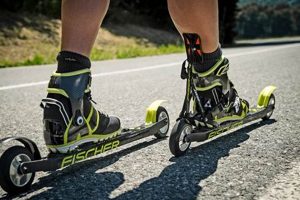
Determining the appropriate dimensions for footwear designed with wheels is a critical element for ensuring both comfort and performance. This process involves accurately measuring the foot’s length and width and comparing those measurements to a manufacturer’s specific sizing chart. For example, a foot measuring 25 centimeters in length might correspond to a size 8 in one brand, but a size 7.5 in another.
Accurate dimension selection is essential to preventing injuries, enhancing control, and maximizing enjoyment. Ill-fitting wheeled footwear can lead to blisters, instability, and reduced maneuverability. Historically, variations in sizing standards have made this a challenging task, necessitating careful attention to individual brand guidelines and, when possible, physical try-ons before purchase. The evolution of manufacturing processes and materials has further influenced the range of available sizes and fits.
The remainder of this article will delve into specific methods for precise foot measurement, examine the nuances of different sizing systems, and provide practical advice for selecting the ideal dimensions, considering various foot shapes and intended use cases.
Roller Skate Sizing
Selecting the correct dimensions is crucial for comfort, performance, and safety. These guidelines provide essential advice for ensuring a proper fit.
Tip 1: Measure Foot Length Accurately: Use a ruler or measuring tape to determine the length of both feet in millimeters. Stand with the heel against a wall and measure to the tip of the longest toe. Account for potential differences in length between the two feet; select dimensions based on the larger foot.
Tip 2: Consult Manufacturer’s Sizing Chart: Each brand employs unique sizing standards. Cross-reference foot measurements with the manufacturer’s specific chart for the product under consideration. Disregard generalizations about standard shoe sizes.
Tip 3: Consider Foot Width: Foot width is a significant factor in achieving a comfortable fit. If a foot is wider than average, explore models specifically designed for wider feet or consider increasing the size by a half or full size to accommodate width.
Tip 4: Account for Sock Thickness: Determine the type of sock that will be worn while using wheeled footwear. Measure the foot while wearing that sock to ensure accurate dimensions.
Tip 5: Simulate Skating Position During Try-On: When trying on wheeled footwear, bend knees to simulate the skating posture. This position can alter foot length and width, providing a more realistic assessment of fit.
Tip 6: Test for Toe Clearance: Ensure adequate space between the longest toe and the end of the boot. A thumbnail’s width of clearance is generally recommended.
Tip 7: Prioritize a Snug, Secure Fit: The heel should remain firmly in place without excessive movement within the boot. A snug fit will improve control and prevent blisters.
Following these guidelines will significantly improve the chances of selecting properly dimensioned footwear, leading to a more comfortable and enjoyable experience.
The subsequent sections will provide detailed information on specific models, materials, and maintenance techniques to further enhance the skating experience.
1. Foot length measurement

Foot length measurement serves as the foundational element in determining appropriate dimensions for wheeled footwear. An inaccurate measurement directly translates into a selection of improper dimensions, irrespective of other fitting considerations. For example, a miscalculation of even a few millimeters can result in selecting a size that is either too constricting, leading to discomfort and potential foot damage, or too loose, compromising stability and control. The reliance on this metric stems from its direct correlation with the internal dimensions of the footwear itself; manufacturers design their products based on specific foot length ranges for each size.
The practical application of precise foot length measurement extends beyond initial selection. Individuals engaged in activities requiring extended periods of use, such as long-distance skating or competitive events, are particularly susceptible to the consequences of incorrect dimensions. Continuous pressure and friction from ill-fitting wheeled footwear can lead to blisters, calluses, and other foot ailments that significantly impact performance and comfort. Conversely, properly dimensioned wheeled footwear, based on accurate foot length, allows for optimal foot support and reduces the risk of injury, thereby enhancing the overall experience.
In summary, foot length measurement is inextricably linked to appropriate dimension selection. While other factors such as foot width and volume are important, the initial and accurate determination of foot length remains the most critical step. Challenges arise from variations in individual foot shapes and manufacturer sizing standards. The broader theme underscores the necessity of meticulously aligning foot length with the specific dimensions outlined by the manufacturer, ensuring a secure, comfortable, and safe experience.
2. Manufacturer's size charts

Manufacturer-provided dimension guides are essential resources for determining the correct dimensions when selecting wheeled footwear. Given the lack of universal standardization across the industry, these charts offer the most direct correlation between foot measurements and product fit, facilitating informed purchasing decisions.
- Variability in Sizing Standards
Different manufacturers employ distinct sizing conventions, often leading to inconsistencies across brands. A size 8 in one brand may not correspond to a size 8 in another. This variability necessitates direct reference to the manufacturer’s chart to ensure dimensional accuracy. For instance, European sizes are fundamentally different from US sizes, requiring careful conversion using the specific chart provided by the brand.
- Measurement Units and Conversion
Size charts commonly utilize various measurement units, including inches, centimeters, and manufacturer-specific units. Understanding these units and accurately converting foot measurements is critical. Incorrect conversion can result in a mismatch between foot size and selected product size, leading to discomfort or injury. For example, failing to correctly convert centimeters to inches can lead to the selection of a size significantly larger or smaller than the actual foot size.
- Width Considerations
Some manufacturers provide width specifications alongside length measurements in their dimension guides. Foot width is a crucial factor often overlooked, especially for individuals with wider or narrower feet. Neglecting width considerations can lead to pressure points, restricted circulation, and discomfort. For example, individuals with wide feet may need to select a wider model or increase their size by a half or full size to accommodate the additional width.
- Model-Specific Variations
Sizing can vary even within the same brand, depending on the model and design. Aggressive models, recreational models, and speed models may all have different fits and recommended dimensions. Consulting the dimension guide specific to the chosen model is vital. For instance, a model with a thick liner may require a slightly larger size compared to a model with a thinner liner, even within the same brand.
Manufacturer’s dimension guides are, therefore, indispensable tools in navigating the complexities of wheeled footwear dimension selection. Diligent adherence to these charts, along with a thorough understanding of measurement units and foot morphology, is crucial for ensuring a comfortable and safe skating experience. The inherent variability across brands and models underscores the necessity of individualized assessment rather than reliance on generic sizing assumptions.
3. Foot width consideration

Foot width significantly influences appropriate wheeled footwear dimensions. Ignoring this factor can lead to discomfort, reduced performance, and potential injuries. The internal volume of footwear, encompassing both length and width, determines the available space for the foot. A mismatch between foot width and the internal width of the footwear causes compression or excessive movement, disrupting biomechanics.
Insufficient width causes constriction, leading to pain, blisters, and impaired circulation. Conversely, excessive width allows the foot to shift laterally, reducing control and increasing the risk of ankle instability. For example, an individual with wide feet selecting standard-width wheeled footwear may experience pressure points along the sides of the foot, resulting in discomfort and potentially leading to the formation of blisters. Proper foot width consideration enhances stability, power transfer, and overall comfort. Different models and brands cater to varying foot widths, often indicated through designations such as “wide,” “medium,” or “narrow” fits. Consulting manufacturer size charts, which often include width measurements, is crucial. Additionally, physical try-ons with appropriate socks allow for a more accurate assessment of fit.
In summary, foot width is an essential component of wheeled footwear dimension selection. Proper consideration mitigates the risk of discomfort and injury, enhancing performance and enjoyment. Selection of models and sizes based solely on foot length, without accounting for width, is an incomplete and potentially detrimental approach. The incorporation of foot width as a key parameter in dimension determination is therefore critical for achieving optimal fit.
4. Sock thickness allowance

The thickness of socks worn directly impacts the available space within wheeled footwear, thus necessitating a deliberate “Sock thickness allowance” during the dimension selection process. Failure to account for sock thickness can result in selecting footwear that is either too tight, leading to discomfort and potential foot damage, or too loose, compromising stability and control. The interaction between sock thickness and internal volume is a critical factor influencing the overall fit. For example, an individual who consistently wears thick socks with wheeled footwear must account for the added volume these socks contribute; otherwise, the selected footwear will feel unduly constricting, particularly after prolonged use.
The magnitude of the “Sock thickness allowance” depends on the type of socks typically worn. Thin socks, often preferred for enhanced feel and responsiveness, necessitate a minimal allowance, while thicker, padded socks, designed for cushioning and warmth, require a more substantial increase in dimension. It is advisable to measure foot dimensions while wearing the intended socks to ensure accurate dimension selection. For instance, recreational wheeled footwear may be used with thicker socks for added comfort, requiring a half-size or full-size increase, depending on the sock’s loft. Alternatively, speed models, designed for precision and control, often pair with thinner socks, warranting a minimal dimension adjustment.
In conclusion, “Sock thickness allowance” constitutes a crucial parameter in wheeled footwear dimension determination. Neglecting to consider sock thickness can negate the benefits of precise foot measurements and manufacturer size charts. The appropriate allowance is contingent on the specific socks used and the intended application of the footwear. A holistic approach, incorporating both foot dimensions and sock thickness, is essential for achieving optimal fit, maximizing comfort, and ensuring safety and performance.
5. Heel stability assessment

Heel stability assessment plays a vital role in determining appropriate wheeled footwear dimensions. The interface between the heel and the boot’s heel cup influences control, comfort, and injury prevention. Inadequate heel stability compromises performance and safety, while excessive restriction hinders natural movement.
- Heel Hold and Control
A secure heel hold is essential for efficient power transfer and precise control. Excessive heel movement within the boot dissipates energy and reduces responsiveness. A properly dimensioned boot ensures the heel remains firmly seated during movement, minimizing slippage and maximizing control. For example, during rapid turns or stops, a secure heel hold allows for quicker and more precise execution.
- Ankle Support and Injury Prevention
Adequate heel stability contributes to overall ankle support, reducing the risk of sprains and other injuries. The heel cup, when properly fitted, provides a stable base for the ankle joint, limiting excessive pronation or supination. A secure heel hold prevents the foot from shifting laterally within the boot, which can lead to instability and increased risk of injury. For example, in aggressive styles with high impact, a stable heel minimizes the risk of ankle injuries.
- Comfort and Blister Prevention
A well-fitted heel cup minimizes friction and prevents blisters. Excessive heel movement causes rubbing against the boot’s interior, leading to skin irritation and blister formation. A secure heel hold reduces this friction, enhancing comfort and preventing discomfort during prolonged use. For example, individuals engaging in long-distance skating require a secure heel hold to prevent blisters.
- Impact Absorption and Vibration Dampening
Heel stability contributes to effective impact absorption and vibration dampening. A properly fitted heel cup distributes forces evenly, reducing stress on the heel bone and surrounding tissues. A secure heel hold minimizes vertical movement within the boot, which can exacerbate the impact of bumps and uneven surfaces. For example, on rough surfaces, a stable heel hold helps to cushion impact, reducing fatigue and potential injury.
The preceding facets underscore the importance of heel stability assessment within the broader context of wheeled footwear dimension selection. A secure and well-supported heel promotes control, prevents injuries, enhances comfort, and improves impact absorption. Proper dimension selection, coupled with careful attention to heel fit, is crucial for optimizing the overall experience.
6. Toe clearance verification

Toe clearance verification is an indispensable step in the wheeled footwear dimension selection process. It directly influences comfort, performance, and long-term foot health. Insufficient toe clearance can lead to discomfort, while excessive clearance diminishes control. Therefore, a systematic approach to verifying toe clearance is essential.
- Importance of Longitudinal Space
Longitudinal space, referring to the distance between the longest toe and the boot’s interior end, is critical for accommodating natural foot movement during locomotion. Insufficient space causes toe crowding, resulting in discomfort, blistering, and potential long-term deformities such as hammertoe. Adequate longitudinal space allows the toes to flex and extend naturally, promoting healthy biomechanics.
- Static vs. Dynamic Clearance
Static toe clearance, assessed when the foot is at rest, differs from dynamic clearance, which considers the foot’s expansion during movement. Foot length increases slightly when the knee is flexed, as it is in the skating posture. Therefore, toe clearance should be verified in a simulated skating position to ensure adequate space during activity. Static assessment alone may underestimate the required clearance.
- Assessment Techniques
Toe clearance can be assessed using various techniques, including manual palpation and insole removal. Manual palpation involves pressing down on the boot’s toe region to gauge the space between the longest toe and the boot’s end. Removing the insole and standing on it provides a visual indication of toe proximity to the insole’s edge. These techniques, while subjective, offer practical means of verifying adequate clearance.
- Impact on Performance and Control
While adequate toe clearance is essential for comfort, excessive clearance can compromise control. When the foot moves excessively within the boot, responsiveness diminishes, and the risk of instability increases. The ideal toe clearance strikes a balance between comfort and control, allowing for natural foot movement without sacrificing precision. The specific requirements for toe clearance may vary based on the intended application.
In summary, toe clearance verification is a multifaceted assessment that contributes significantly to the overall success of wheeled footwear dimension selection. It necessitates consideration of both static and dynamic factors, coupled with practical assessment techniques. The ultimate goal is to achieve a balance between comfort, performance, and foot health, ensuring a positive and safe experience. The selection of appropriate wheeled footwear involves multiple inter-related factors, each playing a role in overall fit and performance.
7. Intended use analysis
The determination of appropriate wheeled footwear dimensions is inextricably linked to the analysis of intended use. The specific demands placed upon the footwear, dictated by the activity in question, necessitate adjustments in dimension selection that prioritize performance, comfort, and safety.
- Recreational Use
Recreational skating, characterized by moderate speeds and relatively short durations, prioritizes comfort. A slightly more relaxed fit is often preferred, allowing for thicker socks and accommodating minor variations in foot size. Overly tight footwear is discouraged, as it can lead to discomfort during extended periods of use. An emphasis is placed on cushioning and support, rather than precise control.
- Aggressive Skating
Aggressive skating, involving jumps, grinds, and other technical maneuvers, demands a snug, responsive fit. Footwear dimensions are selected to maximize control and minimize foot movement within the boot. A tighter fit enhances power transfer and reduces the risk of ankle injuries. Thinner socks are typically used to improve sensitivity, and the footwear is often heat-moldable to conform to the specific contours of the foot.
- Speed Skating
Speed skating necessitates a highly precise and aerodynamic fit. Footwear dimensions are minimized to reduce weight and aerodynamic drag. Extremely thin socks are employed to maximize feel and responsiveness. The boot is often custom-molded to the skater’s foot to ensure optimal power transfer and minimize friction. Even minor dimensional inconsistencies can significantly impact performance in competitive speed skating.
- Artistic/Rhythm Skating
Artistic and rhythm skating require a balance of support, flexibility, and sensitivity. Footwear dimensions are selected to allow for precise footwork and controlled movements. The heel fit is particularly important to ensure stability during spins and jumps. Sock thickness is often moderate, providing a balance between cushioning and feel. The demands of artistic expression necessitate footwear that functions as an extension of the skater’s body.
In summary, the analysis of intended use forms a critical framework for wheeled footwear dimension selection. Whether the activity is recreational, aggressive, speed-oriented, or artistic, the specific demands of the discipline dictate the ideal balance of comfort, control, and support. A thorough understanding of these demands, coupled with precise foot measurements and adherence to manufacturer sizing charts, is essential for optimizing the user experience and minimizing the risk of injury.
Frequently Asked Questions
The following addresses prevalent inquiries regarding the selection of appropriately dimensioned wheeled footwear. Understanding the nuances of fitting ensures both comfort and performance.
Question 1: Why is roller skate sizing not standardized across all manufacturers?
Roller skate sizing lacks universal standardization due to variations in manufacturing processes, material composition, and design philosophies among different manufacturers. Each brand establishes its own dimensional standards, based on proprietary research and development.
Question 2: How does foot width affect roller skate sizing?
Foot width is a critical factor. Insufficient width results in constriction and discomfort, while excessive width compromises control. Select models specifically designed for wider feet or consider increasing the size by a half or full size to accommodate foot width.
Question 3: What role does sock thickness play in determining appropriate roller skate dimensions?
Sock thickness influences available space within the boot. Foot dimensions should be measured while wearing the socks intended for use with the footwear. Adjust dimensions accordingly to accommodate the sock’s volume.
Question 4: How does the intended use influence roller skate sizing?
The intended use significantly impacts the ideal dimensions. Aggressive styles demand a snug fit for enhanced control, while recreational styles prioritize comfort, often allowing for a slightly more relaxed fit.
Question 5: What are the potential consequences of selecting improperly dimensioned roller skates?
Selecting improperly dimensioned wheeled footwear can lead to blisters, instability, reduced maneuverability, and potential long-term foot deformities. Precise fitting is essential for both performance and injury prevention.
Question 6: Is it advisable to purchase roller skates online without trying them on?
Purchasing wheeled footwear online is possible, provided precise foot measurements are taken and cross-referenced with the manufacturer’s sizing chart. Physical try-ons are preferable when feasible, but detailed measurements and chart comparisons can mitigate the risk associated with online purchases.
Accurate dimension determination is paramount for a positive skating experience. Carefully consider all relevant factors, including foot length, width, sock thickness, and intended use.
The subsequent section will explore maintenance and care techniques for extending the lifespan of your wheeled footwear.
Conclusion
This examination of roller skate sizing has underscored the multifaceted nature of dimension selection. Precise foot measurement, consideration of manufacturer-specific sizing charts, and an understanding of factors such as foot width, sock thickness, intended use, heel stability, and toe clearance are all critical components. A failure to adequately address these elements can result in compromised comfort, reduced performance, and an increased risk of injury.
The information presented serves as a comprehensive guide for individuals seeking to optimize their skating experience through informed dimension selection. Careful attention to these principles will facilitate the selection of appropriately sized footwear, promoting safety, comfort, and enhanced performance. The future development of standardized sizing systems may further simplify the dimension selection process. Until such standardization is achieved, diligent adherence to the guidelines outlined herein remains essential.
![Learn Roller Skate in ASL: Sign It! [Guide] | How to Skateboard: A Beginner's Guide to Your First Board & Tricks](https://cruzskateshop.com/wp-content/uploads/2026/06/th-25-300x200.jpg "Learn Roller Skate in ASL: Sign It! [Guide] How to Skateboard: A Beginner's Guide to Your First Board & Tricks")