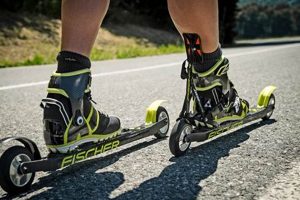
The comparison between inline skates and quad skates highlights a fundamental choice in recreational and competitive skating. One utilizes a single line of wheels, offering speed and agility, while the other employs a four-wheel configuration providing stability and balance. This choice impacts the skater’s experience significantly.
Understanding the nuances between these two types of skates offers several benefits. Selection becomes tailored to individual skill levels and preferences. Historically, the quad skate predates the inline skate, holding a prominent place in roller rinks and artistic skating. The inline skate later emerged, dominating speed skating and aggressive styles. These two skates offer users physical activity.
The following sections will delve into specific attributes, including maneuverability, stability, speed capabilities, and appropriate applications of each skating method. This comparison will allow readers to make well-informed decisions based on the different aspects that matter most to them.
Guidance on Selection and Usage
Choosing between the two options requires careful consideration of intended use and personal aptitude. Prioritizing specific features ensures an optimal skating experience.
Tip 1: Assess Skill Level: Novices often find the quad skates wider base provides greater stability, facilitating easier balance and control. Advanced skaters may prefer the inline skate’s maneuverability for complex movements and higher speeds.
Tip 2: Consider Intended Use: For recreational skating on smooth, flat surfaces, either type is suitable. However, for roller derby or jam skating, quad skates are generally preferred. Conversely, for speed skating or hockey, inline skates offer distinct advantages.
Tip 3: Evaluate Ankle Support: Inline skates typically provide more rigid ankle support, which can be beneficial for injury prevention and maintaining proper form, particularly at higher speeds. Quad skates offer more flexibility, which can enhance agility in certain disciplines.
Tip 4: Analyze Wheel Configuration: Inline skates use wheels in a single line, allowing for greater speed and maneuverability. Quad skates employ two sets of wheels in a parallel configuration, providing stability and a different feel in turns.
Tip 5: Prioritize Comfort: Regardless of the type, proper fit is crucial. Ill-fitting skates can lead to discomfort, blisters, and potential injuries. Ensure adequate cushioning and proper sizing.
Tip 6: Maintenance is Essential: Regular cleaning, bearing lubrication, and wheel replacement extend the lifespan of skates and maintain performance. Different bearing types require different cleaning methods.
Tip 7: Safety Gear is Paramount: Helmets, wrist guards, elbow pads, and knee pads are essential safety equipment, irrespective of the choice of skate. Protective gear minimizes the risk of injury in the event of a fall.
Proper selection and usage, coupled with diligent maintenance and safety precautions, enhance the overall skating experience. These tips serve as a guide toward making an informed decision and ensuring safe participation.
The concluding section will provide a summary of the advantages and disadvantages of each type, offering a final perspective to guide the selection process.
1. Stability

Stability is a critical factor when differentiating between inline skates and quad skates. The wheel arrangement directly impacts the skater’s balance and control. Quad skates, with their two wheels in the front and two in the back, offer a wider base of support. This wider base inherently increases stability, making them a preferable choice for beginners or individuals prioritizing balance over speed. For example, a child learning to skate would likely find quad skates easier to manage initially due to their greater stability. Similarly, skaters participating in roller derby often choose quad skates for their enhanced stability during close-quarters maneuvers.
Inline skates, conversely, feature wheels arranged in a single line. This configuration reduces the base of support, demanding a higher level of balance and control. While less inherently stable, the inline design provides greater potential for speed and agility once proficiency is achieved. For example, speed skaters rely on the narrow profile of inline skates to minimize resistance and maximize velocity. However, this speed comes at the cost of reduced stability, requiring skaters to maintain constant balance adjustments. A skater transitioning from quad skates to inline skates will often experience a period of adjustment due to the difference in stability demands.
In summary, stability plays a decisive role in the choice between inline and quad skates. The wider base of quad skates provides greater inherent stability, benefiting beginners and those requiring balance in specific applications. The narrower profile of inline skates sacrifices some stability for increased speed and agility. Therefore, understanding the relationship between stability and wheel configuration is crucial for selecting the appropriate skate type based on skill level, intended use, and personal preferences.
2. Maneuverability

Maneuverability, a core attribute distinguishing inline skates from quad skates, stems directly from wheel configuration. The single line of wheels in inline skates allows for tighter turns and more agile movements. This is due to the reduced surface contact and the ability to easily shift weight and direction. For example, in roller hockey, players utilize the superior maneuverability of inline skates to navigate quickly around opponents and execute rapid changes in direction. The cause-and-effect relationship is clear: the inline wheel arrangement enables enhanced maneuverability, directly influencing performance in activities requiring quick directional changes.
Quad skates, with their two sets of parallel wheels, offer a different type of maneuverability. While not as adept at sharp, quick turns, quad skates excel in stability and controlled lateral movements. Roller derby exemplifies this characteristic, where skaters use the stability of quad skates to maintain their position during blocking and jamming. The greater surface contact provides resistance and control, allowing for powerful sideways pushes. The importance of maneuverability is paramount in this context, as it determines a skater’s ability to block opponents and navigate the track effectively. This contrasts with the maneuverability needed for slalom skating, where inline skates dominate due to the necessity of extremely tight and precise turns around cones.
Understanding the maneuverability differences is practically significant. The skater’s choice should align with their chosen skating discipline and personal preferences. Selecting the wrong type of skate may hinder performance and increase the risk of falls. Ultimately, the maneuverability characteristic is integral to the decision-making process, influencing everything from recreational enjoyment to competitive success. While inline skates excel in speed and sharp turns, quad skates provide stability and controlled lateral movements, making each skate type suitable for distinct purposes.
3. Speed

The potential for speed significantly differentiates inline skates from quad skates. This factor influences the choice based on intended skating activity and desired performance levels.
- Wheel Configuration and Rolling Resistance
Inline skates, with their single line of wheels, minimize rolling resistance. This configuration allows for greater efficiency and higher speeds compared to quad skates, where two sets of parallel wheels increase friction with the skating surface. The reduced resistance translates into less energy expenditure for the skater to achieve and maintain velocity. For instance, speed skaters consistently utilize inline skates to maximize their performance in competitions.
- Wheel Size and Material
Inline skates often accommodate larger wheel diameters than quad skates. Larger wheels cover more ground per revolution, contributing to increased speed potential. Furthermore, the material composition of the wheels, typically polyurethane with varying durometers (hardness), plays a crucial role. Harder wheels offer less rolling resistance and greater speed on smooth surfaces, while softer wheels provide better grip and control on rougher terrain. Material choices impact speed, highlighting the importance of matching wheel characteristics to skating environment.
- Boot Design and Ankle Support
Inline skate boots are typically designed with a higher cuff providing greater ankle support. This rigid support enables more efficient power transfer from the skater’s leg to the wheels, contributing to faster acceleration and higher top speeds. Quad skate boots generally offer less ankle support, prioritizing flexibility and maneuverability over raw speed. A rigid boot structure translates to more efficient energy transfer.
- Skating Technique
Different skating techniques are more efficiently executed on specific skate types, directly influencing speed. The longer stride and more pronounced push-off technique commonly used in inline skating are conducive to achieving higher speeds. Quad skating often involves shorter strides and a greater emphasis on lateral movements, which may not maximize speed potential to the same extent. Therefore, mastering the proper technique on each skate type is crucial for achieving optimal velocity.
In summary, speed is a multifaceted attribute influenced by wheel configuration, wheel size and material, boot design, and skating technique. Inline skates generally offer a higher speed potential due to their design characteristics, making them the preferred choice for activities where velocity is paramount. Quad skates, while not as inherently fast, provide a different skating experience that emphasizes stability and maneuverability. The selection should align with the skater’s objectives and prioritize either speed, control, or a balance of both.
4. Ankle Support

Ankle support is a crucial design element differentiating inline skates and quad skates, directly impacting stability, control, and injury prevention. The level of support provided influences the skater’s ability to maintain balance, execute maneuvers, and safeguard against potential sprains or fractures.
- Boot Height and Rigidity
Inline skates typically feature a higher boot that extends further up the ankle, providing greater support and limiting lateral movement. The boot’s material is often more rigid, further restricting ankle flexion and extension. This design enhances stability at higher speeds and during complex maneuvers, reducing the risk of ankle roll. Quad skates, conversely, generally have a lower boot cut, allowing for greater ankle flexibility. This flexibility is advantageous in certain disciplines like roller derby, where agility and quick footwork are paramount. However, the reduced support also increases the susceptibility to ankle injuries, particularly for inexperienced skaters.
- Power Transfer and Efficiency
The level of ankle support directly affects the efficiency of power transfer from the skater’s leg to the wheels. A more rigid boot, as found in most inline skates, facilitates a more direct and efficient transfer of energy, maximizing speed and power output. The ankle remains stable, preventing energy loss due to unnecessary movement. Quad skates, with their greater ankle flexibility, may experience a slight loss of power transfer, as some energy is absorbed by the ankle’s range of motion. However, this flexibility can also contribute to improved agility and responsiveness in certain skating styles.
- Injury Prevention
Adequate ankle support is critical for injury prevention, particularly for novice skaters or those engaging in high-impact activities. The higher boot and rigid construction of inline skates provide greater protection against ankle sprains and fractures by limiting excessive movement. Skaters with pre-existing ankle weaknesses or a history of injuries may benefit from the enhanced support offered by inline skates. Quad skates, while offering less inherent support, can be modified with aftermarket ankle braces or supports to mitigate the risk of injury. The cause and effect are connected, ankle support can drastically effect a skater’s ability to not get injured.
- Skating Style and Discipline
The optimal level of ankle support often depends on the intended skating style and discipline. Speed skaters and hockey players generally prefer the rigid support of inline skates, as it enables efficient power transfer and reduces the risk of injury at high speeds. Artistic skaters and roller derby participants may favor the greater flexibility of quad skates, which allows for more nuanced movements and improved agility. The decision ultimately depends on the specific demands of the chosen activity and the skater’s individual preferences.
In summary, ankle support represents a fundamental difference between inline and quad skates, influencing stability, power transfer, injury prevention, and suitability for various skating styles. Inline skates typically offer greater ankle support due to their higher, more rigid boot construction, while quad skates prioritize flexibility. Selecting the appropriate skate type requires careful consideration of these factors, aligning ankle support with individual needs and intended use.
5. Wheel Configuration

Wheel configuration serves as a primary differentiating factor between inline skates and quad skates, directly influencing performance characteristics and suitability for various skating disciplines. The arrangement of wheels dictates stability, maneuverability, and speed potential, shaping the overall skating experience.
- Inline Configuration: Linear Arrangement
Inline skates utilize a single line of wheels mounted on a frame beneath the boot. This linear arrangement minimizes rolling resistance, allowing for greater speed and efficiency. Inline configurations facilitate sharp turns and agile movements, making them suitable for speed skating, hockey, and recreational fitness. The linear design demands a higher degree of balance and control due to the reduced contact area with the ground.
- Quad Configuration: Rectangular Arrangement
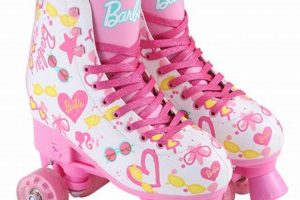
Quad skates feature two pairs of wheels arranged in a rectangular or square pattern, with two wheels positioned at the front and two at the rear of the boot. This configuration provides a wider base of support, enhancing stability and balance. Quad configurations are traditionally favored in roller derby, artistic skating, and recreational settings where stability and controlled movements are prioritized. The wider stance offers increased resistance to lateral forces, aiding in blocking and maneuvering in close proximity to other skaters.
- Wheelbase Length and Maneuverability
The wheelbase, or the distance between the front and rear wheels, affects maneuverability in both inline and quad skates. Shorter wheelbases enhance agility and allow for tighter turns, while longer wheelbases promote stability and speed. Inline skates often feature adjustable wheelbase lengths, allowing skaters to customize the setup to their specific needs. Quad skates typically have a fixed wheelbase determined by the plate design. The wheelbase configuration can be modified with replacement plate if the plate is modular.
- Wheel Size and Rolling Efficiency
Wheel size also plays a significant role in performance. Larger wheels generally offer lower rolling resistance and greater speed, while smaller wheels provide enhanced acceleration and maneuverability. Inline skates commonly utilize larger diameter wheels than quad skates. Larger inline skate wheels are more efficient at moving through skating area. The combination of wheel size and configuration impacts the overall skating experience.
In summary, wheel configuration is fundamental to differentiating the performance characteristics of inline and quad skates. The linear arrangement of inline skates promotes speed and agility, while the rectangular arrangement of quad skates emphasizes stability and control. The selection between these two skate types hinges on the skater’s individual preferences, intended use, and desired balance of speed, maneuverability, and stability.
6. Intended Use

The specific application intended for the skates is a pivotal determinant in selecting between inline and quad designs. The demands of the chosen activity directly correlate with the optimal skate type.
- Recreational Skating
For casual skating on paved trails or in parks, either skate type can be suitable. Quad skates offer inherent stability, potentially appealing to beginners or those prioritizing leisurely enjoyment. Inline skates provide a faster, more efficient stride, appealing to those seeking a light workout. The skater’s comfort level and preferred style influence the choice.
- Roller Derby
Roller derby predominantly utilizes quad skates. The stability and maneuverability afforded by the quad configuration are essential for the sport’s demanding requirements, including blocking, jamming, and navigating close-quarters combat. The rectangular wheel arrangement facilitates lateral movements and provides the necessary stability for physical contact.
- Speed Skating
Speed skating overwhelmingly favors inline skates. The inline design minimizes rolling resistance, enabling higher velocities. Aerodynamic efficiency and power transfer are maximized with the inline configuration. The linear wheel arrangement reduces friction and contributes to faster times.
- Aggressive Skating/Skate Park
Aggressive skating, performed in skate parks or on urban terrain, often employs specialized inline skates. These skates are designed with reinforced frames and smaller, harder wheels for grinding and performing tricks. While quad skates can be used in skate parks, inline skates provide greater versatility and are better suited for performing a wider range of maneuvers. They are suitable for grinding and other advanced tricks.
Therefore, the intended use dictates the ideal skate selection. Each skating discipline leverages specific advantages inherent to either the inline or quad configuration. Aligning the skate type with the activity ensures optimal performance and enhances the overall skating experience.
7. Skill Level

Skill level is a fundamental factor in determining the suitability of inline skates versus quad skates. The inherent characteristics of each skate type cater to varying degrees of skating proficiency. Novice skaters often benefit from the greater stability offered by quad skates. The wider base of support mitigates balance challenges, facilitating easier learning of basic skating techniques. This stability allows beginners to focus on fundamental movements without the added complexity of managing a less stable platform. The cause-and-effect relationship is direct: enhanced stability leads to quicker skill acquisition for those new to skating. The significance of skill level is paramount, as selecting a skate that aligns with one’s proficiency level minimizes frustration and promotes a positive learning experience. As skill increases, the skater may then migrate to an inline skate for enhanced speed and maneuverability.
Conversely, advanced skaters often gravitate towards inline skates to leverage their superior speed and agility. The inline configuration enables more intricate maneuvers, higher velocities, and specialized techniques employed in disciplines such as speed skating, roller hockey, and aggressive skating. For example, a competitive speed skater requires the aerodynamic efficiency and power transfer capabilities of inline skates to achieve optimal performance. The choice is influenced by the skater’s proficiency and the demands of their chosen skating style. An attempt by a novice skater to immediately use inline skates may lead to a higher risk of falls and injury. The skater’s natural skill level is crucial to understanding the benefits of inline skates.
In summary, skill level significantly influences the appropriateness of inline versus quad skates. Quad skates offer enhanced stability for beginners, while inline skates provide advanced skaters with the tools for greater speed and maneuverability. Selecting a skate type that aligns with one’s skill level enhances the learning process, promotes safety, and optimizes performance. Ignoring this connection can lead to frustration, injury, and a suboptimal skating experience.
Frequently Asked Questions
The following questions address common inquiries regarding the distinctions between inline skates and quad skates. These answers aim to provide clarity on their respective attributes and optimal applications.
Question 1: Are inline skates inherently more dangerous than quad skates?
The perception of danger is often linked to skill level and intended use. Inline skates, with their potential for higher speeds, may present a greater risk of injury for inexperienced skaters. However, with proper training and safety equipment, the risk can be mitigated. Quad skates, while providing greater stability, are not immune to causing injury.
Question 2: Can inline skates be used for roller derby?
While roller derby traditionally utilizes quad skates, there are no universal regulations prohibiting inline skates. However, the stability and maneuverability characteristics of quad skates are generally considered more advantageous for the demands of the sport. Inline skates may lack the necessary lateral stability for blocking and physical contact.
Question 3: What type of skate is better for outdoor skating?
Both skate types can be used outdoors. Inline skates may be more suitable for smooth, paved surfaces, while quad skates can handle slightly rougher terrain due to their wider wheel base. Wheel hardness should be adjusted based on the skating surface. Softer wheels on rougher pavement or harder wheels on smoother pavement.
Question 4: Are inline skates more expensive than quad skates?
Pricing varies based on brand, features, and quality. Generally, high-end models of either type can be comparable in cost. Entry-level inline skates may be slightly more expensive due to the complexity of their construction. However, it is important to get the right skates and not worry about the price.
Question 5: Can I convert quad skates into inline skates, or vice versa?
Converting between the two types is generally not feasible. The boot and plate designs are fundamentally different, making a conversion impractical and potentially unsafe. It is recommended to purchase skates specifically designed for the intended purpose.
Question 6: How does wheel size affect the skating experience?
Larger wheels typically offer lower rolling resistance and greater speed, making them suitable for distance skating. Smaller wheels provide enhanced acceleration and maneuverability, benefiting skaters performing tricks or requiring quick turns. The optimal wheel size depends on the skating style and desired performance characteristics.
The answers provided aim to clarify the fundamental differences between inline and quad skates. Individual preferences and intended applications should guide the selection process.
The following section will provide resources and links for additional information on skate selection, maintenance, and safety.
roller blade vs roller skate
This exploration has illuminated the multifaceted differences between inline and quad skates. Key attributes such as stability, maneuverability, speed, ankle support, wheel configuration, intended use, and skill level have been examined to provide a comprehensive understanding of each skate type. These comparative analyses have underscored the importance of informed decision-making when selecting skates.
The information presented should serve as a foundation for readers to critically assess their individual needs and preferences. The proper selection ensures safety, enhances performance, and promotes long-term enjoyment. Further research and practical experience are encouraged to refine the selection process and optimize the skating endeavor.
![Learn Roller Skate in ASL: Sign It! [Guide] | How to Skateboard: A Beginner's Guide to Your First Board & Tricks](https://cruzskateshop.com/wp-content/uploads/2026/06/th-25-300x200.jpg "Learn Roller Skate in ASL: Sign It! [Guide] How to Skateboard: A Beginner's Guide to Your First Board & Tricks")