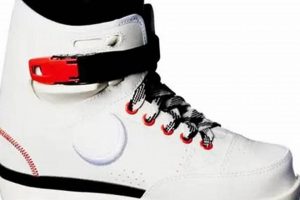
The terms “inline skates” and “roller blades” are frequently used interchangeably, often referring to a type of skate where the wheels are arranged in a single line. This design contrasts with traditional quad skates, where wheels are arranged in two pairs, side by side. These skates are used for recreation, fitness, and various competitive sports.
This mode of wheeled locomotion offers numerous benefits, including improved cardiovascular health, enhanced balance and coordination, and a fun, low-impact exercise option. Their origins can be traced back to attempts to simulate ice skating on dry land, evolving over time into the sophisticated designs seen today. They provide both a practical mode of transportation and a source of entertainment.
The following sections will delve into specific design features, performance characteristics, and typical applications, offering a detailed comparison to inform the user about these versatile wheeled devices. Particular attention will be given to variations within the general category and their suitability for different skill levels and activities.
Considerations for Selecting Inline Skates
This section provides guidance for choosing appropriate inline skates, focusing on key features and applications. Factors such as skill level, intended use, and budget should influence the selection process.
Tip 1: Determine Skill Level. Beginner skaters benefit from skates with greater ankle support and slower bearings. Advanced skaters may prefer models with stiffer boots and faster bearings for enhanced speed and maneuverability.
Tip 2: Identify Intended Use. Recreational skating requires comfortable and durable skates. Aggressive skating demands robust skates with grind plates. Speed skating necessitates lightweight skates with a low profile.
Tip 3: Assess Boot Construction. Hard-shell boots offer superior support and protection, while soft-shell boots prioritize comfort and breathability. The choice depends on skating style and desired level of support.
Tip 4: Evaluate Wheel Durometer. Softer wheels (lower durometer number) provide better grip and shock absorption but wear faster. Harder wheels (higher durometer number) offer greater speed and durability but less grip.
Tip 5: Inspect Bearing Quality. ABEC ratings indicate bearing precision. Higher ABEC ratings signify smoother and faster rolling. However, higher ratings may not be necessary for recreational skating.
Tip 6: Check Frame Material. Aluminum frames offer superior stiffness and power transfer compared to plastic frames. Composite frames provide a balance of stiffness and weight.
Tip 7: Ensure Proper Fit. Skates should fit snugly without being too tight. A proper fit prevents blisters and enhances control. Try on skates with the socks intended for use during skating.
Careful consideration of these factors will lead to a more satisfying and safer skating experience. Selecting the appropriate inline skates is crucial for maximizing performance and enjoyment.
The following concluding remarks will summarize key considerations and reiterate the importance of informed decision-making.
1. Wheel Arrangement

Wheel arrangement is a defining characteristic that distinguishes inline skates from traditional quad skates, often implicitly linked to the term “roller blades.” The linear configuration significantly impacts performance, maneuverability, and the overall skating experience.
- Inline Configuration and Efficiency
Inline skates feature wheels arranged in a single line along the frame. This design reduces rolling resistance, enabling higher speeds and greater efficiency. The linear arrangement allows for a longer stride and more direct power transfer compared to quad skates.
- Maneuverability and Agility
The inline wheel configuration enhances maneuverability, facilitating tighter turns and more precise control. This is particularly advantageous for activities like slalom skating and aggressive skating, where quick changes in direction are essential. The design necessitates a greater degree of balance and coordination.
- Wheel Size and Spacing Impact
Variations in wheel size and spacing influence the skating experience. Larger wheels generally provide higher speeds and smoother rolling over rough surfaces, while smaller wheels enhance acceleration and agility. Wheel spacing affects stability and turning radius, influencing the skate’s responsiveness.
- Frame Length and Stability
Frame length affects the overall stability of the skate. Longer frames offer greater stability at higher speeds, making them suitable for speed skating and long-distance skating. Shorter frames provide increased maneuverability, benefiting recreational and aggressive skaters.
Understanding the nuances of wheel arrangement allows skaters to select equipment best suited to their specific needs and skating style. The linear configuration, fundamental to “roller blades” and inline skates, distinguishes them from quad skates and dictates their performance characteristics. Wheel size, spacing, and frame length further refine the skating experience, allowing for customization based on individual preferences.
2. Boot Design

Boot design plays a crucial role in the performance, comfort, and safety of inline skates, influencing stability, support, and energy transfer. The construction and materials used in boot design significantly impact the skating experience. Understanding the different types of boots is essential for selecting appropriate equipment.
- Hard-Shell Boots
Hard-shell boots offer superior support and protection, typically constructed from rigid plastics or composites. These boots are ideal for aggressive skating and high-impact activities, providing excellent ankle support and preventing injuries. They generally offer less ventilation and may be less comfortable for recreational skating.
- Soft-Shell Boots
Soft-shell boots prioritize comfort and breathability, often featuring padded liners and flexible materials. These boots are well-suited for recreational skating and fitness activities, providing a comfortable fit and allowing for greater range of motion. They offer less support and protection compared to hard-shell boots.
- Hybrid Boot Designs
Hybrid boots combine elements of both hard-shell and soft-shell designs, aiming to balance support, protection, and comfort. These boots often feature a supportive outer shell with a padded inner liner, providing a versatile option for various skating styles. They represent a compromise between performance and comfort.
- Closure Systems and Fit
Closure systems, including laces, buckles, and straps, significantly impact the fit and adjustability of inline skate boots. Effective closure systems ensure a secure and comfortable fit, preventing slippage and enhancing control. The quality and design of closure systems contribute to overall performance.
The choice of boot design depends on the intended use, skill level, and personal preferences of the skater. Whether prioritizing support, comfort, or a balance of both, understanding the characteristics of different boot designs is essential for selecting inline skates that meet specific needs. The evolution of “roller blades,” encompassing inline skates, reflects advancements in boot technology to enhance the skating experience.
3. Frame Material

Frame material significantly influences the performance and durability of inline skates. The frame, which houses the wheels, transmits energy from the skater’s foot to the ground. Consequently, the material composition directly affects power transfer, stability, and the skate’s ability to withstand stress. Inline skates, often colloquially referred to by the brand name “roller blades,” utilize frames constructed from various materials, each offering distinct advantages and disadvantages. For instance, aluminum frames are prevalent in high-performance skates due to their superior stiffness and power transfer capabilities. This stiffness minimizes energy loss during each stride, resulting in enhanced speed and efficiency. A skater participating in a speed skating competition would likely choose skates with aluminum frames for optimal performance.
Plastic or composite frames, conversely, are often found in recreational inline skates. These materials offer a balance of affordability and shock absorption, making them suitable for casual skating and beginners. While they may not provide the same level of power transfer as aluminum frames, they contribute to a more comfortable ride by dampening vibrations from uneven surfaces. Aggressive skates, designed for tricks and stunts, also employ specialized frames constructed from reinforced materials to withstand the impacts associated with grinds and jumps. These frames often incorporate grind plates to protect the boot and provide a smooth sliding surface.
In summary, the choice of frame material is a critical decision when selecting inline skates. Aluminum frames prioritize performance and power transfer, plastic frames emphasize comfort and affordability, and specialized frames cater to specific skating styles like aggressive skating. Understanding these material properties allows skaters to select equipment that aligns with their skill level, intended use, and budgetary constraints. The evolution of frame materials in “roller blades” and inline skates reflects a continuous effort to optimize performance, durability, and user experience.
4. Braking System

The braking system is an integral component of inline skates, directly impacting safety and control. While frequently associated with the brand name “Rollerblade,” the necessity of effective braking transcends brand affiliation. The most common system utilizes a heel brake, a rubber pad attached to the rear of one or both skates. This design relies on the skater shifting their weight backward, lifting the toe, and applying pressure to the brake pad against the ground. Its simplicity makes it suitable for beginners and recreational skaters. However, advanced maneuvers or high-speed situations may necessitate alternative braking methods.
T-stops, a technique involving dragging one skate perpendicular to the direction of motion, provide a more controlled deceleration option. While effective, the T-stop requires practice and can lead to uneven wheel wear. Some aggressive skates forgo traditional braking systems altogether, relying on sliding and controlled falls for stopping. Speed skates often prioritize weight reduction and aerodynamic efficiency over dedicated braking systems, requiring skaters to possess exceptional control and employ advanced stopping techniques. The design and effectiveness of the braking system significantly influence the skater’s ability to react to unexpected obstacles or changes in terrain. For example, a skater encountering pedestrian traffic on a shared-use path would require a responsive and reliable braking system to avoid a collision.
In conclusion, the braking system is a crucial safety feature on inline skates, influencing the skater’s ability to control speed and avoid hazards. While the heel brake remains a prevalent option, alternative techniques and specialized skates cater to diverse skill levels and skating styles. Understanding the limitations and advantages of different braking methods is essential for promoting safe and responsible skating practices. The evolution of braking technology in “roller blades” and inline skates underscores the continuous pursuit of enhanced safety and control within the sport.
5. Intended Use

The intended use of inline skates dictates crucial design considerations and component selections, highlighting the significance of defining this parameter before choosing between models, a choice sometimes simplified as “roller blades” versus inline skates. The causal relationship is straightforward: desired activity shapes equipment requirements. For example, skates designed for aggressive skating prioritize durability and maneuverability, whereas those intended for recreational use emphasize comfort and stability. This distinction directly impacts frame material, boot design, and wheel configuration.
Consider the case of a fitness enthusiast seeking a low-impact cardiovascular workout. Such an individual would benefit from skates with soft-shell boots for comfort, moderately sized wheels for efficient rolling, and a stable frame for controlled movement. Conversely, a speed skater requires lightweight skates with a stiff boot for optimal power transfer, large wheels for high velocity, and a low-profile frame for aerodynamic efficiency. The differentiation in intended use translates to vastly different skate characteristics, influencing the user’s ability to achieve desired outcomes. The prevalence of a particular brand, such as “Rollerblade,” does not negate the fundamental principle that equipment must align with its intended purpose.
Ultimately, a clear understanding of intended use enables informed decision-making, preventing mismatches between equipment capabilities and user expectations. This understanding mitigates the risk of injury, enhances performance, and maximizes enjoyment. Whether recreational skating, aggressive stunts, speed competitions, or fitness training, the intended application serves as the primary determinant in selecting appropriate inline skates. Therefore, focusing on activity needs before considering branding or terminology such as roller blades leads to an optimal purchase.
Frequently Asked Questions
This section addresses common inquiries regarding the distinction between inline skates and roller blades, providing clarification on terminology, design, and usage. These answers adopt an informative approach.
Question 1: Are “inline skates” and “roller blades” fundamentally different products?
The terms are often used interchangeably. Historically, “Rollerblade” was a specific brand that popularized inline skates. However, the term has become generalized, much like “Kleenex” for facial tissues. Therefore, while “Rollerblade” denotes a particular manufacturer, it frequently functions as a generic term for inline skates.
Question 2: Does the wheel configuration vary between inline skates and roller blades?
No. Both designs feature wheels arranged in a single line along the frame. This distinguishes them from quad skates, which have two pairs of wheels arranged side-by-side. The linear wheel arrangement is a defining characteristic of both inline skates and what are commonly called “roller blades.”
Question 3: Are there performance differences between inline skates marketed as “roller blades” and other inline skates?
Performance depends on specific design features (boot stiffness, frame material, wheel size) rather than simply the brand name or term used. A “Rollerblade” brand inline skate designed for speed will outperform a generic inline skate designed for recreational use, regardless of the terminology employed.
Question 4: Should one consider a specific brand when choosing inline skates?
Brand reputation can be an indicator of quality and durability. Established brands often invest in research and development, resulting in advanced technologies and reliable products. However, evaluating specific features and reviews is more critical than brand loyalty alone.
Question 5: Is there a difference in safety features between inline skates and “roller blades”?
Safety features are inherent in the skate’s design (e.g., ankle support, braking system) and independent of whether the skates are marketed under the “Rollerblade” name or as general inline skates. Always prioritize appropriate protective gear, regardless of the brand or terminology.
Question 6: Are certain activities better suited to “roller blades” versus other inline skates?
Activity suitability depends on the skate’s design, not the term used to describe it. Aggressive skating requires robust skates with grind plates, while speed skating necessitates lightweight skates with aerodynamic features. The specific design of the inline skate determines its applicability to a given activity.
The key takeaway is that the terms “inline skates” and “roller blades” are largely synonymous. Selection should be based on intended use, design features, and individual preferences rather than relying solely on terminology.
The following section will explore best practices for maintaining inline skates to ensure longevity and optimal performance.
Conclusion
This exploration has demonstrated that the distinction between “inline skates” and “roller blades” is largely semantic, rooted in the historical dominance of a particular brand. Functionally, both terms refer to skates with wheels arranged in a single line. The selection of appropriate equipment should be guided by specific needs, including intended use, skill level, and desired performance characteristics, rather than by nomenclature.
Therefore, a discerning approach is essential. Prioritize evaluating design features, such as boot construction, frame material, and braking systems, to ensure optimal performance and safety. Continued advancements in materials and technology will undoubtedly further refine inline skate design, demanding ongoing vigilance in assessing product specifications and aligning equipment choices with individual requirements. A commitment to informed decision-making is paramount.

![Top Best Inline Skate Brands in [Year]: Expert Picks | How to Skateboard: A Beginner's Guide to Your First Board & Tricks](https://cruzskateshop.com/wp-content/uploads/2026/03/th-163-300x200.jpg "Top Best Inline Skate Brands in [Year]: Expert Picks How to Skateboard: A Beginner's Guide to Your First Board & Tricks")