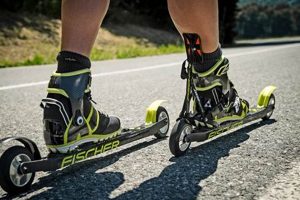
The selection of appropriate skating equipment hinges significantly on the intended environment. Skates designed for use on smooth, hard surfaces such as rinks, contrast markedly with those intended for rougher, more varied outdoor terrains. This distinction affects component choices, including wheel composition, bearing characteristics, and boot construction, each optimized for the specific demands of the intended skating location.
Choosing the correct skate type enhances performance, safety, and longevity of the equipment. Indoor models generally prioritize maneuverability and grip on polished floors, while outdoor counterparts emphasize durability and shock absorption to navigate uneven surfaces effectively. The historical development of roller skating saw early models adapted to both indoor and outdoor settings, eventually leading to specialized designs tailored to the unique challenges presented by each environment. Understanding these differences is crucial for skaters aiming to maximize their experience and minimize potential risks.
The following sections will delve into the specific characteristics of skate types designed for use in different environments. The construction, component materials, and performance capabilities will be examined to illustrate the critical considerations when selecting the ideal skate.
Skate Selection Guidance
The following recommendations are intended to assist in the selection of skates appropriate for their intended use. Adherence to these guidelines can contribute to enhanced performance, increased safety, and prolonged equipment lifespan.
Tip 1: Wheel Hardness Assessment: Prioritize wheel durometer ratings. Softer wheels (78A-85A) are generally preferable for outdoor use due to their shock-absorbing properties. Harder wheels (88A and above) are typically better suited for indoor rinks where smooth surfaces offer minimal resistance.
Tip 2: Bearing Precision Evaluation: Assess bearing ABEC ratings. Higher ABEC ratings indicate tighter tolerances and potentially greater speed; however, for outdoor skating, durability may be more critical than absolute speed. Select bearings designed to withstand the ingress of dirt and debris.
Tip 3: Boot Material Consideration: Evaluate boot materials based on the intended environment. Indoor skating may benefit from lighter, more breathable boots, while outdoor skating may necessitate more robust and supportive materials to protect against impacts and abrasion.
Tip 4: Frame Material and Design: Examine frame materials and construction. Aluminum frames generally offer greater stiffness and responsiveness, suitable for precision skating. Nylon or composite frames may provide greater vibration damping for outdoor use.
Tip 5: Regular Maintenance Implementation: Establish a consistent maintenance schedule. Clean bearings regularly, check for wheel wear, and inspect boots for damage. Proper maintenance extends the life of the equipment and ensures optimal performance.
Tip 6: Protective Gear Utilization: Employ appropriate protective gear regardless of the skating environment. Helmets, knee pads, elbow pads, and wrist guards significantly reduce the risk of injury in the event of a fall.
Adhering to these recommendations will facilitate informed decision-making when procuring skates. Proper selection enhances safety, improves performance, and prolongs the life of the equipment, optimizing the overall skating experience.
The subsequent section will provide a concluding summary of the critical factors in skate selection.
1. Wheel Hardness

Wheel hardness, measured on the durometer scale, directly impacts skate performance on different surfaces. Softer wheels, typically ranging from 78A to 85A, provide enhanced grip and shock absorption, which are beneficial on the irregular and often abrasive surfaces encountered outdoors. The softer compound deforms slightly to conform to imperfections in the pavement, increasing contact area and thus traction. In contrast, harder wheels, generally 88A and above, minimize rolling resistance on the smooth, polished surfaces of indoor rinks. The reduced deformation allows for greater speed and responsiveness. The selection of inappropriate wheel hardness results in compromised performance: soft wheels used indoors feel sluggish, while hard wheels outdoors can lead to a jarring ride and reduced control.
Consider, for instance, a skater using 78A wheels outdoors. These wheels conform to cracks, pebbles, and minor surface variations, maintaining contact and control. The skater experiences a smoother ride and more predictable handling. Conversely, using 95A wheels outdoors would result in a significantly bumpier experience due to the lack of shock absorption. Indoor rinks, characterized by their consistent and smooth surfaces, benefit from harder wheels. Skaters achieve greater speed and agility due to the reduced friction between the wheel and the floor. Selecting the correct wheel hardness ensures efficient energy transfer and optimizes the skating experience for the intended environment.
The influence of wheel hardness extends beyond mere comfort. Incorrect durometer selection increases the risk of falls, reduces maneuverability, and accelerates wheel wear. Careful consideration of wheel hardness based on the skating environment is a crucial component of responsible skate selection. Understanding the interplay between wheel durometer, surface characteristics, and skating style is essential for maximizing performance and safety. Furthermore, the long-term durability of the wheels is affected by using them on inappropriate surfaces.
2. Surface Friction

Surface friction represents a critical factor influencing the design and performance characteristics of skates intended for different environments. The coefficient of friction between the skate wheel and the skating surface dictates the amount of grip, speed, and control a skater experiences. Indoor and outdoor surfaces present distinctly different frictional properties, necessitating specific design adaptations to optimize skating performance.
- Coefficient Variation
Indoor surfaces, typically polished concrete or treated wood, exhibit a low coefficient of friction, requiring harder wheel compounds to minimize rolling resistance and maximize speed. Conversely, outdoor surfaces, such as asphalt or concrete sidewalks, possess a higher coefficient of friction due to their rougher texture and presence of debris. Softer wheel compounds are preferred outdoors to increase grip and compensate for the irregularities of the surface. Failure to account for coefficient variation leads to compromised performance and reduced control.
- Debris Impact
Outdoor skating environments inevitably involve exposure to dirt, pebbles, and other debris. These contaminants increase surface friction and can impede wheel rotation. Skates designed for outdoor use often incorporate features such as sealed bearings to mitigate the ingress of debris and maintain optimal performance. Indoor skating environments generally remain free of significant debris, allowing for the use of more open bearing designs that prioritize speed over protection from contaminants.
- Surface Roughness
The micro-roughness of the skating surface significantly influences the contact area between the wheel and the ground. Smooth indoor surfaces maximize contact area with harder wheels, resulting in efficient energy transfer and high speeds. Rough outdoor surfaces reduce contact area, requiring softer wheels to conform to the irregularities and maintain adequate grip. The selection of appropriate wheel durometer is directly related to the surface roughness of the intended skating environment.
- Environmental Conditions
Outdoor skating surfaces are susceptible to changes in environmental conditions, such as temperature and moisture. Temperature fluctuations can affect the durometer of the wheel compound, altering its frictional properties. Moisture increases the coefficient of friction, potentially reducing speed and increasing the risk of slippage. Indoor surfaces offer a controlled environment, minimizing the impact of external factors on surface friction.
In summary, surface friction acts as a primary differentiator in the design of skates. Consideration of the coefficient of friction, debris impact, surface roughness, and environmental conditions is crucial for optimizing performance, safety, and user experience. The selection of appropriate wheel compounds, bearing designs, and other features directly correlates to the frictional properties of the intended skating environment.
3. Boot Support

Boot support in skate construction plays a pivotal role in determining the stability, control, and safety of the skater, particularly when differentiating between indoor and outdoor models. The level of support provided directly influences the skater’s ability to maintain balance, execute maneuvers, and absorb impacts, varying significantly based on the intended skating environment. Insufficient boot support leads to instability, increasing the risk of ankle injuries and compromising performance, especially on uneven outdoor surfaces. Conversely, excessive boot support can restrict movement, hindering agility on smooth indoor rinks.
Outdoor skates necessitate more robust boot structures to provide ample ankle support and impact absorption. These models often feature reinforced materials, higher cuffs, and additional padding to mitigate the effects of uneven terrain, cracks, and obstacles encountered during outdoor skating. A skater traversing a rough asphalt path, for example, requires a boot capable of preventing ankle roll and absorbing vibrations from the uneven surface. Indoor skates, designed for smooth, predictable surfaces, typically employ lighter, more flexible boot designs that prioritize maneuverability and responsiveness. A skater performing spins or intricate footwork in a rink benefits from a boot that allows for a greater range of motion without sacrificing stability.
Ultimately, the selection of appropriate boot support is critical for optimizing both safety and performance. Outdoor skates require a higher degree of support to withstand the rigors of varied terrain, while indoor skates benefit from a more flexible design that enhances agility. A skater’s choice of skate must carefully consider the specific demands of the intended skating environment to ensure a safe and enjoyable experience. Neglecting this aspect can result in injury, reduced performance, and a diminished skating experience. The appropriate level of boot support contributes significantly to the overall effectiveness of the skating equipment.
4. Bearing Type

The bearing type within skate wheels fundamentally influences the performance characteristics of skates intended for either indoor or outdoor use. Bearings facilitate wheel rotation and are thus critical for speed, efficiency, and durability. Indoor skates typically utilize bearings optimized for minimal rolling resistance and high precision, while outdoor skate bearings are designed to withstand harsher conditions and increased contaminant exposure. The specification of appropriate bearing types directly correlates to the longevity and optimal function of skates in their respective environments.
A common example is the use of ABEC-rated bearings. Higher ABEC ratings (e.g., ABEC 7 or 9) indicate tighter tolerances and are often preferred for indoor skating where smooth surfaces allow these high-precision bearings to achieve maximum speed. However, these bearings are more susceptible to damage from dirt and debris. Outdoor skates, conversely, often employ bearings with lower ABEC ratings (e.g., ABEC 3 or 5) or those with specific seals designed to prevent the ingress of contaminants. Additionally, some outdoor bearings are filled with a thicker lubricant to further protect against dirt and moisture. The choice of bearing seal material (e.g., rubber, metal) also influences its suitability for specific environments, with rubber seals providing better protection against contaminants but potentially introducing more friction than metal shields.
In summary, the selection of appropriate bearing types for either indoor or outdoor skates hinges on a balance between speed, precision, and durability. Indoor skates benefit from bearings optimized for speed and minimal rolling resistance, while outdoor skates require bearings designed to withstand the rigors of varied terrain and contaminant exposure. Proper bearing maintenance, including regular cleaning and lubrication, is essential for maximizing the lifespan and performance of skates, regardless of their intended environment. Failure to select and maintain bearings appropriately can lead to reduced speed, increased rolling resistance, and premature bearing failure, ultimately compromising the skating experience.
5. Terrain Adaptability
Terrain adaptability dictates the suitability of skates for specific environments. Skates optimized for smooth, predictable indoor surfaces exhibit significantly different characteristics from those designed to navigate the varied and often unpredictable terrain encountered outdoors. The capacity of a skate to accommodate diverse surface conditions directly affects the skater’s control, stability, and overall safety.
- Wheel Size and Profile
Larger diameter wheels (76mm and above) generally offer improved roll-over capability on outdoor terrain, allowing the skater to navigate cracks, pebbles, and uneven surfaces more efficiently. The larger diameter bridges small obstacles, maintaining momentum and reducing the risk of abrupt stops or instability. Indoor skates often utilize smaller diameter wheels (72mm and below) for increased maneuverability and responsiveness on smooth, flat surfaces. Wheel profile, whether rounded or flat, also influences terrain adaptability, with rounded profiles typically providing better turning ability and flat profiles maximizing grip.
- Frame Length and Configuration
Longer frames enhance stability, particularly at higher speeds, making them advantageous for outdoor skating where uneven surfaces can induce instability. Shorter frames offer increased agility and responsiveness, suitable for the tight turns and quick maneuvers performed in indoor rinks. Frame configuration, such as the number of wheels and their spacing, further influences terrain adaptability. Three-wheel configurations, for example, can provide a balance between speed and maneuverability, while four-wheel configurations generally offer greater stability.
- Suspension Systems
Some skates incorporate suspension systems or articulated frames designed to absorb shocks and vibrations from uneven terrain. These systems enhance comfort and control on rough surfaces, reducing fatigue and the risk of injury. While less common in traditional roller skates, these features are analogous to suspension systems in off-road vehicles, designed to maintain contact and stability on challenging surfaces. Suspension systems are typically not necessary for indoor skating due to the smooth and predictable nature of the environment.
- Boot Flexibility and Articulation
The degree of flexibility in the skate boot affects the skater’s ability to adapt to changes in terrain. More flexible boots allow for greater ankle flexion and extension, enabling the skater to maintain balance and control on uneven surfaces. Stiffer boots provide greater support and stability but may restrict movement, making them less suitable for navigating complex terrain. The ideal boot flexibility represents a compromise between support and agility, tailored to the specific demands of the intended skating environment.
These factors collectively determine the terrain adaptability of skates. Skates optimized for outdoor use prioritize stability, shock absorption, and the ability to navigate obstacles, while those designed for indoor use emphasize maneuverability and responsiveness on smooth, consistent surfaces. Understanding these differences is crucial for selecting skates that are appropriate for the intended skating environment, maximizing performance and minimizing the risk of injury. The interplay between wheel size, frame length, suspension systems, and boot flexibility dictates the skate’s capacity to handle diverse surface conditions.
Frequently Asked Questions
The following section addresses common inquiries regarding the selection and utilization of skates, providing clarification on key distinctions and performance considerations.
Question 1: What constitutes the primary difference in wheel composition between skates designed for indoor versus outdoor use?
The primary difference resides in the durometer, or hardness, of the wheel. Outdoor skates employ softer wheels, typically in the 78A-85A range, to provide grip and shock absorption on rough surfaces. Indoor skates utilize harder wheels, generally 88A and above, to minimize rolling resistance on smooth surfaces.
Question 2: Why are higher ABEC-rated bearings not necessarily optimal for skates used in outdoor environments?
Higher ABEC ratings indicate tighter tolerances and reduced rolling resistance, beneficial for indoor skating. However, these bearings are more susceptible to damage from dirt and debris encountered outdoors. Outdoor skates benefit from bearings with robust seals, even if the ABEC rating is lower.
Question 3: How does boot construction differ between skate types designed for indoor and outdoor skating?
Outdoor skate boots often feature more robust construction, providing increased ankle support and impact absorption to navigate uneven terrain. Indoor skate boots typically prioritize flexibility and responsiveness for enhanced maneuverability on smooth surfaces.
Question 4: Is it permissible to use skates designed for indoor use outdoors, and what are the potential consequences?
While technically possible, using indoor skates outdoors is not recommended. The harder wheels offer limited grip and shock absorption, leading to a jarring ride, reduced control, and increased risk of falls. Furthermore, outdoor use accelerates wear on indoor-specific components.
Question 5: Are there specific maintenance procedures recommended for skates based on their intended environment?
Yes. Outdoor skates require more frequent cleaning of bearings and wheels due to exposure to dirt and debris. Indoor skates benefit from occasional cleaning to remove dust accumulation but generally require less intensive maintenance.
Question 6: What role does frame material play in determining the suitability of skates for indoor versus outdoor use?
Aluminum frames offer increased stiffness and responsiveness, suitable for precision skating often performed indoors. Nylon or composite frames provide greater vibration damping, beneficial for outdoor use where impact absorption is paramount.
The key takeaways from these FAQs center on the importance of selecting equipment tailored to the intended skating environment. Doing so maximizes performance, enhances safety, and prolongs the lifespan of the skates.
The following section will provide a concluding summary of the considerations discussed.
Conclusion
This examination of “indoor vs outdoor roller skates” underscores the critical importance of matching equipment to the intended environment. Factors such as wheel durometer, bearing type, boot support, and frame material are not merely cosmetic considerations but rather fundamental determinants of performance, safety, and longevity. Improper equipment selection compromises the skating experience and increases the risk of injury.
The informed selection of appropriate equipment represents a crucial investment. Skaters must carefully evaluate the characteristics of their intended environment and choose skates accordingly. Diligence in this regard ensures optimal performance, minimizes the risk of injury, and promotes a safe and enjoyable skating experience. The principles outlined herein serve as a foundation for making responsible decisions regarding skate selection, irrespective of skill level or skating style.
![Learn Roller Skate in ASL: Sign It! [Guide] | How to Skateboard: A Beginner's Guide to Your First Board & Tricks](https://cruzskateshop.com/wp-content/uploads/2026/06/th-25-300x200.jpg "Learn Roller Skate in ASL: Sign It! [Guide] How to Skateboard: A Beginner's Guide to Your First Board & Tricks")