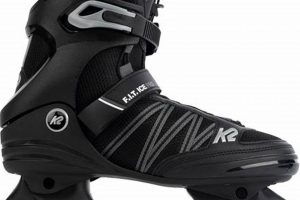
The component of the skating boot which provides stability to the lower leg and foot within the skate is a critical factor in performance and safety. It is designed to minimize lateral movement, preventing excessive pronation or supination during skating maneuvers. For example, a figure skater executing a complex jump requires a high degree of this stability to ensure a controlled landing.
Adequate stabilization of the ankle joint is paramount for injury prevention, particularly sprains and fractures. It enables efficient power transfer from the leg to the blade, improving skating efficiency and control. Historically, advancements in materials and design have led to increasingly sophisticated methods of providing this stabilization, moving from simple leather construction to advanced composite materials and customizable support systems.
The ensuing discussion will elaborate on the various types, construction methods, and fitting considerations related to structures that reinforce the lower leg while skating. The impact of proper fit and maintenance will also be examined to ensure optimal performance and longevity.
Optimizing Lower Leg Stabilization in Ice Skates
Proper attention to the structure that reinforces the lower leg in ice skates can significantly impact performance and reduce the risk of injury. Adhering to the following guidelines will help ensure optimal functionality.
Tip 1: Prioritize Proper Fit: An ice skate must fit snugly around the foot and ankle without being overly tight. Ill-fitting skates can compromise stability and lead to discomfort or injury. Professional fitting is highly recommended.
Tip 2: Evaluate Stiffness Based on Skill Level: Beginner skaters typically benefit from softer, more flexible materials that allow for greater range of motion. Advanced skaters often require stiffer structures for enhanced power transfer and control.
Tip 3: Consider Heat Molding: Heat-moldable skates can be customized to conform precisely to the individual’s foot and ankle contours. This process optimizes contact and reduces pressure points, enhancing comfort and stability.
Tip 4: Inspect Regularly for Wear and Tear: Examine the skates frequently for signs of damage, such as cracks, tears, or softening of the material. Compromised structures may not provide adequate support and should be repaired or replaced.
Tip 5: Lace Skates Properly: Correct lacing technique is crucial for achieving the desired level of stabilization. Lace the lower portion of the skate snugly to secure the foot, and adjust the upper portion to provide appropriate reinforcement to the lower leg.
Tip 6: Address Discomfort Immediately: Any discomfort or pain in the foot or ankle should be addressed promptly. Continuing to skate with pain can exacerbate existing problems and lead to chronic injuries.
Maximizing stabilization through proper fit, material selection, and maintenance procedures can lead to improved performance and a reduced risk of injury. The following sections will delve further into specific aspects of ice skate design and maintenance.
1. Rigidity
Rigidity, as it pertains to the reinforcement structures found in ice skates, is a primary determinant of energy transfer, stability, and control. The level of resistance to deformation directly affects the skater’s ability to execute precise movements and maintain balance.
- Energy Transfer Efficiency
Increased rigidity allows for more efficient transfer of force from the skater’s leg to the blade, resulting in improved acceleration, speed, and jumping power. Softer or more flexible reinforcements dissipate energy, reducing performance effectiveness. A hockey player, for instance, relies on the rigidity of the boot to quickly translate leg drive into skating speed.
- Ankle Stability and Injury Prevention
A more rigid structure provides greater lateral stability, reducing the risk of ankle sprains and other injuries. The external support minimizes excessive pronation or supination, keeping the ankle in a neutral position during demanding maneuvers. Competitive skaters benefit from this increased stability, especially during landings.
- Control and Precision
Higher levels of rigidity enhance the skater’s ability to control the blade and execute precise movements. This is particularly important for figure skaters performing intricate footwork or hockey players making quick turns. The reinforcement acts as a lever, allowing for fine adjustments and greater responsiveness.
- Material Composition and Construction
The degree of rigidity is directly influenced by the materials used and the construction techniques employed. Stiffer materials, such as carbon fiber composites, provide greater support than traditional leather or synthetic materials. Similarly, reinforced construction methods, such as layered designs and external exoskeletons, enhance rigidity.
In conclusion, the level of rigidity in the lower leg reinforcement of an ice skate is a critical design consideration, influencing performance, safety, and overall skating experience. Optimal rigidity should be selected based on the skater’s skill level, skating style, and individual needs, balancing the benefits of power transfer and stability with the potential for reduced flexibility.
2. Flexibility

Flexibility, when considered in relation to the structures that reinforce the lower leg in ice skates, represents a critical counterpoint to rigidity. While stability and power transfer are often associated with stiffness, controlled flexibility contributes to agility, comfort, and injury prevention by accommodating natural movement patterns.
- Range of Motion and Agility
A degree of flexibility within the reinforcement structure permits a greater range of motion in the ankle joint. This increased range enables skaters to execute complex maneuvers, such as intricate footwork in figure skating or rapid changes in direction in hockey. A completely rigid structure would restrict movement, hindering agility and maneuverability.
- Shock Absorption and Impact Mitigation
The capacity for flex allows the skate to absorb some of the impact forces generated during skating. This shock absorption reduces stress on the ankle joint and surrounding tissues, mitigating the risk of stress fractures, tendonitis, and other overuse injuries. The reinforcement acts as a dampening mechanism, protecting the lower leg from repetitive strain.
- Comfort and Adaptability
Slight flexibility can improve comfort, especially during extended skating sessions. The ability of the reinforcement to conform to the skater’s anatomy reduces pressure points and minimizes friction, preventing blisters and chafing. Furthermore, flexibility allows the skate to adapt to subtle variations in foot shape and ankle alignment.
- Progressive Skill Development
For beginner and intermediate skaters, a moderate level of flexibility can aid in skill development. It allows for greater feedback from the ice, enabling skaters to refine their balance and control. Overly rigid reinforcements can mask subtle movements, hindering the learning process.
Therefore, the incorporation of flexibility into the design of ice skate reinforcements is a nuanced engineering challenge. The optimal balance between rigidity and flexibility depends on the skater’s skill level, skating style, and individual biomechanics. Skates designed for recreational use or for skaters developing foundational skills often incorporate greater flexibility than those intended for elite competitive performance, where maximal power transfer is prioritized.
3. Fit

Fit is inextricably linked to the effectiveness of any structure designed to reinforce the lower leg in ice skates. The support system’s intended function to stabilize the ankle, facilitate power transfer, and prevent injury is contingent upon proper conformity to the skater’s anatomy. An ill-fitting support, regardless of its material composition or design, will fail to deliver the intended benefits and may, in fact, increase the risk of adverse outcomes. For instance, a support that is too loose will allow excessive lateral movement, potentially leading to ankle sprains, while one that is too tight can restrict circulation and cause discomfort or even nerve damage.
The implications of fit extend beyond immediate comfort and safety. A properly fitted support optimizes energy transfer, enabling the skater to execute maneuvers with greater precision and efficiency. Consider a figure skater attempting a complex jump. If the reinforcement structure does not conform closely to the skater’s ankle, the skater may experience a loss of control upon landing, impacting both performance and safety. Similarly, in hockey, a well-fitted boot allows for quicker and more responsive turns, enhancing the player’s agility and maneuverability on the ice. Furthermore, the custom fitting process can mitigate pressure points and friction, reducing the likelihood of blisters and calluses that can impede performance over time.
In summary, fit is not merely a matter of comfort but a fundamental determinant of the effectiveness and safety of the structure that reinforces the lower leg in ice skates. The benefits of advanced materials and sophisticated designs are nullified if the support does not conform precisely to the skater’s unique anatomy. Therefore, professional fitting is essential for ensuring that the support functions as intended, optimizing performance, and minimizing the risk of injury.
4. Height

The height of the component reinforcing the lower leg in an ice skate significantly influences the degree of stabilization provided to the ankle joint and the lower leg itself. A taller structure extends further up the leg, offering increased support and limiting lateral movement. This added height can be particularly beneficial for individuals with weaker ankles or those participating in activities that demand greater stability, such as figure skating or hockey. For instance, figure skaters often utilize skates with a higher cut to provide the necessary support for complex jumps and landings, minimizing the risk of ankle sprains. Conversely, a shorter structure offers greater freedom of movement but sacrifices some degree of stability. This may be preferred by skaters seeking increased agility and range of motion, or by those who have strong ankles and require less external support.
The selection of an appropriate height depends on a multitude of factors, including the skater’s skill level, skating style, and individual anatomical characteristics. Beginner skaters may benefit from the added stability provided by a taller structure, which can help to prevent injuries and build confidence. As skaters progress and develop greater ankle strength and control, they may opt for a shorter structure to enhance their agility and responsiveness. Furthermore, skaters with pre-existing ankle conditions or injuries may require a taller structure to provide additional support and prevent further damage. The relationship between height and stability is not linear; excessively tall structures can restrict movement and lead to discomfort, while structures that are too short may fail to provide adequate support. An optimal height is a balance between stability and freedom of movement.
In conclusion, the height of the support structure is a critical design element that affects the overall performance and safety of ice skates. A taller reinforcement generally offers greater stability but reduces range of motion, while a shorter reinforcement provides greater freedom of movement but sacrifices some degree of support. The ideal height is dependent on the individual skater’s needs and preferences, and should be carefully considered when selecting or customizing ice skates.
5. Materials

The selection of materials profoundly affects the efficacy of ice skate structures that reinforce the lower leg. The inherent properties of each material its stiffness, durability, weight, and moldability directly influence the level of support, comfort, and performance provided. For example, traditional leather boots, while offering a degree of flexibility and conforming to the foot over time, often lack the rigidity required for high-level athletic performance. Consequently, advanced skaters commonly utilize boots constructed from composite materials like carbon fiber, which offer exceptional stiffness and energy transfer, enabling more powerful and precise movements.
The development of synthetic materials has broadened the possibilities for achieving specific performance characteristics. Thermoplastic polymers, for instance, allow for heat molding, enabling a customized fit that optimizes stability and reduces pressure points. Furthermore, the integration of padding materials, such as closed-cell foams, enhances comfort and shock absorption, mitigating the risk of blisters and impact-related injuries. The outer layers of the structure must withstand the rigors of on-ice use, abrasion from the ice surface, and impacts from pucks or other skaters, dictating the need for durable and resilient materials.
Ultimately, the choice of material represents a critical engineering trade-off, balancing the competing demands of support, comfort, durability, and performance. Ongoing advancements in materials science continue to drive innovation in ice skate design, enabling the creation of boots that provide superior ankle stabilization while optimizing the skating experience. A proper understanding of material properties is essential for skaters and coaches in selecting equipment that meets their specific needs and maximizes their potential on the ice.
6. Lacing
The lacing system on ice skates plays a critical role in achieving optimal stabilization of the ankle and lower leg. The manner in which the laces are tightened and secured directly affects the level of support provided and the overall fit of the boot, influencing both performance and safety.
- Tension Distribution
Effective lacing ensures even distribution of tension across the foot and ankle, preventing localized pressure points and maximizing support. Uneven lacing can lead to discomfort, blisters, and compromised stabilization. The pattern of lacing, such as the use of eyelets or hooks, also influences the distribution of tension. For instance, a skater might tighten the lower laces more firmly to secure the foot and loosen the upper laces slightly for greater ankle flexibility.
- Ankle Confinement
The lacing system directly controls the degree of ankle confinement within the skate. Tightening the laces around the ankle restricts lateral movement, enhancing stability and reducing the risk of sprains. Conversely, loosening the laces allows for greater range of motion, which may be preferred for certain maneuvers or skating styles. The height to which the laces are tightened also affects the level of support provided to the lower leg.
- Customization and Adjustment
Lacing provides a customizable means of adjusting the fit and support of the skate. Skaters can tailor the tightness of the laces to accommodate individual foot shapes, ankle sizes, and preferences. The ability to adjust the lacing system allows for fine-tuning the level of support based on the activity being performed or the skater’s current condition. For example, a skater recovering from an ankle injury might tighten the laces more firmly to provide additional support during rehabilitation.
- Material Integration
The materials used in the lacing system, such as the laces themselves and the eyelets or hooks, can impact the overall effectiveness of the ankle support. High-quality laces that resist stretching and loosening ensure consistent tension throughout the skating session. Securely fastened eyelets or hooks prevent the laces from slipping or breaking, maintaining the integrity of the support system. The interaction between the lacing materials and the boot’s construction contributes to the overall performance of the reinforcement structure.
The lacing system, therefore, is an integral component of ice skate that reinforces the lower leg. Its proper utilization directly influences the level of stabilization achieved, the comfort experienced, and the overall performance attained. Regular inspection and maintenance of the lacing system are crucial for ensuring its continued effectiveness in providing support and preventing injuries.
Frequently Asked Questions
The following questions address common inquiries regarding the function, selection, and maintenance of ice skate structures that reinforce the lower leg.
Question 1: What constitutes adequate support for the ankle within an ice skate?
Adequate stabilization involves minimizing excessive lateral movement of the ankle joint during skating maneuvers. This prevents over-pronation or supination, reducing the risk of sprains and other injuries. The level of stabilization required varies depending on the skater’s skill level, skating style, and individual anatomical characteristics.
Question 2: How does the stiffness of the reinforcement structure affect skating performance?
Stiffer structures generally enhance power transfer from the leg to the blade, improving acceleration, speed, and control. However, excessive stiffness can restrict range of motion and hinder agility. The optimal stiffness is a balance between power transfer and maneuverability, tailored to the specific demands of the skating activity.
Question 3: What is the role of heat molding in achieving optimal fit?
Heat-moldable skates allow for customization of the reinforcement structure to conform precisely to the skater’s foot and ankle contours. This process optimizes contact, reduces pressure points, and enhances overall stability and comfort. Heat molding can be particularly beneficial for individuals with unusual foot shapes or pre-existing foot conditions.
Question 4: How often should ice skates be inspected for wear and tear?
Regular inspection of the structures that reinforce the lower leg is crucial for identifying signs of damage, such as cracks, tears, or softening of the material. Compromised supports may not provide adequate stabilization and should be repaired or replaced promptly. The frequency of inspection depends on the intensity and duration of skating activities, but at a minimum, skates should be inspected after each use.
Question 5: What is the proper technique for lacing ice skates to maximize stability?
Correct lacing technique involves securing the foot firmly in the lower portion of the skate while adjusting the upper portion to provide appropriate reinforcement to the lower leg. The laces should be tightened evenly to distribute pressure and prevent localized discomfort. Over-tightening the laces can restrict circulation, while under-tightening can compromise stability.
Question 6: Is it possible to over-support the ankle while skating?
Yes. Excessive stabilization can restrict range of motion, hinder agility, and potentially weaken the ankle muscles over time. The goal is to provide sufficient support to prevent injury without unduly limiting natural movement patterns. A balance between stability and flexibility is essential for optimal skating performance and long-term ankle health.
In summary, proper lower leg stabilization in ice skates involves a combination of adequate support, appropriate stiffness, customized fit, regular maintenance, and correct lacing technique. Understanding these factors is essential for selecting and maintaining equipment that optimizes performance and minimizes the risk of injury.
The next section will discuss specific design considerations for structures that reinforce the lower leg in ice skates, focusing on the impact of material selection, construction methods, and anatomical considerations.
Conclusion
This exploration of ice skate ankle support has underscored its critical role in skating performance, injury prevention, and overall comfort. Rigidity, flexibility, fit, height, materials, and lacing systems each contribute to the effectiveness of this vital equipment component. Proper selection, maintenance, and utilization of these supportive elements are paramount for skaters of all levels.
As technology advances, further innovations in materials and design will continue to refine ice skate ankle support. Ongoing research and development remain essential to optimize skating equipment, minimizing the risk of injury and maximizing athletic potential. Skaters, coaches, and manufacturers must prioritize the development and proper application of these technologies to ensure the safety and performance of all athletes on the ice.