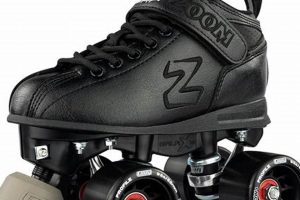
The process of learning to move on roller skates, specifically geared toward individuals with no prior experience, involves a combination of balance acquisition, fundamental movement techniques, and safety awareness. This foundational training allows individuals to develop the necessary skills for confident and controlled locomotion. As an example, the initial stages often focus on simply standing upright and maintaining stability before progressing to forward motion.
Mastering these initial skills provides numerous benefits, including improved coordination, cardiovascular fitness, and enjoyment of recreational activities. Historically, the ability to roller skate has been a popular form of exercise and social engagement, contributing to both physical and mental well-being. Success in this area allows participation in community events and the development of a new skill.
The subsequent sections will outline the essential equipment, fundamental stances, basic movements, and crucial safety precautions necessary to successfully begin the journey into this engaging activity. Each step is designed to build confidence and competency in this enjoyable skill.
Essential Guidance for Novice Roller Skaters
This section provides critical guidance for individuals starting with roller skating. Adhering to these suggestions can substantially improve the learning experience and promote a safer environment.
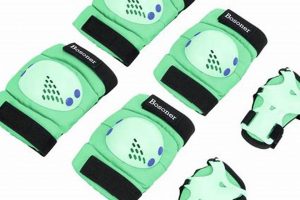
Tip 1: Prioritize Protective Gear: Always wear a helmet, wrist guards, elbow pads, and knee pads. These items significantly reduce the risk of injury during falls, which are common in the early stages.
Tip 2: Master the Ready Stance: The foundational position involves bending the knees, maintaining a slight forward lean, and keeping the feet shoulder-width apart. This posture provides balance and stability.
Tip 3: Practice Small Steps: Begin by taking very small, controlled steps to get a feel for the skates. Avoid large strides that can easily lead to instability.
Tip 4: Find a Smooth, Flat Surface: Practice in an area free of obstacles, cracks, and debris. A smooth surface minimizes the chance of tripping or losing control.
Tip 5: Learn to Fall Safely: Practice falling intentionally by crouching down and landing on the knee pads and wrist guards. This technique can mitigate the impact of unexpected falls.
Tip 6: Focus on Balance: Regularly practice balancing on one foot and shifting weight from one skate to the other. Strong balance control is crucial for confident skating.
Tip 7: Seek Guidance: Consider taking a lesson from a qualified instructor or seeking advice from experienced skaters. Professional guidance accelerates the learning process and ensures proper technique.
Adhering to these tips contributes significantly to a safer and more effective learning process, fostering confidence and competence on roller skates.
With these essential tips in mind, the subsequent sections will delve deeper into specific techniques and maneuvers to enhance the experience.
1. Protective Gear

The employment of protective gear is inextricably linked to the instruction and practice for individuals new to roller skating. This equipment serves as a primary defense against potential injuries during the learning process. Without proper safeguards, novices are disproportionately vulnerable to trauma resulting from falls, collisions, and loss of control, common occurrences during the initial phase. The use of a helmet, for example, mitigates the risk of head injuries, while wrist guards, elbow pads, and knee pads protect vulnerable joints from fractures and abrasions. Consider the scenario of a new skater misjudging their balance; without wrist guards, a natural reaction to break the fall with outstretched hands can easily result in a wrist fracture.
The incorporation of protective measures fosters confidence, encouraging learners to practice more freely without the constant fear of serious harm. This increased confidence can accelerate skill acquisition and promote a more positive association with the activity. Furthermore, the consistent use of appropriate safety measures sets a precedent for responsible skating habits, which are crucial for long-term participation and injury prevention. For instance, routinely wearing a helmet, even after gaining proficiency, reduces the severity of potential head trauma should an unexpected accident occur. Additionally, specialized padding can absorb and distribute impact forces, reducing the risk of bruises, scrapes, and other soft tissue injuries.
In summary, protective gear is not merely an accessory but a foundational element in the instruction of those learning to roller skate. It provides physical protection, fosters confidence, and instills responsible habits. The consistent and appropriate utilization of safety equipment is paramount for ensuring a safe and enjoyable learning experience, minimizing risks and promoting continued participation in this recreational pursuit.
2. Balance Control
Balance control constitutes a fundamental aspect of learning to roller skate. The ability to maintain equilibrium on a moving platform directly influences the skater’s stability, maneuverability, and overall safety. A deficiency in balance control can result in falls, hindering progress and potentially causing injury.
- Core Strength and Stability
Core muscles play a critical role in maintaining an upright posture and controlling body movements while skating. A strong core allows skaters to make subtle adjustments to their center of gravity, compensating for uneven surfaces and changes in momentum. For example, engaging abdominal and back muscles enables skaters to lean into turns without losing balance. Weak core muscles, conversely, contribute to instability and increase the risk of falls.
- Weight Distribution and Foot Placement
Proper weight distribution ensures that the skater’s center of gravity remains within the base of support provided by the skates. Novices often struggle with shifting weight appropriately, leading to imbalances. Learning to distribute weight evenly between both feet, and subsequently shifting weight to one foot during turns or pushes, is essential for controlled movement. Incorrect foot placement, such as positioning the feet too close together, narrows the base of support, increasing instability.
- Proprioception and Body Awareness
Proprioception, the body’s ability to sense its position in space, is crucial for maintaining balance. Skaters rely on proprioceptive feedback to make subtle adjustments to their posture and movements. Through consistent practice, skaters develop a heightened sense of their body’s orientation and can react quickly to maintain balance when encountering unexpected obstacles or changes in terrain. A lack of proprioceptive awareness can result in delayed reactions and an increased likelihood of falling.
- Visual Input and Spatial Orientation
Vision provides critical information about the surrounding environment and aids in maintaining spatial orientation while roller skating. Novices use visual cues to anticipate changes in terrain, identify potential obstacles, and maintain a stable line of sight. The coordination of visual input with other sensory information allows skaters to adjust their movements and maintain balance in dynamic environments. Diminished visual acuity or impaired spatial awareness can compromise a skaters ability to react effectively to external stimuli and maintain equilibrium.
Effective balance control encompasses the interaction of core strength, weight distribution, proprioception, and visual input. These elements work synergistically to enable stable, controlled movement on roller skates. Developing proficiency in these areas is essential for the individual learning to roller skate, allowing for improved skating technique and enhanced safety.
3. Stance Basics

The correlation between fundamental stances and successful novice roller skating is demonstrable and significant. A proper stance provides the foundation for balance, control, and efficient movement, serving as the cornerstone upon which all subsequent skating skills are built. Improper stance, conversely, predisposes the beginner to instability, difficulty in maneuvering, and increased risk of falls. Consider the example of a skater attempting to propel themselves forward with legs fully extended and an upright posture; this stance inherently lacks stability, making even the simplest movements challenging and increasing the likelihood of losing balance. A stable stance, however, allows for efficient power transfer and controlled gliding.
Specific elements contribute to an effective foundational stance. These include a slight bend in the knees, a forward lean from the ankles, and feet positioned shoulder-width apart. This configuration lowers the center of gravity, expands the base of support, and enables dynamic adjustments to maintain equilibrium. The forward lean facilitates momentum and allows for a more natural transfer of weight during pushes and glides. Proper foot placement ensures stability and facilitates lateral movements for turning and stopping. A skater who internalizes these foundational elements will experience a greater sense of stability and control, accelerating the skill acquisition process. For instance, a skater with bent knees can more effectively absorb bumps and uneven surfaces, maintaining balance and reducing the risk of falls, which is critical to how to roller skate beginners.
In summary, mastery of basic stances is not merely a preliminary step but a critical determinant of success. A well-executed stance is the platform for developing advanced skating techniques. Prioritizing stance fundamentals minimizes risk and maximizes learning. Failure to establish a proper stance results in a compromised foundation, hindering progression and increasing the potential for injury. Therefore, dedicating adequate time and attention to stance basics constitutes an indispensable element in the learning progression.
4. Small Steps

The concept of “small steps” is intrinsically linked to the success of individuals learning to roller skate. This approach emphasizes incremental progress and the mastery of fundamental movements before advancing to more complex maneuvers. The cause-and-effect relationship is evident: small, controlled movements build confidence and coordination, leading to improved balance and control. Conversely, attempting advanced techniques prematurely, without establishing a solid foundation, often results in frustration, increased risk of injury, and a slower overall learning curve. As a component of a successful learning experience, these controlled motions are key to how to roller skate beginners.
Consider a novice skater attempting a crossover turn before mastering basic forward motion. The lack of fundamental balance and control makes the crossover exceedingly difficult, likely leading to a fall. However, if the same skater focuses initially on small, deliberate pushes and glides, gradually increasing their stride length and speed, they will develop the necessary muscle memory and balance for more complex turns. This approach allows the learner to refine their technique and address any imbalances or weaknesses before progressing to more demanding movements. For example, a person could start with very short glides in a controlled environment, practicing maintaining their balance on each skate. Over time, the glides will increase both in length and confidence.
The adoption of a “small steps” methodology mitigates the risk associated with learning new physical skills. By breaking down complex movements into manageable components, the learner can focus on perfecting each element before integrating them into a cohesive skill. This gradual approach fosters a sense of accomplishment and reinforces positive learning patterns, contributing to a more enjoyable and effective experience. In essence, the focus on gradual progressions in how to roller skate beginners emphasizes safety and builds solid foundations, promoting skill acquisition and long-term engagement with the activity.
5. Safe Falls

The integration of “Safe Falls” training is paramount for individuals learning to roller skate. Mastery of this skill set reduces the likelihood of serious injury and promotes a confident approach to practice and skill development. Without proper instruction in falling techniques, beginners are disproportionately vulnerable to fractures, sprains, and contusions. Understanding and practicing safe falling techniques is critical to how to roller skate beginners.
- Controlled Descent
The ability to control the direction and manner of a fall is essential. Instead of instinctively bracing with outstretched arms, trainees are instructed to direct the fall toward padded areas such as knees and forearms. This redirection of impact force minimizes the risk of fractures. For instance, a skater who feels themselves losing balance can deliberately crouch down, reducing the distance of the fall and ensuring initial contact with protective gear.
- Tucking and Rolling
When forward momentum is involved, tucking the chin to the chest and initiating a rolling motion can distribute the impact force over a larger surface area, reducing the risk of concentrated injury. This technique borrows from martial arts and other sports where falls are common. A real-world example involves a skater tripping; instead of falling rigidly, they tuck their head and roll onto their side, dissipating the energy of the fall.
- Protective Gear Utilization
Proper use of protective gear, including wrist guards, elbow pads, and knee pads, is integral to mitigating the impact of falls. These items are designed to absorb and distribute force, reducing the likelihood of injury to vulnerable joints and bones. A skater who falls on their knees without pads is far more likely to sustain a serious injury than one who utilizes appropriate protective measures. It is crucial to ensure proper fit and secure fastening of all protective equipment.
- Practice and Repetition
Safe falling techniques must be practiced repeatedly in a controlled environment to develop the necessary muscle memory and reflexes. This proactive training ensures that, in the event of an unexpected fall, the skater’s reaction is instinctive and effective. Practicing falls on a soft surface, such as a padded mat or grassy area, allows learners to refine their technique without the fear of injury. This conditioning is imperative to how to roller skate beginners. Repeated practice ensures a more natural, rather than a calculated, reaction.
Proficiency in safe falling techniques complements other foundational skating skills, fostering confidence and reducing apprehension. This integrated approach accelerates skill acquisition and promotes a more enjoyable and sustainable participation in roller skating. The ability to fall safely is not merely a reactive measure but a proactive skill that directly contributes to enhanced learning and reduced injury rates for those starting roller skating.
6. Smooth Surface
A direct correlation exists between the quality of the skating surface and the ease with which beginners acquire roller skating skills. A smooth, even surface minimizes friction and provides consistent support, allowing learners to focus on balance and fundamental movements without the added challenge of navigating irregularities. This facilitates a more efficient and less intimidating learning experience. Conversely, rough or uneven surfaces increase friction, making it difficult to maintain momentum and increasing the risk of falls. For example, a beginner attempting to learn on a cracked sidewalk will struggle with maintaining balance and control compared to someone practicing on a smooth, sealed asphalt surface. Selecting an appropriate surface is, therefore, a foundational element to how to roller skate beginners.
The benefits of a smooth surface extend beyond mere ease of learning. A consistent surface reduces the likelihood of sudden stops or changes in direction caused by surface imperfections, promoting safer practice conditions. This, in turn, builds confidence, encouraging learners to practice more frequently and for longer durations. Consider the impact of a small pebble: on a rough surface, it may cause a minor stumble, while on a smooth surface, it presents a significantly lower risk. The practical application of this understanding is that instructors often prioritize smooth, controlled environments, such as indoor rinks or sealed parking lots, when teaching beginner roller skating classes. This contributes directly to better skill development, and it promotes an enjoyable activity.
In summary, surface quality is not a peripheral consideration but a critical determinant of success for new roller skaters. A smooth surface minimizes challenges, promotes safety, and fosters confidence. Conversely, uneven or rough surfaces impede progress and increase the risk of injury. Therefore, prioritizing practice on appropriate surfaces is essential for facilitating a positive and effective learning experience. Neglecting surface considerations undermines the foundational steps needed in this activity.
Frequently Asked Questions
This section addresses common inquiries and concerns surrounding the initial stages of learning to roller skate. Clarification of these points facilitates a smoother learning process.
Question 1: What constitutes the most essential protective gear for beginners?
The most critical protective gear includes a properly fitted helmet, wrist guards, elbow pads, and knee pads. These items mitigate the risk of injury from falls, which are common during the learning process. The absence of any of these components increases vulnerability to injury.
Question 2: How long should a beginner expect it to take to learn basic skating skills?
The timeframe varies significantly based on individual aptitude, physical condition, and frequency of practice. However, with consistent practice several times a week, a beginner can typically expect to develop basic skills within a few weeks to a couple of months.
Question 3: Is it necessary to take formal lessons, or can one learn independently?
While independent learning is possible, formal lessons from a qualified instructor can accelerate skill acquisition and ensure the development of correct techniques, reducing the likelihood of developing bad habits or sustaining injuries. Professional guidance is highly recommended.
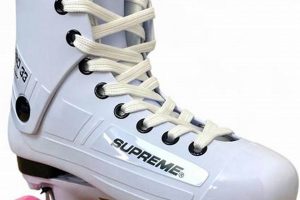
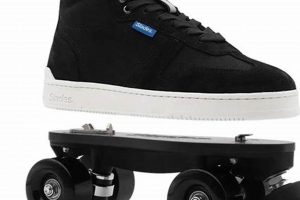
Question 4: What type of skates are most suitable for beginners?
Quad skates, with two wheels in the front and two in the back, are generally considered more stable and easier to learn on compared to inline skates. However, personal preference and availability may influence the choice.
Question 5: How does one determine the appropriate size for roller skates?
Roller skate sizing varies by manufacturer. It is recommended to consult the manufacturer’s sizing chart and, ideally, try on skates in person to ensure a snug but comfortable fit. Ill-fitting skates can compromise balance and control.
Question 6: What are some common mistakes beginners make, and how can they be avoided?
Common mistakes include improper stance, looking down instead of forward, failing to bend the knees, and attempting advanced maneuvers too soon. These can be avoided by consciously focusing on proper technique, maintaining a steady gaze ahead, and progressing gradually.
The information above provides preliminary guidance to individuals embarking on their roller-skating journey. Consistent practice, proper equipment, and adherence to safe practices are imperative for success.
The next section expands on techniques that improve the overall skating experience.
Conclusion
This exploration has systematically addressed the fundamental aspects crucial for those new to roller skating. Topics covered encompass essential safety measures, balance techniques, stance fundamentals, the importance of controlled movements, safe falling strategies, and the influence of surface quality. Each element contributes directly to a safer, more efficient, and ultimately more successful learning experience.
The acquisition of these skills facilitates a transition from novice to competent skater, unlocking opportunities for recreation, exercise, and personal enrichment. Consistent application of these principles will provide a firm foundation upon which to build more advanced techniques, contributing to the long-term enjoyment of this activity.