A ground-level metal rail used in skateboarding and inline skating facilitates the execution of sliding maneuvers. This apparatus, often constructed of steel, is typically placed in skate parks or urban environments to enable skaters to perform tricks involving grinding and sliding along its surface. For example, a skater might approach the rail, ollie (jump), and land with their board or skates aligned to slide across the metal.
The incorporation of this structural element into a skater’s routine allows for an expanded repertoire of tricks and techniques. The utilization of these features is important for skill progression and allows skaters to explore new creative possibilities within the sport. Their increasing presence in skate parks demonstrates their value for skaters of all abilities to practice and master grinding and sliding techniques.
The discussion will now focus on the specific techniques employed while using these structures, considerations for selecting appropriate equipment, and safety measures to mitigate the risks involved. Also, the different types and materials will be considered.
Practical Tips for Rail Skating
The following guidelines are designed to enhance safety and improve technique when utilizing a ground-level metal rail for skating maneuvers. Adherence to these points can contribute to a more controlled and productive skating experience.
Tip 1: Approach Angle: Initiate the approach with a controlled speed and a shallow angle relative to the rail. An overly aggressive angle increases the likelihood of catching an edge and losing balance. Practicing approaching the rail without attempting a trick is good practice.
Tip 2: Foot Placement: Ensure precise foot placement on the board or skates prior to initiating the trick. Shifting weight or adjusting foot position mid-air can compromise stability and lead to a failed attempt.
Tip 3: Maintain Balance: Focus on maintaining a low center of gravity throughout the trick. Bending the knees and keeping the core engaged will improve balance and control while sliding.
Tip 4: Visual Focus: Maintain visual focus on the end point of the rail. This helps guide the body and ensures a smooth transition off the rail upon completion of the trick.
Tip 5: Gradual Progression: Start with simpler tricks, such as boardslides or 50-50 grinds, before attempting more complex maneuvers. This gradual progression allows for the development of muscle memory and improves overall skill.
Tip 6: Equipment Inspection: Prior to skating, thoroughly inspect the equipment for any signs of wear or damage. Ensure the board or skates are in optimal condition to minimize the risk of equipment failure. Also, ensure the metal rail is clean and free of obstructions.
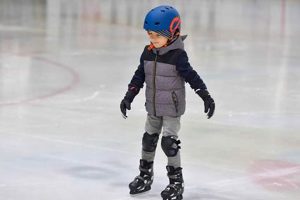
Tip 7: Protective Gear: Always wear appropriate protective gear, including a helmet, knee pads, and elbow pads. Protective measures can significantly reduce the severity of injuries in the event of a fall.
Incorporating these tips into one’s skating practice can contribute to both increased skill and a safer skating environment.
The next section addresses the various types of equipment to consider when approaching rail skating, including considerations for board or skate setup and the selection of appropriate protective gear.
1. Material Durability

Material durability represents a fundamental aspect of ground-level metal rails employed in skating, directly impacting their longevity, safety, and overall performance. The capacity of the metal used to withstand repetitive impacts, abrasive forces, and environmental factors dictates the usable lifespan and operational effectiveness of these apparatuses.
- Steel Composition and Hardness
The specific steel alloy used in construction significantly affects the feature’s resistance to deformation and wear. Harder steels, often treated with processes like quenching or tempering, exhibit enhanced resilience against the constant grinding and sliding of skateboards or skates. Inadequate hardness leads to premature wear, requiring frequent replacements and increasing maintenance costs.
- Weld Integrity and Structural Support
The quality of welds joining the metal sections is crucial for maintaining structural integrity. Poor welding practices can introduce weak points susceptible to cracking or failure under stress. Robust welds, combined with appropriate support structures beneath the feature, distribute impact forces effectively, preventing localized stress concentrations and extending the lifespan of the apparatus.
- Corrosion Resistance and Environmental Impact
Outdoor exposure subjects these rails to the elements, necessitating corrosion resistance. Materials treated with galvanization or protective coatings mitigate the effects of moisture, oxidation, and other environmental factors that can compromise the structural integrity of the material over time. The long-term durability of skating features depends on effective rust prevention.
- Thickness and Gauge of Metal
The thickness and gauge of the metal used are also significant determinants of durability. Thicker metal sections possess greater inherent strength and resistance to bending or deformation under load. Selecting the appropriate gauge of material is essential for withstanding the repeated stresses associated with grinding and sliding techniques.
In summation, the material properties directly correlate with the function of a rail. A poorly chosen material will result in a skating device that is unsafe and in need of consistent repair. Prioritizing durability from the design phase ensures that skating features remain safe, reliable, and enjoyable for skaters of all skill levels.
2. Surface Friction

The characteristic of surface friction fundamentally influences the performance of sliding maneuvers executed on ground-level metal rails. Surface friction determines the speed and control a skater experiences while grinding or sliding, directly affecting the feasibility and execution of different tricks. A high coefficient of friction can cause abrupt stops or loss of momentum, while insufficient friction makes maintaining balance and control challenging.
The material composition and surface finish of the metal rail are primary factors dictating the level of friction. Some metal alloys or coatings exhibit inherently lower friction coefficients than others. Furthermore, the surface texture, whether smooth or slightly textured, impacts grip and glide. For example, a polished steel rail offers a smoother and faster glide compared to a rusty or unevenly coated rail. Skaters often apply wax to reduce friction, allowing for longer and more controlled slides. The effectiveness of this wax is then influenced by both the ambient temperature and humidity, since temperature impacts surface tension.
In summary, optimized surface friction contributes to a safe and predictable skating experience. Too little can lead to a skater losing control, while too much can impact movement. Understanding this interaction allows skaters to maintain control over their speed and technique. This insight is crucial for progressing skill and achieving a greater level of performance.
3. Mounting Stability

Mounting stability is an indispensable element in the effective and secure implementation of metal rails used in skateboarding. The integrity of the mounting system directly impacts the structural soundness of the apparatus and subsequently influences the safety and performance of skaters utilizing the equipment. Secure and robust mounting ensures the rail remains firmly in place, mitigating the risk of dislodgement, wobbling, or complete failure during use.
- Anchoring Techniques and Materials
The method and materials employed for anchoring the rail to the ground are primary determinants of stability. Common anchoring techniques include bolting the rail to a concrete surface, embedding it within the ground, or utilizing a combination of both. The choice of materials, such as high-strength steel bolts or reinforced concrete, must be commensurate with the anticipated loads and environmental conditions. Insufficient anchoring can lead to premature failure of the mounting system, compromising skater safety.
- Load Distribution and Support Structure
Effective load distribution is crucial for preventing stress concentrations and ensuring uniform support across the entire length of the rail. The support structure, whether consisting of vertical posts, angled supports, or a continuous base, must be designed to withstand the dynamic forces generated by skaters performing tricks. Proper load distribution minimizes the risk of localized deformation or cracking of the mounting points.
- Foundation Integrity and Ground Conditions
The stability of the ground or surface onto which the rail is mounted directly affects the overall stability of the apparatus. Unstable soil, cracked concrete, or uneven terrain can compromise the integrity of the mounting system, leading to shifting, sinking, or tilting of the rail. Careful consideration must be given to the ground conditions and foundation construction to ensure a solid and level base for the rail.
- Regular Inspection and Maintenance
Periodic inspection and maintenance of the mounting system are essential for identifying and addressing potential issues before they escalate into major problems. Inspections should include checking for loose bolts, cracks in the concrete, corrosion of metal components, and any signs of movement or instability. Timely repairs and replacements can prevent catastrophic failures and extend the lifespan of the rail.
Mounting stability, therefore, encompasses a multifaceted approach to ensuring the secure and reliable installation of metal rails. The implementation of robust anchoring techniques, effective load distribution strategies, and meticulous maintenance protocols collectively contribute to a safe and predictable skating environment. Failure to address these considerations can result in hazardous conditions, jeopardizing the well-being of skaters and diminishing the overall utility of the apparatus.
4. Grind Techniques

Grind techniques are intrinsically linked to the functionality and purpose of ground-level metal rails. The features, by design, facilitate a range of sliding maneuvers, commonly referred to as grinds, which constitute a significant component of skateboarding and inline skating. The successful execution of these maneuvers is directly dependent on the skater’s proficiency in specific grind techniques, as well as the physical characteristics of the rail itself.
Several grind techniques are commonly performed on these features, including the 50-50 grind, in which both trucks (axles) of the skateboard engage the rail, and the boardslide, where the deck of the skateboard slides along the rail’s surface. Other examples include the crooked grind, the lipslide, and the tailslide, each requiring a different approach and weight distribution. The skater’s ability to control their board or skates during these maneuvers is essential for maintaining balance and preventing falls. For example, a skater attempting a 50-50 grind must accurately align their board with the rail, maintain a stable posture, and evenly distribute their weight to prevent the board from slipping off the rail. The choice of grind technique is also influenced by the rail’s dimensions and the skater’s skill level. Longer rails allow for extended grinds and more complex trick combinations, while shorter rails may be more suitable for beginner skaters learning basic grind techniques.
Consequently, grind techniques represent a core element in skateboarding and skating. Understanding these techniques is critical for skaters seeking to expand their repertoire of tricks and progress their skills. Mastery demands practice, spatial awareness, and the use of properly constructed rails. The connection between grind techniques and the physical features designed to support them underscores their integral role in both sports.
5. Trick Complexity
Ground-level metal rails are instrumental in enabling trick complexity within skateboarding and inline skating. The design and precise execution of advanced maneuvers on these features necessitate a mastery of fundamental skills and a progressive understanding of spatial relationships. The presence of a rail provides a defined platform for skaters to build upon their existing abilities, transitioning from basic slides and grinds to increasingly intricate combinations of tricks. For instance, a skater might begin by learning a simple boardslide and then progress to incorporating rotations, flips, or other elements into the boardslide itself, effectively increasing the trick’s complexity.
The physical characteristics of the rail directly influence the range and difficulty of tricks that can be performed. The length, height, and angle of the feature impose constraints and present opportunities for innovation. A longer rail allows for extended grinds and combinations, while a higher rail requires greater precision and commitment. The geometry of the rail, such as whether it is round, square, or angled, also dictates the types of tricks that are possible. The incorporation of transitions, such as inclines or declines, can further enhance trick complexity by introducing an element of vertical movement and requiring the skater to adapt to changing conditions.
In summation, ground-level metal rails serve as a catalyst for increased trick complexity. By providing a stable and consistent surface, these features enable skaters to hone their skills and explore new creative possibilities. The interplay between the skater’s technical proficiency, the rail’s physical attributes, and the constant push for innovation drives the evolution of trick complexity within skateboarding and skating. Understanding this relationship is vital for both skaters seeking to improve their skills and for designers aiming to create effective and challenging skating environments.
6. Impact Resistance
Impact resistance is a critical design and material consideration for ground-level metal rails used in skateboarding. The ability of these structures to withstand repeated and substantial impacts directly affects their longevity, safety, and suitability for their intended purpose. Failure to adequately address impact resistance can lead to premature wear, structural damage, and an increased risk of injury to skaters.
- Material Selection and Hardness
The choice of material plays a fundamental role in determining impact resistance. High-strength steel alloys, often subjected to hardening processes, are commonly employed due to their capacity to absorb and dissipate impact energy. Softer metals are unsuitable as the force of repeated tricks and impacts would quickly degrade the material.
- Structural Design and Support
The structural design of the rail, including its shape, thickness, and support system, contributes significantly to its ability to withstand impact forces. A robust support structure, properly anchored to the ground, helps to distribute impact loads evenly, preventing localized stress concentrations. Reinforcements, such as internal bracing or gussets, can further enhance the rail’s resistance to bending or deformation under impact. Rails that are not supported adequately risk catastrophic damage with consistent impacts.
- Weld Integrity and Construction Quality
Welds are critical junctions in the rail’s structure, and their integrity directly affects its overall impact resistance. High-quality welding techniques, employing appropriate filler materials and meticulous execution, are essential for creating strong and durable joints capable of withstanding repeated stress. Inadequate welds can become points of failure, leading to cracking or separation under impact. An example of quality construction is using quality alloys when constructing the weld so that the overall structure is strengthened.
- Maintenance and Inspection Protocols
Regular inspection and maintenance protocols are crucial for identifying and addressing potential weaknesses in the rail’s structure before they compromise its impact resistance. Inspections should include a thorough examination of welds, supports, and mounting points for signs of cracking, corrosion, or deformation. Addressing minor issues promptly can prevent them from escalating into more significant problems that could compromise the rail’s ability to withstand impact forces. Maintenance schedules should include re-welding areas that need the extra attention.
The integration of impact-resistant materials, robust structural design, meticulous construction practices, and proactive maintenance protocols is essential for ensuring the safety and longevity of metal rails used in skating. By prioritizing impact resistance, designers and operators can create safe and reliable skating environments that withstand the rigors of regular use and provide skaters with a platform to progress their skills with confidence.
7. Safety Measures

The utilization of metal rails in skateboarding inherently introduces risk, necessitating diligent adherence to safety measures. These measures serve to mitigate the potential for injury associated with falls, collisions, and equipment malfunctions. The presence of a hard, unyielding surface amplifies the consequences of missteps, demanding proactive precautions to ensure skater well-being. For instance, helmet usage demonstrably reduces the incidence of head trauma, a common injury in skateboarding. Knee and elbow pads provide crucial protection against abrasions and fractures resulting from falls onto the rail or surrounding ground. Wrist guards can similarly prevent sprains and breaks caused by bracing oneself during a fall.
Beyond personal protective equipment, environmental safety measures are equally vital. Regular inspection and maintenance of the metal rail itself can identify and rectify potential hazards such as sharp edges, loose mounting hardware, or surface irregularities. Furthermore, maintaining a clear and unobstructed skating area minimizes the risk of collisions with other skaters or bystanders. Ensuring adequate lighting conditions, particularly during evening or indoor sessions, enhances visibility and reduces the likelihood of accidents. Additionally, skater awareness of their own skill limitations and responsible progression of trick difficulty contribute significantly to injury prevention.
In conclusion, safety measures are not merely ancillary to the use of metal rails but are integral components of responsible skateboarding and skating practice. These actions serve as an imperative for minimizing risk, protecting against potential injuries, and creating a safer environment for all participants. The commitment to safety, encompassing both personal protection and environmental awareness, enables skaters to enjoy the challenges and rewards of rail skating while minimizing the inherent dangers.
Frequently Asked Questions
The following section addresses common inquiries and misconceptions pertaining to the use of metal rails in skating, providing objective and comprehensive answers based on established knowledge and best practices.
Question 1: What constitutes an ideal surface material for rails used in skateboarding?
An optimal surface material exhibits a balance of durability, smoothness, and controlled friction. Steel is most often chosen due to durability. Coatings can reduce friction.
Question 2: How does rail height influence trick execution and skill progression?
Lower rails allow for easier access and are suitable for beginners. The higher rails offer more clearance and require more technique.
Question 3: What are the primary considerations for ensuring structural stability of these rails?
The gauge of the metal used, along with the nature of the welds used in construction, can both affect structural integrity. Consider also if the feature is anchored to the ground.
Question 4: Does rail shape impact the types of tricks that can be performed?
Yes, rails with a round profile allow for a sliding contact, while square or rectangular rails provide more edge. This creates a locked feeling for particular tricks.
Question 5: How can the risk of injury be minimized when skating on these features?
Proper safety measures are critical, so make sure to use a helmet and pads to minimize risk. Also, ensure that there is adequate supervision and a controlled environment.
Question 6: What maintenance is required to ensure safety?
Inspect the equipment prior to use. Remove debris. Ensure that equipment is firmly attached to the ground. Replace the equipment when necessary.
This FAQ section is designed to provide clarity and understanding regarding the use of metal rails in skating, and responsible practices are necessary for minimizing risks and optimizing the skating experience.
The subsequent section will delve into the historical context of flat bar skate and its evolution within the broader landscape of skateboarding and skating culture.
Conclusion
The preceding analysis has presented a detailed examination of ground-level metal rails, delineating their functionality, design considerations, and safety protocols. From material selection to grind techniques, each element contributes to the overall performance and risk profile associated with these structures. The importance of proper construction, maintenance, and responsible use is shown, underscoring the need for awareness and adherence to safety guidelines.
The continued evolution of “flat bar skate” and related activities depends on prioritizing safety, promoting responsible innovation, and fostering a culture of respect within the skating community. Only through a sustained commitment to these principles can the risks be minimized and benefits be maximized, ensuring the continued growth and enjoyment of skating for generations to come. Continued research and development are essential for advancing the designs and materials used, further enhancing the safety and performance of these features.