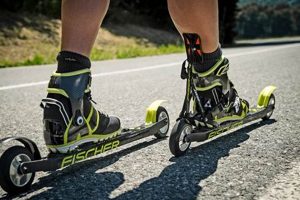
The sizing of roller skates relative to standard shoe sizes is a common point of inquiry for both novice and experienced skaters. Variability exists across brands and models, leading to uncertainty about whether to select a size larger or smaller than one’s typical shoe size. This consideration is important to ensure comfort, performance, and safety while skating.
Properly fitted roller skates are crucial for optimizing control and preventing injuries such as blisters or ankle instability. Ill-fitting skates can hinder a skater’s ability to maneuver effectively and increase the risk of falls. Historically, sizing inconsistencies have been a recurring challenge within the roller skate industry, prompting skaters to seek guidance and advice regarding size selection.
This article will delve into the factors contributing to these sizing variations, examine strategies for accurately measuring foot size, and offer practical recommendations for choosing roller skates that provide an optimal fit. Furthermore, differences between various skate types, such as recreational, artistic, and speed skates, and their impact on sizing considerations will be explored.
Roller Skate Sizing Considerations
Selecting the appropriate size of roller skates requires careful consideration. To mitigate issues related to whether roller skates tend to fit larger or smaller than typical shoe sizes, adherence to the following guidelines is advised:
Tip 1: Measure Foot Length Accurately: Employ a Brannock device or a ruler to measure the length of both feet. Account for the possibility of slight discrepancies between foot sizes and utilize the larger measurement as the primary reference.
Tip 2: Consult Brand-Specific Size Charts: Roller skate manufacturers often provide detailed size charts that correlate foot length to skate size. Refer to these charts diligently, as sizing conventions can vary significantly from one brand to another.
Tip 3: Consider Skate Type: Different categories of roller skates, such as recreational, artistic, or speed skates, may exhibit distinct fitting characteristics. Research the intended use of the skates and account for any specific sizing recommendations associated with the chosen type.
Tip 4: Account for Sock Thickness: Factor in the thickness of the socks that will typically be worn while skating. Thicker socks may necessitate selecting a slightly larger skate size to ensure a comfortable and secure fit.
Tip 5: Prioritize Comfort and Support: Ensure the selected skates provide adequate support and do not cause any areas of excessive pressure or discomfort. A snug but not constricting fit is ideal for optimal performance and safety.
Tip 6: Try On Skates With Socks: When possible, physically try on roller skates while wearing the socks intended for use. This allows for a more accurate assessment of the fit and prevents surprises later.
Tip 7: Consult Experienced Skaters or Retail Professionals: Seek advice from individuals with extensive experience in roller skating or consult with knowledgeable staff at reputable skate retailers. Their insights can prove invaluable in navigating the complexities of roller skate sizing.
By adhering to these suggestions, individuals can increase the likelihood of selecting roller skates that provide a comfortable, supportive, and secure fit, thereby enhancing their skating experience and minimizing the risk of injury.
The subsequent sections will explore specific sizing considerations for different types of roller skates and address strategies for making necessary adjustments to achieve an optimal fit.
1. Brand Sizing Variation
The sizing of roller skates is not standardized across different brands. This lack of uniformity directly impacts whether individuals perceive roller skates as fitting larger or smaller than their typical shoe size. Brand Sizing Variation constitutes a primary factor influencing size selection and necessitates careful attention during the purchase process.
- Inconsistent Size Scales
Different manufacturers employ varying size scales, leading to discrepancies in how a specific foot length translates into a skate size. A size 8 from one brand may correspond to a different foot length than a size 8 from another. This inconsistency requires consumers to consult specific size charts for each brand to determine the appropriate fit, rather than relying solely on their standard shoe size.
- Manufacturing Tolerances
Manufacturing tolerances, inherent in the production process, can contribute to subtle variations in the internal dimensions of roller skates. These variations, though seemingly minor, can influence the overall fit and feel of the skate. Even within the same brand and model, skates produced in different batches may exhibit slight sizing differences, further complicating the selection process.
- Target Market and Foot Shape
Brands may design their skates to cater to specific target markets or foot shapes. For instance, a brand specializing in recreational skates may prioritize a wider fit for enhanced comfort, potentially leading to a sizing discrepancy for individuals with narrower feet. Conversely, a brand focusing on speed skates may offer a more snug fit for improved performance, requiring skaters to adjust their size selection accordingly.
- Material and Construction Methods
The materials used in the construction of roller skates, such as leather, synthetic materials, or composite blends, can affect the overall fit and flexibility of the skate. Stiffer materials may require a longer break-in period and may initially feel smaller than skates constructed from more pliable materials. Furthermore, the construction methods employed can influence the internal volume and shape of the skate, impacting the perceived size.
Therefore, assessing whether roller skates fit “big or small” is inseparable from considering the brand. Sizing charts become essential tools, not mere guidelines. Disregarding the implications of Brand Sizing Variation introduces the risk of selecting an ill-fitting skate, potentially compromising comfort, performance, and safety.
2. Foot Measurement Accuracy

Foot Measurement Accuracy directly influences roller skate fit, determining whether skates are perceived as fitting large or small. Inaccurate foot measurements result in selecting an incorrect skate size, causing discomfort, hindering performance, and increasing the risk of injury. For instance, underestimating foot length may lead to choosing skates that feel too small, restricting movement and causing blisters. Conversely, overestimating foot length can result in skates that feel too large, diminishing control and increasing the likelihood of ankle instability.
The consequences of inaccurate foot measurements extend beyond mere discomfort. Properly fitted skates are essential for maintaining balance, executing maneuvers, and preventing falls. When skates are too large, the foot may slide inside, reducing responsiveness and control. If skates are too small, circulation may be compromised, leading to numbness and fatigue. In both scenarios, the skater’s ability to react quickly and effectively is diminished, increasing the likelihood of accidents. For example, a skater attempting a crossover maneuver with ill-fitting skates may lose balance and fall due to insufficient support and control.
Therefore, precise foot measurement using a Brannock device or comparable tool is paramount. Measurements should be taken while standing, as the foot elongates under weight. Both feet should be measured, and the larger measurement should guide skate size selection. Furthermore, consulting brand-specific size charts that correlate foot length to skate size is essential, given the sizing variations across manufacturers. By prioritizing Foot Measurement Accuracy, skaters can mitigate the risk of selecting improperly sized skates, thereby enhancing their skating experience and minimizing potential hazards.
3. Intended Use Impact

The intended use of roller skates significantly influences the perception of whether they fit “big or small.” Different skating disciplines necessitate specific fitting characteristics to optimize performance and safety. Recreational skating, for example, often prioritizes comfort over precision, allowing for a slightly more relaxed fit. A skate intended for recreational use might feel appropriately sized even with a small amount of extra space, whereas a similar amount of space in a speed skate could compromise control. Therefore, the intended application acts as a crucial filter when assessing size appropriateness.
For instance, artistic skaters require a snug, almost second-skin fit to facilitate precise footwork and intricate maneuvers. A skate that feels slightly large could hinder their ability to execute spins and jumps accurately. Conversely, aggressive skaters who perform jumps and grinds may prefer a slightly roomier fit to accommodate thicker socks and provide added impact protection. Speed skaters necessitate an extremely tight fit to maximize power transfer and minimize energy loss. Any looseness could translate to reduced efficiency and slower times. A touring skater might prefer a little extra room for comfort over long distances, while a roller derby skater needs a very precise fit for agility.
Therefore, selecting the correct roller skate size cannot be divorced from understanding its intended purpose. A skate that seems to run “big or small” relative to standard shoe size might, in fact, be appropriately sized for its specific application. Failure to consider the intended use can lead to selecting an ill-fitting skate that compromises performance, comfort, and safety, regardless of its numerical size designation. Consultation with experienced skaters or retail professionals specializing in the relevant discipline is advisable to ensure optimal fit.
4. Sock Thickness Allowance

Sock Thickness Allowance represents a critical factor in determining the appropriate size of roller skates. Variations in sock thickness directly impact the internal volume occupied within the skate, influencing whether the skate will feel too tight, too loose, or properly fitted. Therefore, understanding and accounting for sock thickness is essential when assessing the overall fit of roller skates.
- Impact on Internal Volume
Thicker socks inevitably reduce the internal space available within the skate boot. This reduction in volume can cause a skate to feel smaller than its designated size. Conversely, thinner socks increase the available space, potentially causing the skate to feel larger. The magnitude of this effect depends on the sock’s material, weave, and overall thickness. For example, a thick wool sock can significantly alter the fit compared to a thin nylon sock.
- Influence on Foot Stability
The sock’s thickness affects the stability of the foot within the skate. Thicker socks can improve cushioning and provide a more secure fit, minimizing foot movement and enhancing control. However, excessively thick socks can restrict circulation and cause discomfort. Thinner socks, while providing less bulk, may not offer sufficient cushioning or support, potentially leading to blisters and foot fatigue. The ideal sock thickness balances comfort, stability, and circulation.
- Accommodation for Different Skate Types
The appropriate sock thickness can vary depending on the type of roller skating. Recreational skating may allow for a wider range of sock thicknesses, prioritizing comfort for extended use. Artistic or speed skating, on the other hand, often requires thinner socks to maximize responsiveness and minimize interference with precise foot movements. Aggressive skating may necessitate thicker socks for added impact protection. The intended use of the skates directly influences the optimal sock thickness.
- Adjustments for Individual Preferences
Personal preferences also play a role in determining the appropriate sock thickness. Some skaters prioritize cushioning and warmth, opting for thicker socks. Others prefer a more minimalist feel, selecting thinner socks. Individual foot shape and sensitivity also influence sock thickness choices. Skaters should experiment with different sock thicknesses to determine what provides the best balance of comfort, support, and performance for their specific needs.
In conclusion, the allowance made for sock thickness directly correlates with the perception of whether roller skates “run big or small.” Choosing an appropriate sock thickness, informed by skate type, individual preference, and foot morphology, is critical for achieving optimal comfort, performance, and safety. Failure to account for sock thickness can result in an ill-fitting skate, regardless of its designated size, ultimately hindering the skating experience.
5. Break-in Period Adjustment
The break-in period of roller skates exerts a tangible influence on the perceived size, and thus, whether skates are considered to “run big or small.” New roller skates, particularly those constructed from stiffer materials such as leather or certain synthetics, often require a period of use to conform to the wearer’s foot shape. This initial stiffness can create the impression of a tighter fit than will ultimately be the case once the materials have softened and molded to the foot. Consequently, a skater who initially perceives a skate as being slightly small may find that, after a few skating sessions, the skate fits comfortably as the materials yield. Conversely, a skate that initially feels perfectly sized might become slightly too large after the break-in period, necessitating adjustments such as thicker socks or aftermarket insoles.
The impact of the break-in period is particularly pronounced in high-performance skate disciplines such as artistic skating or speed skating, where a precise and snug fit is paramount. In these contexts, skaters often intentionally select skates that initially feel slightly tight, anticipating that the materials will stretch and conform to their feet over time, resulting in an optimal fit for performance. Neglecting to account for this break-in period can lead to the selection of skates that ultimately prove to be either too loose or too tight, compromising both comfort and performance. An example is a speed skater selecting a boot that feels perfect at first, only to find that after several weeks of training, the boot has stretched to the point where foot slippage occurs, reducing power transfer and increasing the risk of blisters.
Therefore, a comprehensive assessment of roller skate sizing necessitates a consideration of the break-in period and its potential impact on the overall fit. Skaters should research the materials used in the skate’s construction, consult with experienced skaters or retail professionals regarding anticipated stretching, and be prepared to make adjustments to sock thickness or insole selection to compensate for any changes in fit that occur during the break-in process. Failure to account for this factor can result in a misjudgment of the appropriate skate size, ultimately hindering the skater’s experience and performance. The break-in period is thus an integral component of the overall sizing equation, influencing the final determination of whether roller skates “run big or small.”
Frequently Asked Questions
The following questions address common inquiries regarding roller skate sizing and the perception of whether they run large or small. These answers aim to provide clarity and guidance for selecting appropriately sized skates.
Question 1: Are roller skate sizes consistent with standard shoe sizes?
No, roller skate sizes are not consistently aligned with standard shoe sizes. Variations exist across different brands and models, necessitating the use of brand-specific size charts.
Question 2: How should foot length be measured for roller skate sizing?
Foot length should be measured accurately using a Brannock device or ruler. Measure both feet while standing, and utilize the larger measurement as the primary reference. Consult size charts specific to the brand of roller skates being considered.
Question 3: Does the type of roller skate influence the appropriate size?
Yes, different types of roller skates, such as recreational, artistic, or speed skates, may exhibit distinct fitting characteristics. Refer to recommendations associated with the intended use of the skates.
Question 4: How does sock thickness affect roller skate sizing?
Sock thickness impacts the internal volume of the skate. Account for the thickness of the socks that will typically be worn while skating. Thicker socks may necessitate selecting a slightly larger skate size.
Question 5: What should be done if roller skates feel tight initially?
If roller skates feel tight initially, consider that a break-in period may be required. The materials may stretch and conform to the foot over time. However, ensure that the skates are not excessively tight, as this can restrict circulation and cause discomfort.
Question 6: Where can reliable sizing advice be obtained?
Reliable sizing advice can be obtained from experienced skaters, retail professionals specializing in roller skates, or by consulting online forums and communities dedicated to roller skating.
Properly sized roller skates are crucial for comfort, performance, and safety. Careful consideration of the aforementioned factors is essential for selecting skates that provide an optimal fit.
The subsequent sections will discuss strategies for adjusting roller skates to achieve a more personalized fit.
Do Roller Skates Run Big or Small
The preceding analysis has demonstrated that the question of whether roller skates run big or small lacks a simple, universal answer. Sizing is contingent upon a confluence of factors, including brand-specific sizing conventions, the accuracy of foot measurements, the intended use of the skates, the allowance made for sock thickness, and the anticipated adjustments resulting from the break-in period. Each of these elements contributes to the ultimate perception of fit, rendering generalizations unreliable and emphasizing the importance of individualized assessment.
Therefore, prospective roller skate purchasers must prioritize a comprehensive evaluation that transcends reliance on standard shoe sizes. Diligent consultation of manufacturer-provided sizing charts, precise foot measurement techniques, and careful consideration of the skate’s intended purpose are essential for informed decision-making. Ultimately, achieving a proper fit necessitates a proactive and discerning approach, ensuring both comfort and optimal performance. The significance of this investment in due diligence extends beyond mere convenience, impacting skater safety and long-term enjoyment of the sport.
![Learn Roller Skate in ASL: Sign It! [Guide] | How to Skateboard: A Beginner's Guide to Your First Board & Tricks](https://cruzskateshop.com/wp-content/uploads/2026/06/th-25-300x200.jpg "Learn Roller Skate in ASL: Sign It! [Guide] How to Skateboard: A Beginner's Guide to Your First Board & Tricks")