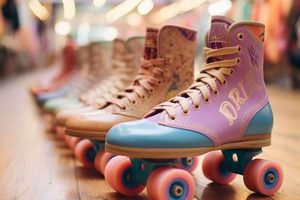
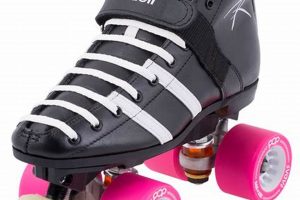
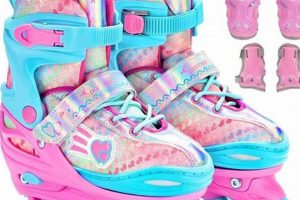
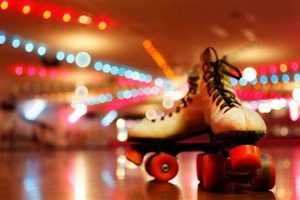
Footwear designed for gliding movement, equipped with wheels, exists in diverse forms. These wheeled boots facilitate recreational activity, athletic pursuits, and even transportation. Variations exist to cater to different skill levels, terrains, and intended uses, impacting wheel configuration, boot structure, and overall performance characteristics. For instance, some are built for speed and maneuverability on smooth surfaces, while others prioritize stability and shock absorption for outdoor environments.
The availability of specialized designs allows individuals to select equipment best suited to their needs, enhancing performance and enjoyment. Historically, evolving designs reflect advancements in materials and engineering, each aiming to improve the skating experience. Understanding the distinctions among these wheeled options is essential for informed decision-making, promoting safety, and maximizing the potential for skill development.
The subsequent sections will delve into specific categories, outlining their respective features and applications. Categories examined will include those optimized for rink skating, outdoor recreation, aggressive styles, and speed events, as well as adjustable options for growing children.
Guidance on Roller Skate Selection
Careful consideration of personal needs is paramount when selecting roller skates. The following points serve as a guide to assist in choosing suitable equipment, promoting safety, and enhancing the overall skating experience.
Tip 1: Identify Intended Use: Determine the primary application, whether for rink skating, outdoor trails, or specialized activities like roller derby. Different activities demand different skate characteristics.
Tip 2: Assess Skill Level: Beginner skaters benefit from stable, supportive boots and wider wheel bases. Experienced skaters may prefer more agile skates with lower-cut boots.
Tip 3: Consider Wheel Type: Harder wheels are better suited for smooth surfaces like indoor rinks, while softer wheels provide better grip and shock absorption on rougher outdoor surfaces.
Tip 4: Evaluate Boot Support: High-top boots offer greater ankle support, suitable for beginners or those requiring extra stability. Lower-cut boots allow for greater flexibility.
Tip 5: Examine Bearing Quality: Higher-rated bearings contribute to smoother, faster rolling. ABEC ratings are commonly used to indicate bearing precision; higher numbers generally equate to faster speeds.
Tip 6: Prioritize Proper Fit: Ensure the skates fit snugly but comfortably, allowing for sufficient toe room. Ill-fitting skates can lead to discomfort and reduced control.
Tip 7: Research Reputable Brands: Opt for established brands known for quality and durability. Reading reviews and comparing features can aid in making an informed decision.
Adherence to these guidelines will significantly improve the selection process, resulting in skates that align with individual needs and contribute to a safe and enjoyable skating experience.
The subsequent section will provide a summary of the main points discussed in this article.
1. Quad vs. Inline

The distinction between quad and inline configurations represents a fundamental divergence in roller skate design, directly influencing performance characteristics and suitability for various skating disciplines. This choice significantly impacts stability, maneuverability, and overall skating experience, shaping the landscape of wheeled footwear.
- Wheel Arrangement and Stability
Quad skates feature two wheels in the front and two in the back, providing a wider base of support. This configuration enhances stability, making them generally easier to learn on and suitable for beginners or activities requiring balance and controlled movements. Inline skates, with wheels arranged in a single line, offer a narrower base, demanding greater balance and control.
- Maneuverability and Agility
Inline skates, due to their longer wheelbase and single-line wheel arrangement, generally offer greater maneuverability and agility. This allows for tighter turns, faster acceleration, and more intricate movements, making them preferable for speed skating, aggressive skating, and slalom activities. Quad skates, while stable, may not be as nimble in tight spaces.
- Application-Specific Design Adaptations
The “Quad vs. Inline” distinction extends to specialized skate designs. Roller derby, for example, predominantly utilizes quad skates due to their stability and ability to withstand lateral forces. Conversely, speed skating heavily relies on inline skates for their aerodynamic profile and efficient power transfer. Aggressive skating often employs inline skates with specialized frames and grind blocks for performing tricks on rails and ramps.
- Boot Support and Ankle Flexibility
Boot design complements the wheel configuration. Quad skates often feature high-top boots providing substantial ankle support, crucial for stability and preventing injury, especially for beginners. Inline skates offer a broader range of boot styles, from high-cut for support to lower-cut for increased ankle flexibility, catering to various skating styles and skill levels.
In conclusion, the choice between quad and inline skates is not merely a matter of preference but a critical consideration based on intended use, skill level, and desired performance characteristics. Each configuration represents a distinct approach to wheeled locomotion, shaping the diverse world of roller skating equipment and techniques. The selection of either platform influences the skater’s ability to execute specific maneuvers, control their movement, and ultimately experience the activity.
2. Boot Construction

The design and materials used in boot construction are critical determinants of a roller skate’s performance, comfort, and suitability for particular skating styles. Boot construction influences support, flexibility, and energy transfer, directly affecting the skater’s control and experience.
- Material Composition and Support
Roller skate boots utilize a range of materials, from soft leather and synthetic fabrics to rigid plastics and carbon fiber. Softer materials offer greater comfort and flexibility, often found in recreational skates. Rigid materials provide enhanced support and responsiveness, crucial for aggressive, speed, and roller derby skates. The choice of material directly impacts the level of ankle and foot support, influencing stability and reducing the risk of injury.
- Closure Systems and Fit
Closure systems, including laces, buckles, and Velcro straps, play a vital role in securing the foot within the boot and achieving a precise fit. Lace systems allow for customized tightening across the entire foot, providing even pressure distribution. Buckles offer quick and easy adjustments, while Velcro straps provide convenience. The type and configuration of the closure system contribute to the overall fit and comfort of the skate, impacting control and reducing the potential for blisters or pressure points.
- Liner Design and Comfort
The inner liner of a roller skate boot contributes significantly to comfort and moisture management. Liners can be made from various materials, including foam, gel, and moisture-wicking fabrics. Padded liners enhance comfort and cushioning, reducing impact and vibration. Moisture-wicking liners help keep the feet dry and comfortable, preventing the build-up of sweat. Removable liners allow for easy cleaning and replacement, extending the lifespan of the skates.
- Ankle Articulation and Flexibility
The degree of ankle articulation offered by the boot directly impacts the skater’s range of motion and maneuverability. High-cut boots provide greater ankle support, limiting flexibility but enhancing stability. Lower-cut boots offer increased ankle flexibility, allowing for greater agility and responsiveness. The level of ankle articulation is a critical consideration based on skating style and skill level, with recreational and beginner skaters typically benefiting from greater support, while advanced skaters may prefer increased flexibility.
In conclusion, the design and materials used in roller skate boot construction are integral to the overall performance and suitability of the equipment. Each component, from material composition to closure systems and liner design, contributes to the skater’s comfort, control, and safety. Understanding the influence of boot construction on skate performance is essential for making informed decisions and selecting equipment that aligns with individual needs and skating style, as there are distinct advantages and disadvantages based on the different skate styles.
3. Wheel Hardness

Wheel hardness is a crucial factor in determining the performance and suitability of roller skates for different skating styles and surfaces. Measured on the durometer scale, wheel hardness significantly affects grip, speed, and durability. The correct choice ensures an optimal skating experience.
- Durometer Scale and Measurement
The durometer scale quantifies the hardness of a wheel, typically ranging from 74A to 101A. Lower numbers indicate softer wheels, while higher numbers represent harder wheels. A durometer of 78A signifies a soft wheel commonly used for outdoor skating, whereas a durometer of 98A indicates a hard wheel ideal for smooth indoor surfaces.
- Impact on Grip and Traction
Softer wheels offer superior grip and traction, especially on rough or uneven surfaces. The increased contact area provides better control and stability. Conversely, harder wheels reduce grip but enhance speed and glide on smooth surfaces. The selection depends on the skating environment and desired performance characteristics.
- Influence on Speed and Glide
Harder wheels minimize rolling resistance, leading to faster speeds and longer glides. This is advantageous for speed skating and rink skating where smooth surfaces predominate. Softer wheels, while offering more grip, tend to slow down the skater due to increased friction. Different skating disciplines benefit from varied wheel durometers.
- Durability and Wear Resistance
Harder wheels generally exhibit greater durability and wear resistance, particularly on smooth surfaces. They are less prone to abrasion and degradation compared to softer wheels. Softer wheels, while providing better grip, tend to wear down more quickly, especially on rough surfaces. The choice involves balancing grip and longevity.
The selection of wheel hardness depends on the intended use and skating environment. Outdoor skaters often prefer softer wheels for grip and comfort, while rink skaters opt for harder wheels for speed and glide. Understanding the relationship between wheel hardness and performance is critical for optimizing the skating experience across different roller skate types. The variations directly impact the maneuverability, control, and longevity of the roller skate components.
4. Bearing Precision
Bearing precision in roller skates significantly influences rolling efficiency, speed, and overall performance. The construction and tolerances of bearings directly impact energy transfer and friction reduction, thereby affecting the skating experience.
- ABEC Rating System
The Annular Bearing Engineering Committee (ABEC) establishes a standardized rating system for bearing tolerances. Higher ABEC ratings, such as ABEC-7 or ABEC-9, signify tighter tolerances and greater precision in bearing construction. While a higher ABEC rating generally indicates superior performance, it does not account for factors like bearing material or lubrication. For example, speed skates typically utilize high ABEC-rated bearings to minimize friction and maximize speed, whereas recreational skates may employ lower-rated bearings focusing on durability over ultimate speed.
- Bearing Materials and Construction
Bearing materials vary, commonly including steel, stainless steel, and ceramic. Steel bearings offer a balance of durability and cost-effectiveness, suitable for general use. Stainless steel bearings provide enhanced corrosion resistance, beneficial in outdoor skating environments. Ceramic bearings exhibit lower friction and greater heat resistance, often favored in high-performance applications. The internal construction of a bearing, including the number and type of balls, also impacts performance. Bearings with more balls or different cage designs can alter load distribution and rolling characteristics. Aggressive skates, designed for grinding and impact, require robust bearings capable of withstanding significant stress.
- Lubrication and Maintenance
Proper lubrication is crucial for maintaining bearing performance and extending their lifespan. Lubricants reduce friction and heat, preventing premature wear and corrosion. Different lubricants, such as oil or grease, offer varying levels of protection and performance characteristics. Regular cleaning and lubrication are essential for all types of roller skates. Contaminants like dirt and debris can degrade bearing performance and accelerate wear. Neglecting maintenance can negate the benefits of high-precision bearings, regardless of skate type. Speed skates require diligent maintenance to preserve optimal rolling efficiency.
- Impact on Skating Style
The required bearing precision is directly linked to skating style. Speed skaters prioritize minimizing friction and maximizing roll, necessitating high ABEC-rated or ceramic bearings. Recreational skaters may prioritize durability and cost-effectiveness, rendering lower-rated steel bearings sufficient. Aggressive skaters require robust bearings capable of withstanding impacts and lateral forces associated with tricks and grinds. Roller derby skaters benefit from bearings that balance durability and maneuverability. Each discipline demands specific bearing characteristics tailored to its unique demands.
The selection of bearing precision is an important consideration when choosing roller skates. From recreational models to high-performance speed skates, bearing choice significantly impacts the skating experience. Skaters should consider their skill level, intended use, and maintenance capabilities when selecting bearings to optimize performance and longevity. Understanding bearing features and their connection to roller skating styles contributes to making informed purchasing decisions. The integration of high-precision bearings allows speed and racing skate to optimize their performances.
5. Frame Material

The selection of frame material in roller skate construction significantly influences performance characteristics across various skating disciplines. The frame serves as the structural foundation, connecting the boot to the wheels, and its properties directly impact weight, stability, power transfer, and durability. Different frame materials cater to the diverse demands of recreational skating, speed skating, aggressive skating, and roller derby, each prioritizing specific attributes.
Aluminum frames, commonly found in speed skates and high-end recreational models, offer a favorable strength-to-weight ratio, maximizing power transfer and responsiveness. The rigidity of aluminum ensures efficient energy transmission during push-off, contributing to enhanced speed and control. Conversely, plastic or composite frames, frequently used in entry-level skates, provide affordability and shock absorption, making them suitable for recreational skating where comfort and ease of use are paramount. Aggressive skates necessitate robust frames capable of withstanding high-impact forces, often employing reinforced aluminum or composite materials with grind blocks for performing tricks on rails and ramps. Roller derby skates benefit from frames that balance agility and durability, allowing for quick maneuvers and sustained impact resistance. Real-world examples highlight the cause-and-effect relationship between frame material and skate performance: a speed skater using an aluminum-framed skate achieves greater velocity compared to one using a plastic-framed skate, while an aggressive skater relying on a plastic frame would experience premature frame failure during demanding tricks.
In summary, frame material selection is a critical decision point when choosing roller skates. The material’s properties directly affect weight, stability, power transfer, and durability, ultimately influencing the skater’s experience and performance. By understanding the trade-offs associated with different frame materials, skaters can make informed choices aligned with their specific needs and skating style. The ability to discern the impact of frame materials allows for optimal equipment selection, thereby improving safety and skating enjoyment across diverse applications.
Frequently Asked Questions Regarding Roller Skates
The following section addresses common queries and misconceptions related to roller skates. This information aims to provide clarity and facilitate informed decision-making when selecting or utilizing this equipment.
Question 1: What are the primary differences between quad and inline roller skates?
Quad skates feature two wheels in the front and two in the rear, providing greater stability and are often preferred by beginners. Inline skates have wheels aligned in a single row, offering enhanced speed and maneuverability suitable for more advanced skaters.
Question 2: How does wheel hardness affect roller skate performance?
Wheel hardness, measured on the durometer scale, influences grip, speed, and durability. Softer wheels offer better grip on rough surfaces, while harder wheels provide greater speed and glide on smooth surfaces.
Question 3: What role do bearings play in roller skate functionality?
Bearings facilitate wheel rotation, minimizing friction and maximizing speed. Higher ABEC ratings indicate tighter tolerances and greater precision, contributing to smoother and faster rolling.
Question 4: How does boot construction influence the skating experience?
Boot construction impacts support, comfort, and energy transfer. Rigid boots provide greater support and responsiveness, while softer boots offer increased flexibility and comfort.
Question 5: What are the considerations when selecting roller skates for outdoor use?
Outdoor skates should prioritize wheel hardness, boot support, and frame material. Softer wheels provide better grip on varied terrain, while robust frames withstand the stresses of outdoor environments. High-cut boots offer added support and stability. High quality bearings for the outdoor will enhance stability and reduce vibrations.
Question 6: How should roller skates be properly maintained?
Maintenance includes regular cleaning of bearings and wheels, proper lubrication of bearings, and inspection of frames and boots for damage. Adhering to a maintenance schedule will prolong the life of the skates and maintain optimal performance.
In summary, understanding the core components and their impact on performance is essential for selecting roller skates aligned with individual needs and skill levels. Consideration of wheel type, bearing quality, boot construction, and frame material will contribute to a safe and enjoyable skating experience.
The concluding section will summarize the key takeaways from this exploration of roller skates.
Conclusion
The preceding analysis elucidates the diverse landscape of roller skates. Critical distinctions exist across models intended for recreational use, competitive speed skating, aggressive maneuvers, and roller derby. These variations in design and material composition directly influence performance, stability, and suitability for specific applications. Key considerations include wheel configuration (quad vs. inline), wheel hardness, bearing precision, boot construction, and frame material.
Therefore, a discerning approach is necessary when selecting equipment. Informed decisions, based on intended use and skill level, are crucial for maximizing performance and safety. Continued advancements in materials and engineering promise further refinements in skate technology, shaping the future of wheeled locomotion and athletic pursuits.