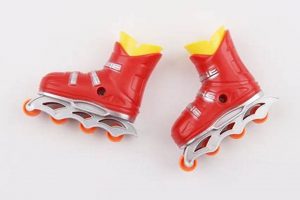
These specialized skating implements are designed for young beginners learning to navigate the ice. They feature two parallel blades beneath each boot, offering increased stability compared to traditional single-blade skates. This configuration provides a wider base of support, mitigating the likelihood of immediate falls. As an example, a child just starting to skate might find it easier to maintain balance using this type of skate due to the enhanced stability.
The significance of such skates lies in their ability to foster confidence and reduce initial apprehension in novice skaters. The added stability translates to a less intimidating learning experience, allowing children to focus on developing fundamental skating skills without constantly worrying about losing balance. Historically, these skates have been instrumental in introducing young individuals to the sport, serving as a stepping stone toward single-blade skating and more advanced techniques.
The subsequent sections will delve into specific features, safety considerations, proper fitting techniques, and maintenance guidelines related to this type of beginner-friendly ice skate, providing comprehensive information for parents and guardians seeking to introduce their children to the joy of ice skating.
Essential Guidance
The following guidance addresses critical aspects of selecting and utilizing ice skates designed for young children who are learning to skate. Adherence to these points will enhance safety and optimize the learning experience.
Tip 1: Proper Fit is Paramount: Ensure the skates fit snugly but comfortably. Overly large skates can impede control and increase the risk of injury. Toes should be able to wiggle slightly, but the heel should not lift significantly when the child flexes their ankle.
Tip 2: Ankle Support is Critical: Select skates that provide adequate ankle support. A rigid boot helps prevent ankle sprains and maintains proper alignment, particularly important for developing skaters.
Tip 3: Blade Sharpness Inspection: While not requiring the same level of sharpness as figure skates, the blades should still be free of significant nicks or rust. Damaged blades can reduce glide and stability.
Tip 4: Secure Fastening System: Utilize skates with a secure and reliable fastening system, such as laces, buckles, or a combination thereof. Ensure the skates are fastened tightly enough to prevent movement within the boot but not so tight as to restrict circulation.
Tip 5: Gradual Introduction: Introduce the child to skating gradually. Begin with short sessions and allow the child to become comfortable with the feel of the skates and the ice.
Tip 6: Protective Gear is Essential: Always ensure the child wears appropriate protective gear, including a helmet, knee pads, and elbow pads. These items significantly reduce the risk of injury from falls.
Tip 7: Supervised Practice: Constant supervision is required, especially during initial learning stages. A supervising adult can offer guidance, support, and immediate assistance if needed.
Tip 8: Regular Maintenance: After each use, wipe down the blades with a dry cloth to prevent rust. Store the skates in a dry place to prolong their lifespan and maintain their condition.
Prioritizing proper fit, adequate support, and diligent maintenance contributes significantly to a safer and more enjoyable learning process. Diligence in these areas fosters confidence and promotes the development of fundamental skating skills.
The subsequent concluding segment will summarize the critical factors for a successful introduction to ice skating using beginner-oriented equipment.
1. Enhanced Stability

The core function of ice skates with dual blades for children centers on the concept of enhanced stability. This stability derives directly from the skate’s design, specifically the presence of two parallel blades instead of a single blade. The increased surface area in contact with the ice creates a broader base of support, directly influencing the skater’s balance. The effect is analogous to comparing a bicycle with training wheels to one without; the training wheels (in this case, the second blade) provide additional support, mitigating the tendency to tip over. As a component, it’s paramount to the safe and effective introduction of young children to the sport. Without this augmented stability, novice skaters are more prone to frequent falls, potentially leading to discouragement or even injury.
A practical example highlighting the significance of enhanced stability is observing a group of first-time skaters. Children using traditional single-blade skates often struggle to maintain an upright position, requiring constant assistance or relying heavily on the rink’s sideboards for support. Conversely, children equipped with dual-blade skates exhibit improved balance and demonstrate a greater ability to move independently across the ice. This enhanced confidence allows them to focus on learning fundamental skating techniques, such as proper posture and stride, rather than solely concentrating on avoiding falls. Moreover, the practical implications extend beyond the immediate skating session. A positive initial experience fostered by enhanced stability can cultivate a lasting interest in the sport and encourage further participation.
In summary, the enhanced stability afforded by dual-blade ice skates for children serves as a foundational element for successful learning and enjoyment. This feature directly addresses the balance challenges inherent in ice skating, enabling young beginners to develop essential skills and build confidence on the ice. While challenges may arise in transitioning to single-blade skates later on, the initial stability provided by the dual-blade design is invaluable for sparking an interest in skating and laying the groundwork for future progress.
2. Beginner-Friendly Design

The design of ice skates intended for children significantly influences the ease with which a beginner can learn to skate. Dual-blade ice skates embody a beginner-friendly design philosophy through several key features. The primary design element, the presence of two parallel blades, inherently contributes to increased stability. This design choice directly addresses the primary challenge for novice skaters: maintaining balance. The wider base of support reduces the likelihood of immediate falls, allowing the child to focus on developing fundamental skills such as pushing off, gliding, and steering. A practical example is the observation that children using these skates often exhibit a greater degree of confidence and are more willing to attempt basic movements compared to those using traditional single-blade skates. The beginner-friendly design minimizes initial frustration and fosters a more positive learning environment.
Further contributing to the beginner-friendly design are features such as easily adjustable straps or closures, allowing for independent donning and doffing of the skates. This empowers the child and reduces reliance on adult assistance. The materials used are often chosen for their durability and comfort, minimizing potential discomfort during extended use. The integration of features that promote ease of use directly translates to increased engagement and a quicker learning curve. These are crucial elements in successfully introducing children to the sport of ice skating. Consider the alternative, where poorly designed skates cause discomfort or impede movement; this can quickly lead to discouragement and a negative association with the activity. Therefore, a well-executed beginner-friendly design is not merely a convenience but a fundamental component of effective children’s ice skates.
In conclusion, the connection between beginner-friendly design and dual-blade ice skates for children is a causal one, where the design directly impacts the learning experience. The design elements of stability, ease of use, and comfort work in concert to create a positive and accessible introduction to ice skating. While the transition to single-blade skates may eventually be desired, the beginner-friendly design of dual-blade skates plays a crucial role in building confidence and fostering a lifelong love of the sport. Challenges in future skill development are arguably reduced by the initial positive experience gained with these skates.
3. Safety First
The principle of “Safety First” is intrinsically linked to the design and application of ice skates with double blades for children. This connection is causal; the double-blade design is, in part, a direct response to the inherent safety concerns associated with introducing young, inexperienced individuals to the activity of ice skating. Single-blade skates require a degree of balance and coordination that most beginners, especially young children, have not yet developed. The resulting instability can lead to frequent falls, increasing the risk of injury. Double-bladed skates mitigate this risk by providing a wider base of support, thus reducing the likelihood of falls and the potential for subsequent injuries. “Safety First,” therefore, functions as a guiding principle in the creation and recommendation of this type of skate. For instance, a rink’s rental program may offer double-bladed skates specifically to minimize accidents among novice skaters, reflecting a practical application of prioritizing safety.
Further illustrating the “Safety First” paradigm is the inclusion of additional safety features in conjunction with the double-blade design. These may include reinforced ankle support to prevent sprains, easily adjustable straps to ensure a secure and comfortable fit (thereby reducing the risk of tripping), and durable materials that withstand the rigors of use without compromising structural integrity. Mandatory helmet usage during skating sessions, often enforced by rink operators, is a further manifestation of prioritizing safety. Furthermore, parental supervision and instruction are integral components of a safe introduction to ice skating. Parents are often advised to closely monitor their children, provide guidance on basic techniques, and ensure that the skates are properly fitted and fastened before allowing them on the ice. This multi-faceted approach reinforces the commitment to minimizing risk and promoting a positive and safe learning experience.
In conclusion, the connection between “Safety First” and children’s ice skates with double blades is one of necessity. The design of the skates directly addresses safety concerns inherent in learning to skate, and this design is often supplemented by additional safety features and practices. While the transition to single-blade skates may eventually be desirable for skill progression, the initial emphasis on safety during the learning phase is paramount. Potential challenges include ensuring proper skate fit and consistent enforcement of safety rules, but the overall goal remains clear: to create a safe and enjoyable environment for children to learn and appreciate the sport of ice skating. The prioritization of “Safety First” is not merely a suggestion but a fundamental requirement.
4. Skill Development

The utilization of ice skates with double blades for children plays a definitive role in foundational skill development on ice. The design directly impacts the acquisition of basic skating proficiency, facilitating a progression from initial balance to more complex maneuvers. The following facets elaborate on the specific ways in which these skates contribute to skill enhancement.
- Enhanced Balance Foundation
Double-bladed skates provide a wider base of support, allowing children to develop a sense of balance on the ice without the immediate fear of falling. This initial stability promotes confidence and encourages experimentation with movement. The skater can focus on weight distribution and posture rather than struggling to remain upright. This enhanced balance foundation is crucial for subsequent skill acquisition, such as gliding and edge control, which rely on a stable core.
- Fundamental Movement Acquisition
The stability offered by double blades enables children to practice fundamental movements, like forward strides, without the complexity of balancing on a single blade. This simplifies the learning process, allowing the child to internalize the mechanics of propulsion and directional control. The initial emphasis is on mastering the basic actions of skating, which then form the building blocks for more advanced techniques. This step-by-step approach is more effective than attempting complex skills before establishing a solid foundation.
- Coordination Development
Ice skating inherently requires coordination between various muscle groups. Double-bladed skates allow children to develop this coordination in a controlled environment. As they become more comfortable with basic movements, they can begin to integrate arm movements and body positioning to enhance their skating. This process improves overall coordination and motor skills, which are transferable to other physical activities. The focus shifts from simply staying upright to actively controlling and directing movement on the ice.
- Confidence Building
The ability to perform basic skating skills successfully, even with the aid of double blades, fosters a sense of accomplishment and builds confidence. This positive reinforcement encourages children to continue practicing and learning new skills. The initial success with double blades can serve as a strong motivator for transitioning to single-blade skates and pursuing more advanced skating techniques. The psychological impact of early success is a significant factor in long-term skill development.
In summary, the skill development facilitated by children’s ice skates with double blades is a carefully sequenced process. The skates provide the necessary stability for establishing a balance foundation, acquiring fundamental movements, developing coordination, and building confidence. This holistic approach to skill development lays the groundwork for future advancement in ice skating, and potentially other physical endeavors.
5. Proper Sizing

Proper sizing is a fundamental component in the effective and safe utilization of children’s ice skates with double blades. A correctly sized skate directly influences balance, control, and overall comfort, thereby impacting the learning experience and minimizing the risk of injury. An ill-fitting skate, whether too large or too small, disrupts the skater’s center of gravity and hinders their ability to maintain stability. This effect is magnified in double-bladed skates, where the intended benefit of increased stability is compromised by improper fit. For example, a skate that is too large allows the foot to move excessively within the boot, diminishing control during strides and turns. Conversely, a skate that is too small restricts foot movement, leading to discomfort, blisters, and potentially hindering proper blood circulation. The selection of the appropriate size is, therefore, not merely a matter of comfort but a crucial safety consideration.
The practical application of proper sizing involves accurate foot measurement and a thorough understanding of the specific sizing guidelines provided by the skate manufacturer. A standardized shoe size may not directly correlate to skate size, necessitating precise measurement using a Brannock device or similar tool. Considerations should include the thickness of the socks typically worn during skating and the shape of the child’s foot. A snug fit is ideal, allowing minimal movement within the boot while providing adequate toe room. Regular monitoring of foot growth is essential, as children’s feet grow rapidly, and a skate that fit properly one season may be inadequate the following year. Rental skates should be carefully inspected to ensure a secure and appropriate fit, as these skates are subject to wear and potential size discrepancies. Ultimately, the process of ensuring proper sizing requires diligence and attention to detail, but the benefits in terms of safety and performance are significant.
In summary, proper sizing is inextricably linked to the safety and effectiveness of children’s ice skates with double blades. This aspect directly impacts the skater’s balance, control, and overall experience. The challenges associated with ensuring proper sizing, such as foot measurement and adherence to manufacturer guidelines, are outweighed by the benefits of minimizing injury risk and promoting a positive learning environment. The commitment to proper sizing reflects a dedication to prioritizing the safety and well-being of young skaters.
6. Ankle Support

The presence and quality of ankle support in children’s ice skates with double blades is a critical safety and performance factor. A direct correlation exists between adequate ankle support and a reduced risk of injury, particularly ankle sprains and fractures, which are common among novice skaters. The double-blade design, while enhancing stability in a lateral direction, does not inherently provide sufficient support to prevent ankle roll or instability. This necessitates a well-structured boot that encases the ankle joint, providing resistance to excessive movement and maintaining proper alignment. Without adequate ankle support, even with double blades, a child’s ankle can easily be compromised during missteps or unexpected shifts in weight. A practical example is observing a child with weak ankles attempt to skate in insufficiently supportive boots; the ankles will tend to buckle inward, leading to fatigue and increasing the likelihood of a fall. In this context, adequate ankle support functions as a preventive measure, mitigating the potential for injury and fostering a more stable skating experience.
The selection of skates with appropriate ankle support also influences the child’s ability to learn proper skating techniques. A supportive boot allows for better control over the blades, facilitating the development of fundamental skills such as pushing off, gliding, and turning. Conversely, a boot that lacks sufficient support can impede these movements, as the skater must compensate for ankle instability, diverting energy and focus away from skill acquisition. For instance, a child with well-supported ankles can more effectively maintain an upright posture and generate power through their legs, leading to more efficient strides and improved overall performance. The design elements contributing to effective ankle support include rigid boot construction, secure lacing or closure systems that provide a snug fit around the ankle, and padded interiors that minimize friction and prevent chafing. These design considerations work in concert to provide a stable and comfortable skating experience, promoting skill development and reducing the risk of injury.
In conclusion, ankle support represents a vital component of children’s ice skates with double blades. Its presence directly addresses the inherent risks associated with learning to skate, contributing to a safer and more effective learning environment. Challenges may arise in ensuring proper fit and selecting skates with sufficient support, but the benefits in terms of injury prevention and skill enhancement outweigh the associated complexities. Prioritizing ankle support reflects a commitment to safeguarding the well-being of young skaters and promoting their enjoyment of the sport. The absence of such support represents a significant compromise in safety and performance.
7. Rust Prevention

The necessity of rust prevention in the context of children’s ice skates with double blades is paramount for maintaining the skates’ structural integrity, ensuring safe operation, and extending their lifespan. Given the skates’ frequent exposure to moisture and the inherent properties of the metal blades, proactive rust prevention measures are essential to mitigate corrosion and its associated detrimental effects.
- Material Degradation
Rust, or iron oxide, weakens the metal comprising the skate blades, compromising their structural integrity. Corrosion diminishes the blade’s thickness and strength, potentially leading to blade failure under stress. Such failure can result in instability, loss of control, and an increased risk of falls. An example is the observation of pitted or flaking surfaces on neglected skate blades, indicating significant material loss due to rust. This degradation directly undermines the skate’s ability to function safely and effectively.
- Performance Impairment
Rust accumulation on the blade surface increases friction between the blade and the ice, hindering smooth gliding and maneuverability. A rough, corroded blade impedes the skater’s ability to execute turns and maintain speed, detracting from the overall skating experience. Evidence of performance impairment can be seen in a child struggling to glide smoothly or experiencing difficulty executing basic skating maneuvers due to rusty blades. Reduced performance directly impacts the enjoyment and skill development associated with ice skating.
- Increased Maintenance Costs
Neglecting rust prevention necessitates more frequent blade sharpening and, in severe cases, premature replacement of the skates. Regular maintenance, including cleaning and drying the blades after each use, significantly reduces the likelihood of rust formation. The financial implications of inadequate rust prevention extend beyond the initial purchase price of the skates, contributing to increased long-term ownership costs. The cost of replacing rusted blades can often approach or exceed the cost of the original skates.
- Safety Implications
Beyond structural failure, rust can create uneven surfaces on the blades, compromising their grip on the ice. This irregular surface can lead to unpredictable movements and an increased risk of falls, especially during sharp turns or sudden stops. Furthermore, sharp rust flakes can pose a laceration hazard. Prioritizing rust prevention minimizes these safety risks, ensuring a more secure and controlled skating experience. Protective measures, such as blade guards during storage and transport, further reduce the potential for damage and injury.
In conclusion, the multifaceted implications of rust formation on children’s ice skates with double blades underscore the critical importance of proactive rust prevention measures. From material degradation and performance impairment to increased maintenance costs and safety implications, neglecting rust prevention has significant consequences. Adhering to recommended cleaning, drying, and storage practices is essential for maintaining the skates’ condition, ensuring safe and enjoyable use, and maximizing their lifespan.
Frequently Asked Questions
The following section addresses common inquiries and concerns regarding the selection, use, and maintenance of children’s ice skates equipped with double blades.
Question 1: At what age are double-bladed ice skates generally appropriate for children?
Double-bladed ice skates are typically suitable for children aged three to five years, depending on their individual development and coordination levels. The primary consideration is the child’s ability to walk and maintain basic balance. If a child can confidently walk and follow simple instructions, they are likely ready for introductory skating with double blades.
Question 2: What are the primary advantages of double-bladed skates compared to single-bladed skates for beginners?
The key advantage is enhanced stability. The dual-blade design provides a wider base of support, making it easier for young children to maintain balance and prevent frequent falls. This increased stability fosters confidence and allows beginners to focus on developing fundamental skating skills without the constant fear of losing balance.
Question 3: How should double-bladed ice skates be properly fitted to ensure safety and comfort?
Proper fitting involves measuring the child’s foot accurately and consulting the manufacturer’s sizing chart. The skates should fit snugly but comfortably, allowing slight toe movement while preventing significant heel lift. Secure fastening systems, such as laces or buckles, should be adjusted to provide adequate ankle support without restricting circulation.
Question 4: Are double-bladed ice skates suitable for advanced skating techniques or figure skating?
Double-bladed ice skates are primarily designed for beginner use and are not suitable for advanced skating techniques or figure skating. The dual-blade design limits maneuverability and precision, making it difficult to execute complex turns, jumps, and spins. Once a child has developed basic skating skills and confidence, a transition to single-bladed skates is recommended for further progression.
Question 5: What safety precautions should be taken when using double-bladed ice skates?
Essential safety precautions include wearing a properly fitted helmet, knee pads, and elbow pads to minimize the risk of injury from falls. Constant adult supervision is also crucial, especially during initial learning stages. Skaters should be instructed on basic safety rules and etiquette to prevent collisions with other skaters.
Question 6: How should double-bladed ice skates be maintained to prolong their lifespan and ensure safe operation?
Regular maintenance involves wiping down the blades with a dry cloth after each use to prevent rust formation. Skates should be stored in a dry place and transported in blade guards to protect the blades from damage. Periodically inspecting the blades for nicks or rust and sharpening them as needed is also recommended.
In summary, double-bladed ice skates provide a stable and confidence-building introduction to skating for young children. Proper fitting, adherence to safety guidelines, and regular maintenance are crucial for maximizing their benefits.
The subsequent section will provide resources for finding appropriate skating lessons and facilities.
Conclusion
This exploration of children’s ice skates with double blades has illuminated their significance as a foundational tool for introducing young individuals to the sport of ice skating. The enhanced stability, beginner-friendly design, and emphasis on safety contribute directly to a positive initial experience, fostering confidence and encouraging skill development. Proper sizing, adequate ankle support, and diligent rust prevention further enhance the benefits and ensure a safe and enjoyable learning process.
The decision to utilize these skates represents a commitment to providing children with a secure and accessible entry point to the world of ice skating. Continued adherence to best practices in fitting, maintenance, and supervision will maximize the potential for a lifelong appreciation of the sport. The responsible use of childrens ice skates double blades lays the groundwork for future skill progression and a continued engagement with the multifaceted benefits of ice skating.