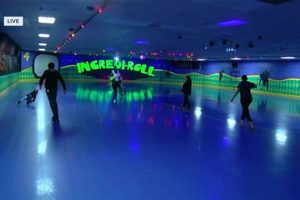
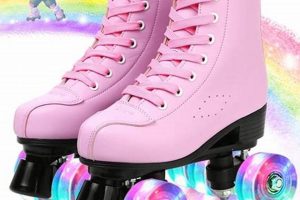
These components, affixed to the front of roller skate plates, provide a crucial mechanism for controlled deceleration and braking. Typically constructed from durable rubber or synthetic materials, they allow the skater to reduce speed or come to a complete halt by applying pressure to the skating surface. They function as an essential safety feature, facilitating maneuverability and preventing collisions. As an example, a skater might use them to avoid an obstacle on a crowded rink or to smoothly execute a controlled stop during a routine.
The integration of these elements significantly enhances the safety and versatility of roller skates. Their presence enables skaters to navigate various environments and perform a wider range of movements with confidence. Historically, rudimentary forms were employed early in the development of roller skating, gradually evolving into the more refined and effective designs utilized today. They have become indispensable for skaters across different disciplines, from recreational skating to competitive roller derby.
The subsequent sections will delve into the different types available, their maintenance requirements, factors influencing their performance, and relevant safety considerations for optimal use. Understanding these aspects is paramount for ensuring both the longevity of the equipment and the safety of the skater.
Optimizing Performance
The following provides practical guidance on maximizing the effectiveness and lifespan of these critical skate components. Adherence to these suggestions will contribute to enhanced safety and control while skating.
Tip 1: Selection Based on Skating Style: Choose the appropriate material durometer (hardness) based on the intended skating surface and style. Softer compounds offer superior grip on slick surfaces but may wear more quickly. Harder compounds provide better durability on rougher terrain but may reduce stopping power.
Tip 2: Regular Inspection for Wear: Routinely examine the braking elements for signs of excessive wear, such as thinning, cracking, or uneven surfaces. Prompt replacement is essential to maintain reliable braking performance.
Tip 3: Proper Adjustment and Alignment: Ensure the components are correctly adjusted and aligned with the skate plate. Improper alignment can lead to uneven wear, reduced braking efficiency, and potential instability.
Tip 4: Controlled Pressure Application: Practice applying consistent and controlled pressure when braking. Abrupt or excessive force can cause skidding or loss of control. Gradual pressure application maximizes stopping power while maintaining stability.
Tip 5: Surface Condition Awareness: Be mindful of the skating surface. Wet, oily, or sandy conditions can significantly reduce braking effectiveness. Adjust skating speed and braking technique accordingly.
Tip 6: Rotation to Promote Even Wear: Periodically rotate the right and left components to promote even wear. This practice can extend their lifespan and maintain consistent braking performance.
Tip 7: Appropriate Tightening of Fasteners: Confirm that all fasteners securing the components are tightened to the manufacturer’s specified torque. Over-tightening can damage the components or the skate plate, while under-tightening can cause loosening and potential failure.
Proper utilization and maintenance are vital for ensuring safety and optimal skating performance. By adhering to the above guidance, skaters can enhance their control and extend the lifespan of these essential skate elements.
The subsequent sections will provide a comprehensive overview of safety protocols related to roller skating, further emphasizing responsible skating practices.
1. Material Composition

The material composition of braking components directly influences their performance characteristics. The primary function of these elements is to provide friction against a skating surface to facilitate deceleration. The materials employed, therefore, must exhibit appropriate frictional properties, wear resistance, and durability under the stress of repeated use. Common materials include various grades of rubber, polyurethane, and synthetic composites. Each material offers a distinct balance of grip, longevity, and cost. The choice of material impacts the skater’s ability to control speed effectively and maintain stability.
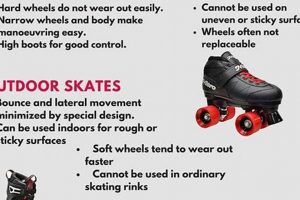
For example, stoppers constructed from high-durometer polyurethane offer extended durability, particularly on abrasive outdoor surfaces, but may provide reduced grip, potentially lengthening stopping distances. Conversely, stoppers made from softer rubber compounds offer superior grip, allowing for more immediate deceleration on smoother surfaces like indoor rinks, but tend to wear down more rapidly. In roller derby, where rapid stops and agile maneuvers are critical, skaters frequently select softer, high-grip compounds, even if they require more frequent replacement. Understanding these trade-offs is crucial for selecting components that match the skater’s style and the typical skating environment.
In summary, material composition is a determinant factor in the performance and longevity of braking components. Selection requires careful consideration of the skating surface, the desired level of grip, and the acceptable rate of wear. Optimizing the material choice directly translates to enhanced safety, control, and overall skating experience. Future advancements in material science may lead to innovative compounds that offer improved performance across a broader range of conditions, further refining the connection between composition and functionality.
2. Durometer Rating

The durometer rating serves as a crucial indicator of a braking component’s hardness, directly impacting its performance characteristics. It quantifies the material’s resistance to indentation, expressed as a numerical value, typically on the Shore A scale for roller skate components. This rating establishes a fundamental relationship between the element’s composition and its functionality. A lower durometer rating signifies a softer compound, while a higher rating indicates a harder material. This has a direct effect on both grip and wear resistance during skating.
A softer compound (lower durometer) generally offers enhanced grip, facilitating quicker deceleration and improved control, particularly on smoother surfaces. However, this increased grip comes at the expense of durability, as the material wears down more rapidly under friction. Conversely, a harder compound (higher durometer) exhibits greater resistance to abrasion, extending the component’s lifespan, especially on rough outdoor surfaces. The trade-off is a reduction in grip, potentially increasing stopping distances and decreasing maneuverability. For instance, a skater predominantly using indoor rinks may opt for a durometer rating in the 70A-80A range for optimal grip, while a skater primarily on outdoor asphalt may prefer 85A or higher for increased durability. This selection reflects the direct correlation between the durometer rating, the skating environment, and the skater’s desired performance.
In conclusion, the durometer rating is a pivotal specification that dictates a component’s balance between grip and durability. Proper understanding of this rating allows skaters to make informed decisions based on their skating style, typical environments, and personal preferences. The selection of an appropriate durometer contributes significantly to safety, control, and the overall skating experience. Future improvements in material science may lead to compounds that offer both high grip and exceptional durability, potentially minimizing the need for such trade-offs.
3. Attachment Mechanism

The attachment mechanism represents a critical design element, directly influencing the stability, security, and ease of use of braking components on roller skates. It dictates how these elements are affixed to the skate plate and subsequently, the reliability of braking performance. An inadequate or poorly designed mechanism can compromise safety and hinder control.
- Threaded Stem and Locknut Systems
This common configuration utilizes a threaded stem extending from the component that passes through a corresponding hole in the skate plate. A locknut secures the stem, clamping the component firmly against the plate. The effectiveness depends on thread quality, nut tightness, and the compressive strength of the materials. A loose nut or stripped threads can lead to component detachment, particularly under the stress of repeated braking.
- Bolt-Through Plate Designs
These mechanisms employ bolts that pass through both the component and the skate plate, secured by nuts on the opposite side. This design generally offers greater strength and resistance to detachment compared to threaded stem systems, especially when subjected to lateral forces. Regular inspection and tightening of bolts are crucial to prevent loosening due to vibration.
- Adjustable Set Screw Mechanisms
Some advanced designs incorporate adjustable set screws that allow for fine-tuning of the component’s position and angle relative to the skating surface. This allows skaters to customize braking performance according to their preferences and skating style. However, the reliability of such systems hinges on the quality of the set screws and their ability to maintain their position under stress.
- Quick-Release Mechanisms
Certain specialized components feature quick-release mechanisms that facilitate rapid installation and removal, often employed in roller derby for quick equipment changes. These systems typically rely on levers or cams to secure the component. While convenient, their robustness and security should be carefully evaluated, as a failure in the quick-release mechanism could result in unexpected detachment during use.
The selection of an appropriate attachment mechanism is paramount for ensuring the safe and reliable operation of braking components. Factors to consider include the skating style, frequency of use, and the expected stress levels. A well-designed and properly maintained attachment mechanism contributes significantly to overall skating safety and control.
4. Wear Resistance

Wear resistance, in the context of elements designed for controlled deceleration, denotes the capacity of the material to withstand the abrasive forces encountered during repeated contact with skating surfaces. This characteristic directly influences the operational lifespan of these components and, consequently, the frequency of replacement required. Reduced wear resistance precipitates accelerated degradation, leading to diminished braking effectiveness and an increased risk of compromised safety. The selection of materials with superior wear resistance is therefore critical in ensuring the reliable long-term performance of this safety equipment. For example, compounds frequently used in outdoor skating contexts prioritize wear resistance over maximal grip to withstand the abrasive nature of asphalt, even at the cost of some stopping power.
The degree of wear resistance required is contingent upon several factors, including the skater’s style, the typical skating environment, and the frequency of use. Aggressive skating styles involving frequent and forceful braking maneuvers demand a higher level of wear resistance than recreational skating. Similarly, skating on rough or abrasive surfaces, such as concrete or asphalt, necessitates materials capable of withstanding greater frictional forces. The practical implication of inadequate wear resistance manifests as a gradual reduction in the component’s size and a corresponding decrease in its ability to effectively reduce speed. Ultimately, this compromises the skater’s control and increases the potential for accidents.
In conclusion, wear resistance is a paramount consideration in the design and selection of braking components for roller skates. Its influence on longevity, braking effectiveness, and overall safety cannot be overstated. Prioritizing wear resistance, particularly in demanding skating environments, represents a prudent approach to mitigating risks and maximizing the investment in skating equipment. Further advancements in material science hold the potential to yield compounds exhibiting even greater wear resistance, thereby enhancing both the safety and cost-effectiveness of roller skating.
5. Adjustability Range
The adjustability range of braking components on roller skates refers to the extent to which their position and angle relative to the skate boot and skating surface can be modified. This characteristic is crucial because it allows skaters to fine-tune the braking action to match their individual skating style, skill level, and the specific demands of different skating environments. A limited adjustability range can restrict a skater’s ability to achieve optimal braking performance, potentially compromising safety and maneuverability. The adjustability range influences the angle of engagement with the skating surface, the amount of pressure required for deceleration, and the overall responsiveness of the braking system. Insufficient adjustability can lead to inefficient braking, uneven wear on the components, or even instability. The effect can be observed in multiple skating disciplines; for instance, roller derby skaters often require a highly customizable adjustability range to facilitate rapid stops and agile maneuvers, while recreational skaters may prioritize simpler, less adjustable designs.
The practical implications of a suitable adjustability range are significant. It enables skaters to adapt their equipment to various skating conditions, such as indoor rinks, outdoor surfaces, or uneven terrain. Skaters can compensate for differences in skating surface friction and adjust the braking angle to maximize stopping power or control slide stops. Furthermore, the adjustability range can accommodate variations in skater anatomy and technique, allowing for a more personalized and comfortable skating experience. For example, a skater with a longer stride might benefit from a braking element positioned further forward, while a skater with weaker leg muscles might prefer a more acute braking angle to reduce the effort required. In sum, adjustability contributes to enhanced control, reduced fatigue, and improved overall skating performance.
The adjustability range represents a critical design parameter that should be carefully considered when selecting braking components. While a wider adjustability range offers greater versatility, it may also increase the complexity of the equipment and necessitate a more thorough understanding of proper adjustment techniques. The optimal adjustability range depends on the individual skater’s needs and preferences. A balance between adjustability, ease of use, and durability is essential. Continuing advancements in roller skate technology are aimed at improving adjustability while maintaining robustness and simplifying the adjustment process, further enhancing the skater’s control and safety.
Frequently Asked Questions
This section addresses common inquiries regarding components used for deceleration and braking on roller skates. The information provided aims to clarify technical aspects and promote informed decisions regarding their selection and maintenance.
Question 1: What constitutes the typical lifespan of these braking devices?
The lifespan varies significantly based on several factors, including material composition, skating frequency, skating style, and the abrasiveness of the skating surface. Frequent use on rough outdoor surfaces will accelerate wear compared to occasional use on smooth indoor rinks. Regular inspection and timely replacement are essential for maintaining consistent braking performance.
Question 2: Is there a standardized method for determining the appropriate size?
No universally standardized sizing system exists. Size selection depends primarily on skater preference and skating style. Larger components provide a greater surface area for braking, potentially offering more stopping power, while smaller components may offer greater maneuverability. Consultation with a skate technician is recommended for personalized guidance.
Question 3: What are the potential consequences of using worn-out elements?
Continued use of worn-out braking elements can significantly compromise braking effectiveness, leading to increased stopping distances and reduced control. This elevates the risk of collisions and injuries. Worn components can also contribute to uneven wear on other skate components, potentially shortening their lifespan.
Question 4: What maintenance procedures are recommended to prolong their lifespan?
Regular inspection for wear, proper cleaning to remove debris, and periodic tightening of attachment hardware are essential maintenance procedures. Rotating components periodically can promote even wear. Avoid skating on abrasive surfaces when possible to minimize wear rates. The manufacturer’s instructions should be consulted for specific maintenance recommendations.
Question 5: Can different types of components be interchanged between different skate brands?
Interchangeability is not guaranteed. Compatibility depends on the attachment mechanism, stem size, and overall design. It is recommended to use components specifically designed for the skate brand and model to ensure proper fit and function. Attempting to force incompatible components can damage the skate plate or compromise braking performance.
Question 6: What safety precautions should be observed when using these braking devices?
Always wear appropriate protective gear, including a helmet, knee pads, elbow pads, and wrist guards. Practice braking techniques in a controlled environment before attempting more challenging maneuvers. Be aware of the skating surface and adjust braking technique accordingly. Never rely solely on the braking elements for stopping; use other techniques, such as turning or foot braking, as needed.
Proper selection, maintenance, and utilization of braking components are paramount for ensuring safe and controlled roller skating. Adherence to these guidelines promotes both performance and safety.
The subsequent section will present a glossary of key terms related to roller skate equipment, further enhancing understanding of the subject matter.
Conclusion
This discourse has comprehensively examined braking components, delving into their functionality, material composition, durometer ratings, attachment mechanisms, wear resistance, and adjustability. These elements represent a critical safety feature on roller skates, enabling controlled deceleration and preventing accidents. Understanding their characteristics and maintenance requirements is paramount for ensuring optimal performance and skater well-being.
The performance and longevity of stoppers for roller skates are inextricably linked to informed selection, diligent maintenance, and responsible skating practices. Continued research and technological advancements will likely yield even more effective and durable braking solutions in the future, further enhancing the safety and enjoyment of roller skating for all skill levels. Skaters are strongly encouraged to prioritize safety by regularly inspecting and maintaining their equipment and seeking professional advice when needed.