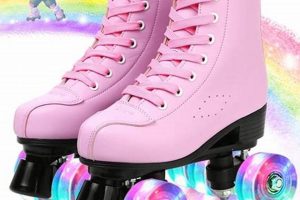
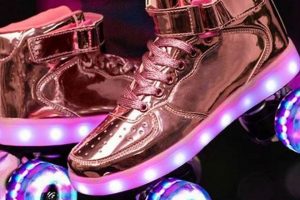
The selection of appropriate footwear for indoor recreational skating necessitates consideration of several factors. These specialized skates are designed to optimize performance and comfort on smooth, indoor surfaces. A prime example would be a skate with a low-cut boot for maneuverability and softer wheels to provide grip on polished floors. The intent is to provide stability and control for the skater.
Utilizing equipment specifically designed for indoor environments can greatly enhance the skating experience. Improved maneuverability, control, and overall comfort are key advantages. Historically, the evolution of skate design has led to specific variations suited to different skating environments, with indoor models prioritizing grip and responsiveness.
The subsequent discussion will delve into the criteria for evaluating suitable options, encompassing wheel composition, boot structure, bearing quality, and overall design considerations critical for informed purchasing decisions.
Guidance for Optimal Indoor Roller Skate Selection
The subsequent guidance outlines key considerations for the acquisition of roller skates tailored for indoor use, ensuring optimal performance and safety.
Tip 1: Wheel Durometer Assessment: Prioritize wheels with a durometer rating suitable for indoor surfaces. Softer wheels (78A-85A) offer enhanced grip on polished floors, mitigating slippage and improving control. This is critical for beginner and experienced skaters alike.
Tip 2: Boot Construction and Fit: Evaluate boot structure for adequate ankle support and overall comfort. A snug, yet not restrictive, fit is paramount. Leather or reinforced synthetic materials often provide a balance of durability and flexibility. Improper fit can lead to blisters and reduced control.
Tip 3: Bearing Precision and Quality: Investigate bearing specifications. ABEC ratings (typically ABEC 5 or ABEC 7) indicate manufacturing tolerances, with higher numbers generally correlating to smoother, faster rolls. However, bearing quality is often more crucial than ABEC rating alone. Stainless steel or ceramic bearings offer enhanced durability.
Tip 4: Frame Material and Rigidity: Aluminum frames provide superior power transfer and responsiveness compared to plastic frames. A rigid frame minimizes energy loss during pushes, resulting in improved skating efficiency. Consider frame length relative to boot size for optimized maneuverability.
Tip 5: Toe Stop or Plug Configuration: Assess the toe stop or plug. Replaceable toe stops offer adjustable height and angle for customized braking. Plugs are suitable for jam skating and other specialized maneuvers where toe stops are undesirable. Secure attachment is essential for safety.
Tip 6: Regular Maintenance Schedule: Establish a routine maintenance schedule. Clean and lubricate bearings periodically to maintain optimal performance. Inspect wheels for wear and replace as necessary. Secure all hardware before each skating session.
The informed selection and regular maintenance of indoor roller skates can significantly improve the skating experience, promoting safety, control, and enjoyment.
The final section will synthesize the preceding information, providing concluding remarks on the overall importance of equipment selection in indoor recreational skating.
1. Wheel Durometer

Wheel durometer, a measure of a wheel’s hardness, is a critical determinant in the performance and suitability of roller skates for indoor environments. Expressed numerically on the “A” scale, a lower durometer value signifies a softer wheel, while a higher value indicates a harder one. For indoor skating, wheels with lower durometer ratings are generally favored due to their enhanced grip on smooth, polished surfaces. The selection of an appropriate durometer directly influences traction, maneuverability, and the overall skating experience. For instance, a wheel with a durometer of 78A provides significant grip on a skating rink floor, allowing for controlled stops and turns. Conversely, a wheel with a durometer of 95A, more suited for outdoor surfaces, would likely result in slippage and reduced control on an indoor rink. The cause-and-effect relationship is clear: wheel durometer directly dictates the level of traction achievable on different surfaces.
The importance of wheel durometer extends beyond mere grip. Softer wheels also tend to absorb vibrations more effectively, leading to a smoother, more comfortable skating experience. This is particularly beneficial during extended skating sessions or when performing intricate maneuvers. The choice of wheel durometer must also consider the skater’s weight and skill level. Heavier skaters may benefit from slightly harder wheels within the recommended indoor range to prevent excessive compression and maintain speed. Conversely, novice skaters often prefer softer wheels for increased stability and control as they develop their skills. Different wheel materials also affect grip and durability, but the durometer rating is the primary indicator of expected performance on a given surface.
In conclusion, understanding and selecting the appropriate wheel durometer is paramount in optimizing roller skates for indoor use. It is not merely a preference but a functional requirement that impacts safety, performance, and comfort. Ignoring this specification could lead to a sub-optimal and potentially hazardous skating experience. Consequently, wheel durometer is a key factor in determining the classification of roller skates as “best indoor roller skates,” bridging the gap between skate design and environmental conditions.
2. Boot Fit

Boot fit serves as a foundational element in the selection of appropriate roller skates for indoor use. Improper boot fit compromises control, comfort, and safety, thereby negating other design advantages. The correlation between correct boot fit and optimal performance underscores its importance when evaluating indoor roller skate models.
- Ankle Support and Stability
Adequate ankle support is crucial for maintaining stability during skating maneuvers. A well-fitted boot secures the ankle, preventing excessive pronation or supination, which can lead to instability and injury. For instance, a boot that is too loose around the ankle provides insufficient support, increasing the risk of sprains or strains during quick turns. In contrast, a boot that is too tight restricts movement and can cause discomfort or numbness. The ideal boot for indoor skating should provide firm, yet comfortable, support to the ankle, allowing for precise control and maneuverability.
- Toe Box Comfort and Alignment
The toe box area of the boot should provide sufficient room for the toes to lie flat and uncompressed. A narrow toe box can cause discomfort, blistering, and even long-term foot problems such as bunions. Conversely, an excessively wide toe box allows the foot to slide forward, reducing control and increasing the risk of toe jamming. The optimal boot fit ensures the toes have ample space to move naturally without being restricted or compressed, promoting comfort and preventing injury during prolonged skating sessions.
- Heel Lock and Slippage Prevention
Effective heel lock is essential for preventing heel slippage within the boot. Heel slippage compromises energy transfer and control, making it difficult to execute precise movements. A well-fitted boot secures the heel firmly in place, minimizing movement and maximizing power transfer with each stride. Features like heel counters and lacing systems that tighten around the ankle contribute to a secure heel lock, enhancing responsiveness and stability.
- Lacing System and Adjustability
The lacing system allows for customized adjustment of the boot’s fit to accommodate individual foot shapes and preferences. Lacing systems that provide independent adjustment in different areas of the boot (e.g., ankle, instep, toe box) are particularly beneficial. For example, a skater with a narrow foot may require tighter lacing around the instep to achieve a secure fit, while a skater with a wider foot may need looser lacing in this area. The adjustability of the lacing system ensures a snug and comfortable fit for a wide range of foot sizes and shapes, contributing to overall comfort and performance.
These aspects of boot fit, considered collectively, significantly impact the designation of indoor roller skates as the “best.” A boot that neglects these principles detracts from the potential benefits of other features, such as wheel durometer and bearing quality, underscoring the necessity of prioritizing boot fit during the selection process. The relationship between boot fit and skating performance dictates a rigorous assessment of boot characteristics before any skate is considered a top-tier choice.
3. Bearing Precision

Bearing precision is a fundamental determinant of the performance characteristics exhibited by indoor roller skates. The internal components of a bearing, specifically the balls, races, and retainer, must adhere to strict dimensional tolerances to ensure smooth and efficient rotation. Deviations from these tolerances result in friction, reduced speed, and diminished overall performance, ultimately impacting the skater’s experience.
- ABEC Rating and Dimensional Tolerances
The Annular Bearing Engineers’ Committee (ABEC) rating system (ABEC-1, ABEC-3, ABEC-5, ABEC-7, ABEC-9) provides a quantitative measure of bearing manufacturing tolerances. While not a definitive indicator of overall quality, a higher ABEC rating generally implies tighter tolerances and reduced imperfections in the bearing components. For example, an ABEC-7 bearing exhibits more stringent dimensional requirements than an ABEC-3 bearing, potentially leading to smoother, faster rolls on the controlled surfaces of an indoor rink. However, it is essential to recognize that factors beyond ABEC rating, such as material quality and lubrication, also influence performance.
- Material Composition and Durability
The materials used in bearing construction significantly impact durability and longevity. Chrome steel is a common material choice due to its hardness and resistance to wear. Stainless steel bearings offer enhanced corrosion resistance, particularly in humid environments. Ceramic bearings, while more expensive, exhibit exceptional hardness, low friction, and resistance to heat, making them a premium option for skaters seeking optimal performance and extended bearing life. For instance, a ceramic bearing is less susceptible to performance degradation from minor contaminants compared to a steel bearing, resulting in more consistent speed and smoothness over time.
- Lubrication and Friction Reduction
Proper lubrication is critical for minimizing friction within the bearing. Lubricants, typically oils or greases, create a thin film between the balls and races, reducing contact and facilitating smoother rotation. The viscosity and composition of the lubricant must be appropriate for the intended skating conditions. For example, a lightweight oil is often preferred for indoor skating to minimize drag, while a thicker grease may be more suitable for outdoor skating where bearings are exposed to more contaminants. Inadequate lubrication leads to increased friction, heat generation, and premature bearing wear, ultimately hindering performance.
- Bearing Seal Design and Contamination Prevention
Bearing seals are designed to prevent contaminants, such as dust and debris, from entering the bearing and compromising its performance. Seals can be either contact or non-contact. Contact seals provide a tighter seal but introduce more friction, while non-contact seals offer lower friction but less effective contamination prevention. For indoor skating, where contaminant levels are generally lower, non-contact seals are often preferred to minimize drag. For example, a rubber shield that creates a tight seal around the inner and outer race can prevent fine dust particles from entering the bearing, preserving its optimal rolling characteristics.
The relationship between bearing precision and the designation of “best indoor roller skates” is direct. Skates equipped with high-precision, well-lubricated bearings constructed from durable materials consistently outperform skates with inferior bearing designs. The ability to maintain consistent speed and smooth roll is paramount in indoor skating disciplines such as rhythm skating, artistic skating, and roller derby. As such, bearing precision represents a key performance indicator that is central to differentiating high-quality indoor roller skates from their less capable counterparts. The investment in superior bearings yields tangible improvements in skating efficiency, control, and overall enjoyment.
4. Frame Rigidity

Frame rigidity is a pivotal characteristic influencing the performance and responsiveness of roller skates, particularly in the context of indoor use. It refers to the frame’s resistance to deformation under load, directly impacting energy transfer and control during skating maneuvers. A rigid frame ensures minimal energy loss, translating skater input directly into forward motion. Conversely, a flexible frame dissipates energy, reducing efficiency and responsiveness.
- Material Composition and Stiffness
The material from which the frame is constructed significantly impacts its rigidity. Aluminum alloys are commonly employed in high-performance indoor roller skates due to their superior strength-to-weight ratio and inherent stiffness compared to plastics. Extruded or forged aluminum frames offer even greater rigidity than stamped aluminum frames, minimizing flex under stress. For example, a 7000 series aluminum frame exhibits greater rigidity than a 6000 series aluminum frame, resulting in more efficient power transfer and enhanced responsiveness. The choice of material directly affects the skate’s ability to translate skater input into precise movements.
- Frame Design and Structural Integrity
Frame design plays a critical role in maximizing rigidity. Reinforcements, such as gussets and cross-bracing, strategically placed within the frame structure, enhance its resistance to bending and twisting. A well-designed frame distributes stress evenly, preventing localized deformation and maintaining structural integrity. For example, a frame with a deep channel profile exhibits greater rigidity than a frame with a flat profile, resisting bending forces more effectively. The integration of design elements directly contributes to the frame’s ability to withstand load and maintain its shape during skating.
- Wheelbase Length and Maneuverability
The wheelbase, defined as the distance between the front and rear axles, influences the maneuverability and stability of the skate. Shorter wheelbases generally enhance maneuverability, facilitating quick turns and agility. However, shorter wheelbases may compromise stability at higher speeds. Longer wheelbases provide greater stability but can reduce maneuverability. The optimal wheelbase length depends on the intended skating style and the skater’s preferences. For example, artistic skaters often prefer shorter wheelbases for enhanced agility, while speed skaters prioritize longer wheelbases for increased stability at high speeds. The relationship between wheelbase length and frame rigidity dictates the overall handling characteristics of the skate.
- Axle Mounting and Energy Transfer
The manner in which axles are mounted to the frame impacts energy transfer and wheel alignment. Precision-machined axle mounts ensure accurate wheel alignment, minimizing friction and maximizing energy transfer. Secure axle mounting prevents unwanted movement or vibration, enhancing control and responsiveness. For example, frames with recessed axle mounts provide a more secure and stable platform for the wheels compared to frames with surface-mounted axles. The integration of precise axle mounting contributes to the overall efficiency of the skate, allowing for smoother and more controlled skating maneuvers.
These facets of frame rigidity, encompassing material composition, structural design, wheelbase length, and axle mounting, collectively determine the performance characteristics of indoor roller skates. Skates incorporating frames with superior rigidity exhibit enhanced responsiveness, stability, and energy transfer, contributing to the overall skating experience. The selection of a frame with appropriate rigidity is paramount in optimizing skate performance and aligning with the demands of various indoor skating disciplines. Consequently, frame rigidity serves as a critical attribute in the evaluation and designation of “best indoor roller skates.”
5. Toe Stop

The toe stop, a crucial component of certain roller skate designs, directly influences maneuverability, braking, and safety, factors essential in the assessment of suitable indoor skating equipment. This element, typically a rubber or composite material affixed to the front of the skate frame, provides a point of contact for controlled stops, stability during specific maneuvers, and push-off assistance. Its presence, design, and adjustability contribute to the overall functionality of a skate, influencing its categorization as appropriate for indoor recreational or competitive use. A well-designed toe stop allows skaters to execute controlled stops without relying solely on heel braking or turns, reducing the risk of falls or collisions on crowded indoor rinks. Its absence necessitates alternative braking techniques which may be less effective or appropriate for all skill levels.
The significance of the toe stop is exemplified in disciplines such as roller derby and jam skating. In roller derby, skaters utilize toe stops for rapid stops and directional changes within a confined space. The ability to quickly pivot and block opponents hinges on the reliable functionality of the toe stop. Similarly, jam skaters employ toe stops for executing intricate footwork and complex dance moves. The toe stop provides a stable platform for maintaining balance and control during these demanding routines. Conversely, in speed skating or certain forms of artistic skating, toe stops may be deemed unnecessary or even detrimental, as they can impede forward momentum. Therefore, the suitability of a toe stop depends on the intended skating style and the specific requirements of the discipline.
In conclusion, the toe stop represents a significant determinant in the suitability of roller skates for various indoor applications. Its contribution to braking, stability, and maneuverability cannot be overlooked when evaluating the overall performance and safety of skating equipment. Although not universally required, its presence and design features contribute significantly to the functionality of skates intended for disciplines requiring rapid stops, agile maneuvers, and controlled movements. Therefore, when selecting suitable skates, considering the specific needs and skating discipline is vital to determining whether toe stops enhance or impede the overall skating experience.
6. Maintenance

Sustained performance and longevity of roller skates, particularly those designated as high-quality indoor models, are inextricably linked to consistent and appropriate maintenance practices. Neglecting maintenance can degrade performance, compromise safety, and diminish the value of even the most well-designed skates. Consequently, maintenance protocols represent an integral consideration in the assessment of “best indoor roller skates.”
- Bearing Cleaning and Lubrication
Accumulation of dust, dirt, and debris within the bearings increases friction, reducing roll speed and causing premature wear. Regular cleaning and lubrication are essential for maintaining optimal bearing performance. The disassembly, cleaning with appropriate solvents, and re-lubrication of bearings should be performed periodically, dependent upon usage frequency. For example, skates used in dusty environments require more frequent bearing maintenance than those used exclusively on pristine indoor surfaces. The type of lubricant employed also influences performance; synthetic lubricants generally offer superior friction reduction and temperature stability compared to petroleum-based alternatives.
- Wheel Rotation and Replacement
Uneven wear patterns on the wheels can compromise stability and maneuverability. Rotating the wheels periodically distributes wear more evenly, extending their lifespan and preserving optimal performance. Regular inspection for signs of wear, such as flat spots or significant diameter reduction, is crucial. Wheels exhibiting excessive wear should be replaced promptly to maintain consistent grip and roll characteristics. For instance, failure to replace worn wheels can lead to unpredictable slides and reduced control, especially during abrupt stops or sharp turns.
- Hardware Inspection and Tightening
Loose or missing hardware, such as axle nuts, mounting bolts, and toe stop screws, can compromise the structural integrity and safety of the skates. Regular inspection of all hardware components is essential. Loose hardware should be tightened to the manufacturer’s specifications to prevent component failure and potential injury. For example, a loose axle nut can allow the wheel to wobble, leading to instability and reduced control. Periodic replacement of worn or damaged hardware may also be necessary.
- Boot Cleaning and Conditioning
The skate boot, whether constructed of leather, synthetic materials, or a combination thereof, requires periodic cleaning and conditioning to maintain its integrity and comfort. Leather boots benefit from regular cleaning with appropriate leather cleaners and conditioning with leather conditioners to prevent cracking and maintain suppleness. Synthetic boots can be cleaned with mild soap and water. Proper boot care extends the lifespan of the skates and enhances the overall skating experience. Neglecting boot maintenance can lead to premature degradation of the materials, compromising fit and support.
These maintenance facets, encompassing bearing care, wheel management, hardware inspection, and boot conditioning, collectively contribute to the sustained performance and longevity of indoor roller skates. Skates subjected to rigorous maintenance protocols consistently outperform and outlast those that are neglected, solidifying the link between maintenance and the characteristics associated with “best indoor roller skates.” The proactive implementation of these maintenance practices constitutes a crucial aspect of responsible skate ownership and ensures a safe and enjoyable skating experience.
Frequently Asked Questions about Indoor Roller Skates
The following questions address common inquiries and concerns related to selecting and maintaining roller skates optimized for indoor use. The information aims to provide clarity and guidance for informed purchasing decisions.
Question 1: What is the optimal wheel durometer for indoor roller skating?
The ideal wheel durometer typically falls within the range of 78A to 85A. Softer wheels offer enhanced grip on smooth, polished indoor surfaces, promoting stability and control. However, specific durometer preferences may vary depending on the skater’s weight, skill level, and preferred skating style.
Question 2: How does bearing precision impact indoor skating performance?
Bearing precision, often indicated by the ABEC rating, influences roll speed and smoothness. Higher ABEC ratings generally correspond to tighter manufacturing tolerances and reduced friction. While not the sole determinant of bearing quality, a higher ABEC rating typically indicates improved performance. Stainless steel or ceramic bearings also offer enhanced durability.
Question 3: What are the key considerations when evaluating boot fit for indoor roller skates?
Proper boot fit is essential for comfort and control. The boot should provide adequate ankle support, a snug but not restrictive fit, and sufficient room in the toe box for comfortable toe splay. Heel lock is crucial for preventing slippage, and an adjustable lacing system allows for customized fit adjustments.
Question 4: How does frame material affect indoor skating performance?
Aluminum frames provide superior power transfer and responsiveness compared to plastic frames. A rigid frame minimizes energy loss during pushes, resulting in improved skating efficiency. Frame length should be considered relative to boot size for optimized maneuverability.
Question 5: Is a toe stop necessary for all indoor roller skating disciplines?
Toe stops are beneficial for activities requiring rapid stops, agile maneuvers, and controlled movements, such as roller derby and jam skating. However, they may be unnecessary or even detrimental for speed skating or certain forms of artistic skating where uninterrupted forward momentum is prioritized.
Question 6: What constitutes a regular maintenance schedule for indoor roller skates?
A regular maintenance schedule should include periodic cleaning and lubrication of bearings, wheel rotation or replacement as needed, inspection and tightening of all hardware, and cleaning and conditioning of the boot. Consistent maintenance prolongs the lifespan of the skates and ensures continued optimal performance.
The foregoing information provides a foundation for understanding key aspects of roller skates intended for indoor use. Proper evaluation of these factors contributes to a more informed selection process.
The subsequent section will synthesize the information, providing a final conclusion regarding the importance of equipment selection in indoor skating.
Best Indoor Roller Skates
The preceding exploration has illuminated critical factors governing the selection and maintenance of roller skates designed for indoor environments. Wheel durometer, boot fit, bearing precision, frame rigidity, toe stop configuration, and consistent maintenance practices emerge as pivotal elements influencing performance, safety, and longevity. The analysis underscores the need for meticulous evaluation of these factors to optimize the skating experience within controlled environments.
The informed application of this knowledge directly impacts the user’s ability to engage in recreational or competitive indoor skating with confidence and control. Prudent selection, guided by an understanding of these principles, mitigates risks, enhances performance, and ultimately fosters a more rewarding engagement with the sport. Continual advancements in materials and design will likely further refine the characteristics of the best indoor roller skates, emphasizing the importance of staying abreast of technological developments in the field.