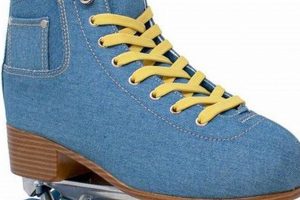
These specialized skates blend the maneuverability of inline designs with the performance requirements of artistic roller skating. Featuring a frame that typically holds between three and four wheels in a linear configuration, they allow for figures, jumps, and spins traditionally executed on quad skates. The boot provides ankle support, crucial for maintaining balance and control during complex routines, much like those seen in ice skating or traditional artistic roller skating.
The advent of these skates expands accessibility to the discipline, allowing practice and performance on a wider range of surfaces than traditional quad skates. This versatility enables athletes to train in environments previously unsuitable for artistic roller skating. Historically, artistic roller skating has primarily utilized quad skates. The inline variant presents a contemporary evolution, attracting both existing skaters and newcomers drawn to its unique characteristics and potential for innovation within the sport.
Further discussion will elaborate on the specific components of these skates, including frame materials, wheel characteristics, and boot construction, providing a detailed overview of their design and functionality. Furthermore, the text will explore training methodologies, competitive aspects, and the growing popularity of this hybrid sport, highlighting its influence on the broader skating community.
Inline Artistic Roller Skates
Optimizing performance on inline artistic roller skates requires meticulous attention to equipment, technique, and training regimen. The following guidelines are designed to enhance the skater’s proficiency and minimize potential risks.
Tip 1: Frame Alignment: Proper frame alignment is paramount. Misalignment can lead to instability and difficulty executing precise maneuvers. Regularly inspect and adjust frame positioning to ensure it complements the skater’s individual anatomy and skating style. A professional fitting is highly recommended.
Tip 2: Wheel Selection: Wheel durometer significantly impacts performance. Softer wheels provide greater grip but may wear faster. Harder wheels offer speed but reduced control. The optimal durometer varies depending on the skating surface and the specific demands of the routine. Experimentation is crucial to determine the ideal configuration.
Tip 3: Boot Support: Adequate ankle support is non-negotiable. The boot must provide a secure and stable platform for complex movements. Consider heat-moldable boots for a customized fit that minimizes slippage and maximizes responsiveness. Regular maintenance of the boot’s fastening system is also essential.
Tip 4: Edge Control Drills: Mastery of edge control is fundamental to artistic skating. Dedicate significant training time to drills that develop the skater’s ability to precisely manipulate edges. Examples include figure eights, serpentines, and controlled turns executed on both inside and outside edges.
Tip 5: Progressive Skill Progression: Avoid attempting advanced skills before mastering the fundamentals. A progressive approach minimizes the risk of injury and ensures a solid technical foundation. Consult with a qualified coach to develop a structured training plan that gradually introduces increasingly challenging elements.
Tip 6: Off-Skate Conditioning: Strength and flexibility are integral to success. Incorporate off-skate conditioning exercises that target core stability, leg strength, and ankle mobility. Plyometrics, balance training, and stretching are particularly beneficial.
Tip 7: Routine Maintenance: Regular maintenance extends the lifespan of the skates and ensures optimal performance. Clean the wheels, bearings, and frame after each session. Inspect for wear and tear and replace components as needed. Proper lubrication is also essential for smooth rolling.
Adhering to these recommendations will contribute significantly to the skater’s progress, enhancing both technical proficiency and overall enjoyment of inline artistic roller skating. Prioritizing safety and systematic skill development are key.
The following sections will explore specific training techniques and competitive strategies related to maximizing the performance capabilities of this evolving sport.
1. Frame Material

The frame material of inline artistic roller skates directly impacts performance characteristics, influencing attributes such as responsiveness, weight, and vibration dampening. Typically constructed from either aluminum alloys or composite materials, the frame serves as the foundation for mounting the wheels and connecting them to the skater’s boot. Aluminum frames, favored for their high strength-to-weight ratio, provide enhanced rigidity, translating into more precise energy transfer during maneuvers such as jumps and spins. This direct response is crucial for executing technically demanding elements with control and accuracy. However, aluminum’s inherent stiffness can also transmit more road vibration to the skater, potentially increasing fatigue during extended sessions. A notable example involves the use of 7000 series aluminum in high-end frames, prized for its exceptional strength and durability under extreme stress.
Composite frames, often made from reinforced polymers, offer an alternative approach. These materials excel in vibration absorption, providing a smoother ride, which can be advantageous for skaters prioritizing comfort and endurance over absolute responsiveness. While typically lighter than aluminum, composite frames may exhibit less torsional stiffness, potentially sacrificing some degree of precision in high-impact situations. The selection of frame material often depends on the skater’s skill level, skating style, and performance priorities. For instance, novice skaters may prefer the forgiving nature of composite frames, while advanced competitors often opt for the enhanced performance of aluminum.
In summary, the choice of frame material represents a critical design consideration in the construction of inline artistic roller skates. Aluminum frames provide superior responsiveness and power transfer, essential for advanced maneuvers, while composite frames offer enhanced vibration dampening and potentially greater comfort. Understanding the trade-offs associated with each material enables skaters to make informed decisions, optimizing their equipment for specific needs and performance goals. The ongoing development of new materials and manufacturing techniques promises further advancements in frame design, continually refining the balance between performance, comfort, and durability in inline artistic roller skating.
2. Wheel Durometer

Wheel durometer, a measure of a wheel’s hardness, is a critical factor influencing the performance characteristics of inline artistic roller skates. The selection of an appropriate durometer directly impacts grip, speed, wear resistance, and the overall feel of the skate, thereby affecting the skater’s ability to execute precise maneuvers and routines.
- Grip and Edge Control
Softer wheels, characterized by lower durometer values (e.g., 82A-88A), offer enhanced grip on skating surfaces. This increased friction allows for more secure edge control, enabling skaters to perform intricate footwork, turns, and stops with greater confidence. However, softer wheels tend to wear more rapidly, particularly on abrasive surfaces. In contrast, harder wheels (e.g., 90A and above) provide less grip, demanding greater skill in edge management but offering increased speed and durability.
- Speed and Roll
The hardness of the wheel directly influences its rolling resistance. Harder wheels exhibit lower rolling resistance, allowing the skater to achieve higher speeds and maintain momentum with less effort. This is advantageous for elements such as jumps and gliding sequences, where speed is essential. Softer wheels, while providing better grip, tend to slow the skater down due to increased friction with the skating surface. Therefore, a balance between grip and speed must be achieved based on the skater’s specific needs and the characteristics of the skating environment.
- Surface Adaptation
The optimal wheel durometer is contingent on the skating surface. Smooth, polished surfaces typically favor harder wheels, as the need for grip is reduced. Conversely, rough or uneven surfaces require softer wheels to provide adequate traction and absorb vibrations, enhancing comfort and control. Skaters frequently adjust wheel durometer based on the specific venue and performance conditions to optimize their skating experience. An outdoor rink, for example, may necessitate softer wheels than an indoor, polished rink.
- Skill Level and Skating Style
The skater’s skill level and skating style also play a role in determining the appropriate wheel durometer. Beginners often benefit from softer wheels, as the increased grip provides greater stability and control while learning fundamental skills. Advanced skaters, on the other hand, may prefer harder wheels to maximize speed and responsiveness for more complex routines. Similarly, skaters who prioritize technical precision may opt for softer wheels, while those focused on speed and power may choose harder options. The interplay between skill, style, and wheel durometer is a key aspect of equipment customization in inline artistic roller skating.
In conclusion, the selection of wheel durometer in inline artistic roller skates is a nuanced process requiring careful consideration of multiple factors, including surface conditions, skating style, and skill level. By understanding the trade-offs between grip, speed, and wear resistance, skaters can optimize their equipment configuration to achieve peak performance and enhance their overall skating experience.
3. Boot Support
Boot support in inline artistic roller skates is a critical determinant of a skater’s stability, control, and injury prevention. The boot’s primary function is to provide a rigid and secure interface between the skater’s foot and the skate frame, allowing for efficient transfer of force during complex maneuvers. Inadequate boot support can result in ankle instability, reduced precision in edge control, and an increased risk of sprains or fractures. For instance, a skater attempting a challenging jump with insufficient ankle support is more likely to experience a compromised landing, potentially leading to injury. Conversely, a boot with robust support allows for confident execution of difficult routines, promoting both performance and safety. The selection of an appropriate boot is therefore paramount.
Modern inline artistic roller skate boots employ a variety of construction techniques and materials to optimize support. Many utilize heat-moldable liners, allowing the boot to conform precisely to the skater’s foot, eliminating pressure points and maximizing contact. Carbon fiber or fiberglass shells offer exceptional stiffness and responsiveness, while strategically placed padding cushions critical areas and reduces friction. The height of the boot cuff also influences the degree of support; higher cuffs provide greater ankle stabilization but may restrict range of motion, whereas lower cuffs offer increased flexibility but less support. Professional skaters often invest in custom-made boots tailored to their specific foot shape, skating style, and the demands of their routines. A prime example is a boot designed with lateral reinforcement for enhanced edge control during spins.
Ultimately, the effectiveness of boot support is a function of its design, materials, and proper fit. Compromises in any of these areas can negatively impact performance and increase the risk of injury. While advancements in boot technology continue to improve the level of support available, careful consideration of individual needs and preferences remains essential. Selecting a boot that provides an optimal balance of support, comfort, and flexibility is a fundamental aspect of maximizing performance and ensuring safety in inline artistic roller skating.
4. Skating Technique

Skating technique forms the core proficiency in inline artistic roller skating, dictating the successful execution of intricate routines and the overall aesthetic impression. The specific skills employed on these skates are directly derived from both traditional artistic roller skating on quad skates and ice skating, adapted to the unique characteristics of the inline configuration. Proper technique encompasses a spectrum of elements, including edge control, posture, balance, and the coordinated integration of upper and lower body movements. The efficiency with which a skater can perform these techniques dictates their ability to perform elements such as jumps, spins, footwork sequences, and pair skating maneuvers. For example, correct edge control, vital for generating power and maintaining stability during turns, is intrinsically linked to the blade design and wheel arrangement of inline artistic skates. A skater without refined edge control may struggle to execute clean landings after jumps or maintain consistent speed during complex patterns, hindering their performance.
Furthermore, variations in skating technique arise from the distinct dynamics of inline versus quad skates. The linear wheel arrangement demands precise weight distribution and greater emphasis on core stability to maintain balance, especially when performing spins or executing abrupt changes in direction. Advanced techniques, such as the Biellmann spin, are made possible through consistent edge control. Specialized training regimens are implemented to address the intricacies associated with inline skating, including drills to strengthen specific muscle groups, improve balance, and refine edge control capabilities. The application of advanced biomechanical analysis to skating technique also contributes to optimize performance and minimize the risk of injuries. This can, for example, enhance jump take-offs and landings.
The integration of effective skating technique is paramount for achieving success in inline artistic roller skating. Mastering fundamental skills, adapting techniques from related disciplines, and employing targeted training methodologies are crucial components of this process. By prioritizing technical proficiency, skaters can unlock the full potential of these specialized skates, enhancing both their performance capabilities and artistic expression. In conclusion, understanding the nuances of skating technique remains a cornerstone of excelling in this demanding and visually captivating discipline.
5. Competitive Standards

In competitive inline artistic roller skating, strict standards govern all aspects of performance, equipment, and judging. These standards ensure fairness, consistency, and the objective assessment of skill. They dictate admissible maneuvers, program composition, dress code, and the evaluation criteria used by judges. Adherence to these standards is non-negotiable for participation in sanctioned events, directly impacting a skater’s eligibility and scoring potential.
- Program Requirements
Competitive programs are structured based on specific requirements that vary according to skill level and event type (e.g., freestyle, figures, pairs). These requirements often mandate the inclusion of designated jumps, spins, footwork sequences, and connecting steps. The program’s difficulty, variety, and execution quality are key determinants in scoring. Deviation from the established program requirements results in point deductions, illustrating the direct impact of adhering to these standards.
- Technical Elements Evaluation
Technical elements, such as jumps and spins, are evaluated based on factors including difficulty, execution quality, and stability. Jump difficulty is determined by the number of rotations and the entrance/exit edges. Spin evaluations consider factors like position variety, centering, and rotation speed. Judges assess the cleanliness of take-offs and landings, penalizing errors such as falls, two-foot landings, and shaky exits. The technical panel ensures fair assessment in these elements, therefore, aligning these elements in training can dramatically improve a competitor’s potential score.
- Artistic Impression Assessment
Artistic impression encompasses the skater’s musicality, choreography, skating skills, and presentation. Judges evaluate how effectively the skater interprets the music, seamlessly integrates technical elements into the program, and conveys emotion through their performance. Penalties are assessed for uninspired routines, poor choreography, or a lack of connection with the audience. Skaters should focus on creative choreography, which may include novel wheel configurations, to maximize artistic potential.
- Equipment Specifications
Competitive standards also extend to equipment specifications, specifically regarding the composition of inline artistic roller skates. These specifications typically limit frame dimensions, wheel durometer, and boot construction to ensure fair competition. Modified equipment may be deemed non-compliant, leading to disqualification. These limitations ensures skaters improve technique instead of relying on equipment-based gimmicks.
The aforementioned aspects highlight the pervasive influence of competitive standards on inline artistic roller skating. These standards regulate not only the execution of technical elements but also the artistic aspects of the performance. By understanding and adhering to these standards, skaters can optimize their training, program design, and equipment selection to maximize their competitive potential. The standards are constantly evolving to promote fairness and elevate the overall level of inline artistic roller skating.
Frequently Asked Questions
The following section addresses common queries regarding inline artistic roller skates, providing concise and informative answers to enhance understanding of this specialized skating discipline.
Question 1: What distinguishes inline artistic roller skates from traditional quad skates?
The primary distinction lies in the wheel configuration. Inline skates feature wheels arranged in a single line, whereas quad skates utilize a two-by-two wheel arrangement. This difference affects maneuverability, stability, and the techniques employed for jumps, spins, and footwork. Inline skates often allow for greater speed and sharper turns, while quad skates provide a more stable platform for certain types of maneuvers.
Question 2: Are inline artistic roller skates suitable for beginners?
While inline artistic roller skates present a steeper initial learning curve compared to recreational inline skates, beginners can successfully learn the discipline with proper instruction and equipment. It is advisable to seek guidance from a qualified coach experienced in inline artistic roller skating to develop fundamental skills and minimize the risk of injury.
Question 3: What type of maintenance is required for inline artistic roller skates?
Regular maintenance includes cleaning the wheels and bearings, inspecting and tightening all hardware, and checking the frame alignment. Wheels should be rotated periodically to ensure even wear. Bearings require lubrication for optimal performance. Addressing these items, along with diligent inspection of the frame and boot, can ensure longevity.
Question 4: What are the key considerations when selecting inline artistic roller skates?
Key considerations include boot fit and support, frame material and alignment, wheel durometer, and the overall quality of construction. It is crucial to select skates that provide adequate ankle support, allow for precise edge control, and are appropriately sized. It is advisable to consult with experienced skaters or retailers to ensure proper equipment selection.
Question 5: How do inline artistic roller skates affect the execution of common skating elements?
Jumps and spins on inline skates often necessitate adaptations in technique compared to quad skates. Edge control and core stability are especially crucial for executing clean landings and maintaining balance during spins. Footwork patterns may also require adjustments to account for the increased maneuverability of inline skates.
Question 6: What are the competitive standards for inline artistic roller skating?
Competitive standards are rigorously enforced and encompass program requirements, technical element evaluation, artistic impression assessment, and equipment specifications. Skaters must adhere to these standards to participate in sanctioned events and achieve competitive scores. These standards can usually be found on the organization that the competition is under.
This FAQ section provides a foundation for understanding inline artistic roller skates. Further exploration of specific topics, such as training methodologies and equipment modifications, is recommended for those seeking a more in-depth understanding.
The subsequent segment will transition into a case study showcasing an elite-level inline artistic roller skater.
Conclusion
The preceding discussion has provided a comprehensive overview of inline artistic roller skates, encompassing design elements, performance characteristics, training methodologies, and competitive standards. A thorough understanding of frame materials, wheel durometer, boot support, and specialized skating techniques is essential for optimizing performance and mitigating potential risks associated with this discipline. Furthermore, adherence to competitive standards is paramount for participation and success in sanctioned events.
Inline artistic roller skates represent a dynamic evolution within the broader skating community. Continued development in equipment technology and training approaches promises to further refine the capabilities and accessibility of this sport. Further exploration into the nuances of inline artistic roller skates is encouraged for those seeking to deepen their knowledge and appreciation of this demanding yet rewarding athletic pursuit.