



Protective gear and specialized footwear are fundamental components for participation in the fast-paced, full-contact sport of roller derby. This equipment provides both safety and performance enhancements for athletes engaged in the activity. Essential elements include quad skates designed for agility and maneuverability, coupled with comprehensive padding to mitigate the risk of injury during gameplay.
The adoption of adequate safety measures is paramount, fostering a more confident and secure playing environment. Properly fitted equipment contributes to improved performance, allowing athletes to execute maneuvers with precision and reduce the potential for impact-related injuries. The evolution of this gear reflects ongoing advancements in materials science and engineering, aimed at maximizing protection and athletic ability. Historically, the use of protective gear has been a crucial factor in the sustained popularity and safety of the sport.
The following sections will delve into the specific features of these crucial items, exploring considerations for selection, maintenance, and technological advancements shaping the future of athletic equipment within this competitive context.
Equipment Guidance for Roller Derby
The following information offers guidance on selecting and maintaining essential equipment for optimal safety and performance in roller derby.
Tip 1: Size and Fit Assessment. Accurate sizing is paramount. Ill-fitting skates can impede agility and increase the risk of ankle injuries. Consult sizing charts and, ideally, try on equipment before purchase. Ensure a snug but not restrictive fit.
Tip 2: Bearing Maintenance Protocol. Roller skate bearings directly affect speed and roll. Regularly clean and lubricate bearings to maintain optimal performance. Debris and insufficient lubrication can significantly reduce efficiency.
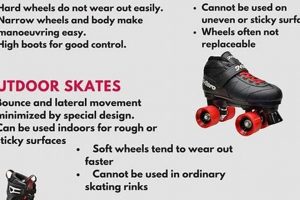
Tip 3: Wheel Durometer Consideration. Wheel durometer (hardness) impacts grip and roll. Softer wheels provide greater grip on smoother surfaces, while harder wheels offer increased speed on rougher surfaces. Choose wheel durometer based on the playing surface.
Tip 4: Protective Padding Selection. Kneepads, elbow pads, wrist guards, and helmets are crucial for injury prevention. Opt for padding certified to meet or exceed safety standards. Regularly inspect padding for wear and tear, replacing it as needed.
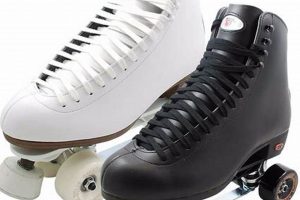
Tip 5: Skate Boot Material Evaluation. Skate boot material influences comfort and support. Leather boots offer durability and mold to the foot over time, while synthetic materials may provide lighter weight and quicker break-in. Consider personal preferences and performance requirements.
Tip 6: Toe Stop Adjustment Techniques. Toe stops are essential for braking and maneuvering. Adjust toe stop height to suit individual skating style and preference. Ensure toe stops are securely fastened before each session.
Tip 7: Helmet Certification Verification. Only helmets certified by reputable safety organizations (e.g., ASTM, CPSC) should be used. A properly fitted and certified helmet significantly reduces the risk of head injuries. Replace helmets after any significant impact, even if damage is not immediately apparent.
Adhering to these guidelines ensures equipment provides the intended protection and performance enhancement, minimizing risks associated with the sport.
The subsequent sections will address advanced topics and ongoing innovations within the realm of roller derby equipment.
1. Ankle Support

Ankle support, an integral aspect of protective equipment, plays a crucial role in mitigating lower extremity injuries within the high-impact, dynamic environment of roller derby. Its presence or absence directly influences both athlete safety and performance capabilities.
- Lateral Stability and Injury Prevention
The primary function of ankle support is to stabilize the ankle joint during lateral movements, frequent accelerations, and abrupt stops characteristic of roller derby. Insufficient support increases the risk of ankle sprains, strains, and potential fractures. Skates with reinforced ankle structures and appropriately designed padding offer enhanced stability, reducing the incidence of these injuries.
- Skate Construction and Material Science
The materials and construction techniques employed in skate boot design directly impact the level of ankle support provided. Leather boots, known for their durability and moldability, can offer custom-fitted support. Synthetic materials, often lighter and more rigid, may provide greater initial support but potentially lack the long-term adaptability of leather. Manufacturers continuously innovate to balance support, comfort, and weight.
- Padding Integration and Impact Dissipation
While skates provide structural support, external padding, particularly ankle guards, augment protection against impacts. These pads dissipate forces generated during collisions or falls, further reducing the likelihood of injury. The integration of padding with skate design is critical to achieving comprehensive ankle protection.
- Performance Implications and Agility
Excessive ankle support, while enhancing safety, can potentially restrict ankle mobility, thereby hindering agility and maneuverability. Finding the optimal balance between support and flexibility is crucial for maximizing performance without compromising safety. Skates designed to allow a degree of controlled ankle flexion enable athletes to execute complex maneuvers while maintaining stability.
The interdependence of skate construction, padding integration, and material science underscores the holistic approach required to optimize ankle support. Ultimately, the appropriate selection and maintenance of equipment that prioritizes this feature is paramount for promoting athlete safety and enabling peak performance in roller derby.
2. Impact Absorption
Impact absorption capabilities are central to the protective function of equipment used in roller derby. The intensity of gameplay, characterized by frequent collisions and falls, necessitates effective mitigation of impact forces to minimize injury risk. Skates and pads designed for this sport incorporate materials and structural designs engineered to attenuate these forces.
- Material Composition and Energy Dissipation
The choice of materials fundamentally influences impact absorption. High-density foams, specialized polymers, and composite materials are employed in pads to convert kinetic energy into other forms, such as heat, through deformation. For example, expanded polyethylene (EPE) and ethylene-vinyl acetate (EVA) foams are commonly used due to their shock-absorbing properties. In skates, similar materials may be integrated into the boot structure to protect the foot and ankle during impacts.
- Padding Design and Force Distribution
The structural design of padding plays a critical role in distributing impact forces over a wider area, reducing the stress concentration at any single point. This is often achieved through contoured shapes, layered construction, and the incorporation of rigid or semi-rigid shells that deflect and disperse forces. Kneepads, elbow pads, and wrist guards are designed with these principles in mind, tailored to the specific anatomical areas they protect.
- Skate Boot Construction and Vibration Dampening
Beyond direct impact protection, skate boot construction contributes to impact absorption by dampening vibrations transmitted from the skating surface. The materials used in the sole and the overall stiffness of the boot influence the level of vibration dampening. A well-designed skate boot can reduce fatigue and improve comfort during prolonged periods of skating by minimizing the transmission of shocks to the foot and ankle.
- Standards and Testing Protocols
Established safety standards and testing protocols are crucial for evaluating the impact absorption capabilities of equipment. Organizations like ASTM International develop standards that specify performance requirements for protective gear. Equipment that meets or exceeds these standards provides a demonstrable level of protection against impacts encountered in roller derby. Routine testing ensures that equipment consistently delivers the expected level of impact absorption.
Effective impact absorption, achieved through a combination of material selection, design principles, and adherence to safety standards, is paramount for mitigating the risks associated with roller derby. Continual advancements in materials science and engineering are driving improvements in the impact absorption capabilities of both skates and pads, further enhancing athlete safety.
3. Maneuverability

Maneuverability, the ability to execute rapid and precise movements, is a critical attribute in roller derby. The design and selection of skates and pads directly influence an athlete’s capacity for agility, impacting performance and strategic advantage.
- Wheel Configuration and Contact Patch
Wheel arrangement significantly influences maneuverability. Lower profile wheels provide stability and quicker response times, crucial for tight turns and rapid positional adjustments. The contact patch, the area of the wheel in contact with the surface, affects grip and rolling resistance. Smaller contact patches enhance agility but may compromise stability, requiring a balance dependent on skating style and track conditions.
- Skate Boot Profile and Responsiveness
The profile and rigidity of the skate boot dictate responsiveness. Lower-cut boots facilitate greater ankle flexion, allowing for more dynamic movements. However, this can compromise ankle support. Stiffer boots offer increased stability but may limit agility. The responsiveness of the boot to subtle shifts in weight and pressure directly translates to maneuverability on the track.
- Padding Design and Range of Motion
Protective padding must allow for a full range of motion to avoid impeding maneuverability. Bulky or ill-fitting pads can restrict movement and hinder agility. Streamlined, anatomically designed pads, constructed from flexible materials, provide protection without compromising the athlete’s ability to execute intricate skating maneuvers. Strategic placement of padding is essential to minimize interference with natural movement patterns.
- Plate Material and Turning Radius
The skate plate, connecting the boot to the wheels, influences the turning radius. Lighter materials, such as aluminum alloys, reduce the overall weight of the skate, contributing to increased agility. The angle and geometry of the plate design affect the ease with which turns can be initiated and sustained. Plates designed for short wheelbase configurations facilitate tighter turns, enhancing maneuverability in close-quarters situations.
The interplay between wheel configuration, boot profile, padding design, and plate material collectively determines the maneuverability afforded by roller derby skates and pads. Optimal equipment selection prioritizes a balance between protection, support, and the freedom of movement required to excel in this dynamic sport.
4. Durability
Durability, representing the capacity of equipment to withstand wear, stress, and degradation over prolonged use, is a critical consideration for roller derby skates and pads. The demanding nature of the sport necessitates equipment capable of enduring frequent high-impact collisions, abrasive surfaces, and repetitive stress without compromising performance or safety.
- Material Selection and Fatigue Resistance
The choice of materials significantly influences the durability of skates and pads. High-strength polymers, reinforced fabrics, and abrasion-resistant leathers are frequently employed to withstand the rigors of roller derby. Fatigue resistance, the ability of a material to endure repeated stress cycles without failure, is paramount. For instance, skate boots constructed from multiple layers of reinforced leather exhibit enhanced fatigue resistance compared to single-layer alternatives.
- Construction Techniques and Joint Integrity
Construction techniques directly affect the structural integrity and longevity of equipment. Reinforced stitching, robust hardware, and durable adhesives contribute to the overall durability of skates and pads. Weak joints or compromised seams are potential points of failure. Skates with bolted rather than riveted components allow for easier repairs and replacement of worn parts, extending the lifespan of the equipment. Similarly, pads with double-stitched seams and reinforced edges demonstrate increased resistance to tearing and abrasion.
- Maintenance Protocols and Environmental Factors
Regular maintenance is essential for maximizing the lifespan of roller derby skates and pads. Cleaning equipment after each use removes debris and prevents the build-up of corrosive substances. Proper storage in a dry environment minimizes the risk of material degradation due to moisture or temperature fluctuations. Periodic inspection and replacement of worn components, such as wheels, bearings, or padding inserts, are crucial for maintaining optimal performance and safety.
- Design Considerations and Stress Distribution
Design features play a key role in distributing stress and minimizing wear. For example, pads with strategically placed reinforcement panels can withstand greater impact forces. Skates with wider base plates distribute load more evenly, reducing stress on the boot and chassis. Design considerations that prioritize stress distribution contribute significantly to the overall durability of the equipment.
The correlation between material selection, construction techniques, maintenance protocols, and design considerations collectively determines the durability of roller derby skates and pads. Investing in high-quality, durable equipment, coupled with diligent maintenance practices, is essential for ensuring long-term performance, safety, and cost-effectiveness within the demanding context of roller derby.
5. Safety Certification

Safety certification serves as a verifiable benchmark for roller derby equipment, indicating compliance with specific performance standards designed to mitigate injury risk. The presence of recognized certifications on skates and pads signals adherence to testing protocols that evaluate impact resistance, structural integrity, and other safety-related characteristics. This directly affects the level of protection afforded to athletes during gameplay, where collisions and falls are commonplace.
For instance, helmets bearing ASTM International (ASTM) or Consumer Product Safety Commission (CPSC) certification have undergone rigorous testing to ensure they meet minimum requirements for impact absorption. Similarly, protective padding, such as kneepads and elbow pads, may be certified to standards that assess their ability to attenuate forces during impacts. The absence of such certifications raises concerns regarding the equipment’s protective capabilities and potential liability for manufacturers and participants. In many organized leagues, safety certification is a mandatory requirement for equipment use, reflecting the emphasis on player welfare. A real-world example is the implementation of helmet certification rules by roller derby leagues worldwide to prevent head injuries.
Ultimately, safety certification provides a critical layer of assurance for roller derby participants, ensuring that skates and pads meet established performance criteria for injury prevention. The challenges lie in the continuous evolution of safety standards to address emerging risks and the need for ongoing monitoring to ensure compliance among manufacturers. The integration of safety certification into the broader framework of risk management within roller derby contributes significantly to the sport’s overall safety profile.
Frequently Asked Questions
The following addresses common inquiries regarding the selection, maintenance, and safety aspects of essential equipment for participation in roller derby.
Question 1: What constitutes essential protective equipment for roller derby participation?
The minimum requirement encompasses a certified helmet, mouth guard, wrist guards, elbow pads, and knee pads. Additional protective gear, such as hip pads or padded shorts, is also advisable, depending on the individuals risk tolerance and position.
Question 2: How does one determine the appropriate size for roller derby skates?
Proper sizing necessitates consulting the manufacturer’s sizing chart, as sizing can vary considerably between brands. Foot measurements should be taken in socks that will be worn during skating. Allowance for toe space is essential; however, excessive room can compromise control and increase the risk of injury.
Question 3: What are the key considerations when selecting roller derby kneepads?
Kneepads should offer a snug but comfortable fit, allowing for a full range of motion without slippage. Features to consider include impact absorption, coverage area, and the method of attachment. Hard-shell kneepads provide superior protection against direct impacts, while softer pads may offer greater flexibility.
Question 4: How frequently should roller derby equipment be inspected for damage?
Equipment should be inspected before each practice or bout for signs of wear, tear, or damage. Particular attention should be paid to straps, closures, seams, and impact zones. Any compromised equipment should be repaired or replaced immediately.
Question 5: What is the expected lifespan of roller derby skates and pads?
The lifespan of equipment depends on usage frequency, intensity, and maintenance. However, helmets should be replaced every five years, regardless of visible damage. Padding should be replaced as soon as it shows signs of degradation or loss of impact absorption. Skates can last several years with proper maintenance, but components such as wheels and bearings will require periodic replacement.
Question 6: Are there specific cleaning protocols for roller derby protective gear?
Cleaning protocols vary depending on the materials. Hard-shell components can be cleaned with mild soap and water. Soft padding may require hand washing or spot cleaning with a specialized cleaner designed for athletic equipment. Equipment should be thoroughly dried before storage to prevent bacterial growth and material degradation.
Selecting and maintaining appropriate roller derby skates and pads are paramount to mitigating injury risk and maximizing performance.
The subsequent section will explore advanced topics related to roller derby equipment and training.
Conclusion
Roller derby skates and pads have been explored in terms of their critical function in the demanding environment of roller derby. Key aspects of safety, durability, maneuverability, and impact absorption have been examined. Certified skates and padding contribute significantly to risk mitigation within the sport, promoting a safer environment for participation.
The continued innovation in materials and design for roller derby skates and pads will further enhance player safety and performance. Ensuring the proper selection, maintenance, and utilization of this equipment remains paramount. Continued adherence to safety standards and the evolution of protective technologies will be important for the longevity and safety of the sport.

![Best Custom Roller Skates For Your Roll | [Brand] | How to Skateboard: A Beginner's Guide to Your First Board & Tricks](https://cruzskateshop.com/wp-content/uploads/2026/04/th-409-300x200.jpg "Best Custom Roller Skates For Your Roll | [Brand] How to Skateboard: A Beginner's Guide to Your First Board & Tricks")