The selection of appropriate rollerblades for those new to the activity is paramount for fostering a positive learning experience and minimizing potential injuries. These skates are typically designed with features that prioritize stability, control, and comfort, enabling individuals to develop foundational skills with confidence. For example, models often incorporate supportive ankle cuffs, secure closure systems, and frames constructed from durable yet forgiving materials.
Prioritizing suitable rollerblades for newcomers provides numerous advantages, including enhanced balance, improved maneuverability, and a reduced risk of falls. Historically, advancements in skate technology have led to designs specifically addressing the needs of inexperienced users, contributing to the sport’s accessibility and popularity. The initial investment in adequate equipment can significantly impact an individual’s progression and enjoyment.
The following sections will explore essential considerations when choosing rollerblades for inexperienced individuals, including key features, different skate types, and recommendations for ensuring a proper fit. This information aims to guide individuals in making informed decisions that support their journey in learning to rollerblade.
Essential Considerations for Initial Rollerblade Selection
Selecting rollerblades demands careful consideration of several factors to ensure safety and optimize the learning process. The following tips provide guidance in choosing equipment suited for novice users.
Tip 1: Ankle Support is Critical: Choose skates that offer robust ankle support. A firm cuff that extends adequately up the lower leg will provide stability and prevent ankle strain, particularly crucial when developing balance.
Tip 2: Closure System Security: Evaluate the skate’s closure system. A combination of buckles, straps, and laces provides a secure and customizable fit, minimizing foot movement within the skate and improving control.
Tip 3: Wheel Hardness Affects Performance: Opt for wheels with a moderate durometer (hardness rating). Softer wheels (e.g., 78A-82A) offer better grip and shock absorption, enhancing stability on varied surfaces.
Tip 4: Frame Material Impacts Stability: Consider the skate’s frame material. Frames made of composite materials provide adequate flex for beginners, offering forgiveness and shock absorption. Stiffer aluminum frames are more suitable for experienced skaters.
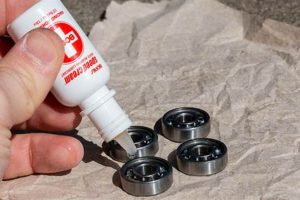
Tip 5: Bearing Quality Influences Speed: Examine the bearing rating (ABEC). Lower ABEC ratings (e.g., ABEC 1-3) indicate slower speeds, which is preferable for beginners focusing on control and balance. Higher ratings are suitable for advanced skating.
Tip 6: Proper Fit is Non-Negotiable: Ensure a snug yet comfortable fit. Ill-fitting skates can lead to blisters, discomfort, and impaired control. Consult sizing charts and, ideally, try on skates before purchase.
Tip 7: Brake Availability is Essential: Confirm that the skates are equipped with a functional and easily accessible brake. Consistent braking is fundamental for safety and control during the initial learning phase.
Prioritizing these considerations will contribute to a safer, more comfortable, and ultimately more rewarding initial experience with rollerblades.
The next section will explore specific skate types and provide recommendations for additional safety equipment.
1. Ankle Support

Ankle support represents a pivotal feature in rollerblades intended for beginners. Insufficient support directly correlates with an increased risk of ankle instability and potential injuries, such as sprains. Conversely, well-designed ankle cuffs provide the necessary lateral stability, promoting proper alignment and preventing excessive inward or outward rolling of the ankle joint. These features are integral to the creation of effective rollerblades for individuals new to the activity.
Effective ankle support influences learning progression. Individuals can develop fundamental skills, such as balance and controlled movements, more confidently when ankle stability is not a primary concern. A real-world example involves a beginner attempting a simple glide. Without adequate ankle support, the skater’s ankle might wobble, leading to a loss of balance and potential fall. However, with firm support, the skater’s ankle remains stable, allowing for smoother execution of the glide and quicker skill acquisition. This underscores the practical significance of considering ankle support as a core aspect of rollerblade design for beginners.
In summary, prioritizing ankle support is vital in the selection of rollerblades for beginners. Its direct impact on stability, injury prevention, and skill development makes it a non-negotiable feature. Addressing this aspect appropriately contributes to a safer and more enjoyable learning experience. A challenge remains in finding the right balance between support and flexibility, ensuring that the ankle is stabilized without unduly restricting movement, which is crucial for long-term skill improvement.
2. Closure System
The closure system on rollerblades represents a critical interface between the skate and the foot, directly impacting comfort, control, and ultimately, the learning experience, especially for beginners. A poorly designed closure system can lead to discomfort, instability, and a heightened risk of injury. The efficacy of this system is therefore a significant factor in determining the suitability of rollerblades for those new to the sport.
- Secure Fit and Foot Stability
The primary role of the closure system is to provide a secure and customized fit, minimizing foot movement within the skate. Excessive foot slippage can compromise balance and control, particularly problematic for beginners still developing their skills. Closure systems that combine laces, buckles, and straps offer the most adaptable and secure fit, allowing for precise adjustment to accommodate varying foot shapes and sizes. For example, a skater with narrow feet might require a system that can be tightened significantly to prevent lateral movement.
- Ankle Support and Control Transmission
The closure system often integrates with the ankle cuff, contributing to overall ankle support and control. The tighter the closure system around the ankle, the more effectively the skater can transfer movements from the leg to the skate. Beginners benefit from this enhanced control, as it allows for more precise steering and braking. A common example involves executing a turn; a secure closure system allows the skater to lean into the turn with greater confidence, knowing that the skate will respond predictably.
- Ease of Use and Adjustment
Beginners often lack the experience to quickly and efficiently adjust complex closure systems. Therefore, ease of use is a crucial consideration. Systems that are straightforward to tighten, loosen, and adjust contribute to a more positive learning experience. For instance, buckles that can be quickly ratcheted down provide a secure fit without requiring excessive force or dexterity. Conversely, overly complicated systems can be frustrating and time-consuming, detracting from the skater’s focus on learning.
- Material Durability and Long-Term Performance
The materials used in the closure system directly affect its durability and long-term performance. Buckles, straps, and laces must withstand repeated use and exposure to environmental factors without breaking or losing their effectiveness. High-quality materials ensure that the closure system maintains its integrity over time, providing consistent support and control. A poorly constructed buckle, for example, might fail under pressure, compromising the fit and potentially leading to an accident.
In conclusion, the closure system plays a multifaceted role in the overall performance and suitability of rollerblades for beginners. The features related to fit, support, ease of use, and durability significantly contribute to the development of key rollerblading skills. The importance of selecting a rollerblade with a high-quality, adjustable, and secure closure system cannot be overstated for newcomers to the sport.
3. Wheel Hardness

Wheel hardness, measured on the durometer scale, significantly influences the performance characteristics of rollerblades, directly impacting their suitability for novice users. Softer wheels, typically ranging from 74A to 82A, offer increased grip and shock absorption, attributes that are particularly beneficial for beginners learning fundamental skills. This enhanced grip provides improved stability and reduces the likelihood of slippage, fostering confidence and control during initial skating experiences. For instance, when practicing balance drills on varied surfaces, softer wheels maintain better contact with the ground compared to harder wheels, mitigating the risk of falls.
Conversely, harder wheels, ranging from 84A upwards, offer increased speed and durability, but at the expense of grip and shock absorption. These characteristics are more suitable for experienced skaters who prioritize speed and maneuverability on smooth surfaces. For a beginner, harder wheels can feel unstable and unpredictable, hindering the learning process and potentially leading to injuries. An illustrative example involves navigating uneven pavement; harder wheels transmit more vibration to the skater’s feet and ankles, potentially causing discomfort and fatigue, while softer wheels absorb much of this impact, providing a smoother ride. Therefore, selecting wheels that balance durability with sufficient grip and shock absorption is crucial for facilitating a positive learning experience. The wheel hardness for the “best inline skates beginners” is important component and directly related to stability.
In summary, wheel hardness plays a pivotal role in determining the suitability of rollerblades for beginners. Softer wheels enhance stability, grip, and shock absorption, fostering confidence and control during the initial stages of learning. While harder wheels offer benefits in terms of speed and durability, they are less forgiving and may impede the learning process for novice skaters. Ensuring the selection of appropriately soft wheels represents a key factor in optimizing the “best inline skates beginners” learning experience and minimizing the risk of injury. The challenge lies in finding a balance between wear resistance and optimal grip based on the typical skating environment.
4. Frame Material
The frame material of rollerblades significantly influences stability, responsiveness, and shock absorption, thereby playing a critical role in determining the appropriateness of the equipment for novice users. Frames constructed from composite materials, such as reinforced plastics, typically offer greater flexibility and vibration dampening compared to aluminum frames. This added compliance translates to a more forgiving ride, which can be particularly beneficial for beginners still developing their balance and coordination. For example, when encountering uneven surfaces, a composite frame will absorb more of the impact, reducing the risk of losing control. Conversely, aluminum frames, while offering superior power transfer and rigidity, can be less forgiving and more challenging to control for inexperienced skaters.
The material choice directly impacts the skater’s ability to learn and progress effectively. Beginners often benefit from the forgiving nature of composite frames, as they allow for minor missteps without immediately translating into a loss of balance or control. Aluminum frames, due to their stiffness, demand more precise technique and control, making them better suited for experienced skaters who have already mastered the fundamentals. To illustrate, a novice attempting a crossover maneuver on an aluminum-framed skate might find the lack of flexibility challenging, leading to instability. In contrast, the same maneuver on a composite frame might feel more manageable, allowing the skater to develop confidence and refine the technique.
In summary, the selection of frame material directly affects the suitability of rollerblades for beginners. Composite frames provide enhanced shock absorption and forgiveness, promoting stability and control during the learning process. Aluminum frames, while offering superior performance characteristics for advanced skaters, can be less forgiving and potentially impede the progress of novice users. Balancing the need for durability with the desire for a forgiving ride is crucial when choosing frame materials. The ideal solution might involve a hybrid design that combines the benefits of both materials, but for purely beginner-focused skates, the emphasis should remain on the shock absorption and flexibility provided by composite frames, and this is the main point for making the “best inline skates beginners”.
5. Brake Reliability
Brake reliability is a critical attribute of rollerblades designed for novice users. The ability to consistently and predictably decelerate or stop is paramount for safety, particularly when learning fundamental skills. A malfunctioning or poorly designed brake system can lead to accidents and injuries, undermining confidence and hindering the learning process. Therefore, brake reliability is a non-negotiable feature in equipment intended for beginners. A real-world example illustrates the significance: a novice encountering an unexpected obstacle requires immediate and effective braking to avoid a collision. Failure of the brake in such a scenario could result in a fall and potential injury. The integration of a reliable brake system directly mitigates this risk.
The effectiveness of a braking system depends on several factors, including the brake pad material, the brake mechanism’s design, and its ease of activation. Brake pads constructed from durable and high-friction materials provide consistent stopping power in various conditions. A well-designed mechanism ensures that the brake pad engages smoothly and predictably with the wheel. Furthermore, the brake should be easily accessible and require minimal force to activate, especially for beginners who may lack the strength or coordination to operate more complex systems. For instance, brakes mounted on the right skate often require a learning curve, whereas intuitively designed brakes offer immediate control. Consistent practice with the braking system is also essential to develop muscle memory and ensure effective response in emergency situations.
In summary, brake reliability is fundamentally linked to the safety and efficacy of rollerblades for beginners. The presence of a dependable braking system enhances control, reduces the risk of accidents, and fosters confidence in novice skaters. Considerations for brake pad material, mechanism design, and ease of activation are essential for ensuring that the system performs consistently and predictably. Prioritizing brake reliability is a cornerstone of producing rollerblades that facilitate a safe and enjoyable learning experience. However, challenges related to brake maintenance and user training should be addressed to optimize the effectiveness of this crucial safety feature. This underscores the significance of brake reliability in promoting the best inline skates beginners experience.
Frequently Asked Questions
The following frequently asked questions address common concerns and misconceptions regarding rollerblades suitable for individuals new to the sport. The information aims to provide clarity and inform selection decisions.
Question 1: What constitutes a ‘beginner’ rollerblade?
A ‘beginner’ rollerblade typically incorporates features prioritizing stability, comfort, and control. This may include enhanced ankle support, secure closure systems, and forgiving frame materials.
Question 2: Is it necessary to purchase specialized rollerblades for initial learning?
While not strictly mandatory, specialized rollerblades can significantly enhance the learning experience and minimize the risk of injury. Features tailored to beginners facilitate skill development and improve confidence.
Question 3: What is the ideal wheel hardness for a novice skater?
Softer wheels, generally ranging from 78A to 82A on the durometer scale, provide improved grip and shock absorption, which are advantageous for beginners seeking stability and control.
Question 4: How important is ankle support in a beginner rollerblade?
Ankle support is crucial. Adequate support prevents ankle strain and enhances balance, allowing the skater to focus on developing fundamental skills.
Question 5: What type of closure system is most suitable for beginners?
A combination of buckles, straps, and laces offers the most secure and customizable fit, minimizing foot movement within the skate and improving control.
Question 6: Should safety gear be considered alongside the rollerblades?
Appropriate safety gear, including a helmet, wrist guards, elbow pads, and knee pads, is essential and should always be used when learning to rollerblade.
In summary, selecting appropriate rollerblades for beginners requires careful consideration of features that promote stability, comfort, and control. Prioritizing these attributes, along with the use of safety gear, will enhance the learning experience and minimize the risk of injury.
The subsequent section will delve into specific rollerblade models and provide recommendations based on various user needs and preferences.
Concluding Remarks
The preceding analysis has underscored essential features associated with rollerblades designed for those new to the activity. Prioritizing aspects such as ankle support, closure system efficacy, wheel hardness, frame material composition, and brake reliability facilitates a safer, more comfortable, and ultimately more productive learning experience. Selecting rollerblades that incorporate these design principles is critical for the successful development of fundamental skating skills. It is not merely the equipment, but the initial user experience that defines the sport’s accessibility and long-term appeal.
Therefore, a discerning approach to rollerblade selection warrants consideration. The information presented should empower individuals to make informed choices that align with their needs and goals. The long-term impact of initial equipment selection on an individual’s progression and enjoyment within this sport should not be underestimated. Choosing “best inline skates beginners” is not a mere purchase; it’s an investment in a positive start and a continued journey toward mastery.