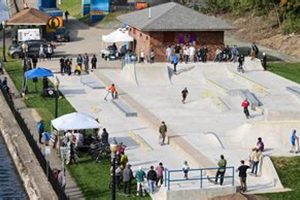
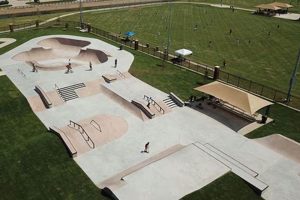
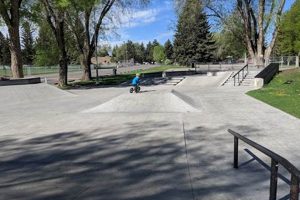
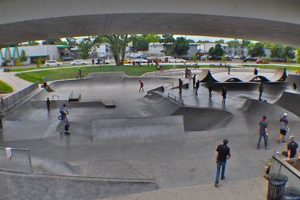
Equipment designed for use in designated recreational spaces featuring ramps, rails, and other obstacles allows individuals to perform stunts and tricks. These specialized products differ from recreational or fitness models through features like reinforced frames, smaller wheels for enhanced maneuverability, and specialized liners for increased impact absorption. A common application is performing aggressive skating, which involves jumps, grinds, and other technical maneuvers.
The employment of appropriately engineered gear can significantly enhance safety and performance. Durable construction reduces the risk of equipment failure during high-impact activities. The smaller wheel diameter facilitates quicker turns and greater control, enabling more intricate trick execution. The adoption of these specific designs represents a historical shift from general-purpose equipment towards specialized tools optimized for the demands of this particular activity.
The subsequent discussion will address the key characteristics of these products, including frame materials, wheel types, bearing selection, and liner technologies. Furthermore, this explanation will include important safety considerations and maintenance procedures essential for maximizing longevity and ensuring a secure experience.
Optimizing Performance
This section outlines essential considerations for effective and safe equipment utilization within the specified environment. Adherence to these principles promotes enhanced control, reduces risk of injury, and extends equipment lifespan.
Tip 1: Pre-Session Inspection: Thoroughly examine the equipment prior to each use. Scrutinize frames for cracks or bends, verify wheel integrity, and confirm secure axle attachment. Replace any compromised component immediately.
Tip 2: Wheel Selection Optimization: Employ wheels with a durometer rating suitable for the surface being traversed. Harder wheels facilitate faster speeds on smooth surfaces, while softer wheels offer superior grip on rougher terrain. Consider wheel profile for desired maneuverability.
Tip 3: Bearing Maintenance Protocols: Regular cleaning and lubrication of bearings are crucial for maintaining optimal roll speed and reducing friction. Remove bearings from wheels, clean with appropriate solvent, lubricate with specialized oil, and reinstall securely.
Tip 4: Frame Configuration Adjustments: Experiment with frame positioning to achieve optimal balance and responsiveness. Adjust frame alignment to align with individual stance and riding style, enhancing control during grinds and landings.
Tip 5: Protective Gear Integration: Always utilize appropriate protective gear, including a helmet, knee pads, elbow pads, and wrist guards. Ensure proper fit and secure fastening to maximize impact protection during falls.
Tip 6: Progressive Skill Development: Advance skill acquisition in a controlled and incremental manner. Begin with fundamental maneuvers and gradually progress to more complex tricks as proficiency increases. Avoid attempting maneuvers beyond current capabilities.
Tip 7: Surface Assessment Prioritization: Carefully evaluate the surface conditions before initiating any maneuvers. Identify potential hazards such as cracks, debris, or uneven surfaces. Adapt technique and speed accordingly to mitigate risk.
Proper equipment maintenance and mindful utilization significantly enhance the overall experience and minimize the likelihood of injury. A proactive approach to safety and performance ensures a fulfilling and sustainable engagement.
The subsequent sections will delve into advanced techniques and strategies for maximizing performance and achieving long-term progression.
1. Durability

Within the context of equipment intended for designated recreational spaces, durability represents a critical performance parameter. This characteristic directly affects the lifespan and safety of the product, particularly when subjected to the stresses inherent in performing stunts and tricks on ramps, rails, and other obstacles. The repetitive impacts, forceful landings, and abrasive interactions with concrete and metal surfaces place significant demands on all components. Compromised structural integrity can lead to equipment failure, potentially resulting in injuries to the user. As a case in point, a frame fabricated from inferior materials is susceptible to cracking or bending under repeated stress, rendering the equipment unsafe for continued use.
The selection of high-quality materials and robust construction techniques directly contributes to enhanced durability. Frames constructed from reinforced aluminum alloys or composites offer superior resistance to deformation and fracture compared to those manufactured from less resilient materials. Likewise, wheels formulated with high-rebound urethane compounds exhibit improved resistance to abrasion and chunking. For example, reinforced stitching on liners and high-tensile axles provide greater resistance to wear and tear.
Ultimately, the investment in durable equipment translates to a reduced risk of equipment failure, enhanced user safety, and a longer product lifespan. While initially more expensive, durable equipment offers a greater return on investment by minimizing the need for frequent replacements and repairs. Proper maintenance practices, such as regular inspection and cleaning, can further extend the longevity of even the most robust equipment.
2. Maneuverability
Maneuverability, in the context of equipment designed for skate park use, represents a critical performance attribute. This characteristic dictates the ease and precision with which a user can execute tricks and navigate obstacles, directly impacting both performance and safety.
- Wheel Size and Profile
Smaller wheel diameters, typically in the 55-60mm range, enhance agility and responsiveness. A rounded wheel profile reduces friction during turns, facilitating quicker transitions and spins. Conversely, larger wheels offer increased speed but sacrifice maneuverability. The selection of an appropriate wheel size and profile is therefore crucial for optimizing performance within the confined space of a skate park.
- Frame Length and Configuration
Shorter frames contribute to heightened maneuverability by reducing the overall length of the equipment. This allows for quicker turns and improved responsiveness in tight spaces. Rockered wheel configurations, where the middle wheels are slightly lower than the outer wheels, further enhance maneuverability by allowing the user to pivot more easily.
- Boot Stiffness and Articulation
A supportive but not overly rigid boot allows for a balance of control and flexibility. Excessive stiffness can hinder maneuverability, while insufficient support can compromise stability. Adequate ankle articulation is essential for executing complex maneuvers and maintaining balance during landings.
- Bearing Quality and Maintenance
High-quality bearings minimize friction, enabling smoother and more responsive wheel rotation. Regular cleaning and lubrication of bearings are essential for maintaining optimal performance and ensuring consistent maneuverability. Contaminated or worn bearings can significantly impede performance and increase the risk of instability.
The interplay between wheel size, frame configuration, boot design, and bearing quality dictates the overall maneuverability of equipment intended for skate park use. A comprehensive understanding of these factors is essential for selecting equipment that optimizes performance and enhances the user experience. Compromises between speed and agility must be considered, depending on individual skill level and preferred riding style.
3. Impact Absorption

Within the discipline of utilizing equipment in specifically designed recreational environments, impact absorption represents a critical safety parameter. The repetitive and high-force impacts associated with performing tricks and navigating obstacles necessitate effective mitigation strategies to protect the user from injury.
- Liner Materials and Design
The liner, the internal padding within the boot, plays a pivotal role in impact attenuation. Materials such as closed-cell foams and gel inserts are commonly employed to dissipate energy upon impact. Multi-density liners, featuring varying levels of firmness in different zones, offer targeted protection for vulnerable areas like the ankles and heels. The liner’s design, including its thickness and contour, directly influences its ability to absorb and distribute impact forces, reducing stress on the user’s joints and bones. For example, denser foam in the heel area provides enhanced protection during landings from elevated surfaces.
- Frame Construction and Shock Absorption
The frame, typically constructed from aluminum or composite materials, contributes to impact absorption through its inherent flexibility and design. Certain frames incorporate shock-absorbing elements, such as elastomeric inserts or strategically placed flex points, to dampen vibrations and reduce the transmission of impact forces to the boot. The frame’s geometry and material properties influence its ability to absorb and dissipate energy, mitigating the risk of stress fractures and other frame-related failures. For instance, a frame with strategically placed cutouts can flex under load, absorbing impact energy before it reaches the user’s foot.
- Wheel Durometer and Material Composition
The durometer, or hardness, of the wheels affects their ability to absorb impacts. Softer wheels, with lower durometer ratings, offer greater shock absorption compared to harder wheels. The material composition of the wheel, including the type of urethane used and the presence of additives, also influences its impact absorption properties. Softer wheels compress more readily upon impact, dissipating energy and reducing the force transmitted to the user’s body. For example, a wheel with a softer urethane compound will provide a more cushioned ride, especially on rough surfaces.
- Insole Technology and Vibration Dampening
The insole, the removable insert within the boot, provides an additional layer of impact absorption and cushioning. Insoles featuring gel inserts, memory foam, or orthotic designs can further enhance comfort and reduce stress on the feet and ankles. Specialized insoles with vibration-dampening properties can minimize the transmission of vibrations from the ground to the user’s body, reducing fatigue and improving overall comfort during extended use. An insole with a molded arch support can provide additional stability and impact absorption, particularly for users with flat feet.
The collective effectiveness of the liner, frame, wheels, and insole in absorbing impacts directly influences the safety and comfort of individuals engaging in activities within designated recreational environments. Proper selection and maintenance of these components are crucial for mitigating the risk of injuries and maximizing the enjoyment of the activity.
4. Wheel Hardness

Wheel hardness, quantified by the durometer scale, significantly influences the performance characteristics of equipment intended for use in designated recreational environments. The selection of an appropriate durometer rating is crucial for optimizing grip, speed, and durability, directly impacting a user’s ability to execute tricks and navigate obstacles effectively.
- Grip and Control
Softer wheels, typically with a durometer rating below 84A, offer enhanced grip on smooth surfaces. This increased traction provides superior control during sharp turns and intricate maneuvers, particularly on polished concrete or wood ramps. The increased friction, however, reduces overall speed. For instance, performing a grind on a metal rail requires sufficient grip to maintain balance and prevent slippage, a characteristic facilitated by softer wheels.
- Speed and Momentum
Harder wheels, with a durometer rating of 84A or higher, minimize rolling resistance, resulting in increased speed and momentum. This attribute is beneficial for achieving higher air during jumps and maintaining speed on transitions. The reduced grip, however, can compromise control, particularly on slick or uneven surfaces. An example is accelerating quickly to clear a gap or execute a high-speed run on a vert ramp, where harder wheels provide a performance advantage.
- Durability and Wear Resistance
Harder wheels exhibit greater resistance to abrasion and wear, extending their lifespan, especially when subjected to the abrasive surfaces commonly found in recreational areas. Softer wheels, while offering superior grip, tend to wear down more rapidly, requiring more frequent replacements. Specifically, consistently skating on rough concrete will degrade softer wheels more quickly than harder wheels, necessitating replacement to maintain optimal performance.
- Surface Compatibility
The optimal wheel hardness is contingent upon the surface conditions. Softer wheels perform well on slick or uneven surfaces, providing enhanced grip and control. Harder wheels excel on smooth, well-maintained surfaces, maximizing speed and efficiency. An environment with varied surface conditions may necessitate a compromise in wheel hardness to achieve a balance between grip and speed. For example, a skate park with both smooth concrete sections and rough asphalt transitions may require a medium-hardness wheel for optimal performance across the entire facility.
Ultimately, the selection of an appropriate wheel hardness represents a critical decision that directly influences performance and safety. The ideal choice depends on a user’s skill level, preferred riding style, and the specific characteristics of the surface being traversed. A careful consideration of these factors is essential for optimizing the experience and mitigating potential risks.
5. Frame Rigidity

Frame rigidity within the context of inline skates designed for designated recreational spaces exerts a significant influence on performance and control. A stiffer frame transmits energy more efficiently, allowing for quicker response to rider input during maneuvers. This characteristic is particularly crucial for activities that involve rapid changes in direction, such as grinds and aerial tricks. Conversely, a less rigid frame may exhibit increased flex, potentially compromising stability and control, particularly under high loads. For example, attempting a rail slide with a frame that lacks adequate rigidity can result in unwanted flex, increasing the likelihood of a missed landing or a loss of balance.
The material composition and design of the frame directly dictate its rigidity. Frames constructed from high-grade aluminum alloys generally exhibit superior stiffness compared to those made from less robust materials. Design elements, such as frame bracing and cross-sectional profiles, further contribute to overall rigidity. A frame with strategically placed reinforcement can resist deformation under stress, maintaining consistent performance characteristics. Consider the difference between a solid frame and a frame with large cutouts; the solid frame generally offers greater resistance to bending. The direct consequence of this resistance is enhanced control for the skater, improving precision during complex tricks.
Understanding the relationship between frame rigidity and performance allows skaters to select equipment tailored to their specific riding style and skill level. Enhanced frame rigidity translates to improved control, precision, and energy transfer, making it a critical factor in optimizing performance and maximizing the potential for progression. Choosing the optimal frame for a specific application requires considering trade-offs between weight, responsiveness, and cost, ultimately contributing to a safer and more effective skating experience. The skater’s understanding of this connection has a practical and significant influence on equipment choices and skating success.
6. Bearing Precision

Bearing precision, measured by the ABEC (Annular Bearing Engineers’ Committee) scale or similar ISO standards, represents a critical determinant of performance for inline skates used in skate parks. The tolerance to which bearings are manufactured directly affects rolling resistance, speed, and overall durability under the stresses imposed by aggressive skating.
- Reduced Rolling Resistance
Higher precision bearings, characterized by tighter tolerances, minimize friction between the internal components. This reduction in friction translates to lower rolling resistance, allowing the skater to maintain speed with less effort. For instance, bearings with an ABEC 7 rating exhibit lower rolling resistance compared to ABEC 3 bearings, contributing to increased speed and momentum during ramp transitions and gap jumps. The significance of minimizing friction cannot be overstated when executing complex maneuvers.
- Enhanced Speed and Momentum
The reduced rolling resistance afforded by high-precision bearings directly translates to increased speed and improved momentum maintenance. This is particularly advantageous in a skate park environment, where maintaining speed is essential for clearing obstacles and executing tricks effectively. Skaters can generate and sustain the necessary velocity for performing aerial maneuvers or maintaining grind duration, ultimately expanding the possibilities for skill execution. For example, ABEC 9 bearings contribute to enhanced speed for carving around bowls compared to bearings with lower precision grades.
- Increased Durability and Longevity
High-precision bearings, due to their tighter tolerances and superior materials, exhibit increased durability and longevity. The reduced friction minimizes heat buildup, a primary cause of bearing failure. In the rigorous environment of a skate park, where bearings are subjected to repeated impacts and high loads, the enhanced durability of high-precision bearings translates to reduced maintenance and replacement costs over the lifespan of the equipment. An example is a higher grade bearing withstanding the forces when landing jumps, when a low-grade bearing would require more frequent maintenance.
- Improved Responsiveness and Control
The smoother and more consistent rolling characteristics of high-precision bearings contribute to improved responsiveness and control. Skaters experience enhanced feedback from the equipment, allowing for more precise adjustments during maneuvers. This improved responsiveness is particularly beneficial for executing technical tricks and maintaining balance on challenging surfaces. An example is the refined control achieved when performing intricate footwork during grinds, facilitated by the consistent and predictable rolling action of high-precision bearings.
The integration of high-precision bearings directly correlates with enhanced performance, improved durability, and increased safety for inline skates used in skate parks. The selection of appropriate bearings, based on the ABEC rating or similar standards, represents a critical factor in optimizing the overall skating experience. An inadequate bearing can compromise the overall potential of the inline skates. The investment in quality bearings is therefore a fundamental step for any serious skater.
Frequently Asked Questions
The following addresses common inquiries regarding equipment selection, maintenance, and safety protocols for optimal utilization within designated recreational environments.
Question 1: What constitutes the primary distinctions between equipment intended for designated recreational spaces and those designed for general recreational use?
Equipment specifically engineered for skate parks typically incorporates reinforced frames, smaller wheel diameters for enhanced maneuverability, and specialized liners to maximize impact absorption during high-impact activities. These features are not commonly found in general recreational models.
Question 2: What wheel durometer rating is most appropriate for skate park environments?
The selection of an optimal durometer rating depends on surface conditions and individual preferences. Softer wheels (below 84A) provide increased grip on slick surfaces, while harder wheels (84A and above) offer enhanced speed on smooth surfaces. A medium durometer rating may provide a compromise for varied surfaces.
Question 3: What safety equipment is considered essential when utilizing inline skates within designated recreational spaces?
The consistent utilization of a certified helmet, knee pads, elbow pads, and wrist guards is considered mandatory for mitigating the risk of injury during falls and impacts. Proper fit and secure fastening of all protective gear are crucial.
Question 4: How frequently should bearings be cleaned and lubricated to ensure optimal performance?
Bearing maintenance frequency depends on usage intensity and environmental conditions. As a general guideline, bearings should be cleaned and lubricated every 2-4 weeks with specialized bearing solvent and lubricant. Regular maintenance prevents friction buildup and maintains rolling efficiency.
Question 5: What factors should be considered when selecting a frame material for aggressive skating?
Frame material selection involves a trade-off between weight, rigidity, and durability. Aluminum alloy frames offer a balance of these factors, providing sufficient stiffness for energy transfer and resistance to deformation. Composite frames may offer weight savings but may compromise rigidity.
Question 6: How can one extend the lifespan of equipment intended for skate park use?
Regular inspection, cleaning, and maintenance are essential for maximizing the longevity of inline skate equipment. Prompt replacement of worn or damaged components, adherence to recommended maintenance schedules, and storage in a dry environment all contribute to extended equipment lifespan.
The proper selection, maintenance, and utilization of equipment are crucial for maximizing both safety and performance within designated recreational environments. Adherence to recommended guidelines minimizes the risk of injury and prolongs the lifespan of the equipment.
The subsequent section will detail advanced techniques for optimizing performance and ensuring a safe and enjoyable experience.
Conclusion
The preceding exploration has elucidated the key considerations surrounding equipment tailored for designated recreational environments. Factors such as durability, maneuverability, impact absorption, wheel hardness, frame rigidity, and bearing precision are not merely specifications, but critical determinants of safety and performance. Optimal selection requires a nuanced understanding of the trade-offs between these attributes, aligning equipment characteristics with individual skill levels and preferred riding styles.
The informed utilization and consistent maintenance of specialized equipment will invariably enhance the overall experience, mitigating the risk of injury and maximizing the potential for skill progression. Continued adherence to established safety protocols and a proactive approach to equipment upkeep are paramount for ensuring a sustainable and rewarding engagement within these demanding recreational spaces. As technology and materials advance, the refinement of specialized products will continue to shape the landscape of this activity, necessitating an ongoing commitment to informed equipment selection and responsible usage.