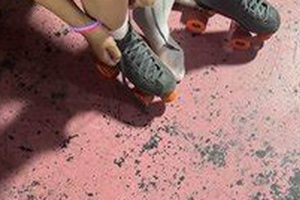
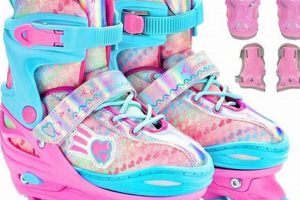
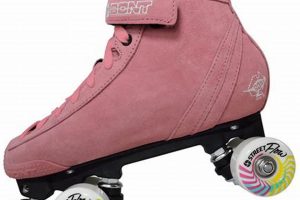
Edea roller skates are specialized footwear designed for artistic roller skating. These skates are characterized by a boot, typically made of leather or synthetic materials, mounted onto a roller skate frame. The boot provides ankle support and allows for precise control, while the frame, equipped with wheels, facilitates movement and performance on the skating surface.
The significance of these skates lies in their contribution to the execution of complex maneuvers in artistic roller skating. The design and materials used in their construction enhance a skater’s ability to perform jumps, spins, and footwork with greater accuracy and finesse. Historically, advancements in the manufacturing and design of skating equipment have played a critical role in the evolution and increasing difficulty of competitive roller skating programs.
The subsequent sections will delve into specific aspects, including the construction and materials, the different types available, how they are used and maintained, and factors to consider when selecting the right pair.
Edea Roller Skates
The following guidelines are designed to assist individuals in maximizing the performance and lifespan of artistic roller skates.
Tip 1: Boot Fit is Paramount: Proper boot fit is crucial for comfort and performance. Boots should be snug, allowing for minimal foot movement within the boot itself. Ill-fitting boots can lead to discomfort, blisters, and impaired control.
Tip 2: Frame Alignment and Adjustment: Verify the alignment of the frame with the boot. Misalignment can affect balance and maneuverability. Adjust the frame’s position based on individual skating style and preference.
Tip 3: Wheel Selection and Maintenance: The selection of appropriate wheels, based on skating surface and desired performance characteristics, is essential. Regularly clean wheels to remove debris and ensure optimal grip.
Tip 4: Bearing Care and Lubrication: Routine maintenance of wheel bearings is critical. Clean and lubricate bearings periodically to reduce friction and maintain wheel speed. Neglecting bearing care can result in decreased performance and premature wear.
Tip 5: Boot Maintenance and Cleaning: Clean the boot regularly to remove dirt and perspiration. Use appropriate cleaning products to maintain the material’s integrity and prevent deterioration. Periodic conditioning of leather boots is recommended to prevent cracking and maintain suppleness.
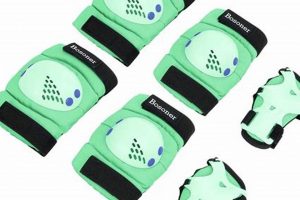
Tip 6: Protective Gear Usage: It is advisable to wear appropriate protective gear, including wrist guards, knee pads, and elbow pads, during training and performance. These items can mitigate the risk of injury in the event of a fall.
These considerations, when implemented diligently, contribute to both enhanced performance and the longevity of artistic roller skates.
The subsequent sections will explore additional details regarding the selection, maintenance, and optimal use of these specialized skates.
1. Boot Construction

Boot construction is a critical determinant of performance characteristics. The materials, design, and manufacturing processes employed in creating the boot directly influence the support, comfort, and control that artistic roller skates provide.
- Material Composition
Edea boots often utilize a combination of leather and synthetic materials. Leather provides a degree of flexibility and moldability, conforming to the skater’s foot over time. Synthetic materials offer enhanced durability and resistance to wear. The specific blend of materials influences the boot’s overall weight, stiffness, and ability to withstand repeated stress from jumps and landings.
- Ankle Support System
The level of ankle support provided is crucial for executing complex maneuvers. Edea boots incorporate varying degrees of reinforcement in the ankle area, utilizing padding, stiffeners, and strategically placed stitching to provide stability and prevent ankle roll. The degree of support is typically tailored to the skater’s skill level and the demands of their routines.
- Internal Padding and Lining
The internal padding and lining contribute to both comfort and performance. Padding reduces pressure points and minimizes friction, preventing blisters and discomfort during prolonged skating sessions. The lining material, often a moisture-wicking fabric, helps to maintain a dry and comfortable environment inside the boot, enhancing grip and reducing slippage.
- Sole Construction and Attachment
The sole of the boot, which is attached to the skate frame, is a critical component of the overall structure. Its construction influences the transfer of energy from the skater’s foot to the wheels. Edea employs various sole designs and attachment methods to optimize this energy transfer, enhancing responsiveness and control.
These elements of boot construction are carefully engineered to provide the optimal blend of support, comfort, and responsiveness that are essential for success in artistic roller skating. The specific features and characteristics of an Edea boot are often tailored to the specific needs and preferences of individual skaters, highlighting the importance of proper boot selection and fit.
2. Frame Rigidity

Frame rigidity, with respect to Edea roller skates, refers to the degree to which the skate frame resists deformation under applied forces. This characteristic significantly influences the skater’s control, responsiveness, and energy transfer. A rigid frame maintains its shape during skating maneuvers, ensuring that the skater’s input is directly translated into movement on the wheels. Conversely, a frame with low rigidity may flex or twist, dissipating energy and reducing precision. An example illustrating this is during jump landings. A frame with insufficient rigidity will absorb the impact energy through deformation, rather than transferring it efficiently to the wheels, resulting in a loss of momentum and control upon landing.
The selection of frame material and its structural design directly dictate frame rigidity. Frames crafted from high-modulus aluminum alloys or reinforced composite materials exhibit superior rigidity compared to those made from less robust materials. The geometry of the frame, including the thickness and shape of its components, further contributes to its ability to withstand stress. Skaters often select frames with varying levels of rigidity based on their skill level, skating style, and the specific demands of their routines. Advanced skaters performing intricate jumps and spins typically require frames with high rigidity to maintain stability and precision.
In conclusion, frame rigidity is a crucial factor in determining the performance characteristics of Edea roller skates. It impacts energy transfer, responsiveness, and overall control. Proper selection, considering skating style and skill level, is essential to optimize performance. Understanding the interplay between frame rigidity and skating technique enables skaters to make informed decisions, leading to improved performance and reduced risk of injury.
3. Wheel Composition
Wheel composition is a critical determinant of Edea roller skates’ performance. The materials used in wheel construction directly influence grip, roll, and durability, impacting a skater’s ability to execute precise movements and maintain control. Variations in composition cater to diverse skating styles and surfaces. For example, wheels with a higher durometer (hardness) provide less grip but offer greater speed and are typically used on smoother surfaces, facilitating gliding and long, sweeping movements. Conversely, softer wheels with a lower durometer offer increased grip, enhancing control during quick turns and intricate footwork, making them suitable for rougher surfaces or skaters prioritizing stability.
The interplay between wheel composition and skating surface significantly affects performance. Consider a skater performing a spin on a polished rink with hard wheels; the reduced friction allows for effortless rotation. However, attempting the same maneuver on a less-than-ideal surface with the same wheels may result in a loss of control due to insufficient grip. Likewise, softer wheels used on a very smooth surface may generate excessive friction, slowing the skater down. The careful selection of wheel composition, therefore, necessitates an understanding of the rink conditions and the specific requirements of the skater’s routine.
In summary, the wheel composition of Edea roller skates profoundly influences skating performance. Selecting the appropriate durometer and material optimizes grip, roll, and control based on surface conditions and skating style. While challenging, mastering this aspect of skate configuration leads to enhanced performance and reduced risk of errors, enabling skaters to fully realize their technical abilities.
4. Bearing Precision

Bearing precision is a critical attribute of Edea roller skates, directly impacting rolling efficiency and performance. The bearings facilitate smooth wheel rotation around the axle, enabling skaters to achieve desired speeds and execute intricate maneuvers with minimal resistance. Higher precision bearings, manufactured to tighter tolerances, exhibit reduced friction and enhanced durability. This translates to faster roll speeds, improved glide, and a greater conservation of energy, ultimately allowing skaters to maintain momentum and execute demanding routines with greater ease.
The quality and precision of bearings within Edea roller skates can either enable or hinder a skater’s performance. For example, consider a competitive skater attempting a complex spin sequence. Bearings with low precision and high friction will impede the skater’s ability to maintain a consistent rotational speed, potentially leading to imbalances and a loss of control. Conversely, high-precision bearings allow for a smoother, more sustained spin, enabling the skater to focus on technique and artistry without fighting against friction. Similarly, during jumps, efficient bearings contribute to faster approach speeds and a more powerful takeoff, enhancing the skater’s ability to achieve sufficient height and rotation.
In summary, bearing precision is a fundamental component of Edea roller skates. Its influence on rolling efficiency and energy conservation directly affects a skater’s ability to perform and compete effectively. While often overlooked, the selection and maintenance of high-precision bearings are essential for maximizing performance and realizing the full potential of Edea roller skates. The increased initial cost of high-precision bearings is often offset by improved performance and extended lifespan, making them a worthwhile investment for serious skaters.
5. Ankle Support
Ankle support within Edea roller skates is a critical design element that directly influences a skater’s stability, control, and injury prevention. Edea boots are engineered with specific structural features to provide varying degrees of ankle support, tailored to the skater’s skill level and the demands of their discipline. Insufficient support can lead to ankle instability, increasing the risk of sprains or strains, while excessive rigidity may limit the skater’s range of motion and ability to perform certain techniques effectively. The design aims to balance stability and flexibility.
The connection between ankle support and performance is evident in the execution of complex maneuvers. For example, during a jump landing, the ankle joint is subjected to significant impact forces. Adequate ankle support helps to absorb and distribute these forces, preventing excessive stress on the ligaments and tendons. Similarly, during spins and intricate footwork, strong ankle support allows skaters to maintain proper alignment and control, reducing the risk of wobbling or losing balance. The specific materials and construction techniques used in Edea boots, such as reinforced padding and strategic stitching, contribute to the level of support provided.
In conclusion, ankle support is an integral component of Edea roller skates, significantly affecting both performance and safety. Skaters must carefully consider their individual needs and skill level when selecting boots with appropriate ankle support characteristics. Understanding the relationship between ankle support and skating technique is essential for maximizing performance and minimizing the risk of injury. The proper fit and lacing technique also contribute to the effectiveness of ankle support, emphasizing the importance of a comprehensive approach to skate selection and usage.
6. Lace System

The lace system on Edea roller skates plays a crucial role in securing the foot, enabling precise control and maximizing energy transfer. The design and implementation of this system influence a skater’s ability to perform maneuvers accurately and safely.
- Lace Material and Durability
Edea roller skates utilize laces constructed from high-tensile materials designed to withstand repeated tightening and loosening. The durability of the laces is paramount, as breakage during a performance can compromise safety and hinder execution. Waxed laces, frequently used, offer enhanced grip and prevent slippage, ensuring consistent tension throughout the skating session.
- Lace Hook Configuration
The arrangement of lace hooks on Edea boots is strategically designed to distribute pressure evenly across the foot and ankle. Variations in hook placement allow for customization, enabling skaters to adjust the tightness in specific areas to achieve optimal support and flexibility. Skaters may choose to tighten the lower portion for increased stability during landings or loosen the upper portion for greater range of motion during spins.
- Impact on Ankle Support and Flexibility
The lace system directly impacts ankle support. Proper lacing techniques allow skaters to fine-tune the level of support, accommodating individual needs and preferences. Tight lacing provides greater rigidity, enhancing stability during jumps and high-impact maneuvers. Conversely, looser lacing offers increased flexibility, facilitating intricate footwork and maximizing artistry. The system provides an option to create both rigidity and flexibility.
- Lacing Techniques
Various lacing methods are employed to achieve specific goals. Skaters modify techniques based on foot morphology, skating style, and comfort. For example, a “window lacing” technique can relieve pressure on bony prominences, while a “surgeon’s knot” can provide increased security and prevent slippage. Mastering lace system methods contributes to skate comfort and enhances performance and is very important
The lace system is integral to the overall functionality of Edea roller skates. A well-maintained and properly adjusted lace system contributes to enhanced performance, comfort, and safety, enabling skaters to execute their routines with confidence and precision. Skaters should be trained on proper techniques for maintaining and adjusting their lace system to extract maximum benefits.
7. Toe Stop
The toe stop is a critical component of Edea roller skates, serving as a primary tool for controlled braking, initiating jumps, and executing specific footwork techniques. Its functionality stems from the friction generated upon contact with the skating surface, allowing skaters to arrest momentum, propel themselves upwards, or maintain balance during intricate maneuvers. Without a properly functioning toe stop, the execution of advanced artistic roller skating elements would be significantly impaired, and the risk of falls would increase substantially. A practical example is the controlled stop required before entering a spin; the toe stop provides the necessary friction to decelerate and establish the proper posture for the spin.
The design and adjustability of the toe stop are crucial for optimal performance. Edea roller skates typically feature adjustable toe stops, allowing skaters to customize the height and angle of the stop to suit their individual skating style and the specific demands of their routines. The material composition of the toe stop, often a blend of rubber or synthetic polymers, influences its grip and durability. A toe stop that is too soft may wear down quickly, while one that is too hard may lack sufficient grip, compromising control. Furthermore, the ability to adjust the toe stop allows skaters to compensate for variations in rink surfaces and fine-tune their technique for specific skills.
In summary, the toe stop is an indispensable element of Edea roller skates, enabling controlled braking, jump initiation, and footwork precision. Its adjustability and material composition significantly impact a skater’s ability to execute advanced maneuvers safely and effectively. A thorough understanding of the toe stop’s function and proper adjustment techniques are essential for maximizing performance and minimizing the risk of injury. The toe stop is not merely an accessory; it is an integral component that directly influences a skater’s ability to interact with the skating surface and execute the demands of artistic roller skating.
Frequently Asked Questions
This section addresses common inquiries regarding Edea roller skates, providing concise and authoritative answers to enhance understanding and inform decision-making.
Question 1: What distinguishes Edea roller skates from other brands?
Edea roller skates are distinguished by their focus on lightweight design, advanced materials, and anatomical fit. The boots are engineered to provide optimal support and flexibility, enhancing a skater’s performance capabilities. This contrasts with other brands that may prioritize traditional construction methods or different performance characteristics.
Question 2: How does one determine the correct size Edea roller skate boot?
Determining the correct size necessitates precise foot measurements, including length and width. Edea provides specific sizing charts that correlate foot measurements with boot sizes. It is recommended to consult a qualified skate technician for professional fitting to ensure optimal comfort and performance. Improper sizing can lead to discomfort, injury, and impaired control.
Question 3: What level of maintenance do Edea roller skates require?
Edea roller skates require regular maintenance to ensure optimal performance and longevity. This includes cleaning the boots, checking for wear and tear, lubricating bearings, and inspecting the frame and wheels. The frequency of maintenance depends on usage intensity and environmental conditions. Neglecting maintenance can lead to premature wear and compromised performance.
Question 4: Can the frame on Edea roller skates be replaced or upgraded?
Yes, the frame on Edea roller skates can be replaced or upgraded. This allows skaters to customize their skates to suit their individual skating style and performance needs. It is crucial to select a frame that is compatible with the boot and designed for the intended skating discipline. Professional installation is recommended to ensure proper alignment and functionality.
Question 5: What is the expected lifespan of Edea roller skates?
The lifespan of Edea roller skates depends on various factors, including usage frequency, skating style, maintenance practices, and environmental conditions. With proper care and maintenance, Edea roller skates can last for several years. However, components such as wheels and bearings may require replacement more frequently.
Question 6: Where can one purchase Edea roller skates?
Edea roller skates can be purchased from authorized dealers, specialty skate shops, and select online retailers. It is recommended to purchase from reputable sources to ensure authenticity and receive proper fitting and support. Purchasing from unauthorized sources may result in counterfeit products or inadequate service.
This FAQ section provides essential information to address common concerns regarding Edea roller skates. Proper understanding and adherence to recommended practices contribute to optimized performance and prolonged skate lifespan.
The next section will explore the future of Edea roller skate technology and emerging trends in the artistic roller skating industry.
Conclusion
This examination has elucidated the multifaceted attributes of edea roller skates, emphasizing their integral role in artistic roller skating. From boot construction and frame rigidity to wheel composition, bearing precision, ankle support, the lace system, and the toe stop, each element contributes significantly to performance and safety. Understanding these components is crucial for selecting and maintaining equipment that meets the demands of this discipline.
Continued innovation and refinement of edea roller skates are anticipated, driven by the pursuit of enhanced performance and the evolving needs of skaters. Awareness of technological advancements and dedication to meticulous maintenance will ensure that these skates remain a valuable tool for skaters striving for excellence. The future of artistic roller skating is intertwined with the ongoing development of its equipment, highlighting the importance of informed decision-making and sustained commitment to quality.