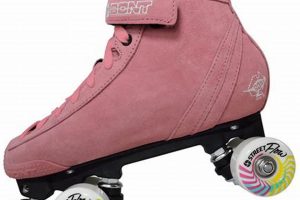
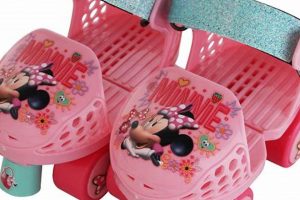
Entry-level recreational footwear, designed for ease of use and stability, provides a foundation for developing fundamental skating skills. These skates typically feature supportive ankle structures, manageable wheel durometer, and reliable braking systems. For example, a boot with reinforced padding coupled with polyurethane wheels ensures controlled movement and reduces the risk of injury for new skaters.
The selection of appropriate introductory equipment facilitates a positive initial learning experience, fostering confidence and encouraging continued participation in the activity. Historically, simplified designs and durable materials have been prioritized to accommodate the specific needs of novice users, emphasizing safety and promoting skill acquisition over advanced performance characteristics.
Subsequent sections will detail specific features to consider, types of models available, maintenance recommendations, and safety precautions pertinent to individuals starting their skating journey.
Guidance for Selecting Introductory Skating Equipment
The following guidelines provide insight into selecting suitable recreational footwear for individuals new to skating. Prioritizing safety and comfort will enhance the learning process and promote long-term enjoyment of the activity.
Tip 1: Ankle Support Assessment: Evaluate the rigidity of the boot’s ankle support. Adequate support minimizes the risk of ankle sprains and provides greater stability during initial learning phases. Models with high-cut boots and reinforced ankle padding are generally recommended.
Tip 2: Wheel Durometer Consideration: Opt for wheels with a lower durometer rating (e.g., 78A-82A). Softer wheels offer increased grip on various surfaces, enhancing control and stability, particularly for outdoor skating on uneven terrain.
Tip 3: Brake Proficiency: Ensure the selected skates include a functional and easily accessible brake. Mastering braking techniques is crucial for safety. Practice stopping in a controlled environment before venturing onto public paths.
Tip 4: Proper Fit Evaluation: A snug, but not constricting, fit is essential. Ill-fitting skates can lead to discomfort, blisters, and reduced control. Measure foot length accurately and consult size charts provided by the manufacturer.
Tip 5: Bearing Quality: While not always readily apparent, bearing quality impacts rolling efficiency. ABEC-rated bearings (e.g., ABEC 5 or ABEC 7) offer a balance between performance and durability for recreational skating.
Tip 6: Frame Material: Aluminum frames offer greater durability and responsiveness compared to plastic frames. However, plastic frames are typically lighter and more affordable, making them suitable for casual use.
Tip 7: Protective Gear Investment: Complementing the appropriate footwear with comprehensive protective gear, including a helmet, knee pads, elbow pads, and wrist guards, is paramount to preventing injuries.
Adherence to these recommendations will contribute to a safer and more enjoyable introduction to skating, enabling new users to develop proficiency and confidence.
The subsequent section will discuss common challenges encountered by novice skaters and strategies for overcoming them.
1. Ankle Support

Ankle support is a critical determinant in the suitability of recreational footwear for novice skaters. Its presence or absence directly impacts stability, control, and the likelihood of injury during the initial learning phase.
- Lateral Stability
The primary function of ankle support is to provide lateral stability, preventing excessive pronation or supination of the ankle joint. This is particularly crucial for beginners who may lack the muscle strength and balance to maintain proper alignment independently. Insufficient lateral stability increases the risk of sprains and other ankle injuries.
- Boot Height and Rigidity
Ankle support is often correlated with boot height. Taller boots generally offer greater support compared to low-cut designs. The rigidity of the boot material also plays a significant role. Stiffer materials provide more resistance to ankle movement, while more flexible materials offer greater range of motion, but less support. A balance must be struck based on the individual skater’s needs and skill level.
- Padding and Reinforcement
Effective ankle support often incorporates internal padding and external reinforcement. Padding cushions the ankle and reduces pressure points, while reinforcement, such as plastic or composite overlays, adds structural integrity. These features work in tandem to secure the ankle and prevent unwanted movement during skating.
- Impact on Learning Curve
Adequate ankle support contributes to a smoother learning curve. By providing stability and reducing the risk of injury, beginners can focus on developing fundamental skills such as balance, gliding, and turning without being hampered by ankle instability. This promotes confidence and encourages continued participation in the activity.
The incorporation of robust ankle support mechanisms in introductory skating equipment represents a critical safety feature. Skates lacking sufficient support are generally unsuitable for beginners due to the elevated risk of injury and the potential for hindering skill development.
2. Wheel Durometer and Recreational Footwear

Wheel durometer, a measurement of a wheel’s hardness, significantly influences the performance characteristics of recreational footwear, particularly for beginner skaters. The durometer scale, typically measured in “A” units, ranges from softer (lower numbers) to harder (higher numbers). The selection of an appropriate durometer rating is essential for optimizing grip, control, and overall safety for novice users. A lower durometer rating indicates a softer wheel, providing increased friction and adherence to the skating surface. This is crucial for beginners as it enhances stability and reduces the likelihood of slips and falls. For instance, wheels with a durometer of 78A-82A are frequently recommended for introductory recreational skating due to their enhanced grip on diverse surfaces, including asphalt and concrete. The increased friction translates into better control during turns and stops, facilitating a more confident and secure learning experience.
Conversely, wheels with a higher durometer rating (e.g., 85A or higher) are designed for advanced skaters seeking greater speed and roll efficiency on smooth surfaces. These harder wheels offer less grip, requiring greater skill and control to maintain balance and prevent unintended skidding. Utilizing high-durometer wheels on rough or uneven surfaces can be particularly hazardous for beginners, potentially leading to loss of control and injury. Consider the practical example of a beginner attempting to skate on 85A wheels on a cracked asphalt surface. The lack of grip could cause instability, making it difficult to maintain balance and execute basic maneuvers. In contrast, 80A wheels would provide a more forgiving and controlled experience on the same surface.
In summary, the selection of wheel durometer is a critical consideration in the context of recreational footwear designed for beginner skaters. Lower durometer wheels, typically in the 78A-82A range, offer enhanced grip and stability, promoting a safer and more controlled learning environment. While harder wheels may offer advantages in terms of speed and roll efficiency, their reduced grip makes them unsuitable for novice users. The integration of appropriately durometer-rated wheels contributes significantly to the overall usability and safety of beginner recreational skates, fostering confidence and encouraging continued engagement with the activity.
3. Braking System and Introductory Skating Equipment

An effective braking system is a paramount safety feature of introductory skating equipment. Its presence and functionality directly influence the user’s ability to control speed and avoid collisions. The absence of a reliable braking mechanism in beginner skates elevates the risk of accidents and injuries, hindering the development of fundamental skating skills. A typical braking system consists of a heel brake or toe stop. A heel brake, commonly found on inline skates, is activated by angling the foot and applying pressure to the heel. Toe stops, prevalent on quad skates, require lifting the toes to engage the braking surface. The choice between these systems often depends on the skate type and the user’s preference; however, both must be easily accessible and responsive for novice skaters.
The practical significance of a well-designed braking system is evident in various scenarios. For example, a beginner skating downhill may need to decelerate quickly to maintain control. A responsive brake allows the skater to manage speed and avoid potential hazards. Similarly, navigating crowded areas necessitates the ability to stop promptly to prevent collisions with pedestrians or other skaters. The effectiveness of the braking system is also contingent on the skater’s proficiency in utilizing it. Therefore, instructional materials and practice sessions should emphasize proper braking techniques. Furthermore, routine maintenance is essential to ensure the brake remains in optimal condition. Worn or damaged brake pads should be replaced promptly to maintain adequate stopping power. Improper maintenance can compromise the brake’s effectiveness, increasing the risk of accidents.
In summary, the braking system constitutes an indispensable component of introductory skating equipment. Its reliability and ease of use directly impact user safety and control. Emphasis on proper braking techniques and regular maintenance is crucial for mitigating risks and promoting a positive learning experience. The integration of an effective braking system is a non-negotiable requirement in the design and selection of beginner skates, contributing significantly to the overall safety and accessibility of the sport.
4. Proper Fit

The correlation between recreational footwear’s fit and its suitability for beginners is substantial. An ill-fitting skate, irrespective of other design features, compromises stability, control, and overall safety. A skate that is too large permits excessive foot movement, impeding precise maneuvering and increasing the risk of ankle sprains. Conversely, a skate that is too small restricts blood flow, causing discomfort and potential long-term foot problems. The ideal fit secures the foot firmly without constriction, allowing for natural articulation while minimizing slippage within the boot. The outcome of ignoring proper fit principles often includes blistering, chafing, and an inhibited learning curve. For example, a beginner forced to compensate for a loose skate may develop poor skating habits and a reluctance to continue learning. The practical significance of this connection lies in the diminished potential for enjoyment and skill development when the skater is distracted by discomfort or instability.
The evaluation of proper fit requires careful consideration of foot length, width, and arch height. Measurements should be taken while wearing socks of the appropriate thickness, and compared against manufacturer-specific sizing charts. Factors such as heat-moldable liners and adjustable closure systems offer opportunities to customize the fit and accommodate individual foot contours. Real-world application of these principles involves a comprehensive fitting process, often conducted at specialized retailers. The retailer assesses the skater’s foot characteristics and recommends models known for their fit characteristics. Online purchases, while convenient, necessitate meticulous self-measurement and careful review of product specifications and customer feedback pertaining to sizing accuracy.
In summary, the proper fit of recreational footwear is an integral component of their efficacy as introductory skating equipment. The consequences of neglecting fit considerations include reduced performance, increased risk of injury, and diminished enjoyment of the activity. Addressing the challenges inherent in achieving a precise fit requires careful measurement, thorough product research, and, when possible, professional assistance. This understanding is crucial for individuals seeking to initiate a skating journey effectively and safely.
5. Bearing Quality

The quality of bearings in recreational footwear directly influences the ease of use and overall experience, particularly for beginner skaters. Bearings, typically rated using the ABEC scale, determine the rolling efficiency of the wheels. Lower-quality bearings generate increased friction, requiring greater effort to maintain momentum. This increased resistance can be especially fatiguing for novice skaters, hindering skill development and potentially discouraging continued participation. For instance, skates equipped with unrated or low-ABEC bearings will demand significantly more exertion than those with higher-rated components, resulting in slower speeds and reduced glide distance per push.
The selection of bearings for introductory skates necessitates a balance between performance and durability. While high-precision bearings offer superior rolling characteristics, they may be more susceptible to damage from dirt and debris encountered during outdoor skating. ABEC 5 or ABEC 7 bearings are often considered appropriate for beginners, providing a reasonable level of performance without requiring excessive maintenance. The practical difference is observable in the skater’s ability to maintain a steady pace and control direction. Skates with quality bearings allow the skater to focus on technique rather than struggling against the skate’s inherent resistance. Consider the example of two identical pairs of skates, one with ABEC 3 bearings and the other with ABEC 7. The skater using the ABEC 7 equipped skates will experience a smoother, more effortless glide, enabling them to concentrate on balance and coordination.
In conclusion, bearing quality is a significant, though often overlooked, factor in the selection of recreational footwear for beginners. Low-quality bearings increase the physical demands of skating, potentially impeding skill development and reducing enjoyment. Opting for bearings with a moderate ABEC rating, such as ABEC 5 or ABEC 7, provides a balance between performance, durability, and cost-effectiveness. This choice facilitates a more efficient and enjoyable learning experience, promoting continued engagement with the activity. Prioritizing bearing quality, alongside other factors such as ankle support and wheel durometer, contributes to a positive introduction to the sport.
Frequently Asked Questions
The following section addresses common inquiries regarding the selection and use of recreational footwear for novice skaters, providing essential information to facilitate informed decision-making.
Question 1: What distinguishes recreational footwear designed for novice skaters from advanced models?
Introductory models prioritize stability, support, and ease of use. They typically feature robust ankle support, wheels with a lower durometer for enhanced grip, and accessible braking systems. Advanced models, in contrast, emphasize speed, maneuverability, and responsiveness, often sacrificing stability for performance.
Question 2: What level of ankle support is necessary for beginners?
Adequate ankle support is critical. Skates should feature high-cut boots with reinforced ankle padding to minimize the risk of sprains and provide greater stability during initial learning phases. A rigid boot structure offers superior support, preventing excessive ankle movement.
Question 3: What is the significance of wheel durometer in recreational skating?
Wheel durometer measures wheel hardness. Lower durometer wheels (e.g., 78A-82A) offer increased grip and control, which is beneficial for beginners. Higher durometer wheels provide greater speed but less grip, making them unsuitable for novice users.
Question 4: How crucial is a functional braking system for beginners?
A reliable braking system is paramount. Novice skaters require an easily accessible and responsive brake to control speed and avoid collisions. Both heel brakes (inline skates) and toe stops (quad skates) are viable options, provided the skater is proficient in their use.
Question 5: How should introductory skates fit properly?
A snug, but not constricting, fit is essential. Ill-fitting skates can lead to discomfort, blisters, and reduced control. Measure foot length accurately and consult size charts provided by the manufacturer. Ensure there is minimal heel lift within the boot.
Question 6: What bearing quality is recommended for novice skaters?
ABEC-rated bearings (e.g., ABEC 5 or ABEC 7) offer a balance between performance and durability for recreational skating. Lower-quality bearings generate increased friction, requiring greater effort to maintain momentum. Higher-rated bearings, while offering superior performance, may be more susceptible to damage.
The information presented addresses fundamental considerations for selecting appropriate recreational footwear for individuals new to skating. Prioritizing safety, comfort, and proper fit will enhance the learning process and promote long-term enjoyment.
The subsequent section will discuss common challenges encountered by novice skaters and strategies for overcoming them.
Conclusion
The preceding analysis has outlined key considerations in the selection of appropriate introductory skating equipment. Factors such as ankle support, wheel durometer, braking system functionality, proper fit, and bearing quality collectively determine the suitability of a given model for novice users. Emphasis on these attributes directly contributes to user safety, skill development, and overall enjoyment of the activity.
The selection of “good beginner roller skates” represents a foundational element in the successful initiation of new skaters. Diligence in evaluating these factors will not only mitigate potential risks but also foster a positive and sustainable engagement with skating as a recreational pursuit. Prioritizing informed decision-making ultimately benefits both the individual and the wider skating community.