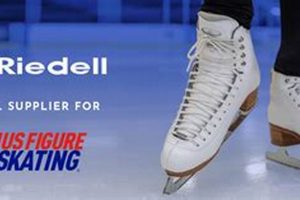
Determining the appropriate dimensions for children’s footwear intended for use on frozen surfaces is a crucial aspect of ensuring comfort, performance, and safety. Accurate measurement considers factors such as foot length and width, which translate into corresponding size indications provided by manufacturers. This process aims to align the skaters foot with the internal volume of the boot, promoting stability and control on the ice.
Selecting the correct size is paramount for several reasons. A poorly fitted skate can lead to discomfort, blisters, and reduced maneuverability. Historically, ill-fitting skates have contributed to a higher risk of ankle injuries and falls. Moreover, a properly sized skate can improve a young skater’s confidence and enjoyment of the sport, fostering a positive learning experience. Understanding the nuances of finding the correct dimensions contributes significantly to their development.
The subsequent sections will delve into specific methods for measuring feet, interpreting sizing charts from various brands, and understanding the implications of half sizes and width options. Furthermore, the discussion will cover the critical aspects of proper fit assessment and maintenance practices that contribute to the longevity and performance of the equipment.
Essential Considerations for Correct Boot Dimensions
The following guidelines offer crucial insights to facilitate the selection of appropriate footwear dimensions, ensuring safety and optimal performance.
Tip 1: Measure Feet Accurately. Employ a standardized measuring device, such as a Brannock device, to obtain precise length and width measurements. Ensure the individual is standing with their full weight distributed evenly.
Tip 2: Consult Manufacturer Sizing Charts. Different brands may employ varying sizing conventions. Refer to the specific manufacturer’s chart to correlate foot measurements with their corresponding skate sizes.
Tip 3: Prioritize Fit Over Age. Age-based estimations are unreliable. Precise foot measurement is the only accurate determinant of correct boot dimensions.
Tip 4: Consider Sock Thickness. Factor in the thickness of the socks typically worn during skating. Measurements should be taken with the socks on to ensure an accurate fit.
Tip 5: Allow for Growth, But Do Not Oversize Excessively. A small allowance for growth is permissible, but oversizing can compromise stability and control. Aim for no more than one finger’s width of space at the toe.
Tip 6: Evaluate Ankle Support. Proper ankle support is crucial for stability and injury prevention. Ensure the ankle is snug and secure within the boot.
Tip 7: Test the Fit Through Movement. After trying on the boot, have the child simulate skating motions to assess comfort and range of motion. Check for any pressure points or areas of discomfort.
Adhering to these considerations enhances safety, minimizes discomfort, and promotes optimal performance on the ice. Accurate sizing is not merely about comfort, but also about fostering confidence and enjoyment of the sport.
The concluding section will summarize the key principles of appropriate size selection and outline best practices for maintaining the integrity and longevity of equipment.
1. Foot Length Measurement

Foot length measurement serves as the primary determinant in selecting the appropriate size for youth ice skates. The correlation between precise foot dimensions and correctly sized skates directly impacts performance, comfort, and safety. Inadequate or inaccurate measurement leads to the selection of equipment that is either too restrictive, causing discomfort and potential foot problems, or too large, resulting in diminished control and an elevated risk of injury. For example, a child with a foot measuring 20 centimeters should, ideally, be fitted with a skate size that corresponds to this measurement according to the specific manufacturer’s sizing chart. This direct relationship underscores the foundational role of accurate measurement.
The practical significance of proper foot length measurement extends beyond mere comfort. Skates that are too large impede the skater’s ability to execute precise movements, compromising balance and agility. Conversely, overly tight skates can restrict blood flow, leading to numbness and potential long-term damage. In a real-world scenario, a young hockey player wearing skates that are a full size too large might struggle to maintain a stable stance during sharp turns, increasing the likelihood of falls and hindering skill development. Similarly, a figure skater in skates that are too small might experience persistent pain, affecting their ability to practice and perform effectively.
In summary, accurate foot length measurement is indispensable to the effective selection of youth ice skates. Challenges arise from variations in manufacturer sizing standards, emphasizing the need to consult brand-specific charts. Understanding the implications of accurate measurement enhanced performance, improved comfort, and minimized injury risk is critical for parents, coaches, and retailers. This fundamental connection ultimately contributes to a safer and more enjoyable skating experience.
2. Width Consideration

Width consideration forms an integral component of appropriate skate dimension determination for young individuals. Foot width varies significantly, and neglecting this dimension during skate selection leads to compromised fit, discomfort, and reduced performance. The internal volume of skates must accommodate the foot’s width to ensure proper blood circulation, stability, and overall comfort. When selecting “youth ice skate sizing”, a proper width consideration is critical to overall youth safety and enjoyment while on the ice. An individual with wide feet forced into a narrow skate experiences constriction, potentially causing pain, blisters, and numbness. Conversely, a narrow foot in a skate designed for wider feet lacks support, leading to instability and difficulty executing precise maneuvers. For instance, a young hockey player with particularly wide feet may find standard-width skates excessively tight, hindering their ability to accelerate and turn efficiently.
The practical application of width consideration involves accurate foot measurement using a Brannock device or similar tool capable of assessing both length and width. Manufacturers typically offer skates in various widths, designated by letters such as “D” for standard, “C” for narrow, and “E” or “EE” for wide. Consulting brand-specific sizing charts that incorporate width measurements is crucial. Real-world scenarios frequently demonstrate the consequences of disregarding width. Parents often focus solely on length, overlooking the potential for discomfort and performance issues arising from an ill-fitting width. A figure skater with narrow feet, placed in skates too wide for their foot, experiences excessive movement within the boot, reducing control and increasing the risk of ankle injuries.
In summary, width consideration is a non-negotiable aspect of “youth ice skate sizing”. Challenges arise from the variability in manufacturer sizing and a frequent tendency to prioritize length over width. Understanding and addressing the width dimension enhances comfort, performance, and safety. The integration of foot width measurements into the selection process, coupled with consultations with knowledgeable skate fitters, contributes to an optimized skating experience, minimizing discomfort and maximizing skill development.
3. Brand Size Variation

Brand size variation is a significant factor in determining appropriate “youth ice skate sizing”. Inconsistent sizing standards across different manufacturers necessitate careful attention to specific brand guidelines, as a given numerical size may not translate uniformly across brands. This variation arises from differing manufacturing processes, design philosophies, and target demographics. Failure to account for brand-specific sizing can result in ill-fitting skates, leading to discomfort, impaired performance, and potential injuries. For instance, a “youth ice skate sizing” listed as size 3 from Brand A may correspond to a different foot length than a size 3 skate from Brand B. Consequently, relying solely on a child’s previous skate size or shoe size is unreliable when switching brands.
The practical implications of brand size variation extend to the purchasing process. Online transactions, where physical try-ons are impossible, require meticulous examination of the manufacturer’s sizing chart. Measuring the child’s foot accurately and comparing it to the brand’s specific chart is essential. Real-world examples highlight the prevalence of this issue; parents often report ordering skates online based on their child’s typical shoe size, only to discover that the skates are either too large or too small upon arrival. Retail environments should provide knowledgeable staff capable of assisting with measurements and offering guidance on brand-specific sizing nuances. The common confusion reinforces the critical need for consumers to prioritize brand-specific sizing charts over generalized size assumptions.
In summary, brand size variation presents a persistent challenge in the realm of “youth ice skate sizing”. Successfully navigating this challenge necessitates a proactive approach, involving precise foot measurements and careful consultation of manufacturer-provided sizing charts. Acknowledging and addressing the inconsistencies across brands is paramount to ensuring a proper fit, optimizing performance, and promoting a safe and enjoyable skating experience. The understanding that “youth ice skate sizing” requires brand-specific attention is fundamental.
4. Sock Thickness Impact

The thickness of socks worn while skating significantly affects the fit and performance of skates, directly impacting the determination of appropriate “youth ice skate sizing.” This seemingly minor detail can alter the internal volume of the skate, influencing comfort, stability, and control. A failure to account for sock thickness leads to inaccurate size selection and potential performance deficiencies.
- Reduction of Internal Volume
Thicker socks reduce the internal space within the skate, making it feel tighter and potentially requiring a larger skate size than would be needed with thinner socks. For example, a child who normally wears thin athletic socks while skating and then switches to thick wool socks during colder months may find that their skates feel too small, necessitating an adjustment in “youth ice skate sizing”. This alteration directly affects the skater’s comfort and ability to perform maneuvers effectively.
- Impact on Fit Precision
Precise skate fit is essential for optimal performance and injury prevention. Socks that are too thick can distort the intended fit, creating pressure points and reducing the skater’s feel for the ice. In contrast, socks that are too thin may not provide adequate cushioning, resulting in discomfort and potential blisters. This precision is critical in “youth ice skate sizing”. Consider a young hockey player whose skate fit is calibrated for thin socks. Switching to thicker socks compromises the fit, reducing ankle support and increasing the risk of instability during quick turns and stops.
- Material Properties and Moisture Management
The material composition of socks affects moisture management within the skate. Thick cotton socks, while providing cushioning, tend to retain moisture, leading to cold and clammy feet, which can impact performance and comfort. Conversely, moisture-wicking materials like wool or synthetic blends help regulate temperature and keep feet dry. An example is a figure skater wearing cotton socks, which become damp and cold during a long practice session, negatively affecting their focus and precision. When selecting skates based on “youth ice skate sizing”, appropriate sock material helps to maintain comfort and function.
- Inconsistencies and Seasonal Variations
Sock thickness often varies seasonally, with thicker socks being preferred during colder months for added warmth. This inconsistency poses challenges in maintaining a consistent skate fit throughout the year. A young skater whose skates fit perfectly with thin socks in the summer may find that the same skates are too tight with thicker winter socks, potentially impacting their performance and necessitating a re-evaluation of their “youth ice skate sizing.” This seasonal factor requires careful consideration to ensure consistent comfort and performance.
Accurate “youth ice skate sizing” must account for the intended sock thickness to ensure optimal fit and performance. Failing to address this factor results in compromised comfort, reduced control, and an increased risk of injury. Parents, coaches, and retailers must emphasize the importance of measuring the child’s foot while wearing the socks they typically use for skating to achieve the most accurate fit. The integration of sock thickness considerations into the sizing process improves the skating experience by enhancing comfort and ensuring proper performance.
5. Growth Allowance

The concept of growth allowance introduces a complex consideration in determining appropriate “youth ice skate sizing.” Unlike adult sizing, where stability is the primary goal, “youth ice skate sizing” must account for the rapid physical development of children, specifically the continual increase in foot length and width. Striking a balance between providing sufficient room for growth and maintaining a secure, performance-oriented fit represents a significant challenge. A failure to adequately address growth allowance leads to frequent and costly skate replacements, while excessive allowance compromises safety and skating proficiency.
- Foot Development Stages
Children’s feet undergo significant developmental changes, exhibiting growth spurts that may not be consistent or predictable. Ignoring these stages leads to inaccurate size selection, requiring frequent adjustments or replacements. For example, a child may experience a growth spurt mid-season, rendering properly fitted skates too small, resulting in discomfort and potential foot problems. The “youth ice skate sizing” must consider these stages of development.
- Fit Compromises and Safety Risks
Oversizing skates to accommodate future growth compromises fit integrity. Excess space within the boot reduces ankle support, increases the risk of instability, and impedes proper technique. Consider a young hockey player wearing skates that are a size too large, designed to account for anticipated growth. The reduced ankle support leads to poor balance and a heightened risk of ankle sprains. Precise “youth ice skate sizing” minimizes the chance of injury.
- Economic Implications
The financial burden of frequently replacing skates due to growth should be considered. A strategy that prioritizes a precise fit over long-term growth may prove more economical in the long run, as it optimizes performance and safety while delaying the need for a replacement. For example, purchasing well-fitted, appropriately sized skates offers a more cost-effective approach than continually purchasing larger sizes expecting longer use. Judicious “youth ice skate sizing” helps balance budget and safety concerns.
- Alternative Solutions
Some manufacturers offer adjustable skates designed to accommodate growth spurts. These adjustable designs provide a viable alternative for families seeking to extend the lifespan of their skate investment. These solutions often involve internal mechanisms that allow for incremental size adjustments, providing a degree of flexibility that standard skates lack. Alternative “youth ice skate sizing” may offset the cost of continually replacing skates.
The consideration of growth allowance when determining “youth ice skate sizing” requires a nuanced approach. This involves balancing the need for a precise, performance-enhancing fit with the practical realities of a child’s rapid physical development. Strategies include prioritizing fit integrity, considering adjustable skate designs, and understanding the economic implications of frequent skate replacements. The objective is to optimize safety, performance, and cost-effectiveness while accommodating growth within reasonable limits.
6. Ankle Support

Ankle support is a critical biomechanical element integrated into skate design, exerting significant influence over skater stability, control, and injury prevention. Its proper consideration during skate dimension selection, especially within the domain of “youth ice skate sizing,” is essential for fostering both safe skill development and effective performance on the ice. The absence of adequate ankle support can result in compromised technique, increased susceptibility to sprains, and an overall diminished skating experience.
- Structural Integrity and Boot Stiffness
The physical structure of the skate boot, specifically its stiffness and height around the ankle joint, provides the foundation for effective ankle support. A boot constructed from rigid materials, extending sufficiently up the lower leg, restricts excessive ankle movement, enhancing stability. For example, a skate constructed with a high, stiff boot provides superior support compared to a low-cut, flexible design, thereby reducing the likelihood of ankle instability during lateral movements. The impact of boot stiffness must be aligned with correct “youth ice skate sizing”.
- Lacing Systems and Closure Mechanisms
Lacing systems and closure mechanisms (buckles, straps, power straps) contribute to the level of adjustability and security around the ankle. These elements allow skaters to customize the fit, ensuring a snug and supportive enclosure. A well-designed lacing system, coupled with power straps, enables skaters to fine-tune the tightness around the ankle, optimizing stability and control. Inversely, inadequately tightened or poorly designed lacing undermines the boot’s supportive capacity, irrespective of correct “youth ice skate sizing”.
- Internal Padding and Anatomical Fit
Internal padding, strategically positioned around the ankle area, enhances comfort while providing additional support. Anatomically contoured padding fills voids, minimizing slippage and maximizing contact between the foot and the boot. Skates with inadequate padding around the ankle may cause discomfort, leading to altered biomechanics and increased fatigue. The combined effect of padding and precise “youth ice skate sizing” reinforces ankle stability and mitigates the risk of injury.
- Flex Rating and Skill Level Appropriateness
Skates are manufactured with varying flex ratings, indicating the degree of stiffness in the ankle region. Novice skaters generally benefit from stiffer boots, providing increased support and stability as they develop fundamental skills. Advanced skaters may prefer more flexible boots, allowing for greater range of motion and nuanced movements. Selecting a skate with a flex rating inappropriate for the skater’s skill level compromises either support or agility, regardless of correct “youth ice skate sizing.”
In conclusion, effective ankle support is intrinsically linked to proper “youth ice skate sizing”. Its realization relies on a combination of structural boot design, secure closure systems, strategic padding, and skill-appropriate flex ratings. The judicious integration of these elements maximizes safety, enhances performance, and contributes to a positive skating experience for young individuals. The understanding of ankle support provides an important point to the overall considerations when purchasing.
Frequently Asked Questions
The following questions address common issues encountered when determining appropriate dimensions for children’s ice skates. They aim to clarify key considerations and dispel misconceptions surrounding the selection process.
Question 1: How frequently should children’s ice skates be replaced due to growth?
Replacement frequency depends on individual growth rates. It is advisable to assess skate fit every three to six months, especially during periods of rapid development. Indicators include discomfort, pressure points, or a lack of ankle support.
Question 2: Is it acceptable to purchase ice skates a size larger to accommodate growth?
Purchasing skates a size larger compromises stability and increases the risk of injury. A small allowance, no more than one finger’s width at the toe, may be considered, but precise fit should be prioritized.
Question 3: How do different ice skate brands vary in their sizing?
Sizing standards vary significantly across brands. Refer to the specific manufacturer’s sizing chart, correlating foot measurements with their corresponding skate sizes. Avoid relying on generalized size assumptions.
Question 4: What type of socks should be worn when fitting ice skates?
Wear the type of socks typically used during skating. Sock thickness affects internal skate volume. Measure the child’s foot while wearing the appropriate socks to ensure an accurate fit.
Question 5: How important is ankle support in youth ice skates?
Ankle support is crucial for stability and injury prevention. Ensure the ankle is snug and secure within the boot. Skates with inadequate ankle support increase the risk of sprains and reduce control.
Question 6: What are the implications of neglecting foot width when selecting ice skates?
Neglecting foot width leads to discomfort, reduced performance, and potential foot problems. Skates should accommodate the foot’s width to ensure proper blood circulation and stability. Choose the appropriate width option (e.g., standard, wide) based on accurate foot measurements.
Accurate size selection is paramount for safety, comfort, and performance. Consistent monitoring of fit, awareness of brand-specific sizing, and proper consideration of sock thickness and ankle support are essential.
The next section will address maintenance practices to prolong the lifespan and performance of the equipment.
Concluding Observations on Youth Ice Skate Sizing
This exploration of “youth ice skate sizing” has underscored the multifaceted nature of determining appropriate dimensions for young skaters. Considerations extend beyond simple numerical correspondence, encompassing foot length, width, brand-specific variations, sock thickness, growth allowance, and the crucial role of ankle support. The consequences of neglecting these factors include compromised performance, increased injury risk, and diminished enjoyment of the sport. The need for accurate measurement and informed decision-making has been consistently emphasized.
Given the inherent complexities and potential ramifications, stakeholders, including parents, coaches, and retailers, must prioritize a diligent and informed approach to “youth ice skate sizing”. A commitment to precision, coupled with an awareness of the unique needs of developing skaters, will ultimately contribute to a safer and more rewarding skating experience. Continual vigilance and education remain paramount to ensuring optimal outcomes for young athletes.