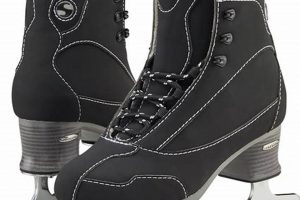
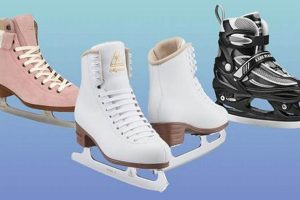
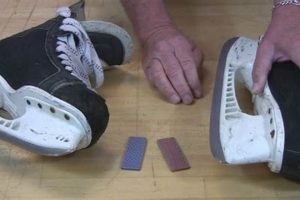
Footwear specifically engineered for use on ice surfaces, often constructed with a rigid outer shell and supportive inner lining, enables individuals to glide and perform maneuvers. This specialized equipment provides the necessary ankle support and blade attachment for ice skating activities.
Proper footwear is fundamental for performance and safety in various ice sports, including figure skating, hockey, and recreational skating. Historically, these boots have evolved from simple leather attachments to sophisticated designs incorporating advanced materials for enhanced comfort, support, and control. The development of improved boot technology has directly contributed to advancements in skating techniques and injury prevention.
The subsequent sections will examine the different types available, the key features to consider when selecting appropriate models, and guidance on proper care and maintenance for extended longevity.
Essential Considerations for Selection and Maintenance
The following outlines essential tips for optimizing the lifespan and performance of specialized footwear for ice activities. Adherence to these guidelines promotes safety and enhances the overall skating experience.
Tip 1: Prioritize Proper Fit: Ensure a snug yet comfortable fit, allowing for minimal foot movement within the boot. Ill-fitting footwear can lead to blisters, discomfort, and impaired control on the ice.
Tip 2: Inspect Blade Alignment Regularly: Verify that the blade is securely and accurately aligned with the boot. Misalignment can negatively affect balance and edge control, increasing the risk of falls.
Tip 3: Dry Thoroughly After Each Use: Moisture accelerates degradation of materials. After each skating session, remove the inner lining (if applicable) and allow the boots to air dry completely, away from direct heat.
Tip 4: Utilize Blade Guards: Protect the blades from damage when walking off the ice surface. Hard guards are suitable for walking, while soft guards absorb moisture and prevent rust during storage.
Tip 5: Sharpen Blades Periodically: Regular sharpening is crucial for maintaining optimal edge performance. The frequency of sharpening depends on usage and ice conditions, but typically every 10-20 hours of skating is recommended.
Tip 6: Store Properly: When not in use, store in a cool, dry place, away from direct sunlight and extreme temperatures. Stuffing with newspaper can help maintain the shape of the boot.
Tip 7: Replace Worn Components: Inspect laces, insoles, and other components for wear and tear. Replace these items as needed to maintain support, comfort, and safety.
Consistent adherence to these guidelines will extend the lifespan of the specialized footwear and contribute to a safer and more enjoyable skating experience. Proper care ensures optimal performance and minimizes the risk of injury.
The concluding section will offer a comprehensive summary of the discussed topics, solidifying key points for enhanced understanding.
1. Ankle Support

Ankle support is a critical attribute of ice skate boots, influencing performance, comfort, and injury prevention. The design and construction of the boot around the ankle directly impact a skater’s ability to maintain balance, execute maneuvers, and withstand the forces generated during skating.
- Rigidity and Stability
The rigidity of the boot’s ankle area provides lateral stability, preventing excessive pronation or supination. This stability is paramount for maintaining a strong skating edge and executing controlled turns. Insufficient rigidity can lead to ankle strain and reduced control, while excessive rigidity can limit mobility. The appropriate level of support is often tailored to the skater’s skill level and the demands of their specific discipline.
- Range of Motion
While stability is essential, the design must also permit a necessary degree of ankle flexion and extension. This range of motion allows the skater to effectively use their ankles for power generation and fine-tuned control. Boots that overly restrict movement can hinder a skater’s ability to bend their knees and maintain a low center of gravity, impacting both performance and balance.
- Lacing System and Customization
The lacing system plays a crucial role in achieving a secure and adjustable fit around the ankle. A well-designed lacing system allows the skater to customize the level of support, tightening or loosening the laces to accommodate individual preferences and skating styles. Some boots incorporate power straps or other features to further enhance ankle support and stability.
- Material Composition and Construction
The materials used in the ankle area of the boot contribute significantly to its supportive qualities. Stiff materials such as reinforced polymers or leather provide a firm foundation, while padding and cushioning offer comfort and impact absorption. The construction techniques employed, such as strategic stitching and molding, further enhance the boot’s ability to provide targeted support and maintain its shape over time.
The interplay of rigidity, range of motion, lacing system, and material composition determines the effectiveness of ankle support in ice skate boots. Skaters must carefully consider these factors when selecting boots to ensure they provide the optimal balance of stability, comfort, and control for their individual needs and skating goals. Proper ankle support not only enhances performance but also minimizes the risk of ankle injuries, allowing skaters to enjoy the sport safely and confidently.
2. Blade Attachment

The method by which a blade is affixed to ice skate boots is a critical determinant of performance, stability, and safety. The connection directly influences the transfer of force from the skater’s body to the ice, affecting acceleration, turning ability, and overall control.
- Riveted Construction
Traditional blade attachment often employs rivets to secure the blade to the sole of the boot. This method offers simplicity and robustness, however, adjustability is limited. Rivets are typically arranged in a pattern that distributes the load across the sole, minimizing stress concentration. While effective, riveted attachments lack the fine-tuning capabilities required by advanced skaters.
- Screwed Mounting
Utilizing screws for blade attachment offers increased adjustability. Screws allow for minor adjustments to the blade’s position, accommodating individual biomechanics and skating styles. This method generally involves a metal plate embedded within the sole of the boot, providing a secure anchor point for the screws. The ability to fine-tune blade alignment is particularly valued in figure skating and high-level hockey.
- Bonded Systems
Adhesive bonding presents an alternative method, wherein the blade is affixed to the boot using specialized adhesives. These systems aim to distribute stress evenly across the bonding surface, minimizing localized stress points. Bonding can offer a lightweight and streamlined profile; however, concerns regarding long-term durability and potential for delamination exist. This method is typically seen in recreational or specialized skate designs.
- Integrated Chassis Designs
Some boots feature an integrated chassis design, wherein the blade and boot are manufactured as a single unit or with a highly integrated interface. These designs strive to optimize stiffness and energy transfer, maximizing efficiency and responsiveness. Integrated systems often require specialized manufacturing processes and may limit the interchangeability of blades. Benefits typically involve improved control and reduced weight.
The selection of a particular blade attachment method depends on a balance of factors including performance requirements, durability expectations, adjustability needs, and manufacturing costs. Each approach presents unique advantages and limitations that must be carefully considered to optimize overall skate performance. The interface between blade and boot remains a focal point for ongoing innovation in skate design.
3. Material Construction

The selection of materials in footwear designed for ice surfaces dictates durability, performance, and safety. The external shell frequently incorporates reinforced polymers or treated leather to withstand the rigors of repeated use and provide structural integrity. These materials resist abrasion from ice and impact from pucks or other skaters. Internal linings consist of moisture-wicking fabrics and padding to ensure thermal insulation and mitigate discomfort. A rigid sole plate, often made of composite materials, provides a stable platform for blade attachment and efficient energy transfer. An example is the shift from traditional all-leather boots to incorporating carbon fiber in competitive figure skating to reduce weight and increase responsiveness, allowing for higher jumps and quicker rotations. The consequence of inappropriate material choice is rapid degradation, compromised support, and increased risk of injury.
Beyond structural components, the materials used in lacing systems and closure mechanisms are also crucial. High-strength laces and durable buckles or straps contribute to a secure and customizable fit. The materials must maintain their integrity in sub-freezing temperatures and withstand repetitive tightening and loosening. Furthermore, the bonding agents or adhesives used to join different materials play a critical role in the overall durability of the skate. Delamination or adhesive failure can compromise the structural integrity of the boot, leading to reduced performance and potential safety hazards. The advancement in synthetic materials, like specialized foams that mold to the skater’s foot shape after being heated, allow a previously unattainable custom fit in mass-produced boots.
In summary, material construction is a paramount consideration in the design and manufacturing of specialized footwear for ice activities. The careful selection and integration of appropriate materials directly influence the skate’s longevity, performance characteristics, and the safety of the user. While advancements in material science offer opportunities to enhance skate design, challenges remain in balancing durability, weight, and cost-effectiveness. Understanding the relationship between material properties and skate performance is essential for both manufacturers and skaters seeking to optimize their equipment.
4. Proper Fit

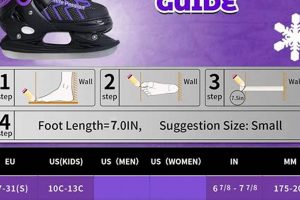
The relationship between footwear for ice activities and appropriate sizing is foundational to both performance and safety. An ill-fitting boot compromises control, increases the risk of injury, and diminishes the overall skating experience. Conversely, correct sizing ensures optimal energy transfer, stability, and comfort. A boot that is too large allows excessive foot movement, leading to blisters, chafing, and impaired responsiveness. This slippage reduces the skater’s ability to effectively use edges, impacting turns, jumps, and overall balance. A boot that is too small restricts circulation, causes discomfort, and can lead to long-term foot problems. The selection process must therefore prioritize accurate measurement and careful consideration of individual foot morphology.
The consequences of improper sizing are evident in various skating disciplines. In hockey, a loose boot can delay reaction time and reduce the power generated during strides and stops, potentially impacting game performance and increasing vulnerability to injury. In figure skating, precise control is paramount; an improperly sized boot hinders the skater’s ability to execute intricate footwork and landings, elevating the risk of falls and ankle sprains. Even in recreational skating, an ill-fitting boot can lead to discomfort and fatigue, diminishing the enjoyment of the activity. Manufacturers often provide sizing charts and guidelines, but professional fitting by experienced personnel is highly recommended to account for variations in foot width, arch height, and individual preferences. The fitting process should involve assessing the skater’s stance, gait, and intended use to ensure optimal boot selection.
In conclusion, proper fit is not merely a matter of comfort but a critical component of safety and performance in skating. The cause-and-effect relationship between boot sizing and skating outcomes underscores the importance of careful measurement, professional fitting, and informed selection. While advancements in boot technology and customization options offer opportunities to optimize fit, the fundamental principle remains unchanged: a well-fitting boot provides the foundation for a safe and enjoyable skating experience. The challenge lies in balancing individual needs, boot characteristics, and professional expertise to achieve the ideal fit for each skater.
5. Thermal Insulation

Thermal insulation within ice skate boots is critical for maintaining foot warmth and comfort in sub-freezing conditions. The lack of adequate insulation leads to decreased performance and potential health risks, including frostbite. The materials employed for this purpose aim to minimize heat loss from the foot to the surrounding cold environment. Insufficient thermal protection can constrict blood vessels, reducing circulation and causing numbness, thereby impairing a skater’s ability to control the skates effectively. For instance, prolonged exposure to cold during outdoor skating sessions necessitates well-insulated boots to prevent discomfort and maintain dexterity.
The effectiveness of thermal insulation is determined by factors such as the type and thickness of the insulating material, the boot’s overall construction, and the presence of moisture. Materials like Thinsulate, fleece, or wool are commonly used for their insulating properties. Moisture, whether from sweat or external sources, significantly reduces the effectiveness of these materials. Therefore, moisture-wicking liners are often incorporated to keep the feet dry. Competitive skaters, who spend extended periods on the ice, often rely on specialized socks in conjunction with insulated boots to optimize warmth and comfort without compromising skate feel. Furthermore, appropriate insulation prevents the excessive tightening of laces, which can further restrict blood flow and exacerbate cold-related issues.
In summary, thermal insulation represents a vital component of specialized footwear for ice activities. It ensures the comfort, safety, and performance of skaters by mitigating heat loss and maintaining adequate foot temperature. Proper insulation design, material selection, and moisture management are crucial considerations for manufacturers and skaters alike. Failure to address this aspect can result in discomfort, impaired performance, and potential health hazards associated with prolonged exposure to cold. Understanding the mechanisms and implications of thermal insulation is thus essential for optimizing the skating experience.
6. Blade Sharpness

Blade sharpness is a critical attribute of ice skate boots, directly influencing a skater’s ability to grip the ice, control movement, and execute maneuvers safely and effectively. The edges of the blade, when properly sharpened, create small grooves in the ice surface, providing the necessary friction for propulsion, turning, and stopping. Dull blades result in reduced grip, causing skaters to slide uncontrollably and expend excessive energy attempting to maintain balance. For example, a hockey player with dull blades would struggle to accelerate quickly or make sharp turns, impacting their performance and increasing the risk of collisions. In figure skating, edge control is even more crucial, as it is integral to performing jumps, spins, and intricate footwork.
The appropriate level of blade sharpness varies depending on the skating discipline and the skater’s skill level. Hockey players often prefer a shallower hollow (the concave shape ground into the blade) for increased speed and glide, while figure skaters typically require a deeper hollow for enhanced edge control and grip during complex maneuvers. The process of sharpening involves grinding the blade to create a precisely defined hollow, followed by honing to remove any burrs or imperfections. Regular sharpening is essential to maintain optimal performance, but over-sharpening can weaken the blade and reduce its lifespan. Moreover, the frequency of sharpening depends on the intensity of use, the type of ice surface, and the skater’s individual preferences. Improper sharpening techniques can damage the blade and compromise its structural integrity, highlighting the importance of using experienced and qualified technicians.
In conclusion, blade sharpness is an indispensable component of ice skate boots, directly impacting a skater’s ability to perform and remain safe on the ice. The relationship between blade sharpness and skating performance is a cause-and-effect dynamic that underscores the need for regular maintenance and skilled sharpening practices. While challenges exist in balancing sharpness with blade longevity and individual preferences, understanding the practical significance of this relationship is fundamental for optimizing the skating experience and minimizing the risk of injury. The future of skate blade technology may involve innovations in materials and sharpening techniques to further enhance grip, durability, and overall performance.
7. Maintenance Regimen

A systematic maintenance regimen is critical for preserving the integrity, performance, and longevity of specialized footwear used on ice surfaces. Neglecting consistent care precipitates accelerated degradation, compromised support, and increased risk of equipment failure, directly impacting skater safety and performance capabilities.
- Regular Cleaning and Drying
After each use, the immediate removal of moisture and debris prevents corrosion and material breakdown. Perspiration and condensation accumulate within the boot’s lining, fostering bacterial growth and weakening structural components. Thorough drying, aided by absorbent materials, mitigates these effects and extends the lifespan of the boot. Failure to adhere to this practice invites premature deterioration and compromises hygienic conditions.
- Blade Protection and Sharpening
The blade’s edges are fundamental to a skater’s ability to control movement on the ice. Protect the blades from damage when walking off the ice surface by using blade guards is recommended. Periodic sharpening ensures optimal grip and maneuverability. Regular blade sharpening keeps the skates performance at its peak. Neglecting sharpening results in diminished control and increased effort, while inadequate protection against abrasion leads to blunted edges and compromised performance.
- Hardware Inspection and Tightening
The integrity of rivets, screws, and laces is paramount for maintaining structural stability and secure fit. Routine inspection identifies loose or damaged hardware that requires immediate attention. Tightening screws and replacing worn laces prevents instability and potential equipment failure during use. Failure to maintain hardware integrity compromises support and elevates the risk of injury.
- Proper Storage Techniques
Environmental factors such as temperature, humidity, and direct sunlight significantly impact material degradation. Storing boots in a cool, dry environment, away from direct sunlight, minimizes these effects. Utilizing boot bags or protective covers shields against dust and physical damage. Improper storage accelerates material deterioration and reduces the overall lifespan of the footwear.
Adherence to a comprehensive maintenance regimen ensures continued performance and safety. Each facet contributes to the sustained functionality of footwear, mitigating risks associated with degradation and promoting extended use. Inconsistent maintenance practices ultimately undermine the investment in specialized footwear, necessitating premature replacement and compromising the skating experience.
Frequently Asked Questions
The following addresses common inquiries and misconceptions regarding specialized footwear for ice surfaces. The information provided aims to enhance understanding and inform decision-making.
Question 1: How does one determine the correct size?
Accurate sizing necessitates professional measurement. Foot length and width are critical parameters. Manufacturers’ sizing charts serve as initial guides, but individual foot morphology necessitates in-person fitting to ensure optimal comfort and performance.
Question 2: What distinguishes figure skating models from hockey models?
Figure skating models emphasize ankle flexibility and blade curvature for intricate movements. Hockey models prioritize ankle support and impact resistance for high-speed maneuvers and physical contact. Blade attachment mechanisms and boot construction differ accordingly.
Question 3: How frequently should blades undergo sharpening?
Sharpening frequency depends on usage intensity, ice conditions, and skating discipline. Regular users typically require sharpening every 10-20 hours of ice time. Professional evaluation determines the need for sharpening based on blade edge condition.
Question 4: What materials provide optimal thermal insulation?
Synthetic materials such as Thinsulate and fleece offer effective thermal insulation while maintaining breathability. Wool and specialized synthetic socks augment insulation. The key consideration involves balancing warmth with moisture management to prevent discomfort and performance degradation.
Question 5: How does one mitigate odor and bacterial growth?
Regular cleaning and drying are essential. Moisture-wicking liners and anti-bacterial sprays can help mitigate odor. Allowing to air dry completely after each use prevents bacterial growth. The usage of boot dryers also helps maintain freshness.
Question 6: Can skate blades be replaced independently of the footwear?
Blade replacement depends on the attachment method. Riveted blades typically require professional replacement. Screwed or chassis-based systems offer greater interchangeability. Compatibility with the specific model must always be confirmed.
In summary, informed selection and consistent maintenance practices are crucial for optimizing the performance and extending the lifespan of specialized footwear for ice activities.
Ice Skate Boots
This discourse has systematically examined various facets of specialized footwear intended for ice surfaces. From construction materials and proper fit to thermal insulation and blade maintenance, a comprehensive understanding of these elements is crucial for optimizing both performance and safety. The interconnection between each attribute underscores the complexity inherent in selecting and maintaining such equipment.
The investment in suitable footwear, coupled with consistent and informed maintenance practices, reflects a commitment to both the pursuit of athletic excellence and the mitigation of potential risks. As technology continues to evolve, further advancements in materials and design will undoubtedly enhance the capabilities and longevity of these essential tools for navigating the frozen landscape.