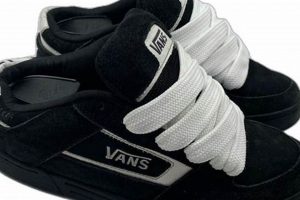
The conversion of footwear into a rolling apparatus presents a versatile method for personal transportation and recreational activity. This process typically involves attaching wheeled components to the soles of existing shoes, enabling the user to glide across smooth surfaces. For example, specialized kits are available that allow individuals to affix rollerblade-style wheels to standard athletic shoes.
This adaptation offers numerous advantages, including cost-effectiveness compared to purchasing dedicated skates, portability, and the ability to transition seamlessly between walking and skating. Historically, similar concepts have appeared in various forms, from early attempts at wheeled shoes to more modern, refined designs focusing on enhanced stability and user control. The flexibility it provides caters to various needs, whether commuting short distances or engaging in leisurely skating activities.
The following sections will delve into the specific methods and technologies employed in this conversion process, explore the available hardware options, discuss safety considerations, and analyze the overall impact on the recreational sports and personal mobility landscapes.
Conversion Strategies
This section provides actionable advice for individuals interested in adapting their existing footwear for use as rolling skates. The following points emphasize safety, performance, and long-term durability.
Tip 1: Select Compatible Footwear: The base shoe should offer a rigid sole and a secure fit. Athletic shoes with reinforced midsoles provide a stable platform for attaching wheeled mechanisms. Avoid shoes with excessive cushioning or flexible soles, as these can compromise control and stability.
Tip 2: Utilize Professional Conversion Kits: Opt for conversion kits designed specifically for the intended shoe type and skating style. These kits typically include mounting hardware, adjustable wheel configurations, and safety features such as locking mechanisms. Ensure the kit meets relevant safety standards.
Tip 3: Prioritize Secure Attachment: The method of attaching the wheeled mechanism to the shoe is critical. Adhesives alone are generally insufficient. Mechanical fasteners, such as bolts and straps, provide a more secure and reliable connection. Regularly inspect the attachment points for wear or loosening.
Tip 4: Implement Gradual Adaptation: After converting shoes, begin with short practice sessions on smooth, controlled surfaces. This allows the user to become accustomed to the altered balance and maneuverability. Avoid attempting advanced maneuvers until a solid foundation of basic skills is established.
Tip 5: Employ Protective Gear: Regardless of experience level, always wear appropriate safety gear, including a helmet, knee pads, elbow pads, and wrist guards. These items significantly reduce the risk of injury in the event of a fall.
Tip 6: Regular Maintenance is Important: Routinely inspect the wheels, bearings, and mounting hardware. Clean and lubricate moving parts as needed to ensure smooth operation and prevent premature wear. Replace worn components promptly to maintain optimal performance.
Adhering to these guidelines will contribute to a safer and more enjoyable experience. Proper preparation and diligent maintenance are essential for maximizing the utility and longevity of converted footwear.
The following sections will provide an in-depth analysis of specific conversion kits, focusing on their design features, performance characteristics, and suitability for various applications.
1. Adaptability

Adaptability, in the context of modifying footwear for rolling locomotion, refers to the degree to which a standard shoe can be successfully altered to function as a skate. This quality is paramount in determining the feasibility and effectiveness of the conversion, impacting performance, safety, and user satisfaction.
- Sole Rigidity
The adaptability of a shoe’s sole is directly proportional to its rigidity. A rigid sole provides a stable platform for mounting wheeled mechanisms, minimizing flex and ensuring efficient energy transfer. Conversely, a flexible sole will compromise control and increase the risk of instability. Athletic shoes with reinforced midsoles demonstrate higher adaptability compared to casual footwear with softer, less supportive soles.
- Attachment Surface Area
Sufficient surface area on the shoe’s sole enhances adaptability by providing ample space for secure attachment of the rolling mechanism. Larger, flatter soles accommodate a greater variety of mounting hardware and distribute force more evenly. Shoes with intricate tread patterns or excessively curved soles present challenges in achieving a stable and reliable connection, reducing their adaptability.
- Upper Support and Fit
The adaptability of a shoe extends beyond the sole to include the upper, which must provide adequate support and a secure fit. A well-fitting upper minimizes foot slippage and enhances control during skating. Shoes with adjustable straps or laces offer superior adaptability by allowing users to fine-tune the fit for optimal comfort and performance. Loose or poorly constructed uppers diminish the user’s ability to effectively control the rolling apparatus.
- Material Compatibility
Adaptability is influenced by the compatibility of the shoe’s materials with the attachment hardware. Certain adhesives or mechanical fasteners may not adhere effectively to specific materials, such as certain synthetic fabrics or treated leathers. Selecting shoes constructed from materials that readily accept and securely retain attachment hardware is crucial for achieving a durable and reliable conversion.
The aforementioned facets of adaptability collectively determine the suitability of a given shoe for conversion into a rolling skate. Optimizing these elements is essential for ensuring a safe, efficient, and enjoyable skating experience. Successfully adapting footwear requires careful consideration of the shoe’s inherent characteristics and the specific demands of the intended application.
2. Mechanism Integration
Mechanism integration, in the context of adapting conventional footwear for use as rolling skates, denotes the methodologies and technologies employed to securely affix a wheeled apparatus to the sole of a shoe. Effective mechanism integration is paramount to the success of any attempt to repurpose shoes for skating, directly impacting stability, control, and ultimately, user safety. A flawed integration strategy can result in detachment of the wheeled component during use, potentially leading to injury. Conversely, a well-engineered integration system provides a stable and responsive platform for skating. For example, professional-grade conversion kits often utilize a combination of high-strength adhesives and mechanical fasteners, such as screws or bolts, to create a robust connection between the shoe and the rolling mechanism. This dual-method approach mitigates the risk of failure associated with relying solely on adhesive bonding.
Different integration methods exhibit varying degrees of efficacy and complexity. Adhesive-only solutions, while simplest to implement, generally lack the durability and security required for sustained skating. Bolting or screwing the wheeled mechanism directly to the shoe’s sole offers a more robust connection, provided that the shoe’s construction can withstand the stress and that appropriate load-bearing washers and locking nuts are used. Another approach involves encasing the shoe within a purpose-built frame that integrates the wheels. This method distributes the forces more evenly across the shoe and provides a higher degree of structural integrity. The choice of integration method depends on factors such as the shoe type, the intended skating style, and the user’s skill level. For example, more rigorous skating activities, such as aggressive skating or roller hockey, necessitate a more robust and secure integration system than casual recreational skating.
In summary, mechanism integration represents a critical determinant of the performance and safety associated with transforming shoes into skates. The selection of an appropriate integration method, coupled with meticulous execution, is essential for creating a functional and reliable rolling apparatus. The challenges inherent in achieving optimal integration stem from the variability in shoe design and material properties. Future advancements in materials science and manufacturing techniques may lead to more efficient and versatile integration solutions. A comprehensive understanding of mechanism integration principles is therefore indispensable for anyone undertaking this conversion process.
3. Balance Dynamics
The endeavor to adapt conventional shoes into skates fundamentally alters the dynamics of balance. Whereas walking relies on distributed pressure and a relatively low center of gravity, the addition of wheels introduces instability and necessitates continuous adjustments to maintain equilibrium. The cause-and-effect relationship is direct: altered footwear geometry precipitates changes in balance requirements. The importance of balance dynamics cannot be overstated; it is a core component determining usability and safety. For example, individuals using converted footwear often exhibit a wider stance and increased reliance on upper-body movements to compensate for the reduced stability afforded by the wheel configuration.
Further analysis reveals that wheel placement and size exert significant influence on balance. Larger wheels provide greater speed but demand more precise balance control, while smaller wheels offer enhanced stability at the expense of speed. The distance between wheels, the wheelbase, also impacts maneuverability and stability. A shorter wheelbase facilitates tighter turns but reduces stability at higher speeds. Understanding these interdependencies allows for informed decisions when selecting or designing conversion kits. Furthermore, the user’s skill level interacts with balance dynamics. Novices typically require a more stable configuration with a lower center of gravity, whereas experienced skaters can manage more dynamic arrangements. Practical applications of this understanding extend to adaptive equipment for individuals with disabilities, where customized wheel configurations can enhance mobility and independence.
In conclusion, balance dynamics represents a critical consideration when transforming shoes into skates. The alteration of footwear geometry precipitates significant changes in balance requirements, necessitating careful attention to wheel configuration, user skill level, and intended application. Challenges remain in achieving a universally stable and adaptable design due to the inherent variability in shoe types and user capabilities. Recognizing and addressing these challenges are crucial for maximizing the potential of converted footwear as a viable form of personal transportation and recreational activity.
4. Safety Protocol

The implementation of stringent safety protocols is intrinsically linked to the endeavor of adapting standard footwear for use as rolling skates. The transformation inherently introduces elevated risks of falls and injuries due to the altered balance and maneuverability. Protective measures, therefore, become non-negotiable. For example, failure to employ appropriate safety gear, such as helmets and pads, significantly increases the likelihood of sustaining head trauma or fractures during a fall. Similarly, neglecting to inspect the integrity of the wheel attachment mechanism prior to use can result in catastrophic failure and subsequent loss of control. The application of consistent safety protocols reduces the probability of adverse outcomes.
Further analysis highlights the importance of environmental awareness as a critical component of safety protocol. Operating converted footwear on unsuitable surfaces, such as uneven terrain or congested pedestrian areas, elevates the risk of accidents. Users must also adhere to posted speed limits and traffic regulations, where applicable. Practical examples include the designation of specific skating zones in public parks and the enforcement of helmet laws for minors. Moreover, formal training in basic skating techniques and emergency stopping procedures can significantly mitigate the potential for injuries. This proactive approach fosters a culture of safety and responsibility among users.
In conclusion, safety protocol forms an indispensable element of any activity involving adapted rolling footwear. The integration of protective gear, environmental awareness, and formal training minimizes the inherent risks associated with this activity. Ongoing challenges remain in promoting widespread adherence to safety guidelines, particularly among unsupervised users. The development and dissemination of comprehensive safety resources, combined with effective enforcement measures, are essential for ensuring the responsible use of converted footwear and maximizing user well-being.
5. Surface Compatibility

Surface compatibility represents a critical determinant in the successful and safe utilization of adapted rolling footwear. The interaction between the wheel material and the contact surface dictates the efficiency of movement, the level of control attainable, and the potential for hazardous incidents. The cause-and-effect relationship is clear: inappropriate surface selection leads directly to reduced performance and heightened risk. For example, attempting to use converted footwear with hard polyurethane wheels on a soft, yielding surface such as grass or sand results in significant friction, impeding forward motion and compromising stability. The importance of surface compatibility, therefore, lies in its foundational influence on the user experience and safety profile of adapted footwear. Without appropriate surface consideration, the benefits of the adaptation are negated, and the likelihood of accidents increases substantially.
Further analysis reveals that ideal surfaces are characterized by smoothness, evenness, and adequate grip. Polished concrete, asphalt, and designated skating rinks exemplify surfaces that provide optimal rolling efficiency and allow for precise maneuvering. However, the presence of debris, cracks, or excessive inclines significantly diminishes surface compatibility, increasing the risk of falls. Real-world examples include city streets with uneven pavement, which can cause unexpected wheel stops, and indoor surfaces with residual cleaning agents, which can reduce traction. Practical applications stemming from this understanding include the development of specialized wheel materials designed to enhance grip on varied surfaces and the advocacy for improved infrastructure maintenance to promote safer skating environments. Additionally, the recognition of surface limitations guides responsible usage, prompting users to select appropriate locations and adapt their skating techniques accordingly.
In conclusion, surface compatibility constitutes an indispensable factor in the context of adapting conventional footwear for rolling use. The interplay between surface characteristics and wheel properties dictates performance, control, and safety. Ongoing challenges involve the design of versatile wheel technologies capable of adapting to diverse surfaces and the promotion of infrastructure improvements to facilitate safe and enjoyable skating experiences. A comprehensive understanding of surface compatibility is, therefore, essential for maximizing the utility and minimizing the risks associated with converted footwear.
6. Component Durability
Component durability is a critical factor in the successful and safe implementation of converting standard footwear into a rolling skate apparatus. The sustained performance of the converted system is directly proportional to the longevity and robustness of its constituent parts, including wheels, bearings, mounting hardware, and the shoe’s structural elements. The cause-and-effect relationship is evident: substandard components lead to premature failure, compromising safety and negating the economic benefits of adapting existing footwear. The importance of component durability cannot be overstated, as it dictates the overall lifespan and reliability of the conversion. A practical example involves the selection of high-grade bearings; bearings constructed from hardened steel with sealed enclosures exhibit superior resistance to wear and contamination compared to lower-quality alternatives, thereby extending the operational life of the wheels and ensuring smoother rolling.
Further analysis reveals that material selection and manufacturing processes significantly influence component durability. Wheels manufactured from high-rebound polyurethane, for instance, offer enhanced resistance to abrasion and deformation compared to those made from less resilient materials. Similarly, mounting hardware fabricated from stainless steel or other corrosion-resistant alloys provides superior protection against environmental degradation, preventing rust and ensuring secure attachment over extended periods. Real-world applications of this understanding include the development of standardized testing protocols to assess the durability of various components under simulated stress conditions. This informs consumer choices and incentivizes manufacturers to prioritize quality and longevity in their product designs. Furthermore, regular maintenance practices, such as cleaning and lubricating bearings and inspecting mounting hardware for signs of wear, contribute significantly to extending the lifespan of the components and ensuring continued safe operation.
In conclusion, component durability represents an indispensable element in the conversion of shoes into skates. The selection of high-quality materials, adherence to stringent manufacturing standards, and the implementation of proactive maintenance procedures are paramount to maximizing the lifespan and safety of the converted system. Ongoing challenges include the development of cost-effective yet durable components suitable for a range of shoe types and skating styles. A comprehensive understanding of component durability principles is, therefore, essential for both manufacturers and consumers seeking to optimize the performance and longevity of adapted rolling footwear.
Frequently Asked Questions
The following questions and answers address common inquiries regarding the process of adapting conventional footwear for use as rolling skates. These insights aim to provide a comprehensive understanding of the associated considerations and challenges.
Question 1: Is any shoe type suitable for conversion into a skate?
No. The shoe must possess a rigid sole and provide adequate ankle support. Athletic shoes with reinforced midsoles are generally preferable. Shoes with flexible soles or inadequate support structures are not recommended due to safety concerns.
Question 2: What is the most secure method for attaching the rolling mechanism?
A combination of high-strength adhesives and mechanical fasteners, such as bolts or screws, provides the most reliable connection. Adhesives alone are generally insufficient for sustained use and rigorous activity.
Question 3: What safety equipment is essential when using converted footwear as skates?
A helmet, knee pads, elbow pads, and wrist guards are considered mandatory. These items significantly reduce the risk of injury in the event of a fall.
Question 4: Can adapted footwear be used on any surface?
No. Smooth, paved surfaces, such as asphalt or concrete, are ideal. Uneven or obstructed surfaces pose a significant hazard and should be avoided.
Question 5: How does the conversion process affect balance?
The addition of wheels raises the center of gravity and reduces stability. Users must adjust their posture and movements to maintain equilibrium.
Question 6: How can the lifespan of converted footwear be maximized?
Regular maintenance, including cleaning and lubricating the wheels and inspecting the attachment hardware, is crucial. Worn or damaged components should be replaced promptly.
These FAQs highlight the crucial role of footwear selection, attachment security, safety equipment, surface compatibility, balance considerations, and maintenance practices when converting shoes into skates. Neglecting these elements can result in compromised safety and diminished performance.
The subsequent section will explore the legal and regulatory implications associated with the use of adapted rolling footwear in public spaces.
Conclusion
This analysis has systematically explored the process of adapting conventional footwear into rolling skates, emphasizing critical aspects such as adaptability, mechanism integration, balance dynamics, safety protocols, surface compatibility, and component durability. These elements are not merely suggestions but rather essential considerations for ensuring a functional and safe conversion.
Effective implementation of “turn shoes into skates” necessitates a commitment to rigorous testing, adherence to safety guidelines, and continuous improvement of hardware and techniques. Responsible innovation in this field will contribute to safer and more accessible forms of personal mobility. Further research and development are crucial to address remaining challenges and unlock the full potential of this adaptation for both recreational and practical applications. A comprehensive understanding of these issues promotes responsible and informed innovation.