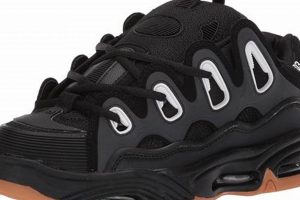
Footwear designed for skateboarding that offers additional internal volume is often sought after. This type of shoe provides a broader platform for the foot, particularly in the toe box and midfoot regions. For example, individuals with naturally wider feet may find standard skate shoes constricting, leading to discomfort and impaired performance.
The advantages of accommodating a broader foot profile are numerous. Increased comfort allows for longer skating sessions without pain or blistering. A more natural foot splay can improve board feel and stability, leading to enhanced control and trick execution. Historically, skaters with wider feet have modified standard shoes or sought out alternative brands to achieve a better fit, highlighting the ongoing need for specialized options.
This article will explore the various aspects of such specialized footwear. Topics covered will include the specific design features that distinguish them, the materials used in their construction, and brands that cater to this specific niche of the skateboarding market. Additionally, factors influencing selection and care will be discussed to provide a complete understanding.
Guidance on Selecting Appropriate Skateboarding Footwear
The following recommendations outline key considerations when choosing skateboarding footwear designed for individuals requiring additional width. Adherence to these guidelines can significantly impact comfort, performance, and longevity of the shoe.
Tip 1: Measure Foot Width Accurately: Prior to purchase, obtain a precise measurement of foot width, ideally using a Brannock device or similar tool. This measurement should be compared to the manufacturer’s sizing chart to determine the appropriate width designation (e.g., extra wide, 2E, 4E).
Tip 2: Prioritize Durable Construction Materials: Skateboarding footwear is subjected to significant abrasion. Look for options constructed from durable materials such as suede, reinforced canvas, or leather. Seam construction should also be robust to withstand repetitive impact and stress.
Tip 3: Examine Sole Construction and Tread Pattern: The sole provides essential grip and board feel. Vulcanized rubber soles are a standard in skateboarding, offering a balance of grip and flexibility. Consider the tread pattern; deeper patterns offer greater traction, while flatter patterns may enhance board feel.
Tip 4: Evaluate Internal Cushioning and Support: Adequate internal cushioning is crucial for impact absorption. Look for models with supportive insoles and padded collars and tongues. Arch support should be considered based on individual foot anatomy and skating style.
Tip 5: Assess Toe Box Shape and Volume: The toe box should provide ample space for the toes to splay naturally without constriction. A rounded or squared-off toe box is generally more accommodating than a tapered design. Ensure sufficient vertical volume to prevent toe rubbing.
Tip 6: Consider Lacing System and Closure: A secure and adjustable lacing system is essential for maintaining foot stability. Reinforced eyelets and durable laces will prolong the life of the shoe. Alternative closure systems, such as Velcro straps, may offer additional support.
Tip 7: Read Reviews and Seek Recommendations: Consult online reviews and seek recommendations from experienced skaters to gain insights into the performance and durability of specific models. Pay attention to comments regarding fit and sizing accuracy.
Following these recommendations allows for a more informed selection process, promoting enhanced comfort, performance, and footwear longevity. Investment in appropriate footwear yields both short-term and long-term benefits.
The following sections will delve into brands and specific models catering to the unique needs of skaters requiring additional width, providing further guidance for optimal selection.
1. Comfort

Comfort, in the context of skateboarding footwear, significantly influences the overall user experience. Footwear designed with insufficient internal volume can lead to a variety of discomforts, including blistering, cramping, and restricted circulation. The relationship between foot width and shoe width directly affects comfort levels. Individuals with wider feet often experience lateral compression when wearing standard-width skate shoes, compromising their ability to skate for extended periods. This, in turn, can hinder skill progression and overall enjoyment of the sport.
Footwear that effectively accommodates a wider foot profile allows for a more natural foot splay within the shoe. This reduces pressure points and friction, minimizing the likelihood of blisters and discomfort. Improved blood flow, resulting from reduced compression, can also enhance foot sensitivity and proprioception, which are essential for maintaining board feel and control. Examples include skaters who have switched to wider models reporting reduced foot fatigue and improved performance during longer sessions. Additionally, those previously experiencing bunions or similar foot conditions often find significant relief with appropriately-sized skateboarding footwear.
Prioritizing comfort through appropriately sized skateboarding footwear yields tangible benefits in performance and enjoyment. Neglecting this aspect can lead to chronic foot problems and decreased participation. Selecting the correct width, therefore, is not merely a matter of preference, but a critical factor in ensuring long-term comfort and enabling skaters to perform at their optimal level. Understanding the interplay between foot anatomy and footwear design is fundamental to making informed decisions that support both immediate comfort and long-term foot health.
2. Durability
Durability is a paramount consideration in skateboarding footwear, especially when addressing the needs of individuals requiring wider shoe models. The increased stress and potential for premature wear necessitates specific design and material choices to ensure longevity.
- Reinforced Construction
A crucial aspect of durability is the reinforcement of stress points. Wider footwear may experience greater strain on seams and attachment points due to increased foot movement. Reinforcing these areas with additional stitching or durable materials, such as multiple layers of suede or strategically placed rubber overlays, extends the lifespan of the shoe.
- Material Selection
The choice of materials significantly impacts the overall durability. Premium suede, known for its abrasion resistance, is frequently employed in high-wear areas. Canvas, while lighter, often benefits from reinforcement or treatment to enhance its resistance to tearing and scuffing. Selecting appropriate materials helps to mitigate wear and tear.
- Sole Adhesion and Composition
The bond between the sole and the upper is a critical point of failure in many skate shoes. Robust adhesives and durable sole compounds, such as vulcanized rubber, contribute to a longer-lasting shoe. The tread pattern also affects durability; a well-designed pattern distributes stress evenly, reducing localized wear and increasing grip retention.
- Internal Support Structures
Internal components, such as heel counters and internal reinforcing panels, play a vital role in maintaining the shoe’s shape and providing support. Without these structures, the shoe may deform prematurely, leading to increased stress on the outer materials and a reduction in overall lifespan. These structures become particularly important in a wider profile shoe, as they help to maintain the integrity of the larger form.
These facets highlight the multifaceted nature of durability in skateboarding footwear. Choosing models with reinforced construction, durable materials, strong sole adhesion, and robust internal support structures are essential for withstanding the stresses of skateboarding, especially when catering to skaters with wider feet who require specifically designed and constructed shoes.
3. Board Feel

Board feel, in the context of skateboarding footwear, denotes the sensitivity and tactile connection between the skater’s foot and the skateboard. While often associated with sole thinness, the fit of the shoe, particularly its width, significantly impacts the skater’s perception and control. A well-fitted skateboarding shoe enhances board feel, while an ill-fitting one can diminish it, regardless of sole thickness.
- Sole Flexibility and Material
A flexible sole allows the foot to conform to the concave shape of the skateboard, increasing the surface area of contact and transmitting subtle changes in board angle to the skater. A sole that is too stiff, or constructed from a material that inhibits flexibility, dampens these sensations. In the context of a wider skateboarding shoe, maintaining adequate sole flexibility is critical to prevent the foot from feeling isolated or disconnected from the board.
- Internal Volume and Foot Position
Excessive internal volume, which can occur if the footwear is not properly sized in width, may cause the foot to shift within the shoe during skating. This movement reduces the precision of board feel, as the skater loses immediate feedback from subtle changes in board position. A skateboarding shoe that provides adequate width without excessive internal volume ensures a snug, stable fit, enhancing the skater’s ability to perceive and react to the board’s movements.
- Insole Thickness and Responsiveness
While insoles primarily serve to provide cushioning and impact absorption, their thickness and material composition can influence board feel. Thicker, less responsive insoles can dampen the skater’s connection to the board. A thinner, more responsive insole, even in a wider skateboarding shoe, allows for a greater degree of sensitivity and control. The selection of insole material and thickness should be carefully considered to balance comfort and board feel.
- Upper Construction and Foot Lockdown
The upper construction contributes to board feel by securing the foot within the shoe and preventing unwanted movement. A well-designed upper, even in a wider skateboarding shoe, provides a snug and supportive fit around the midfoot and heel, minimizing slippage and maximizing the skater’s ability to translate subtle movements into board control. The material and construction of the upper are therefore essential components in optimizing board feel.
Ultimately, board feel represents a complex interplay of factors, extending beyond the sole’s thinness. The fit and construction of the entire skateboarding shoe, including considerations for width and internal volume, critically influence the skater’s tactile connection to the board. A properly sized and constructed wider skateboarding shoe can effectively enhance board feel, allowing skaters to maintain sensitivity and control while accommodating the specific needs of their foot anatomy. The compromise of these factors will determine the ultimate experience.
4. Stability
The term “stability,” when applied to skateboarding footwear, refers to the shoe’s capacity to maintain a secure and balanced platform for the foot. This is particularly salient in the context of wider shoe models, where maintaining foot control can present unique challenges.
- Lateral Support and Foot Lockdown
Lateral support is crucial for preventing excessive foot roll during turns and landings. In skateboarding footwear designed for wider feet, this support is achieved through reinforced sidewalls and supportive upper construction. Without adequate lateral support, the foot may slide within the shoe, compromising control and increasing the risk of ankle injuries. An example would be a skater executing a kickflip; the lateral pressure on the outside of the foot requires a shoe that effectively locks the foot in place.
- Sole Width and Ground Contact
The width of the sole relative to the width of the upper impacts overall stability. A sole that is narrower than the upper creates an unstable platform, especially when the foot exerts lateral pressure. Wider soles, particularly those designed to accommodate a broader foot profile, provide a more stable base of support, increasing the skater’s ability to maintain balance and control. Imagine a skater performing a manual; a wider sole contributes to a more balanced distribution of weight and reduces the likelihood of tipping.
- Heel Counter Integrity
The heel counter is a structural component that cups and supports the heel, preventing unwanted movement and enhancing overall stability. A robust heel counter is essential in wider footwear to minimize heel slippage and maintain a secure fit. For instance, when a skater ollies, the heel experiences significant impact; a solid heel counter absorbs this impact and keeps the foot stable.
- Insole Design and Arch Support
The insole contributes to stability by providing cushioning and arch support. Adequate arch support helps to maintain proper foot alignment and prevents overpronation or supination, both of which can compromise stability. In wider footwear, a well-designed insole can compensate for increased internal volume and ensure a secure, stable fit. For example, landing a jump with inadequate arch support in the insole may cause the foot to pronate excessively, leading to instability and potential injury.
The interplay of these factorslateral support, sole width, heel counter integrity, and insole designdetermines the overall stability of skateboarding footwear. Selecting a wider skateboarding shoe that addresses each of these elements effectively enhances the skater’s ability to maintain balance, control, and minimize the risk of injury. Prioritizing stability allows skaters to execute maneuvers with confidence and precision.
5. Impact Absorption

Impact absorption is a crucial attribute in skateboarding footwear, directly mitigating the repetitive stress and high-force landings inherent in the sport. The connection with broader shoe models lies in the potential need for increased cushioning and support to accommodate the wider foot’s biomechanics and distribute impact forces effectively. A wider foot may exert pressure over a larger surface area within the shoe during impact, necessitating specialized cushioning materials and designs to prevent localized stress concentrations and promote overall comfort and injury prevention. For instance, upon landing a jump, a skater’s foot absorbs forces several times their body weight. In a standard shoe, this force may be focused on specific areas. In a model better suited to a wide foot, this force needs to be distributed effectively to protect the foot.
The efficacy of impact absorption in specialized skateboarding footwear depends on several factors. Material selection is paramount; polyurethane and ethylene-vinyl acetate (EVA) foams are commonly employed for their shock-absorbing properties. Density and thickness are also critical variables; a higher density foam provides greater impact resistance, while a thicker insole offers increased cushioning. The integration of gel or air-based cushioning systems further enhances impact absorption. The insole design must also account for arch support, which helps distribute impact forces evenly across the foot. Consider the instance of a skater with flat feet. The insole must provide adequate arch support to compensate and prevent excess stress on the heel and forefoot. Without adequate consideration of the wide foot, manufacturers cannot provide efficient impact resistance.
In summary, impact absorption is intrinsically linked to the performance and safety of skateboarding footwear, particularly when catering to the specific needs of skaters requiring wider shoe models. Effective shock absorption requires careful consideration of material selection, insole design, and overall shoe construction to accommodate the wider foot’s biomechanics and distribute impact forces evenly. Failure to prioritize impact absorption can lead to discomfort, fatigue, and an increased risk of injuries such as heel bruises, stress fractures, and ankle sprains. Prioritizing impact absorption becomes a crucial consideration for design in this specific area of athletic footwear.
6. Foot Protection
Foot protection in skateboarding footwear serves to mitigate injuries resulting from impacts, abrasions, and compressive forces. The relationship between foot protection and wider shoe models warrants specific attention due to the potential for altered biomechanics and increased stress distribution across a broader foot profile.
- Toe Cap Reinforcement
The toe cap region is particularly susceptible to damage from ollies, kickflips, and other maneuvers that involve dragging the shoe across the ground. Reinforced toe caps, often constructed from multiple layers of suede or durable rubber, provide abrasion resistance and prevent premature wear. In wider shoe models, ensuring adequate toe cap reinforcement is critical to maintain the shoe’s structural integrity and protect the toes from impact and abrasion. An example includes skaters performing street maneuvers where the toe of the shoe frequently makes contact with concrete or asphalt.
- Midfoot Support and Stability
Proper midfoot support is essential for maintaining foot alignment and preventing excessive pronation or supination during high-impact landings. Wider feet may require additional arch support to distribute impact forces evenly and minimize stress on the plantar fascia. Stiffening materials, such as thermoplastic polyurethane (TPU) shanks, provide torsional rigidity and prevent the shoe from collapsing under pressure, offering enhanced foot protection. A skater landing awkwardly may find their arch strained without appropriate midfoot support.
- Ankle Padding and Collar Support
The ankle joint is vulnerable to sprains and contusions during skateboarding. Adequate ankle padding and a supportive collar help to stabilize the ankle and protect it from impacts and abrasions. High-top designs offer increased ankle coverage, while strategically placed padding cushions the ankle bone and minimizes the risk of injury. In wider shoe models, ensuring a secure and comfortable fit around the ankle is critical for effective protection. A skater experiencing a board strike to the ankle would benefit from substantial padding in this area.
- Sole Cushioning and Impact Distribution
The sole of a skateboarding shoe provides the primary interface for impact absorption. High-density foams, gel inserts, or air-based cushioning systems help to dissipate impact forces and protect the heel and forefoot from stress fractures and bruising. A wider sole, relative to the width of the upper, enhances stability and provides a larger surface area for impact distribution. A skater dropping from a significant height relies on the sole to cushion the landing and minimize stress on the joints.
In conclusion, foot protection is a fundamental consideration in the design and selection of skateboarding footwear, particularly for individuals requiring wider shoe models. The integration of reinforced toe caps, midfoot support, ankle padding, and effective sole cushioning ensures that the foot is adequately protected from the various hazards encountered during skateboarding. Addressing each of these elements effectively minimizes the risk of injury and promotes long-term comfort and performance.
Frequently Asked Questions
The following questions address common inquiries regarding skateboarding footwear designed for individuals requiring a wider fit. The information presented aims to clarify misconceptions and provide a comprehensive understanding of relevant aspects.
Question 1: What criteria define a “wide skate shoe”?
A skateboarding shoe categorized as “wide” offers increased internal volume compared to standard-width models. This increased volume primarily affects the forefoot and midfoot regions, providing additional space for the toes to splay naturally and accommodating wider foot anatomies. Manufacturers typically designate width variations using standardized sizing conventions such as “2E” or “4E.”
Question 2: Are “wide skate shoe” models merely larger versions of standard shoes?
No. While a wider designation implies increased overall volume, it does not simply represent an upscaled version of a standard shoe. Manufacturers often adjust the shape of the last (the foot-shaped form around which the shoe is constructed) to ensure a proper fit and maintain structural integrity in the wider dimensions.
Question 3: Does a “wide skate shoe” negatively impact board feel?
Not necessarily. A properly fitted “wide skate shoe” should not compromise board feel. While excessive internal volume can reduce sensitivity, selecting a model that provides adequate width without being overly voluminous maintains a close connection to the board. Construction and sole design also play a role.
Question 4: Is a “wide skate shoe” less durable than a standard width option?
Durability depends on construction quality, not solely on width. Shoes designed to accommodate wider feet must have reinforced stitching and durable materials in high-stress areas to compensate for the potential increase in stress on the seams. Quality construction practices are crucial.
Question 5: How does impact absorption differ in a “wide skate shoe”?
Impact absorption mechanisms remain consistent regardless of shoe width. However, the insole design and overall cushioning may need to be adapted to accommodate the wider foot profile and ensure even distribution of impact forces. A well-designed insole is crucial.
Question 6: Can orthotics be used effectively in a “wide skate shoe”?
Yes. The increased internal volume of a “wide skate shoe” often provides ample space to accommodate orthotic inserts. This can be particularly beneficial for individuals with specific foot conditions requiring additional support or correction. However, the shoe’s internal dimensions should be assessed after inserting the orthotic to ensure a secure and comfortable fit.
The information above highlights the importance of selecting skateboarding footwear tailored to individual foot characteristics. Ignoring width considerations can lead to discomfort, reduced performance, and potential injuries. Understanding these factors promotes more informed purchasing decisions.
The subsequent section will explore specific brands and models known for their accommodating fits, offering further guidance for skaters seeking optimal comfort and performance.
Conclusion
The preceding analysis has explored the multifaceted aspects of “wide skate shoe” options. A suitable fit, characterized by adequate width and internal volume, contributes significantly to comfort, performance, and long-term foot health. Considerations of durability, board feel, stability, impact absorption, and comprehensive foot protection are all equally critical. The discussion has underscored the need for informed decision-making when selecting skateboarding footwear, especially for individuals with wider foot anatomies. Selecting an ill-fitting shoe of the standard model can lead to negative experiences.
The information presented should serve as a valuable resource for skaters and retailers alike. Prioritizing proper fit and construction, over aesthetic considerations alone, promotes a safer and more enjoyable skateboarding experience. Continued research and development in this niche market are essential to meeting the evolving needs of all skateboarders, ensuring accessibility to quality footwear for every foot type. The future of this topic will only benefit from proper awareness.

![Best Amiri Skate Shoes: Style & Performance [Year] | How to Skateboard: A Beginner's Guide to Your First Board & Tricks](https://cruzskateshop.com/wp-content/uploads/2026/04/th-497-300x200.jpg "Best Amiri Skate Shoes: Style & Performance [Year] How to Skateboard: A Beginner's Guide to Your First Board & Tricks")