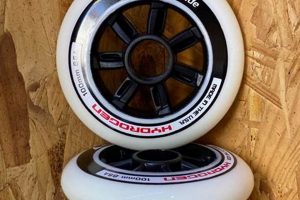
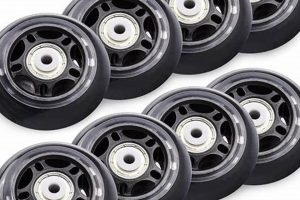
The diameter of a roller skate or inline skate wheel is a key characteristic influencing performance. Measured in millimeters (mm), this dimension directly affects speed, maneuverability, and the overall feel of the skating experience. For example, smaller diameters, typically between 54mm and 70mm, are common in aggressive skating where agility and responsiveness are prioritized. Larger diameters, such as 80mm to 110mm, are often found on recreational or speed skates, enabling faster speeds and smoother rolling over varied surfaces.
Wheel diameter plays a vital role in matching the skate to the intended use and skater skill level. Historically, smaller wheels were prevalent due to limitations in manufacturing and material science. As technology advanced, larger diameter wheels became more common, offering increased speed and efficiency, particularly for long-distance skating. The selection of a suitable diameter can greatly enhance the skater’s experience, improving comfort, control, and overall performance based on the intended skating style.
Understanding the implications of various wheel diameters is crucial when selecting skates or replacing existing wheels. The following sections will delve into specific wheel size recommendations for different skating disciplines, provide guidance on durometer selection, and offer practical advice for maintaining optimal wheel performance. This information is intended to guide informed decisions and enhance the skater’s knowledge base regarding skate wheel characteristics.
Selecting the Correct Diameter
Choosing an appropriate wheel diameter is crucial for optimal skating performance and safety. These guidelines offer specific considerations for different skating styles and skill levels.
Tip 1: Consider Skating Discipline: Different skating styles necessitate distinct diameters. Aggressive skating typically utilizes smaller wheels (54mm – 60mm) for enhanced control during grinds and tricks. Recreational skating often benefits from mid-sized wheels (72mm – 80mm) that balance speed and maneuverability. Speed skating demands larger wheels (90mm – 110mm) for maximum velocity and roll efficiency.
Tip 2: Account for Skater Skill Level: Beginners often find smaller wheels (70mm – 76mm) easier to control due to their lower speed and increased stability. Experienced skaters may prefer larger wheels for higher speeds and smoother navigation over varied terrain.
Tip 3: Assess Frame Compatibility: The skate frame’s design dictates the maximum wheel diameter it can accommodate. Exceeding this limit can compromise safety and damage the frame. Consult the manufacturer’s specifications or measure the frame’s wheel wells before purchasing new wheels.
Tip 4: Evaluate Surface Conditions: Smooth surfaces, such as skate parks and paved paths, allow for larger wheels that maximize speed. Rougher surfaces, such as asphalt or uneven terrain, may necessitate smaller wheels for improved control and shock absorption.
Tip 5: Factor in Personal Preference: Ultimately, the ideal wheel diameter is influenced by individual preferences and skating style. Experiment with different diameters to determine the optimal balance of speed, maneuverability, and control for one’s specific needs.
Tip 6: Check the Durometer: While diameter affects the top speed and handling, consider the durometer(hardness). Wheel durometer affects grip and wear. Softer wheels can offer grip, While harder wheels are faster and wear less.
Selecting the correct wheel diameter significantly impacts skating performance, safety, and enjoyment. Careful consideration of skating discipline, skill level, frame compatibility, and surface conditions is essential for making an informed decision.
The following sections will explore the role of wheel durometer and provide practical advice for maintaining skate wheels, further enhancing the skating experience.
1. Diameter (mm)

The diameter, measured in millimeters (mm), represents the fundamental attribute defining a skate wheel’s size. It establishes a direct causal relationship with the wheel’s rolling speed and maneuverability characteristics. A larger diameter translates to a greater distance covered per revolution, thus contributing to higher potential speeds. Conversely, smaller diameters offer enhanced agility and control, particularly crucial for disciplines requiring rapid direction changes and intricate maneuvers. The selection of a specific diameter is, therefore, an essential consideration in determining “what size skate wheels” are appropriate for a given application.
The diameter’s practical significance is evident across various skating disciplines. Aggressive skating, for example, often employs smaller wheels (54mm-60mm) to facilitate grinding and aerial tricks, prioritizing control over speed. Speed skating, conversely, utilizes larger wheels (90mm-110mm) to achieve maximum velocity and maintain momentum over long distances. Recreational skating typically favors a middle ground, with wheels ranging from 72mm to 80mm balancing speed and maneuverability. Real-world examples, such as a speed skater’s reliance on large-diameter wheels for competitive advantage or an aggressive skater’s preference for smaller wheels in a skate park environment, underscore the critical influence of diameter.
Understanding the correlation between diameter and performance characteristics is pivotal for selecting “what size skate wheels” best suits individual needs and preferences. Ignoring this relationship can lead to suboptimal performance and potentially compromise safety. The limitations imposed by skate frame compatibility must also be considered, creating an upper bound on the permissible wheel diameter. In summary, wheel diameter acts as the primary variable in determining “what size skate wheels” a skater should use, directly impacting speed, maneuverability, and overall skating experience.
2. Skating discipline

The intended skating discipline directly dictates the optimal wheel size. Different styles of skating prioritize distinct performance characteristics, creating a causal relationship between the chosen activity and the wheel diameter necessary for success. Understanding this link is crucial when determining the correct wheel size for a specific purpose. For example, aggressive skating emphasizes control and maneuverability for performing tricks on ramps and rails. Consequently, aggressive skaters typically employ smaller wheels, often ranging from 54mm to 60mm, which provide enhanced responsiveness and stability during complex maneuvers. In contrast, speed skating necessitates maximizing velocity and maintaining momentum over long distances. Therefore, speed skaters overwhelmingly favor larger wheels, typically between 90mm and 110mm, to achieve greater rolling efficiency and top speeds.
Recreational skating occupies a middle ground, balancing the need for both speed and maneuverability. Skaters engaging in recreational activities, such as trail skating or general fitness skating, often utilize mid-sized wheels, typically between 72mm and 80mm. This diameter range provides a compromise between speed and control, enabling skaters to navigate various terrains and maintain a comfortable pace. Figure skating on inline skates presents another specialized case. Figure skaters require wheels that allow for precise edge control and smooth transitions between maneuvers. Wheel sizes and profiles for figure skating vary widely and depend on the model of frame as well as the skater’s weight and ability.
In conclusion, selecting the appropriate wheel size requires careful consideration of the intended skating discipline. The inherent demands of each style, whether prioritizing control for aggressive maneuvers, speed for competitive racing, or a balance for recreational activities, directly influence the optimal wheel diameter. Disregarding this relationship can result in suboptimal performance, reduced control, and a potentially diminished skating experience. Therefore, an understanding of the connection between skating discipline and wheel size is fundamental to choosing equipment that aligns with individual skating goals and maximizes enjoyment.
3. Frame compatibility

Frame compatibility represents a critical constraint when selecting the appropriate wheel size for inline or roller skates. The design of the skate frame inherently limits the maximum wheel diameter that can be accommodated. Attempting to install wheels exceeding this limit can result in damage to the frame, compromised structural integrity, and potential safety hazards. The wheel wells, or the spaces within the frame designed to house the wheels, dictate the allowable diameter. A larger wheel will physically not fit within a frame designed for smaller wheels. This restriction necessitates a thorough understanding of frame specifications before purchasing replacement wheels or upgrading skate components.
The impact of frame compatibility is evident in various skating scenarios. For instance, an aggressive skate frame, designed for smaller wheels to enhance maneuverability during grinds and tricks, will typically not accommodate larger wheels intended for speed skating. Similarly, a recreational skate frame designed for mid-sized wheels will exhibit compromised performance if excessively small or large wheels are installed. Real-world examples include skaters attempting to fit 80mm wheels into a frame designed for a maximum of 76mm, resulting in wheel rub against the frame and impaired rolling ability. This incompatibility can lead to instability and increase the risk of falls.
Therefore, understanding frame compatibility is paramount when determining the suitable wheel size for any pair of skates. Consulting the manufacturer’s specifications for the frame is essential. These specifications typically indicate the maximum wheel diameter that can be safely used. Disregarding frame compatibility can lead to functional limitations, structural damage, and increased risk of injury. The interconnectedness of frame design and wheel diameter underscores the importance of considering both factors simultaneously to ensure optimal performance and safety within the constraints of the physical equipment.
4. Skater skill

Skater skill level constitutes a significant factor in determining the appropriate wheel size. A skater’s proficiency directly impacts their ability to control and maneuver skates, influencing the optimal diameter required for safe and effective performance. Beginners often benefit from smaller wheels due to their inherent stability and slower speeds. This allows novice skaters to develop fundamental skills, such as balance and basic maneuvering, without the added challenge of high-velocity rolling. Conversely, experienced skaters typically possess the requisite control and coordination to manage larger wheels, enabling them to achieve higher speeds and navigate varied terrains with greater efficiency. Thus, skater skill functions as a determinant in the selection process.
Real-world examples illustrate the practical significance of aligning wheel size with skater skill. A beginner attempting to use large-diameter wheels designed for speed skating may struggle with control, leading to instability and potential falls. This misalignment arises from the skater’s insufficient skill to manage the increased speed and reduced maneuverability associated with larger wheels. In contrast, an experienced skater using smaller wheels might find their performance limited by the lower speeds and reduced rolling efficiency. This demonstrates the importance of adapting equipment to match the skater’s abilities and intended use. Skate instructors frequently recommend smaller wheels for beginner classes to facilitate learning and minimize the risk of injury. As skaters progress, they may gradually transition to larger wheels to enhance their performance capabilities.
In summary, skater skill exerts a discernible influence on the selection of wheel size. Beginners typically require smaller wheels to promote stability and control, while experienced skaters can leverage larger wheels to maximize speed and efficiency. This relationship underscores the need for skaters to carefully consider their skill level when choosing equipment, ensuring a safe and enjoyable skating experience. The appropriate wheel size must align with the skater’s current abilities to prevent overexertion or limit performance potential, and selecting “what size skate wheels” is a skill-dependent decision.
5. Surface condition
The condition of the skating surface directly influences the optimal wheel size selection. The surface texture, smoothness, and presence of obstacles create varying demands on the wheels, impacting speed, grip, and vibration absorption. Smooth surfaces, such as polished concrete or well-maintained asphalt, facilitate the use of larger wheels. These larger wheels provide increased rolling efficiency, allowing skaters to achieve higher speeds and maintain momentum with less effort. Conversely, rough surfaces, characterized by cracks, pebbles, or uneven textures, necessitate the use of smaller wheels. These smaller wheels offer greater maneuverability and improved control, enabling skaters to navigate obstacles and maintain stability on unpredictable terrain.
The cause-and-effect relationship between surface condition and wheel size is evident in real-world skating scenarios. For example, skaters participating in indoor speed skating on smooth, specialized tracks consistently utilize large-diameter wheels to maximize velocity. The absence of surface irregularities allows for uninterrupted rolling and efficient power transfer. In contrast, skaters engaging in recreational skating on rough, urban streets often opt for smaller wheels, which enhance maneuverability and absorb vibrations caused by uneven pavement. Ignoring this relationship can lead to suboptimal performance, increased fatigue, and a heightened risk of injury. A skater attempting to use large wheels on a rough surface may experience reduced control and increased vibration, while a skater using small wheels on a smooth surface may sacrifice speed and efficiency.
In summary, the surface condition represents a crucial consideration when determining the appropriate wheel size. Smooth surfaces favor larger wheels for maximizing speed, while rough surfaces necessitate smaller wheels for enhancing control and vibration absorption. Understanding this relationship allows skaters to make informed equipment choices that optimize performance and ensure a safe and enjoyable experience. Practical application of this knowledge requires assessing the typical skating environment and selecting wheels that align with the prevalent surface conditions. This ensures the skater maintains control, minimizes fatigue, and maximizes the performance potential of their equipment within the limitations of the skating surface.
6. Rolling speed
Rolling speed, the velocity attained and maintained while skating, is intrinsically linked to wheel size. Larger wheels inherently cover more ground per rotation, directly influencing the potential for higher speeds. Understanding the dynamics of this relationship is crucial when determining the optimal wheel size for various skating activities.
- Wheel Diameter and Distance per Revolution
The diameter of the skate wheel directly dictates the distance covered with each complete rotation. A larger wheel possesses a greater circumference, translating to a longer distance traveled for every single revolution compared to a smaller wheel. This characteristic is pivotal in achieving higher rolling speeds, particularly on smooth, consistent surfaces. For instance, a 110mm wheel will inherently cover more linear distance per revolution than a 72mm wheel, all other factors being equal.
- Inertia and Momentum
Larger wheels, due to their greater mass and diameter, possess a higher moment of inertia. This increased inertia translates to greater momentum once the wheel is in motion. Consequently, larger wheels require more initial effort to accelerate but maintain their rolling speed more effectively than smaller wheels. This property is particularly advantageous for long-distance skating and maintaining speed on flat surfaces. The increased momentum reduces the need for frequent pushing, thereby improving efficiency.
- Surface Contact and Friction
Wheel size influences the contact area between the wheel and the skating surface. Larger wheels generally have a smaller contact patch compared to smaller wheels, given similar durometer. This reduced contact area minimizes friction, further contributing to increased rolling speed. However, excessively small contact patches can compromise grip, especially on uneven or slick surfaces. The interplay between wheel size, contact area, and surface friction directly affects the skater’s ability to maintain speed and control.
- Skating Efficiency
Larger wheels have the potential to make a skater more efficient. Once the initial energy has been applied and the wheels are rolling, the wheels’ higher diameter helps them glide further. For long distance skaters or anyone looking to be efficient, larger wheels can reduce the energy to travel the same distance.
The facets of wheel diameter, inertia, surface contact, and skater efficiency work synergistically to determine rolling speed. While larger wheels generally facilitate higher speeds, the selection of “what size skate wheels” must also account for skater skill, surface conditions, and the specific requirements of the intended skating discipline. A balanced approach, considering these interrelated factors, is essential for optimizing performance and safety.
7. Maneuverability
Maneuverability, the capacity to execute controlled turns and directional changes with agility, is critically influenced by wheel size in both roller and inline skates. The correlation between wheel diameter and turning radius dictates the responsiveness and control experienced by the skater. The selection of wheel size, therefore, has a direct impact on maneuverability.
- Wheelbase and Turning Radius
The overall length of the wheelbase, effectively determined by wheel size, directly impacts the turning radius. Smaller wheels, resulting in a shorter wheelbase, facilitate tighter turns and increased agility. Larger wheels, conversely, create a longer wheelbase, increasing the turning radius and reducing the skater’s ability to make sharp, rapid directional changes. This principle is particularly evident in aggressive skating, where smaller wheels are preferred for their superior maneuverability in confined spaces such as skate parks.
- Agility and Responsiveness
Smaller wheels exhibit heightened agility and responsiveness, allowing for quicker reactions to changes in terrain or planned maneuvers. This responsiveness is essential for disciplines requiring rapid transitions and intricate footwork. Larger wheels, while providing enhanced speed and momentum, tend to dampen responsiveness, making them less suitable for activities demanding precise control and instantaneous adjustments. The reduced agility associated with larger wheels can present challenges in navigating obstacles or performing technical maneuvers.
- Stability and Control
While smaller wheels enhance maneuverability, they can also reduce stability, particularly at higher speeds. The shorter wheelbase makes the skater more susceptible to imbalances and requires greater skill to maintain control. Larger wheels, with their extended wheelbase, offer increased stability, especially at elevated speeds. However, this stability comes at the cost of reduced maneuverability, making it more challenging to execute quick turns and navigate tight spaces. The skater must balance the need for stability with the desire for agility when selecting wheel size.
- Skating Style and Purpose
The optimal wheel size for maneuverability is ultimately dictated by the intended skating style and purpose. Aggressive skaters prioritizing trick execution require the agility afforded by smaller wheels. Speed skaters, focusing on maximizing velocity, may sacrifice some maneuverability for the increased stability and rolling efficiency of larger wheels. Recreational skaters, seeking a balance between speed and maneuverability, often opt for mid-sized wheels that provide a compromise between the two. The intended use case determines the relative importance of maneuverability in the wheel size selection process.
In summary, maneuverability is intricately linked to wheel size, influencing turning radius, responsiveness, and stability. While smaller wheels enhance agility and quick directional changes, larger wheels offer increased stability at higher speeds. The skater must carefully weigh these competing factors, considering their skill level, skating style, and the intended purpose, to select a wheel size that optimally balances maneuverability with other performance characteristics. “What size skate wheels” are best is dependent on the style of skating the wheels are intended for.
Frequently Asked Questions
The following section addresses common inquiries regarding skate wheel size, offering clarification and guidance based on established principles of skate mechanics and performance.
Question 1: What is the standard unit of measurement for skate wheel size?
Skate wheel size is universally measured in millimeters (mm), representing the wheel’s diameter. This measurement is crucial for ensuring compatibility with skate frames and understanding the wheel’s performance characteristics.
Question 2: Does a larger wheel size always equate to greater speed?
Generally, larger wheels facilitate higher potential speeds due to increased ground coverage per revolution. However, factors such as skater skill, surface conditions, and wheel durometer also significantly influence actual rolling speed.
Question 3: How does wheel size affect a skater’s ability to perform tricks?
Smaller wheels typically enhance maneuverability and responsiveness, making them preferable for executing intricate tricks. Larger wheels can hinder agility due to their increased turning radius and reduced responsiveness.
Question 4: What role does the skate frame play in determining suitable wheel size?
The skate frame dictates the maximum wheel diameter that can be accommodated. Exceeding this limit can compromise the frame’s structural integrity and impair performance. Consult frame specifications before selecting wheel size.
Question 5: Is wheel size a factor for beginner skaters?
Yes, beginners often benefit from smaller wheels, which offer enhanced stability and control. Smaller wheels facilitate the development of fundamental skating skills without the added challenge of excessive speed.
Question 6: Can wheel size impact a skater’s comfort level?
Wheel size can affect comfort, particularly on rough surfaces. Smaller wheels may transmit more vibration, while larger wheels offer a smoother ride. The selection of appropriate wheel durometer can also mitigate discomfort on uneven terrain.
In summary, wheel size is a critical parameter influencing skate performance, safety, and comfort. Careful consideration of skating discipline, skill level, frame compatibility, and surface conditions is essential for making an informed decision.
The subsequent sections will delve into the impact of wheel durometer on skating performance and provide guidelines for maintaining skate wheels.
Determining Optimal Wheel Diameter
This exploration of “what size skate wheels” has illuminated the multifaceted factors influencing performance and skater experience. Wheel diameter directly impacts rolling speed, maneuverability, stability, and comfort. Its selection necessitates a comprehensive evaluation of skating discipline, skill level, frame compatibility, and surface conditions. Suboptimal selection can compromise safety and hinder skill progression.
The informed application of these principles is crucial for maximizing skating potential and ensuring long-term enjoyment. Continued advancements in materials and design promise further refinements in wheel technology, potentially reshaping the landscape of skating performance. A thorough understanding of wheel characteristics empowers skaters to make informed decisions, optimizing their equipment for peak performance and sustained engagement in this dynamic activity.