



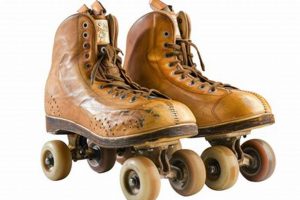
These recreational devices provide a means of mobile enjoyment and physical activity, consisting of a boot or shoe affixed to a chassis with wheels. They facilitate gliding movement across smooth surfaces, offering a blend of exercise and entertainment for individuals of various ages and skill levels. An example of their application can be seen in organized sporting events or casual recreational outings.
The value of these wheeled boots stems from their ability to promote cardiovascular health, enhance balance and coordination, and foster social interaction. Historically, similar wheeled contraptions have existed in various forms, evolving from rudimentary designs to the technologically advanced models available today. They contribute to a healthy lifestyle and provide accessible recreational opportunities for a broad population.
The following sections will delve into the various styles, features, maintenance requirements, and safety considerations associated with these popular items. Understanding these aspects is crucial for selecting the appropriate equipment and ensuring a safe and enjoyable skating experience. Specific topics will include different wheel types, bearing functionalities, and protective gear recommendations.
Guidance for Optimal Use
The following recommendations aim to maximize the lifespan, performance, and safety associated with wheeled footwear. Adherence to these guidelines will contribute to a more satisfying and secure skating experience.
Tip 1: Regular Cleaning and Maintenance: After each use, inspect the chassis, wheels, and bearings for debris. Use a soft cloth to remove dirt and grime. Lubricate bearings periodically with appropriate lubricant to ensure smooth rolling and prevent premature wear.
Tip 2: Proper Wheel Alignment: Verify that all wheels are properly aligned with the chassis. Misalignment can cause uneven wear and reduce stability. Adjust or replace wheels as needed to maintain optimal performance.
Tip 3: Secure Fastening: Before each skating session, ensure that all straps, buckles, and laces are securely fastened. Loose fastenings can compromise stability and increase the risk of falls.
Tip 4: Utilize Protective Gear: Always wear appropriate protective gear, including a helmet, knee pads, elbow pads, and wrist guards. Protective gear significantly reduces the risk of injury in the event of a fall.
Tip 5: Select Suitable Skating Surfaces: Choose smooth, paved surfaces that are free of obstacles and debris. Avoid skating on rough or uneven surfaces, as these can damage the equipment and increase the risk of falls.
Tip 6: Gradual Skill Progression: Advance skills gradually. Attempting complex maneuvers before mastering basic techniques can lead to injuries. Practice in a controlled environment until proficiency is achieved.
Tip 7: Routine Hardware Check: Regularly inspect all bolts, nuts, and screws for tightness. Loose hardware can compromise the structural integrity of the device and increase the risk of accidents. Tighten or replace any loose or missing components.
These tips emphasize the importance of preventative maintenance, proper usage, and prioritizing safety. Consistent application of these guidelines will contribute to the longevity of the equipment and the well-being of the user.
The subsequent section will provide information on selecting the appropriate model based on individual needs and skating style.
1. Durability
Durability, in the context of recreational wheeled footwear, directly influences its lifespan and overall value. The construction materials and design impact the product’s capacity to withstand stress, impacts, and environmental factors encountered during regular use. Substandard materials or faulty construction can lead to premature failure of components such as the boot, chassis, or wheels. This, in turn, necessitates costly repairs or replacement of the entire product. For instance, a chassis made from low-grade plastic is susceptible to cracking under pressure, while poorly constructed boots may suffer from seam separation or material degradation.
The choice of materials significantly affects durability. Polyurethane wheels, known for their abrasion resistance, offer a longer lifespan compared to wheels made from less robust compounds. Similarly, high-quality bearings, properly sealed to prevent contamination, maintain their performance over extended periods. Boots reinforced with durable fabrics and secure stitching contribute to the structural integrity, minimizing wear and tear. Consider the example of two seemingly identical products: the one crafted with premium materials and reinforced stress points will demonstrably outlast its counterpart in active usage scenarios.
Assessing durability is essential for consumers seeking a worthwhile investment. Selecting products constructed from robust materials and featuring reinforced designs reduces the likelihood of premature failure and ensures a longer period of reliable performance. This focus on longevity not only translates to cost savings in the long run but also minimizes the environmental impact associated with frequent replacements. Prioritizing durability promotes both consumer satisfaction and responsible consumption.
2. Maneuverability

Maneuverability, the ability to execute controlled turns and movements with ease, forms a critical component of wheeled boot performance. Several design characteristics directly influence this attribute. The wheelbase, the distance between the front and rear wheels, affects responsiveness. Shorter wheelbases typically provide greater agility, facilitating tighter turns, whereas longer wheelbases enhance stability at higher speeds. Wheel durometer, a measure of hardness, also plays a crucial role. Softer wheels offer increased grip, aiding in controlled cornering, while harder wheels prioritize speed and slide capabilities. Furthermore, frame design and boot articulation contribute to the overall turning radius and responsiveness of the equipment.
Specific use cases highlight the practical importance of maneuverability. In artistic skating disciplines, precise control and nimble footwork are essential for executing complex routines. Similarly, in roller derby, athletes require exceptional agility to navigate the track and evade opponents. Recreational skaters benefit from enhanced maneuverability when navigating crowded pathways or performing basic tricks. As an example, consider two individuals using different equipment. One equipped with a short wheelbase and softer wheels will exhibit greater ease in performing sharp turns and quick stops, while the other, utilizing a longer wheelbase and harder wheels, might demonstrate superior stability at higher velocities but experience difficulty in tighter spaces. Therefore, the desired level of maneuverability should align with the intended application.
Understanding the interplay between design features and maneuverability enables informed decision-making when selecting wheeled boots. Consideration of wheelbase, wheel durometer, and frame design relative to the intended skating style will optimize performance and enjoyment. Selecting equipment ill-suited for a particular activity presents safety risks and impedes skill development. Prioritizing maneuverability contributes to a safer, more efficient, and more satisfying skating experience. Ultimately, the degree to which an individual can precisely control and direct movement directly influences both the potential for advanced maneuvers and the capacity to navigate varied terrains.
3. Wheel Material

The selection of wheel material exerts a significant influence on the performance and longevity of wheeled boots. Its impact spans several critical parameters including grip, speed, durability, and vibration absorption. The material directly determines the user’s control, comfort, and the overall lifespan of the wheels themselves. For instance, polyurethane, a common choice, provides a balance of these characteristics, suitable for various skating styles and surfaces. Conversely, less resilient materials degrade rapidly, diminishing performance and necessitating frequent replacements. This consideration is particularly relevant in products intended for rigorous or prolonged use, where wheel integrity is paramount for safety and efficiency.
Different materials cater to distinct skating needs. Softer compounds deliver superior grip, vital for maneuvers requiring precise control on slick surfaces. These are frequently employed in artistic and recreational models where stability is prioritized. Harder compounds, conversely, minimize rolling resistance, enhancing speed on smooth surfaces. These are favored in speed skating or aggressive skating applications. Examining analogous components like tires on vehicles illustrates the significance of material composition. The wheel material, like the tire compound, determines the interaction between the device and the surface, influencing handling, braking, and wear characteristics. Thus, the correlation between wheel material and intended application is a key determinant of performance.
Ultimately, selecting the appropriate wheel material is crucial for optimizing the skating experience and maximizing the useful life of the wheeled boots. Understanding the trade-offs between grip, speed, and durability enables consumers to make informed decisions aligned with their specific needs and preferences. Neglecting this aspect can lead to diminished performance, increased risk of injury, and accelerated wear. Thus, the material composition of the wheels should be a central consideration in evaluating the suitability and value of such recreational equipment, acknowledging that material choice affects not only performance but safety and long-term usability.
4. Bearing Quality
Bearing quality is intrinsically linked to the performance of wheeled boots. It directly affects the rolling efficiency, speed, and overall smoothness of the skating experience. Inferior bearings introduce friction, impeding wheel rotation and requiring greater exertion from the user. This manifests as reduced speed, increased fatigue, and diminished control. Conversely, high-quality bearings minimize friction, allowing for effortless gliding and enhanced maneuverability. An example of this disparity is evident when comparing models equipped with precision-engineered bearings to those with standard, mass-produced components; the difference in rolling efficiency is immediately noticeable.
Bearing quality is determined by several factors, including the materials used, the precision of manufacturing, and the internal lubrication. High-quality bearings typically employ hardened steel or ceramic components, ensuring durability and resistance to wear. Precision machining minimizes imperfections, reducing friction and maximizing rolling efficiency. Effective lubrication further reduces friction and protects against corrosion. Furthermore, bearing rating systems, such as the ABEC scale, provide a standardized measure of manufacturing tolerances. While ABEC ratings offer a comparative metric, real-world performance also depends on proper maintenance and operating conditions. Consider a scenario where two identical sets of wheels are fitted with different bearings: the set with higher quality, well-lubricated bearings will consistently outperform the other.
Understanding the significance of bearing quality allows consumers to make informed purchasing decisions. Investing in models with superior bearings translates to a more enjoyable and efficient skating experience, reduced fatigue, and enhanced control. Furthermore, proper bearing maintenance, including regular cleaning and lubrication, extends the lifespan of both the bearings and the wheeled boots. While higher quality bearings often command a higher price, the long-term benefits in performance, durability, and user satisfaction justify the investment. Bearing selection represents a critical factor in the overall performance equation, impacting both the casual user’s enjoyment and the competitive athlete’s results.
5. Boot Comfort

Boot comfort is a paramount consideration in the design and selection of recreational wheeled footwear. It directly influences the user’s overall experience, impacting endurance, control, and the potential for injury. A well-designed boot minimizes discomfort, allows for prolonged use, and enhances performance by providing adequate support and reducing friction.
- Anatomical Fit and Support
The anatomical fit of the boot is critical for distributing pressure evenly across the foot. Boots that conform to the natural shape of the foot reduce the likelihood of pressure points, blisters, and discomfort. Adequate arch support is essential for maintaining proper alignment and preventing foot fatigue. A well-structured heel cup provides stability and prevents excessive movement within the boot. For example, custom-molded boots offer a personalized fit, optimizing comfort and performance compared to generic designs.
- Padding and Liner Materials
The materials used in the boot’s padding and liner significantly affect comfort and breathability. High-quality padding cushions the foot and absorbs impact, reducing stress on joints and muscles. Breathable liner materials wick away moisture, preventing sweat build-up and maintaining a comfortable temperature inside the boot. The selection of these materials directly impacts the user’s ability to wear the footwear for extended periods without discomfort. A liner with antimicrobial properties can also help to control odor and prevent the growth of bacteria.
- Ventilation and Temperature Regulation
Proper ventilation is crucial for maintaining a comfortable internal environment within the boot. Ventilation systems allow air to circulate, dissipating heat and moisture. This prevents the foot from overheating and reduces the risk of blisters and fungal infections. Strategically placed vents and breathable materials contribute to effective temperature regulation. Boots designed for warmer climates often incorporate larger ventilation panels to maximize airflow. Conversely, boots intended for colder environments may prioritize insulation to retain heat.
- Closure Systems and Adjustability
The closure system, including laces, buckles, and straps, enables users to customize the fit and adjust the level of support. A secure and adjustable closure system prevents the foot from shifting within the boot, enhancing control and stability. Laces allow for precise adjustments along the length of the foot, while buckles and straps provide quick and easy tightening. The positioning and design of these closures influence the overall comfort and security of the boot. A well-designed closure system distributes pressure evenly, avoiding constriction or discomfort.
The interconnectedness of these facets underscores the importance of prioritizing boot comfort when selecting recreational wheeled footwear. Neglecting this aspect can lead to discomfort, fatigue, and an increased risk of injury. By considering anatomical fit, padding materials, ventilation, and closure systems, users can enhance their skating experience and maximize their enjoyment of the activity. Choosing a model with superior comfort features ultimately contributes to a safer, more efficient, and more pleasurable skating experience.
6. Safety Features
The integration of safety features directly influences the risk mitigation associated with wheeled boot usage. Protective elements mitigate potential injuries arising from falls, collisions, or equipment malfunctions. The absence or inadequacy of these features increases the likelihood of physical harm. For instance, a secure ankle support system reduces the risk of sprains and fractures, while a robust braking mechanism enhances stopping ability, minimizing the chances of collisions. The specific design and effectiveness of these features directly correlate with the user’s safety and control while engaged in the activity.
Protective gear constitutes a critical category of safety features. Helmets provide essential head protection, mitigating the severity of head injuries in the event of a fall. Knee pads and elbow pads shield joints from abrasion and impact forces. Wrist guards offer support and prevent hyperextension of the wrist, reducing the risk of fractures. The utilization of properly fitted and certified protective gear significantly decreases the incidence of injury. Consider the scenario where an individual falls without wearing a helmet; the potential for severe head trauma is substantially elevated compared to an individual wearing a certified helmet.
Compliance with safety standards and regulations is paramount in ensuring product reliability and minimizing risk. Reputable manufacturers adhere to established safety protocols during the design and production phases. Certifications from recognized organizations, such as ASTM International, indicate that the product has undergone rigorous testing and meets specified safety criteria. Consumers should prioritize products that bear these certifications as an assurance of quality and safety. Prioritizing safety features and adherence to established standards enhances user safety and underscores the significance of responsible design and manufacturing practices.
Frequently Asked Questions About Wheeled Boots
The following questions address common inquiries and misconceptions regarding the selection, use, and maintenance of these popular recreational devices. The answers aim to provide clarity and promote informed decision-making.
Question 1: What are the primary factors influencing the performance of wheeled boots?
Performance is influenced by a combination of wheel material, bearing quality, boot fit, and frame design. Wheel material affects grip and speed, bearing quality impacts rolling efficiency, boot fit contributes to comfort and control, and frame design influences maneuverability.
Question 2: How often should bearings be cleaned and lubricated?
Bearing maintenance frequency depends on usage conditions. Under normal circumstances, cleaning and lubrication should occur every 1-2 months. In dusty or wet environments, more frequent maintenance may be necessary to prevent corrosion and maintain optimal performance.
Question 3: What is the significance of wheel durometer?
Wheel durometer measures the hardness of the wheel. Softer wheels (lower durometer numbers) provide greater grip, while harder wheels (higher durometer numbers) offer increased speed. The appropriate durometer depends on the intended skating style and surface conditions.
Question 4: How can the lifespan of wheeled boots be extended?
Lifespan can be extended through regular cleaning, proper lubrication of bearings, secure fastening of straps and buckles, and the avoidance of rough or abrasive surfaces. Routine inspection for wear and tear, followed by timely repairs or replacements, also contributes to longevity.
Question 5: Are there specific safety standards that should be considered when purchasing?
Products bearing certifications from recognized organizations, such as ASTM International, indicate compliance with established safety standards. Consumers should seek these certifications as assurance of product quality and safety.
Question 6: What are the key considerations when selecting protective gear?
Protective gear should fit securely and comfortably, providing adequate coverage and impact protection. Helmets should meet relevant safety standards, and knee pads, elbow pads, and wrist guards should be durable and appropriately sized.
These answers highlight the importance of informed decision-making when engaging with wheeled boots. Understanding these aspects promotes safer, more enjoyable, and more efficient use of the equipment.
The next section will explore advanced techniques and skills development for experienced skaters.
Conclusion
This exploration has elucidated the multifaceted nature of kingdom roller skates, encompassing design elements, performance characteristics, safety protocols, and maintenance practices. The information presented underscores the importance of informed decision-making when selecting and utilizing this equipment. Aspects such as wheel material, bearing quality, boot comfort, and safety features directly impact the user experience and long-term value.
A comprehensive understanding of these principles fosters responsible usage and enhances the potential for safe and enjoyable recreational pursuits. Continued adherence to recommended maintenance procedures and consistent prioritization of safety measures will ensure optimal performance and longevity. The pursuit of knowledge regarding wheeled boot technology is a critical element in maximizing both individual benefit and overall safety within the skating community.
![Rolling Fun: Roller Skate Minnie Mouse Toy [Review] | How to Skateboard: A Beginner's Guide to Your First Board & Tricks](https://cruzskateshop.com/wp-content/uploads/2026/05/th-364-300x200.jpg "Rolling Fun: Roller Skate Minnie Mouse Toy [Review] How to Skateboard: A Beginner's Guide to Your First Board & Tricks")