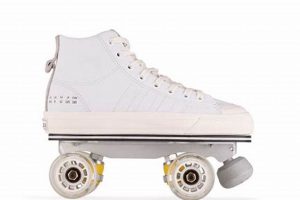
The suitability of wheeled boots designed for gliding across surfaces is directly correlated with developmental stage. Determining when a child is ready for this activity involves assessing their balance, coordination, and decision-making skills. For example, while some four-year-olds may possess the necessary physical capabilities, others may not be ready until they are six or seven.
Introducing children to this recreational pursuit at the appropriate time fosters physical literacy, builds confidence, and encourages an active lifestyle. Historically, advancements in protective gear and skate design have lowered the risk of injury, making it a safer activity for younger participants. The ability to partake contributes to social development through shared experiences with peers.
The subsequent sections will elaborate on key considerations for introducing this activity, including choosing the right type of equipment, understanding safety precautions, and teaching fundamental skating techniques. Emphasis will be placed on creating a positive and encouraging learning environment for successful skill acquisition.
Guidance on Determining Readiness
The following guidelines offer assistance in evaluating whether an individual is prepared to engage in the activity. These recommendations prioritize safety and proper skill development.
Tip 1: Assess Gross Motor Skills: Prior to introducing roller skates, evaluate the child’s ability to perform basic gross motor skills such as walking, running, and jumping. Consistent performance of these activities indicates a foundational level of coordination.
Tip 2: Evaluate Balance and Coordination: Balance is paramount. Observe the child’s ability to stand on one foot for a short duration and maintain balance while shifting weight. Impaired balance indicates a need for further development before attempting to skate.
Tip 3: Consider Cognitive Understanding: Participants must comprehend and adhere to safety rules. Evaluate the child’s capacity to understand and follow instructions related to braking, turning, and avoiding obstacles.
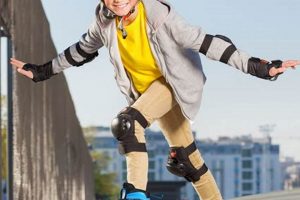
Tip 4: Prioritize Proper Protective Gear: Helmet, knee pads, elbow pads, and wrist guards are essential. Ensure a snug and secure fit for all protective equipment. Protective gear should be regarded as non-negotiable.
Tip 5: Start with Controlled Environments: Introduce skating in a controlled environment, such as a smooth, flat surface free from traffic and obstructions. Gradual progression to more challenging environments is recommended as skills improve.
Tip 6: Supervise Initial Attempts: Close supervision is imperative during the initial learning phase. Provide guidance and support to prevent falls and injuries. Direct instruction is key to developing proper technique.
Tip 7: Focus on Fundamental Skills: Emphasize basic skating techniques such as the “scooter push” and controlled stopping. Mastering these fundamentals provides a solid foundation for more advanced skills.
Adherence to these guidelines promotes a safer and more enjoyable introduction to the activity. Proper preparation and supervision are essential for fostering positive experiences and minimizing the risk of injury.
The subsequent article sections will delve into choosing the appropriate equipment and provide detailed instruction on fundamental skating techniques.
1. Physical maturity

Physical maturity forms a foundational element in determining an appropriate age for roller skates. It represents the degree to which an individual’s musculoskeletal system and neuromuscular control have developed. Insufficient physical development can lead to instability, increased risk of falls, and potential injuries. For example, a very young child lacking the leg strength to maintain an upright posture will struggle to control their movements while skating, regardless of their enthusiasm.
The connection between physical maturity and age for roller skates lies in the developmental milestones that typically occur within specific age ranges. While chronological age provides a general guideline, it is not a definitive indicator. Individual variation in physical development is significant. Therefore, assessment of gross motor skills, balance, and coordination are crucial. A practical application of this understanding is observing a child’s ability to perform activities like hopping, skipping, and balancing on one foot before introducing skates. Successful execution of these tasks suggests a baseline level of physical readiness.
In conclusion, understanding the impact of physical maturity on skating ability is paramount. While age serves as an initial consideration, a comprehensive evaluation of motor skills and physical capabilities is essential. Ignoring physical readiness can result in negative experiences and increased injury risk. Prioritizing physical development ensures a safer and more enjoyable introduction to the activity, fostering skill acquisition and long-term participation.
2. Balance proficiency

Balance proficiency represents a critical determinant in establishing an appropriate age for roller skates. It directly affects an individual’s ability to maintain stability, control movements, and prevent falls while using the equipment. Insufficient balance leads to erratic movements, increased reliance on external support, and a higher probability of injury. For example, an individual lacking adequate balance may experience difficulty maintaining an upright posture, particularly when initiating movement or navigating uneven surfaces, thus increasing the risk of a fall.
The relationship between balance proficiency and readiness for roller skating is causal. Improved balance facilitates smoother transitions, controlled turns, and efficient braking. Children who demonstrate competence in activities that require balance, such as standing on one leg or walking along a line, are more likely to adapt quickly to the demands of skating. Conversely, individuals with poor balance may require extended periods of supervised practice and modified equipment, such as skates with increased stability or the use of training aids. The importance of balance is further underscored by the types of injuries common in skating, which often result from loss of control due to impaired balance.
In conclusion, balance proficiency is a fundamental component of the determination of age for roller skates. Assessing and developing balance before introducing skating is paramount for safety and skill acquisition. Deficiencies in balance should be addressed through targeted exercises and activities before attempting to learn to skate. Prioritizing balance proficiency optimizes the learning process, promotes positive experiences, and minimizes the risk of falls and injuries. Therefore, integrating balance training into introductory skating programs is essential for fostering competence and encouraging long-term participation in the activity.
3. Cognitive understanding

Cognitive understanding serves as a pivotal factor influencing the appropriate age for roller skates. This cognitive capacity encompasses the ability to comprehend and apply safety rules, assess risks, and make sound judgments in dynamic environments. A deficiency in cognitive understanding directly increases the likelihood of accidents and injuries. For example, an individual unable to recognize or react appropriately to hazards, such as approaching obstacles or changes in terrain, poses a significant risk to themselves and others.
The linkage between cognitive understanding and skating proficiency is inextricably tied to safety. A skater must grasp the importance of protective gear, understand the principles of controlled stopping, and be able to anticipate potential dangers. Individuals lacking these cognitive skills are less likely to adhere to safety guidelines, potentially leading to severe consequences. Real-world examples include failing to yield to pedestrians, disregarding traffic signals in designated skating areas, or attempting maneuvers beyond one’s skill level. The practical significance lies in the demonstrable reduction in accidents and injuries when individuals possess adequate cognitive processing capabilities.
In summary, cognitive understanding is an indispensable component in determining an age for roller skates. Its presence enables safe and responsible participation, reducing the likelihood of incidents. Challenges arise in accurately assessing cognitive maturity, as it does not always align with chronological age. However, observation of an individual’s decision-making skills, adherence to instructions, and ability to recognize and respond to potential hazards offers valuable insight. Therefore, evaluating cognitive understanding alongside physical capabilities is crucial for ensuring a safe and enjoyable skating experience.
4. Protective equipment

The implementation of protective equipment is fundamentally intertwined with determining the appropriate age for roller skates. Its purpose extends beyond mere risk mitigation; it facilitates skill development and fosters a sense of security, encouraging active participation.
- Helmet Efficacy
Helmets provide crucial protection against head injuries, including concussions and skull fractures, which are prevalent risks in skating-related accidents. The use of properly fitted helmets significantly reduces the severity of head trauma. For younger individuals, whose motor skills are still developing, helmets are essential for mitigating potential damage from falls and collisions.
- Joint Protection with Pads
Knee pads, elbow pads, and wrist guards safeguard vulnerable joints from abrasions, contusions, and fractures. These pads distribute impact forces, reducing the risk of injury during falls. The incorporation of these protective measures allows younger skaters to practice without the constant fear of severe joint trauma, thereby enhancing learning and skill acquisition.
- Proper Fit and Functionality
The efficacy of protective equipment is contingent upon proper fit and functionality. Ill-fitting equipment provides inadequate protection, increasing the risk of injury. Prior to engaging in skating activities, parents or guardians should ensure that helmets fit securely and pads are appropriately sized. Routine inspection for wear and tear is also necessary to maintain optimal protective capabilities.
- Psychological Impact
Protective gear also has a notable psychological effect. By providing a sense of security, protective gear empowers skaters to take risks and explore their abilities without undue apprehension. This confidence encourages skill development and fosters a more positive skating experience, particularly for younger learners who may be hesitant to attempt new maneuvers without adequate protection.
The strategic use of protective equipment, including helmets and joint pads, greatly influences the suitability of roller skates for individuals across various stages of development. Promoting and implementing appropriate protective measures is thus imperative for the safety and well-being of all participants, irrespective of age. Prioritizing protective measures promotes the safety and enjoyment of skating.
5. Supervised practice

Supervised practice is a critical element in safely introducing roller skates, directly influencing the appropriateness of participation at various developmental stages. The guidance and oversight afforded during this period mitigate risks, foster skill development, and ensure adherence to safety protocols.
- Skill Acquisition and Technique Correction
Supervised practice allows for real-time correction of improper techniques. A trained instructor or experienced adult can identify and address errors in posture, balance, and movement, preventing the development of bad habits that could lead to injuries. For example, a young skater consistently leaning too far forward can be guided to maintain a more upright stance, improving stability and control.
- Gradual Progression of Challenges
Supervision facilitates a gradual increase in the complexity of skating tasks. Introducing more challenging maneuvers only after mastering basic skills minimizes the risk of overexertion and potential injuries. A child who has successfully mastered forward skating and controlled stopping on a flat surface, under supervision, may then be introduced to gentle inclines or basic turning techniques.
- Enforcement of Safety Rules and Awareness
Supervised practice ensures strict adherence to safety rules and promotes heightened awareness of surroundings. An adult supervisor can reinforce the importance of wearing protective gear, avoiding obstacles, and maintaining a safe distance from other skaters. This proactive approach fosters a sense of responsibility and minimizes the likelihood of accidents stemming from negligence or recklessness.
- Adaptation to Individual Needs and Abilities
Supervision allows for individualized instruction tailored to the skater’s specific needs and abilities. An experienced observer can identify areas where a child may be struggling and provide targeted support and encouragement. A skater who exhibits difficulty with balance, for example, may benefit from additional exercises designed to improve core strength and stability, while a more confident skater may be challenged with more advanced techniques.
The facets of supervised practice significantly influence the determination of age for roller skates, emphasizing that mere chronological age is insufficient. Effective supervision enables individuals, regardless of age, to develop the necessary skills and judgment to engage in the activity safely. The absence of appropriate supervision negates the benefits of protective gear and proper equipment, increasing the likelihood of accidents. Therefore, integrating supervised practice into introductory skating programs promotes a safe, positive, and effective learning environment.
6. Controlled environment
The provision of a controlled environment exerts a significant influence on determining the appropriate age for roller skates. This environment minimizes potential hazards, allowing beginners, particularly younger individuals, to focus on developing fundamental skills without undue risk. A controlled environment is not simply a physical space; it encompasses the deliberate manipulation of variables to enhance safety and promote effective learning. The absence of such control directly increases the likelihood of accidents, irrespective of protective gear or skill level. For instance, introducing a novice skater to a crowded public park, replete with uneven surfaces and unpredictable pedestrian traffic, drastically elevates the potential for collisions and injuries.
The specific attributes of a controlled environment are crucial for optimal outcomes. These include a smooth, level skating surface free from obstructions such as cracks, debris, or standing water. Adequate lighting is also essential, particularly during evening hours, to ensure visibility and prevent misjudgments. The presence of boundaries, such as cones or designated lanes, can further delineate the skating area and minimize interaction with external hazards. Practical examples encompass indoor skating rinks, gymnasium floors, or designated sections of paved bike paths reserved for introductory skating instruction. The creation of such environments necessitates careful planning and ongoing maintenance to ensure continued safety and suitability for beginner skaters. Furthermore, the establishment of clear rules and regulations within the controlled environment, coupled with consistent enforcement, reinforces safe skating practices.
In summary, the establishment and maintenance of a controlled environment are indispensable components of responsible introduction to roller skates, particularly in relation to age. It directly mitigates risks, facilitates skill acquisition, and promotes safe skating habits. While the precise characteristics of a controlled environment may vary depending on the individual’s skill level and the specific setting, the overarching principle remains constant: the deliberate reduction of hazards to create a safer and more conducive learning environment. The integration of this principle into skating instruction is paramount for fostering positive experiences and minimizing the potential for injury, ultimately allowing for earlier and more successful introduction to the activity.
7. Skill progression

Skill progression constitutes an integral facet of determining an appropriate age for roller skates. It represents a structured, sequential approach to skill acquisition, beginning with fundamental techniques and gradually advancing to more complex maneuvers. The absence of a well-defined skill progression can lead to premature attempts at advanced techniques, resulting in increased risk of falls, injuries, and the development of improper skating habits. An example of this is a child attempting advanced turns or jumps before mastering basic balance and controlled stopping. Such actions elevate the potential for severe injury.
The implementation of a structured skill progression directly addresses safety concerns. By emphasizing mastery of foundational skills before progressing, the individual develops the necessary neuromuscular control and confidence to handle increasingly challenging situations. For example, introducing a child to forward skating and controlled stops before attempting backward skating or ramp maneuvers ensures that they possess the requisite balance, coordination, and judgment to navigate these more demanding tasks. This systematic approach not only minimizes the risk of injury but also fosters a more enjoyable and rewarding learning experience. Furthermore, recognizing plateaus or difficulties within the progression allows for targeted intervention and individualized instruction, optimizing the learning process.
In summary, skill progression is a critical component in determining a suitable age for roller skates. It reduces the risk of injury by ensuring that the individual possesses the necessary skills and physical capabilities before advancing to more challenging maneuvers. This approach also optimizes learning by fostering confidence and preventing the development of bad habits. Ignoring skill progression leads to a higher likelihood of accidents, while adhering to a structured and sequential approach maximizes safety, enjoyment, and long-term participation in the activity. The challenges involve objectively assessing skill levels and tailoring instruction to individual needs, but the benefits of a well-defined progression far outweigh the difficulties.
Frequently Asked Questions Regarding Age for Roller Skates
The following addresses common queries and concerns surrounding the appropriate introduction of roller skates, focusing on factors beyond mere chronological age.
Question 1: What constitutes the minimum chronological age for engaging in roller skating activities?
While no universally mandated minimum exists, most children exhibit the requisite motor skills, balance, and cognitive understanding between the ages of four and six. However, individual assessment remains paramount, irrespective of age.
Question 2: How does physical maturity factor into determining readiness for roller skates?
Adequate muscle strength and neuromuscular control are essential for maintaining stability and preventing falls. Evaluate the individual’s ability to perform basic gross motor skills before introducing roller skates.
Question 3: What level of balance proficiency is necessary before attempting roller skating?
Individuals should demonstrate the ability to stand on one foot for a short duration and maintain balance while shifting weight. Impaired balance necessitates targeted exercises and activities before attempting to skate.
Question 4: Why is cognitive understanding a critical consideration when introducing roller skates?
Participants must comprehend and adhere to safety rules, assess risks, and make sound judgments. A deficiency in cognitive understanding significantly increases the likelihood of accidents and injuries.
Question 5: What protective equipment is essential, and why is proper fit crucial?
Helmets, knee pads, elbow pads, and wrist guards are mandatory. Ill-fitting equipment provides inadequate protection, increasing the risk of injury. Ensure a snug and secure fit for all protective equipment.
Question 6: How important is supervised practice, and what does it entail?
Close supervision is imperative during the initial learning phase. Provide guidance, support, and real-time correction of improper techniques to prevent falls and injuries. Supervision also involves gradual progression of challenges.
In summary, determining readiness for roller skates involves a holistic assessment of physical maturity, balance proficiency, cognitive understanding, and the availability of proper protective equipment and supervised practice. Prioritizing these factors ensures a safer and more enjoyable introduction to the activity.
The following section will provide detailed guidance on choosing appropriate roller skate equipment.
Age for Roller Skates
This exploration has emphasized that determining an appropriate age for roller skates transcends simple chronological benchmarks. Physical maturity, balance proficiency, cognitive understanding, consistent use of protective equipment, and the presence of supervised practice within a controlled environment are paramount. Prioritization of these factors, assessed individually, ensures a safer and more effective introduction to the activity. These considerations are not merely guidelines; they are essential for responsible engagement.
Continued diligence in evaluating individual readiness and fostering a supportive learning environment will contribute to positive experiences and minimize the potential for injury. The integration of these principles into educational programs and parental oversight is crucial for promoting safe and responsible participation in roller skating activities. Diligent adherence to these precepts fosters both enjoyment and long-term engagement with this recreational pursuit.