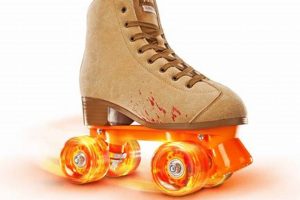
Components facilitating smooth wheel rotation are critical to roller skate performance. These elements, typically small and circular, reside within the wheel hub, minimizing friction and enabling efficient movement. Selection of these components can significantly impact a skater’s speed, control, and overall skating experience.
Quality in these rotational aids translates to enhanced glide, reduced energy expenditure, and improved longevity of the skates. Historically, advancements in materials and manufacturing processes have led to increasingly refined designs, offering superior performance compared to older models. Choosing appropriately maximizes enjoyment and effectiveness, whether for recreational skating, competitive speed skating, or artistic expression.
Therefore, a comprehensive examination of various bearing types, materials, ABEC ratings, maintenance practices, and application-specific considerations will be presented. This analysis provides a foundation for informed decision-making when selecting components for optimal roller skate functionality.
Selecting Optimal Roller Skate Bearings
Selecting the right bearing can significantly influence skating performance and enjoyment. Below are several key considerations to ensure informed decision-making.
Tip 1: Understand ABEC Ratings: The Annular Bearing Engineering Committee (ABEC) scale (ranging from 1 to 9, with odd numbers only) indicates manufacturing tolerances. Higher ABEC ratings suggest tighter tolerances, which theoretically result in greater precision and speed. However, ABEC rating is not always directly correlated with performance in skating. Consider other factors, such as material and lubricant.
Tip 2: Consider Material Composition: Bearings are typically constructed from steel or ceramic. Steel bearings are more common and provide a balance of durability and affordability. Ceramic bearings are lighter, generate less friction, and are more resistant to heat. Ceramic options often command a higher price point but can offer superior performance in competitive settings.
Tip 3: Prioritize Lubrication: Proper lubrication is essential for maintaining bearing functionality. Oil-based lubricants offer lower friction, while grease-based lubricants provide greater protection against contaminants. Select a lubricant appropriate for the intended skating environment and frequency of use.
Tip 4: Inspect for Sealed or Shielded Designs: Sealed bearings offer superior protection against dirt and moisture, extending bearing life in outdoor environments. Shielded bearings provide some protection but are easier to clean and lubricate. Evaluate the skating conditions to determine the optimal level of protection.
Tip 5: Regularly Clean and Maintain: Routine cleaning and lubrication are crucial for preserving bearing performance. Remove debris and old lubricant using a solvent specifically designed for bearing cleaning. Re-lubricate after cleaning to ensure smooth operation.
Tip 6: Match Bearings to Skating Style: Aggressive skaters may prioritize durability and impact resistance, while speed skaters may focus on minimal friction and weight. Select a bearing that aligns with the demands of the specific skating discipline.
These considerations can help skaters of all levels make informed decisions about bearing selection. Choosing appropriately results in improved performance, increased longevity, and a more enjoyable skating experience.
The subsequent sections will delve deeper into the specifics of bearing types and the implications for roller skate maintenance.
1. Material Composition
The material composition of a bearing directly influences its performance and longevity within roller skates. Bearings are commonly constructed from steel or ceramic materials, each presenting distinct advantages and disadvantages that impact the overall skating experience. Steel bearings, typically manufactured from stainless or chrome steel, offer a robust and cost-effective solution. Their inherent durability withstands significant stress and impact, making them suitable for a variety of skating styles, including recreational and aggressive skating. For example, a skater performing jumps and grinds subjects bearings to considerable force; steel bearings are more resistant to deformation or fracture under such conditions.
Ceramic bearings, on the other hand, utilize silicon nitride or zirconium dioxide. These materials exhibit lower friction coefficients and greater hardness than steel. The reduced friction translates to increased speed and efficiency, making them advantageous in speed skating or long-distance applications. Furthermore, ceramic materials are non-corrosive and generate less heat during operation. As a practical example, competitive speed skaters often prefer ceramic bearings because the reduced rolling resistance allows them to maintain higher velocities with less energy expenditure. However, ceramic bearings are generally more expensive and may be more susceptible to damage from impacts compared to steel bearings.
Ultimately, the selection of bearing material hinges on the skater’s specific needs and priorities. Steel bearings offer a balance of durability and affordability, while ceramic bearings prioritize performance and efficiency. Understanding the properties of these materials is crucial for selecting a suitable bearing that optimizes roller skate functionality and ensures a prolonged lifespan. Moreover, correct maintenance aligned with the bearing’s material can significantly extend the service life.
2. ABEC rating implications

The Annular Bearing Engineering Committee (ABEC) rating is a common specification found when evaluating roller skate bearings. This rating system aims to define the manufacturing tolerances of a bearing. While often cited as a key indicator of performance, its relevance in determining the “best bearings for roller skates” requires careful consideration.
- Precision and Tolerance
The ABEC scale, ranging from 1 to 9 (with odd numbers only), specifies the dimensional tolerances of a bearing. A higher ABEC rating indicates tighter tolerances, meaning the bearing’s components are manufactured with greater precision. It is often presumed that bearings with tighter tolerances offer reduced friction and increased speed.
- Real-World Performance Considerations
While ABEC ratings reflect manufacturing precision, factors such as material quality, lubrication, and bearing design can significantly impact performance in roller skates. A lower-rated bearing made with high-quality materials and appropriate lubrication may outperform a higher-rated bearing of inferior construction.
- Application-Specific Relevance
The importance of ABEC rating varies based on skating discipline. For applications demanding high precision and speed, such as speed skating, tighter tolerances may offer a marginal advantage. However, for recreational or aggressive skating, the increased durability and impact resistance of lower-rated bearings may be more beneficial.
- Marketing and Misconceptions
The ABEC rating is often used as a marketing tool, leading to misconceptions about its direct correlation with bearing quality and performance. It is crucial to recognize that ABEC rating is only one of several factors influencing bearing performance and should not be the sole determinant in selecting the “best bearings for roller skates.”
In conclusion, the ABEC rating provides information about the manufacturing precision of a bearing. However, its significance in selecting optimal roller skate bearings is context-dependent. Material quality, lubrication effectiveness, skating style, and maintenance practices are equally, if not more, critical factors that contribute to overall bearing performance and longevity.
3. Lubrication effectiveness

Lubrication effectiveness is a critical determinant of bearing performance and longevity in roller skates. Proper lubrication minimizes friction, dissipates heat, and protects against contaminants, thereby influencing the overall efficiency and lifespan of the rotational component.
- Friction Reduction
Effective lubrication reduces direct contact between bearing components, thereby minimizing friction. The coefficient of friction directly impacts the rolling resistance of the bearing, influencing the ease and speed with which a skater can move. Inadequate lubrication increases friction, leading to slower speeds, increased energy expenditure, and accelerated wear. For instance, a dry bearing can exhibit significantly higher friction compared to a properly lubricated one, resulting in a noticeable decrease in skating efficiency.
- Heat Dissipation
Friction generates heat within bearings. Effective lubrication facilitates heat dissipation, preventing overheating and potential damage to bearing components. Excessive heat can alter the metallurgical properties of steel bearings and degrade ceramic components, leading to premature failure. An example is the sustained high-speed skating, where bearings without adequate lubrication are prone to overheating, potentially causing irreversible damage.
- Contaminant Protection
Lubricants form a barrier against the ingress of contaminants such as dirt, dust, and moisture. These contaminants can abrade bearing surfaces, increasing friction and accelerating wear. Effective lubrication seals the bearing, minimizing the risk of contamination and extending its operational life. For example, outdoor skating exposes bearings to a variety of contaminants. A high-viscosity lubricant provides a more effective barrier than a low-viscosity option.
- Lubricant Type and Viscosity
The selection of lubricant type (oil-based or grease-based) and viscosity significantly impacts its effectiveness. Oil-based lubricants generally offer lower friction but provide less protection against contaminants. Grease-based lubricants offer greater protection but may increase rolling resistance. Viscosity determines the lubricant’s ability to maintain a film between bearing components. Selecting an appropriate lubricant based on skating conditions and bearing design is crucial for maximizing lubrication effectiveness.
In summary, lubrication effectiveness directly contributes to optimal bearing performance. Proper lubrication not only enhances speed and efficiency but also extends the lifespan of the bearings by minimizing friction, dissipating heat, and protecting against contaminants. Selection of the correct lubricant type and viscosity, coupled with regular maintenance, is essential for achieving optimal performance and realizing the full potential of the bearings. Therefore, understanding lubrication effectiveness is paramount in selecting the “best bearings for roller skates.”
4. Sealed vs. shielded design

The choice between sealed and shielded bearing designs profoundly impacts the performance and maintenance requirements of roller skates. The “best bearings for roller skates” are often determined by the environment and intensity of use, making the seal or shield a critical consideration.
- Contamination Protection
Sealed bearings offer superior protection against contaminants such as dirt, dust, and moisture. A rubber or synthetic seal creates a tight barrier, preventing particles from entering the bearing and causing abrasion. This is particularly advantageous in outdoor skating environments or areas with high levels of airborne debris. Shielded bearings, in contrast, use a metal or plastic shield that provides a less complete barrier, allowing for easier access for cleaning and lubrication. However, this design offers reduced protection against contamination. For example, a skater frequently skating on sandy surfaces would benefit more from sealed bearings, minimizing the intrusion of abrasive particles.
- Maintenance Accessibility
Shielded bearings are designed for easier maintenance, allowing skaters to remove the shields and access the internal components for cleaning and lubrication. This accessibility enables thorough maintenance, removing accumulated debris and refreshing the lubricant to maintain optimal performance. Sealed bearings, while offering better protection, are more difficult to clean as the seals are not typically designed for repeated removal and reinstallation. Attempting to remove the seals can damage them, compromising their protective function. This is relevant for competitive skaters who meticulously maintain their equipment for peak performance. They might prefer shielded designs despite the increased risk of contamination.
- Friction Considerations
Sealed bearings may exhibit slightly higher friction compared to shielded bearings, particularly when new. The seal creates additional contact, increasing rolling resistance. However, high-quality sealed bearings are designed to minimize this effect through the use of low-friction seal materials and precise manufacturing tolerances. Shielded bearings, with their reduced contact, may offer lower initial friction. The long-term friction performance depends heavily on proper maintenance and the degree of contamination. A contaminated shielded bearing will exhibit significantly higher friction than a clean, sealed bearing. Thus, consistent upkeep is vital.
- Application-Specific Suitability
The optimal choice between sealed and shielded bearings depends on the intended skating application. Sealed bearings are well-suited for recreational skaters, outdoor enthusiasts, or those who prioritize low maintenance. The enhanced protection minimizes the need for frequent cleaning and lubrication. Shielded bearings are favored by competitive skaters, aggressive skaters, or those who prioritize customization and meticulous maintenance. The accessibility allows for fine-tuning and optimization of bearing performance. This distinction highlights that the “best bearings for roller skates” are best evaluated in the context of skating style and environment.
In conclusion, the selection between sealed and shielded bearings is a trade-off between protection and maintenance accessibility. The “best bearings for roller skates” in a given situation depend on the skater’s priorities, skating environment, and maintenance habits. While sealed designs offer superior protection and reduced maintenance, shielded designs provide easier access for cleaning and lubrication. Considering these factors ensures an informed decision and optimizes skating performance.
5. Maintenance requirements

Bearing upkeep significantly affects performance and longevity. Selecting appropriate components necessitates an understanding of the required maintenance practices. Neglecting maintenance accelerates wear, diminishing performance and potentially leading to premature failure. Thus, maintenance demands directly influence the determination of optimal bearing choices.
- Cleaning Frequency and Procedures
Bearings accumulate dirt, debris, and degraded lubricant, necessitating periodic cleaning. Frequency depends on skating environment and usage intensity. Shielded bearings often allow for easier cleaning due to removable shields. Sealed bearings, while offering superior protection, present cleaning challenges. Improper cleaning techniques, such as using harsh solvents, can damage bearing components. Selecting bearings aligned with one’s willingness to perform regular, correct cleaning is paramount. For example, a skater frequently exposed to sandy conditions should either opt for bearings that are easily cleaned, or be prepared to replace bearings more often, regardless of their initial quality or performance specifications.
- Lubrication Intervals and Methods
Lubrication minimizes friction, dissipates heat, and protects against corrosion. Relubrication intervals depend on lubricant type and skating conditions. Oil-based lubricants typically require more frequent application than grease-based lubricants. Proper lubrication techniques ensure even distribution without over-lubrication, which attracts debris. Neglecting lubrication leads to increased friction, heat buildup, and accelerated wear. Skaters need to weigh the trade-off between lower friction with oils requiring more frequent reapplication and less frequent but potentially higher friction greases. The optimal bearing selection should correspond to a skater’s planned lubrication schedule.
- Inspection and Replacement Indicators
Routine inspection helps identify signs of wear, such as roughness, noise, or excessive play. Identifying these indicators enables timely replacement, preventing catastrophic failure and potential injuries. Bearings exhibiting these symptoms should be replaced immediately, regardless of their initial cost or perceived quality. Regular inspection, especially following exposure to harsh conditions, is an important aspect of maintenance. The ability to easily inspect components influences the choice of shielded versus sealed designs.
- Tool Requirements and Skill Level
Proper bearing maintenance necessitates specialized tools such as bearing presses, cleaning solvents, and lubrication applicators. Performing these tasks requires a certain level of mechanical skill and understanding. Improper handling can damage bearings, negating any potential benefits. Skaters lacking the necessary tools or expertise should consider selecting bearings that require minimal maintenance or seek professional assistance. The complexity of required tools should be a factor when determining “best bearings for roller skates” for skaters without prior mechanical experience.
In conclusion, maintenance demands are intrinsically linked to the selection of optimal bearing components. Bearings requiring frequent or complex maintenance may not be suitable for all skaters. The “best bearings for roller skates” are those that align with the skater’s willingness and ability to perform necessary upkeep, ensuring prolonged performance and minimizing the risk of failure. Recognizing this interconnection promotes informed decision-making and enhances the overall skating experience.
6. Skating style compatibility

The demands placed upon roller skate bearings vary significantly depending on the specific skating discipline. Selecting appropriate components requires careful consideration of the forces, speeds, and environmental conditions inherent to each skating style. Therefore, skating style compatibility is a crucial determinant in identifying components optimized for a particular application.
- Aggressive Skating
This style involves high-impact maneuvers such as jumps, grinds, and slides. Bearings in aggressive skates are subjected to considerable stress and shock loads. Durability and impact resistance are paramount. Steel bearings with robust construction and secure shields are generally preferred. For example, bearings used in aggressive skates require the ability to withstand repeated impacts from landing jumps on hard surfaces. High ABEC ratings are typically less critical than overall structural integrity. Failure to use appropriate components can lead to rapid degradation and potential safety hazards.
- Speed Skating
Speed skating prioritizes minimal rolling resistance and maximum velocity. Bearings in speed skates must facilitate smooth, efficient rotation at high speeds. Ceramic bearings, with their lower friction coefficients, are often favored for this application. Lubrication is critical, and meticulous maintenance is essential. Shielded bearings that allow for easy cleaning and relubrication are commonly used. An example is the utilization of low-viscosity oil to minimize drag during races. Bearings optimized for speed skating may not withstand the impact forces encountered in other skating styles. Attention to maintenance is paramount.
- Artistic Skating
Artistic skating combines elements of dance, gymnastics, and skating, demanding precision, control, and fluid movement. Bearings in artistic skates must provide a balance of speed, responsiveness, and durability. Steel or hybrid ceramic bearings with moderate ABEC ratings are often suitable. The optimal choice depends on the specific routines and individual preferences. Consider routines involving intricate footwork and jumps, where responsiveness and control are critical. Bearings must provide a predictable and consistent feel. Overly high ABEC ratings may result in excessive speed, compromising control.
- Recreational Skating
Recreational skating encompasses a wide range of activities, from casual strolls to fitness skating. Bearings in recreational skates should offer a balance of performance, durability, and affordability. Steel bearings with moderate ABEC ratings are typically adequate. Sealed bearings that require minimal maintenance are often preferred for convenience. An example is casual skating on paved trails. Here, durability and ease of maintenance are more important than maximizing speed. Selecting overly specialized or expensive bearings is generally unnecessary. A focus on value and longevity is appropriate.
Consideration of skating style compatibility is essential for selecting optimal bearing components. The demands placed upon bearings vary significantly across different disciplines. Understanding these demands allows skaters to prioritize specific characteristics such as durability, speed, or maintenance requirements. By aligning bearing selection with the intended skating style, performance is enhanced, longevity is maximized, and overall skating satisfaction is improved. The “best bearings for roller skates” are thus defined by their suitability for a particular application.
7. Durability expectations
The anticipated lifespan of roller skate bearings is a crucial factor in determining the most suitable components for a given application. Durability expectations, influenced by skating style, frequency of use, and environmental conditions, dictate the required robustness and resistance to wear of the bearings. Selecting appropriately ensures sustained performance and minimizes the need for frequent replacements.
- Material Composition and Hardness
Bearing material directly affects durability. Steel bearings, particularly those crafted from high-carbon steel alloys, offer excellent resistance to deformation and fracture. Ceramic bearings, while possessing superior hardness, can be more brittle under impact. Hardness, measured by scales such as Rockwell C, indicates a material’s resistance to indentation. Higher hardness values generally correlate with increased wear resistance. An aggressive skater performing frequent jumps and grinds would likely benefit from the increased durability of high-carbon steel bearings, even if they do not offer the same low-friction properties as ceramic alternatives. A bearing failing prematurely due to material inadequacy negates any potential performance advantages.
- Seal Integrity and Contamination Resistance
The effectiveness of bearing seals significantly influences lifespan. Sealed bearings provide superior protection against the ingress of contaminants, such as dirt, dust, and moisture, which accelerate wear. Seal materials, such as rubber or synthetic polymers, must maintain their integrity over time to prevent contaminant intrusion. The absence of effective seals allows abrasive particles to damage bearing surfaces, increasing friction and reducing operational life. In environments with high levels of airborne particulates, sealed bearings are essential for maintaining durability. Shielded bearings, while offering lower initial friction, are more vulnerable to contamination and require more frequent maintenance to achieve comparable longevity.
- Lubrication Effectiveness and Film Strength
Lubrication is essential for minimizing friction and dissipating heat, both of which contribute to bearing wear. The lubricant must possess sufficient film strength to maintain a separating layer between bearing surfaces under load. Inadequate lubrication leads to increased friction, heat buildup, and accelerated degradation. The type of lubricant (oil-based or grease-based) and its viscosity influence its effectiveness. High-viscosity lubricants generally offer greater protection against wear but may increase rolling resistance. A skater engaging in prolonged high-speed skating requires a lubricant with sufficient film strength to prevent metal-on-metal contact. Conversely, a skater using a low-viscosity lubricant focused on maximizing glide may sacrifice some durability for short-term gains.
- Load Capacity and Fatigue Life
Bearing load capacity dictates the maximum load that a bearing can withstand without permanent deformation. Fatigue life refers to the number of revolutions a bearing can endure before failure due to fatigue. Exceeding the load capacity or operating beyond the fatigue life significantly reduces bearing lifespan. Dynamic load rating (C) and static load rating (C0) are common metrics used to quantify load capacity. Selecting bearings with appropriate load ratings is critical for applications involving high loads or repetitive stress. Aggressive skaters, who frequently subject bearings to high-impact forces, require bearings with higher load capacities to prevent premature failure. Choosing under-specified bearings may result in deformation, increased friction, and eventual breakdown, regardless of other performance characteristics.
Consequently, durability expectations are inextricably linked to the choice of “best bearings for roller skates.” Understanding the interplay between material composition, seal integrity, lubrication effectiveness, and load capacity enables skaters to select components that align with their specific needs and skating style. A balanced consideration of these factors ensures both sustained performance and minimizes the long-term costs associated with bearing replacement. Selecting for durability ensures the chosen bearings will reliably perform their role and provides a more fulfilling skating experience.
Frequently Asked Questions
The following section addresses common inquiries related to roller skate bearings, providing clarity on key aspects of selection, maintenance, and performance.
Question 1: What is the significance of the ABEC rating in roller skate bearings?
The Annular Bearing Engineering Committee (ABEC) rating indicates the manufacturing tolerances of a bearing. Higher ABEC ratings denote tighter tolerances, potentially translating to greater precision and speed. However, factors such as material quality, lubrication, and application can outweigh the importance of ABEC rating alone.
Question 2: How frequently should roller skate bearings be cleaned and lubricated?
Cleaning and lubrication frequency depend on usage intensity and environmental conditions. Bearings exposed to dirt, dust, or moisture require more frequent maintenance. A visual inspection should guide cleaning and lubrication schedules. Neglecting this maintenance can lead to decreased performance and accelerated wear.
Question 3: What are the differences between sealed and shielded bearings, and which is preferable?
Sealed bearings offer greater protection against contaminants, while shielded bearings allow for easier cleaning and lubrication. The optimal choice depends on the skater’s priorities and skating environment. Sealed designs are well-suited for recreational skaters. Shielded options are favored by those who perform meticulous maintenance.
Question 4: What type of lubricant is most suitable for roller skate bearings?
Both oil-based and grease-based lubricants are used in roller skate bearings. Oil-based lubricants generally offer lower friction but require more frequent application. Grease-based lubricants provide greater protection against contaminants but may increase rolling resistance. The optimal choice depends on skating conditions and maintenance preferences.
Question 5: Can roller skate bearings be over-lubricated?
Yes, over-lubrication can attract dirt and debris, negating the benefits of lubrication. Applying a thin, even coat of lubricant is optimal. Excess lubricant should be wiped away to prevent the accumulation of contaminants.
Question 6: How can the lifespan of roller skate bearings be extended?
Regular cleaning, proper lubrication, avoiding harsh environments, and selecting bearings appropriate for the skating style contribute to extended bearing life. Routine inspection for signs of wear enables timely replacement, preventing catastrophic failures.
These FAQs aim to provide a foundational understanding of bearing-related concerns. By addressing these questions, skaters can make more informed decisions regarding bearing selection and maintenance.
The following section transitions into a concluding summary.
Concluding Remarks on Roller Skate Bearings
This exploration has traversed the multifaceted landscape of roller skate bearing selection, emphasizing the interplay between material composition, ABEC ratings, lubrication effectiveness, design considerations, maintenance protocols, skating style compatibility, and durability expectations. Determining optimal choices necessitates a holistic understanding of these interconnected factors. A superficial assessment of any single attribute, such as ABEC rating, is insufficient for achieving sustained performance and reliability.
Prudent selection, guided by informed decision-making, yields enhanced performance, extended longevity, and a more fulfilling skating experience. Continued diligence in maintenance and awareness of technological advancements in bearing design will further optimize roller skate functionality. The pursuit of excellence in skating requires an unwavering commitment to the foundational elements that underpin performance, with bearing selection serving as a critical juncture.