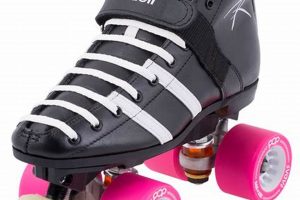
The foundational structure that connects the wheels to the boot in a roller skate is a critical component. This framework, typically constructed from metal or reinforced nylon, dictates the skate’s maneuverability and responsiveness. For example, a longer framework often provides increased stability, while a shorter one facilitates quicker turns.
The design and materials used in this element significantly impact a skater’s performance and comfort. Historically, these components were simple, heavy pieces. Modern iterations utilize lighter materials and sophisticated geometries to enhance speed, agility, and shock absorption. This evolution has broadened the range of skating disciplines possible, from recreational use to competitive artistic and speed skating.
The following sections will delve into the different types available, their adjustment mechanisms, common materials, and considerations for choosing the right one to match specific skating styles and skill levels. This detailed exploration will empower skaters to make informed decisions regarding their equipment.
Roller Skate Plate
Proper selection and maintenance of this foundational element are crucial for optimal skating performance and safety. The following tips provide guidance on maximizing the lifespan and functionality of this essential skate component.
Tip 1: Material Selection: Evaluate material properties based on skating style. Aluminum alloys offer a balance of strength and weight for recreational and artistic skating. For aggressive or derby skating, steel or reinforced nylon may provide greater durability.
Tip 2: Mounting Precision: Ensure accurate mounting to the boot. Misalignment can lead to uneven wear on wheels, reduced maneuverability, and potential instability. Professional installation is recommended for complex or high-performance setups.
Tip 3: Kingpin Adjustment: Understand the impact of kingpin tension. Loosening the kingpin increases turning sensitivity, while tightening it enhances stability. Experiment to find the optimal setting for the skater’s skill level and skating environment.
Tip 4: Cushion (Bushing) Durometer: Choose cushions appropriate for the skater’s weight and desired level of responsiveness. Softer cushions provide more maneuverability but less stability. Harder cushions offer greater stability at higher speeds.
Tip 5: Regular Inspection: Conduct routine inspections for signs of wear, cracks, or loose hardware. Promptly address any issues to prevent potential failures during skating. Pay close attention to the pivot cups and kingpin threads.
Tip 6: Hardware Maintenance: Lubricate pivot cups and kingpins periodically to maintain smooth operation and prevent corrosion. Use a suitable lubricant specifically designed for skating equipment.
Tip 7: Axle Nut Tightness: Verify that axle nuts are securely tightened to prevent wheel wobble and potential axle damage. However, avoid over-tightening, which can restrict wheel rotation and damage bearings.
Optimizing these factors contributes to a more enjoyable and safer skating experience. Regular attention to these details will extend the life of the equipment and enhance performance.
The subsequent sections will explore specific troubleshooting techniques and advanced adjustment strategies for this crucial component.
1. Mounting Base Material

The mounting base material is a critical determinant of a roller skate plate’s performance and longevity. This material directly affects the plate’s weight, strength, vibration dampening characteristics, and resistance to corrosion. For example, a plate constructed from aircraft-grade aluminum offers a superior strength-to-weight ratio compared to one made from stamped steel, resulting in improved responsiveness and reduced skater fatigue. The choice of material also dictates the plate’s ability to withstand the stresses of various skating styles, from recreational gliding to high-impact derby or aggressive skating. Consequently, understanding the properties of different mounting base materials is essential for selecting a plate that aligns with specific skating needs.
Different materials are suited for different applications. Reinforced nylon composites offer a lightweight and cost-effective alternative, particularly for recreational skaters. However, these materials may lack the rigidity and durability required for more demanding disciplines. High-end plates often employ advanced alloys or even titanium to maximize performance. The material composition also affects the plate’s ability to transmit or absorb vibrations. Aluminum tends to transmit more road vibration than composite materials, potentially leading to increased fatigue on longer skating sessions. This is especially pertinent in outdoor skating environments with rougher surfaces. The process of manufacturing will also affect the overall strength of the plate and the final outcome. Manufacturing processes like forging or CNC milling contribute to a stronger, more consistent end product.
Ultimately, the selection of the mounting base material represents a trade-off between weight, strength, durability, cost, and vibration dampening. Careful consideration of these factors is necessary to optimize the skater’s performance and enjoyment. While high-performance materials offer distinct advantages, they also come at a higher price point. Therefore, the choice depends on the skater’s budget, skill level, and intended use. Future research into novel materials and manufacturing techniques may lead to further improvements in the performance and affordability of roller skate plates.
2. Kingpin angle variability

Kingpin angle variability within a roller skate plate is a crucial design parameter influencing the skate’s responsiveness and turning characteristics. The angle at which the kingpin is set in relation to the horizontal plane significantly impacts the amount of force required to initiate a turn and the overall stability of the skate.
- Turning Radius and Agility
A steeper kingpin angle generally results in a tighter turning radius and increased agility. This configuration allows for quicker and more precise maneuvers, making it suitable for disciplines like artistic skating and roller derby, where rapid changes in direction are essential. Conversely, a shallower angle provides greater stability and reduces the likelihood of accidental turns, advantageous for speed skating and recreational use.
- Effort and Fatigue
The kingpin angle also affects the amount of effort required to turn the skate. Steeper angles typically require less force to initiate a turn, reducing fatigue during extended skating sessions. However, this increased sensitivity can also make the skate feel less stable at high speeds. Shallower angles demand more force, potentially increasing fatigue but providing a more secure and predictable feel.
- Compatibility with Bushings
Kingpin angle variability interacts directly with the type and durometer of bushings used in the skate. Steeper angles may require softer bushings to achieve the desired level of responsiveness, while shallower angles may benefit from firmer bushings to maintain stability. The optimal combination depends on the skater’s weight, skill level, and preferred skating style. An incorrectly matched bushing and kingpin angle can lead to poor performance or even instability.
- Plate Material and Construction
The design and material of the plate itself play a role in determining the range of kingpin angles that can be accommodated. Stronger, more rigid materials allow for steeper angles without compromising structural integrity. The construction method also influences the plate’s ability to withstand the forces generated during turns. Machined aluminum plates, for instance, typically offer greater precision and durability compared to stamped steel plates.
In summary, kingpin angle variability is a critical factor in determining the performance characteristics of a roller skate plate. By carefully considering the desired turning radius, effort requirements, bushing compatibility, and plate construction, skaters can select a plate configuration that optimizes their skating experience. Understanding this interplay contributes to a more informed equipment selection process and enhanced performance.
3. Cushion durometer effects

Cushion durometer, measured on the Shore A scale, directly influences the responsiveness and stability of a roller skate plate. This hardness rating dictates the cushions’ resistance to compression, thereby controlling the plate’s tilting action and subsequent turning ability. A lower durometer value signifies a softer cushion, requiring less force to compress. This translates to increased maneuverability, allowing for tighter turns and greater agility. Conversely, a higher durometer value represents a firmer cushion, providing more resistance to compression. This configuration offers enhanced stability, particularly at higher speeds, and reduces the likelihood of unwanted or abrupt turns. For instance, a skater engaged in artistic routines might opt for softer cushions to facilitate intricate footwork, while a speed skater would likely choose firmer cushions for improved control at high velocities. Improper durometer selection can result in instability, difficulty executing desired maneuvers, or excessive fatigue.
The relationship between cushion durometer and plate performance extends to the specific design of the plate itself. Plates with steeper kingpin angles typically require softer cushions to achieve optimal responsiveness, while plates with shallower angles may benefit from firmer cushions. Furthermore, the skater’s weight and skill level must be considered. Heavier skaters generally require firmer cushions to prevent excessive compression, which can lead to bottoming out and diminished control. Less experienced skaters may find firmer cushions more forgiving, as they provide greater stability during the learning process. Plate geometry, cushion shape (conical vs. cylindrical), and the overall design of the kingpin and pivot system all interact with cushion durometer to determine the skate’s handling characteristics. Some advanced plates offer adjustable cushion seats, allowing skaters to fine-tune the compression and rebound characteristics of the cushions.
In summary, cushion durometer is a critical factor in the performance of a roller skate plate, directly impacting maneuverability, stability, and overall control. The selection of appropriate cushion durometer depends on a complex interplay of factors, including plate design, skater weight, skill level, and intended skating discipline. A thorough understanding of these relationships is essential for optimizing skate performance and ensuring a safe and enjoyable skating experience. Further research into advanced cushion materials and geometries promises to yield even greater improvements in plate responsiveness and control.
4. Pivot cup integrity

Pivot cup integrity is fundamental to the functionality and performance of a roller skate plate. These small, often overlooked components play a critical role in facilitating smooth turning action and maintaining overall stability. Degradation or failure of these components can significantly compromise the skater’s control and safety.
- Material Degradation
Pivot cups are typically constructed from polyurethane or similar elastomeric materials. Over time, these materials can degrade due to exposure to ultraviolet radiation, ozone, and physical stress. Degradation manifests as cracking, hardening, or complete disintegration, leading to increased friction and restricted movement of the kingpin. This, in turn, diminishes the skater’s ability to execute precise turns and maintain balance.
- Friction and Wear
The pivot cup serves as a bearing surface between the kingpin and the plate. Constant friction between these two components gradually wears down the pivot cup, increasing the play between the kingpin and the plate. This excessive play results in a loose and unresponsive feel, making it difficult to control the skates accurately. Regular lubrication can mitigate friction and extend the life of the pivot cups.
- Impact on Kingpin Angle
The integrity of the pivot cup directly influences the effective kingpin angle. A worn or damaged pivot cup can alter the angle at which the kingpin sits, changing the turning characteristics of the skate. This can lead to unpredictable handling and make it challenging for the skater to adapt to different skating conditions. Consistent pivot cup maintenance ensures that the intended kingpin angle is maintained.
- Safety Implications
Compromised pivot cup integrity poses a significant safety risk. Excessive play in the kingpin can lead to instability and make it difficult to recover from unexpected movements or impacts. In extreme cases, a completely failed pivot cup can cause the kingpin to dislodge from the plate, resulting in a sudden loss of control and potential injury. Regular inspection and timely replacement of worn pivot cups are crucial for ensuring skater safety.
The interconnectedness of pivot cup integrity with kingpin function, plate geometry, and overall skater safety underscores its importance in the design and maintenance of roller skate plates. Regular inspection, proper lubrication, and timely replacement of worn pivot cups are essential practices for preserving the performance and safety of the skating equipment.
5. Axle alignment precision
Axle alignment precision, in the context of a roller skate plate, refers to the degree to which the axles, which hold the wheels, are parallel to each other and perpendicular to the longitudinal axis of the plate. This alignment is critical for efficient energy transfer, smooth rolling, and predictable handling characteristics. Deviations from precise alignment introduce friction, increase wear, and compromise the skater’s control.
- Reduced Rolling Resistance
When axles are precisely aligned, wheels roll smoothly and efficiently with minimal internal friction. Conversely, misaligned axles cause wheels to experience greater rolling resistance, requiring more energy to maintain speed. This increased resistance translates to increased skater fatigue and reduced overall performance, particularly during long skating sessions. Accurate axle alignment minimizes this wasted energy.
- Even Wheel Wear
Misaligned axles cause uneven pressure distribution across the wheel surface. This leads to accelerated and uneven wear, shortening the lifespan of the wheels and requiring more frequent replacements. Precise alignment ensures that the wheel surface contacts the skating surface evenly, distributing the load and promoting uniform wear. Skaters benefit from extended wheel life and consistent performance.
- Enhanced Stability and Control
Axle misalignment can create unpredictable handling characteristics, making it difficult for the skater to maintain balance and control. The skate may pull to one side or exhibit a wobbly feel, particularly at higher speeds. Accurate alignment ensures that the skate tracks straight and predictably, providing the skater with a stable and controlled platform. This stability enhances the skater’s confidence and allows for more precise maneuvers.
- Bearing Longevity
Misaligned axles place undue stress on the wheel bearings, leading to premature wear and failure. This increased stress causes the bearings to overheat and degrade, reducing their efficiency and lifespan. Accurate axle alignment minimizes the forces acting on the bearings, extending their operational life and reducing the need for frequent replacements. Properly aligned axles ensure the bearings spin freely and efficiently, contributing to a smoother and faster skating experience.
The significance of axle alignment precision extends beyond mere performance enhancements; it directly impacts the longevity of various skate components and the skater’s overall safety. Neglecting this aspect of roller skate plate maintenance can lead to a cascade of problems, ultimately diminishing the skating experience. Accurate axle alignment is a critical element in maintaining a functional and reliable roller skate setup. It also makes the most of the wheels bearings and plate.
Frequently Asked Questions
This section addresses common inquiries regarding the core component of roller skates that connects the wheels to the boot. It provides detailed answers to clarify operational aspects, material properties, and maintenance procedures.
Question 1: What factors influence the selection of a suitable roller skate plate material?
Material choice depends on intended use. Aluminum alloys provide a balance of strength and weight for recreational and artistic skating. Steel is suitable for higher-impact activities. Reinforced nylon composites provide a lightweight, economical alternative, but may not possess the rigidity or durability of metallic options.
Question 2: How does kingpin angle impact skating performance?
Kingpin angle dictates turning responsiveness. Steeper angles allow for tighter turns and enhanced agility, appropriate for artistic skating and roller derby. Shallower angles provide greater stability, beneficial for speed skating and recreational use. Optimizing the kingpin angle is vital for achieving the desired handling characteristics.
Question 3: What is the significance of cushion durometer?
Cushion durometer, measured in Shore A, determines the cushions’ resistance to compression and the plate’s tilting action. Softer cushions (lower durometer) offer greater maneuverability, while firmer cushions (higher durometer) provide enhanced stability. Selecting the appropriate durometer is crucial for balancing responsiveness and control.
Question 4: Why is pivot cup integrity important?
Pivot cups facilitate smooth kingpin movement and maintain stability. Degradation or damage compromises turning precision. Regular inspection and timely replacement of worn pivot cups are essential for maintaining optimal skate performance and preventing potential safety hazards.
Question 5: How does axle alignment precision affect skating efficiency?
Precise axle alignment minimizes rolling resistance, promotes even wheel wear, and enhances stability. Misaligned axles increase friction, reduce wheel lifespan, and compromise control. Careful attention to axle alignment is critical for maximizing skating efficiency and ensuring predictable handling.
Question 6: What routine maintenance is recommended for a roller skate plate?
Regular inspection for signs of wear, cracks, or loose hardware is crucial. Lubrication of pivot cups and kingpins prevents corrosion and maintains smooth operation. Verify axle nut tightness to prevent wheel wobble. These practices extend equipment life and enhance safety.
Proper component selection, configuration, and maintenance are vital for safe and optimal skating.
The succeeding sections will present a troubleshooting guide and advanced adjustment protocols for this system.
Conclusion
This exploration of the roller skate plate has illuminated its critical role in skating performance and safety. From material selection and kingpin angle to cushion durometer, pivot cup integrity, and axle alignment, each factor contributes significantly to the overall skating experience. The interplay between these elements demands careful consideration for optimal results.
The continued advancement of roller skate technology hinges on a deeper understanding of the dynamics within the system. Further research and development focused on material science, engineering design, and user feedback will pave the way for enhanced performance, increased safety, and greater accessibility for skaters of all skill levels. It remains the responsibility of skaters and manufacturers alike to prioritize the integrity and maintenance of this core component.