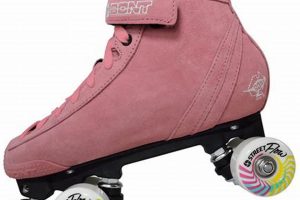
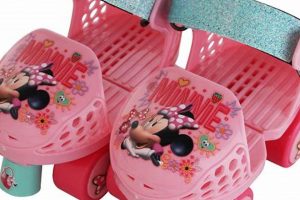
These wheeled boots, often originating from the mid-20th century, represent a nostalgic form of recreational footwear. Characterized by their classic design and sturdy construction, they evoke a specific era of skating culture. An example would be a pair of high-top leather boots mounted on metal plates with adjustable toe stops, produced during the 1950s or 60s.
The significance of these items lies in their representation of a bygone era and their appeal to collectors and enthusiasts. They provide a tangible connection to the history of roller skating and offer a unique skating experience compared to modern inline skates. Their historical context includes a period of increased leisure time and the popularity of roller rinks as social hubs.
The subsequent discussion will delve into the defining characteristics, restoration processes, collecting considerations, and the enduring appeal of these iconic items.
Tips Regarding Distinguishing and Maintaining Classic Wheeled Footwear
The following guidelines provide essential information for identifying authentic specimens and ensuring their longevity.
Tip 1: Authenticating the Components: Scrutinize the materials used. Original models frequently incorporate leather boots, metal plates, and often, wooden wheels. Examine markings or stamps on the components for manufacturer identification and potential age verification.
Tip 2: Assessing the Boots: Inspect the leather for signs of age, such as cracking or stiffness. However, significant deterioration may indicate improper storage or excessive use. Original stitching patterns and hardware can also be indicative of authenticity.
Tip 3: Evaluating the Plate and Trucks: Examine the metal plate and trucks for signs of wear or damage. Rust or corrosion can affect performance and structural integrity. Original plates often feature specific designs or markings unique to the manufacturer.
Tip 4: Inspecting the Wheels: Original wheels may be made of wood, clay, or early forms of plastic. Check for cracks, chips, or uneven wear. Replacement wheels may detract from the item’s originality and value.
Tip 5: Maintaining Original Hardware: Preserve original nuts, bolts, and bearings. These components contribute to the item’s historical accuracy and functionality. Clean and lubricate them carefully to prevent corrosion and ensure smooth operation.
Tip 6: Proper Storage: Store in a cool, dry environment away from direct sunlight to prevent deterioration of the leather and other materials. Use boot trees to maintain the shape of the boots and prevent cracking.
Tip 7: Professional Restoration: When necessary, seek professional restoration services from experienced individuals familiar with vintage roller skates. Improper repairs can damage the item and diminish its value.
Adherence to these guidelines facilitates the accurate identification, preservation, and enjoyment of these historic artifacts, ensuring their continued appreciation by future generations.
The following sections will address collecting considerations and the enduring cultural impact of these artifacts.
1. Authenticity

The verification of “Authenticity” is paramount when assessing the value and historical significance of these vintage skates. This process ensures that the item accurately represents its purported origin and manufacturing period, safeguarding against misrepresentation and enhancing collectibility.
- Original Components
The presence of original components, such as leather boots, metal plates, and specific wheel types, is crucial. Manufacturers often used distinct materials and designs that serve as markers of authenticity. For instance, specific stamping patterns or hardware styles unique to a particular era can validate the item’s age and origin. Replacing these components with modern alternatives diminishes the skate’s authenticity.
- Manufacturer Markings
Genuine items frequently bear manufacturer markings, logos, or serial numbers that align with documented production records. These markings provide verifiable evidence of the item’s origin. Discrepancies or inconsistencies in these markings raise concerns about potential forgeries or modified pieces. Absence of known markings should trigger further investigation.
- Historical Consistency
The item’s design and construction must align with established historical knowledge of skate manufacturing techniques during the purported era. Inconsistencies in materials, construction methods, or design elements may indicate a lack of authenticity. Researching period catalogs and historical resources is essential for verifying these details.
- Provenance Documentation
The existence of documented provenance, such as original receipts, catalogs, or historical records tracing the item’s ownership, strengthens claims of authenticity. Provenance provides a verifiable chain of custody, reducing the risk of acquiring misrepresented or counterfeit items. Lack of provenance necessitates a more rigorous examination of the item itself.
The multi-faceted process of confirming authenticity ensures that each pair of vintage skates accurately represents its historical context and manufacturing origin. Diligence in this area safeguards collectors from fraud and preserves the integrity of these historical artifacts.
2. Condition

The physical condition of vintage roller skates directly correlates with their value, usability, and historical significance. Deterioration, stemming from factors such as age, storage conditions, and usage patterns, impacts various components of the skates. For instance, leather boots may exhibit cracking or stiffness due to dryness, while metal plates can suffer from rust or corrosion. Wheel integrity is also vulnerable; wooden wheels are prone to splitting, and early plastic wheels may become brittle. Such degradation compromises the skate’s functionality and aesthetic appeal. Consequently, a pair of skates with significant deterioration will possess less value for both collectors and individuals seeking functional vintage skates. A prime example is a pair of 1940s skates with severely cracked leather and rusted plates, rendering them unsuitable for practical use and lowering their collectible value.
Conversely, preservation enhances both the monetary and intrinsic worth of these artifacts. Skates maintained in excellent condition offer a tangible connection to the past and represent a significant piece of roller-skating history. Preservation efforts, including proper cleaning, lubrication, and storage, mitigate the damaging effects of time and environment. Restoration, when performed meticulously by experienced professionals, can revive deteriorated components without compromising the item’s authenticity. For example, replacing worn bearings, reconditioning leather boots, and carefully cleaning metal parts can revitalize a set of skates, increasing their market appeal and ensuring their continued enjoyment for future generations. Preserving the item’s original condition, as much as possible, remains a guiding principle among serious collectors.
Ultimately, the condition of vintage roller skates serves as a primary determinant of their worth. It affects not only their practical usability and market price but also their capacity to represent a specific era of roller-skating history. Careful attention to preservation and restoration practices ensures that these artifacts continue to offer insights into the past and remain accessible to enthusiasts and collectors alike. Challenges in assessment include differentiating between age-related wear and damage caused by improper use or storage, underscoring the need for expert evaluation in many cases.
3. Rarity

The scarcity of specific models significantly influences the value and collectibility. Limited production runs, unique design features, or historical circumstances contribute to a model’s rarity. For example, early Chicago roller skates manufactured during wartime, using specific materials due to resource limitations, are now exceedingly rare. This is because materials was used on manufacturing and this time period. The decrease of the available resources and materials, increases the rarity, making the models very rare.
Furthermore, rarity dictates the prices within the market. Models with limited production and very specific designs tend to be more expensive than common skates. Another example is the Chicago “Flying Scout” model, produced for a short period and featuring a distinctive winged design. Its scarcity drives up its value, attracting collectors willing to pay a premium. Therefore, understanding factors contributing to the “Rarity” aspect of these roller skates is very important when assessing the actual value of roller skates.
The assessment of “Rarity” can be challenging, requiring detailed historical research and a deep understanding of roller skate manufacturing. Limited documentation or inconsistent production records can complicate the process. However, “Rarity” remains a critical factor, shaping the market for these historical artifacts and preserving their cultural significance.
4. Components

The various components that constitute these wheeled boots collectively determine their functionality, historical accuracy, and overall value. Each element, from the boot itself to the wheels and hardware, contributes uniquely to the item’s character and performance. A thorough understanding of these elements is essential for assessing the item’s authenticity and appreciating its historical context.
- Boots
The boots, typically constructed from leather, provide support and stability to the skater. Their design, stitching patterns, and materials reflect the manufacturing techniques of the era. High-top designs were common, offering ankle support, while the quality and type of leather varied depending on the manufacturer and intended use. The boots’ condition, including the presence of original laces and hardware, is a significant factor in their value.
- Plates
The metal plates form the chassis of the skates, connecting the boots to the wheels. These plates are typically made of steel or aluminum and feature adjustable trucks that allow the skater to control the turning radius. Plate design and construction varied among manufacturers, with some models incorporating intricate patterns or unique suspension systems. The presence of original plates and their condition significantly impact the skate’s authenticity.
- Wheels
Wheels dictate the skating experience. Early models often featured wooden or clay wheels, while later versions incorporated rubber or early plastic compounds. The size, hardness, and composition of the wheels affected the speed and grip of the skates. Original wheels, particularly those made of wood, are highly sought after by collectors, but their condition is often compromised due to age and wear.
- Hardware
Nuts, bolts, bearings, and toe stops are critical for functionality and safety. Original hardware, often featuring specific designs and materials, enhances historical accuracy. The condition of these components affects the skate’s usability; worn bearings can impede performance, and damaged toe stops compromise safety. Maintaining or replacing these components with period-correct hardware is important for preservation.
The interplay between these various components defines the overall character of vintage roller skates. Each part contributes uniquely to the skate’s performance, aesthetic appeal, and historical significance. Preserving or restoring these components with attention to historical accuracy ensures the continued appreciation and functionality of these items.
5. Restoration

Restoration is an essential element in preserving vintage wheeled boots, particularly those originating from Chicago. This process aims to revive these historical artifacts, addressing deterioration while maintaining their authenticity and historical significance.
- Ethical Considerations in Component Replacement
Replacement of original components presents ethical challenges. The goal is to restore functionality without compromising historical accuracy. For instance, replacing worn leather boots with modern materials can detract from the skate’s authenticity. Sourcing period-correct replacements or carefully repairing original components represents a more ethical approach, preserving historical integrity.
- Structural Integrity and Safety Concerns
Addressing structural weaknesses is crucial for safety. Rust, corrosion, or material fatigue can compromise the integrity of metal plates and trucks. Restoration efforts must prioritize strengthening these components without altering their original design. Welding repairs or reinforcement techniques can enhance safety while maintaining historical accuracy. Neglecting these structural issues can result in hazardous skating conditions.
- Surface Treatment and Aesthetic Revitalization
Surface treatments, such as cleaning and polishing, revitalize the aesthetic appearance. However, aggressive methods can damage delicate finishes or original markings. Gentle cleaning agents and careful polishing techniques preserve the item’s character while enhancing its visual appeal. Overzealous cleaning can remove valuable patina, diminishing historical value. For instance, removing original paint from metal plates detracts from its aesthetic appeal.
- Professional Expertise and Historical Accuracy
Engaging experienced professionals familiar with vintage skate restoration is essential. These experts possess the knowledge and skills necessary to perform delicate repairs while maintaining historical accuracy. Improper restoration can damage the item and diminish its value. Consulting historical resources and seeking advice from knowledgeable collectors ensures that restoration efforts align with established best practices.
Restoration is integral to preserving the legacy of Chicago vintage roller skates, requiring a delicate balance between revitalizing function and maintaining historical authenticity. Ethical considerations, structural integrity, aesthetic revitalization, and professional expertise converge to ensure that these artifacts continue to offer insights into roller-skating history for future generations.
6. Collectibility
The collectibility of wheeled boots produced in Chicago is directly linked to factors such as historical significance, brand recognition, and availability. These items represent a tangible piece of American industrial history, specifically the development of recreational equipment. The “Chicago” brand, in particular, carries substantial weight among collectors due to its long-standing reputation and prevalence during the golden age of roller skating. This creates a cause-and-effect relationship where historical prominence enhances collectibility, and vice versa.
The appeal of collecting these historical recreational devices lies in their ability to evoke a sense of nostalgia and connect collectors to a specific era. The value of a given pair depends heavily on factors already covered, but also on factors that directly relate to “Collectibility”, such as the relative number of models that remain available, and the demand for these skates. Models in pristine condition command higher prices, as do those associated with particular historical events or cultural trends. For instance, a pair of skates from a well-known rink or competition may hold increased value due to its association with that piece of history.
In summary, understanding the drivers of “Collectibility” is essential for anyone involved in buying, selling, or appreciating these wheeled boots. Historical context, brand recognition, rarity, and condition all contribute to an item’s desirability and market value. Challenges in this area include accurately assessing authenticity and navigating the complexities of a market influenced by both nostalgia and investment potential. Nevertheless, their enduring appeal and connection to a vibrant cultural past ensures their continued attraction for enthusiasts and collectors alike.
Frequently Asked Questions
This section addresses common inquiries regarding vintage roller skates produced by the Chicago Roller Skate Company, providing clarity on aspects relevant to collectors, enthusiasts, and those seeking historical information.
Question 1: What are the primary indicators of authenticity?
Authenticity is primarily determined by the presence of original components, manufacturer markings, and consistency with documented historical production methods. Discrepancies in materials, construction, or markings may indicate a lack of authenticity.
Question 2: How does the condition of vintage roller skates impact their value?
The condition directly correlates with value. Skates in excellent condition, with minimal wear and original components intact, command higher prices. Significant deterioration, such as cracked leather or rusted metal, diminishes value.
Question 3: What factors contribute to the rarity of specific models?
Rarity is often influenced by limited production runs, unique design features, or historical circumstances. Models manufactured during specific periods or those with distinctive characteristics tend to be rarer and more valuable.
Question 4: What are the key components to examine when evaluating a pair of vintage skates?
The key components include the boots, plates, wheels, and hardware. Each component should be assessed for originality, condition, and alignment with the skate’s purported era of manufacture.
Question 5: What are the ethical considerations regarding restoration?
Ethical restoration prioritizes preserving historical accuracy and integrity. Component replacement should be minimized, and when necessary, period-correct replacements should be sought. Aggressive cleaning or modifications that alter the item’s original appearance should be avoided.
Question 6: What contributes to the collectibility of specific “Chicago” models?
Collectibility is influenced by historical significance, brand recognition, rarity, and condition. Models associated with specific historical events or cultural trends tend to be more desirable to collectors.
In summary, assessing Chicago vintage roller skates involves a multifaceted evaluation of authenticity, condition, rarity, components, restoration practices, and factors influencing collectibility. Diligence in these areas facilitates informed decisions for both collectors and enthusiasts.
The following section concludes the exploration of these vintage skates.
Conclusion
This article has provided a comprehensive overview of Chicago vintage roller skates, encompassing their defining characteristics, authentication, preservation, and collectibility. Attention has been given to the evaluation of component originality, the impact of condition on value, and the ethical considerations surrounding restoration. The analysis underscores the importance of informed assessment when engaging with these artifacts of roller-skating history.
Continued research and careful stewardship are essential for preserving the legacy of these vintage skates. Their enduring appeal serves as a testament to a vibrant era of recreational history. Prospective collectors and enthusiasts are encouraged to prioritize authenticity and preservation to ensure the continued appreciation of these items for generations to come.