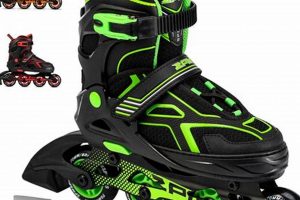
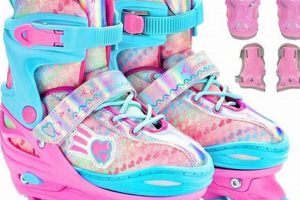
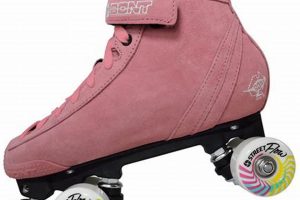
These recreational devices are designed for smooth gliding on paved surfaces. They comprise a boot, typically constructed from durable materials, that is attached to a frame. This frame holds inline wheels, arranged in a single line, which allows for efficient movement and maneuverability. Roces, an established brand, offers a variety of these skates tailored to different skill levels and skating styles.
The equipment facilitates a full-body workout, enhancing cardiovascular health and strengthening muscles, particularly in the legs and core. Its origins can be traced back to attempts to simulate ice skating on land, evolving significantly over time with technological advancements in materials and design. The modern iteration provides users with a fun, engaging way to exercise and enjoy the outdoors.
The following sections will delve into specific aspects of these skates, including their construction, variations, selection criteria, and maintenance procedures. This will provide a comprehensive understanding of this type of skating equipment.
Guidance on Selection and Maintenance
The following tips provide guidance on selecting and maintaining skating equipment for optimal performance and longevity.
Tip 1: Size Selection. Ensure accurate sizing. Ill-fitting equipment can lead to discomfort, reduced performance, and potential injury. Consult manufacturer sizing charts and consider trying on equipment before purchase.
Tip 2: Wheel Hardness. Select appropriate wheel hardness based on skating surface and desired performance characteristics. Softer wheels offer better grip but wear down faster, while harder wheels are more durable but may provide less grip.
Tip 3: Bearing Maintenance. Regularly clean and lubricate bearings to maintain smooth rolling. Accumulated dirt and debris can significantly reduce bearing efficiency.
Tip 4: Frame Alignment. Periodically check frame alignment. Misaligned frames can affect balance and control, leading to uneven wheel wear and potentially dangerous situations.
Tip 5: Brake Inspection. Regularly inspect and replace the brake pad as needed. Worn brake pads compromise stopping power and increase the risk of accidents.
Tip 6: Boot Condition. Monitor the boot’s condition for signs of wear and tear. Damage to the boot can compromise support and stability.
Tip 7: Fastener Security. Ensure all fasteners, such as buckles and straps, are securely fastened before each use. Loose fasteners can lead to loss of control.
Following these guidelines contributes to enhanced performance, increased safety, and prolonged equipment lifespan. Prioritizing these aspects is essential for a safe and enjoyable skating experience.
The subsequent section will address common issues and troubleshooting techniques related to this type of skating equipment.
1. Boot Support
Boot support in skating equipment directly impacts stability, control, and injury prevention. Insufficient support increases the risk of ankle rolling and other related injuries, particularly during high-impact maneuvers or uneven surfaces. In Roces models, varying boot designs cater to different skill levels and skating disciplines. For instance, aggressive skates often feature a rigid, high-cut boot for enhanced ankle stability during jumps and grinds, whereas recreational models may offer a softer, more flexible boot for increased comfort over extended periods.
The construction material significantly influences the level of support provided. Hard-shell boots, typically made of durable plastics or composites, offer maximum rigidity and protection, ideal for demanding skating styles. Soft-boot designs, incorporating breathable fabrics and padding, prioritize comfort and flexibility, suitable for casual skating and beginners. Roces utilizes both approaches, ensuring that individuals can select a model that aligns with their specific requirements and performance expectations.
Selecting the appropriate boot support level is crucial for both safety and performance. Compromising on support can lead to instability and increased injury risk, while excessive rigidity may hinder mobility and comfort. Therefore, evaluating skating style, skill level, and intended usage is essential when choosing skating equipment. Ultimately, proper boot support is a fundamental aspect of quality skates, contributing significantly to a safe and enjoyable skating experience.
2. Wheel Diameter

Wheel diameter is a fundamental characteristic influencing the performance of inline roller skates. Its selection significantly affects the speed, maneuverability, and overall skating experience. Roces offers a diverse range of models, each featuring different wheel diameters to cater to various skating styles and skill levels. Understanding the implications of wheel diameter is essential for choosing appropriate equipment.
- Speed and Roll Efficiency
Larger wheel diameters generally translate to higher top speeds and improved roll efficiency. A greater contact area with the ground reduces rolling resistance, allowing skaters to maintain momentum with less effort. Roces speed skates, designed for racing and long-distance skating, typically utilize larger wheels, often exceeding 100mm in diameter, to maximize speed and efficiency.
- Maneuverability and Agility
Smaller wheel diameters offer enhanced maneuverability and agility. The shorter wheelbase allows for quicker turns and tighter control, making them suitable for urban skating, hockey, or aggressive skating disciplines. Roces aggressive skates, designed for performing tricks and maneuvers in skate parks, commonly feature smaller wheels to facilitate greater control and responsiveness.
- Stability and Control
Wheel diameter also influences stability and control. Larger wheels, while offering higher speeds, can feel less stable, particularly for novice skaters. Smaller wheels provide a lower center of gravity, increasing stability and ease of control, which is particularly important for beginners and those skating on uneven surfaces. Roces recreational skates often incorporate a moderate wheel diameter, striking a balance between speed, stability, and control.
- Vibration Absorption
Larger wheels tend to absorb more vibrations from the skating surface. This can lead to a smoother and more comfortable ride, especially on rough pavement. Smaller wheels transmit more of the surface imperfections, potentially causing discomfort or fatigue on longer skates. Roces fitness skates, designed for longer distances, often use slightly larger wheels to improve comfort over extended periods.
The selection of an appropriate wheel diameter is a critical consideration when choosing skating equipment. Roces offers a wide spectrum of models, each meticulously designed with specific wheel diameters to optimize performance for a given discipline. Understanding the trade-offs between speed, maneuverability, stability, and comfort enables individuals to choose equipment that aligns with their specific needs and enhances their overall skating experience. Therefore, careful consideration of wheel diameter is paramount when selecting Roces skates.
3. Bearing Quality
Bearing quality directly influences the performance and longevity of skating equipment. Within products, the bearings facilitate wheel rotation, converting applied force into motion. Inferior bearings exhibit higher friction, impeding speed and requiring greater effort for propulsion. Products incorporating low-grade bearings may also suffer from premature wear, leading to increased maintenance requirements and reduced lifespan. Conversely, high-quality bearings, such as those with tighter tolerances and superior lubrication, provide smoother, more efficient rolling characteristics.
The ABEC (Annular Bearing Engineers’ Committee) scale, while commonly used, does not fully encompass bearing quality. While a higher ABEC rating suggests tighter manufacturing tolerances, factors such as material composition, lubrication type, and seal design also significantly impact performance. Products employing bearings with chromium steel races and nylon retainers tend to exhibit greater durability and corrosion resistance. Similarly, the use of high-viscosity lubricants minimizes friction and heat buildup, further enhancing bearing performance. Real-world examples include skaters experiencing significantly faster speeds and reduced fatigue when transitioning from lower-grade to higher-grade bearings within their skates.
Bearing maintenance is crucial for maintaining optimal performance. Regularly cleaning and lubricating bearings removes contaminants and reduces friction, extending bearing life. Neglecting maintenance results in increased rolling resistance and eventual bearing failure. Furthermore, understanding the nuances of bearing quality allows consumers to make informed purchasing decisions, selecting equipment that balances performance, durability, and cost. Ultimately, prioritizing bearing quality contributes to an enhanced and more sustainable skating experience.
4. Frame Material

The frame constitutes a critical structural component of Roces inline roller skates, directly influencing stability, responsiveness, and overall performance. The material composition of this frame dictates its weight, stiffness, and ability to absorb vibrations. Consequently, the choice of frame material significantly affects the skater’s control, comfort, and skating efficiency. Aluminum alloy frames, for example, offer a high strength-to-weight ratio, providing excellent energy transfer and responsiveness suitable for advanced skaters seeking precise control and efficient power transmission. In contrast, composite frames, often constructed from reinforced plastics, offer enhanced vibration damping and reduced weight, making them a preferred choice for recreational skaters prioritizing comfort and shock absorption.
The selection of frame material must also consider the specific skating discipline. Aggressive skates, designed for skate park use and high-impact maneuvers, often utilize thicker, more robust frames made from high-grade aluminum alloys or reinforced composites to withstand the stresses of grinding and jumping. Speed skates, prioritizing minimal weight and maximum stiffness for efficient power transfer, frequently feature lightweight aluminum frames with aerodynamic profiles. Recreational skates may employ a wider range of frame materials, balancing cost, durability, and comfort to cater to a diverse range of users. For instance, a Roces recreational skate might feature a composite frame to reduce weight and vibration, making it more comfortable for extended skating sessions.
Ultimately, the frame material represents a crucial design element within Roces inline roller skates, influencing performance characteristics and catering to specific skating disciplines. Understanding the properties of different frame materials allows skaters to make informed decisions, selecting equipment that aligns with their individual needs and enhances their overall skating experience. The interplay between frame material, skating style, and performance expectations highlights the importance of careful consideration when choosing appropriate equipment. The subsequent section will address braking systems.
5. Braking System

A functioning braking mechanism is a fundamental safety component in all inline roller skates, including those manufactured by Roces. Its effectiveness directly impacts a skater’s ability to control speed and avoid collisions, thereby mitigating the risk of injuries. Most Roces recreational and fitness models incorporate a heel brake system, where a brake pad is attached to the rear of one skate. When the skater extends the braking skate forward, the pad contacts the ground, creating friction and slowing the skater down. The efficiency of this system depends on several factors, including the pad’s material composition, the skater’s technique, and the condition of the skating surface. For example, a worn brake pad or a wet surface can significantly reduce braking effectiveness.
While heel brakes are prevalent in recreational models, certain Roces skates designed for specific disciplines may omit them. Speed skates, prioritizing aerodynamics and minimizing weight, often lack a traditional braking system. Skaters rely on alternative methods, such as controlled slides or using surrounding environment, to decelerate. Aggressive skates, used for performing tricks and grinds, may also exclude heel brakes to prevent interference during maneuvers. In these instances, the skater’s skill and awareness become paramount for safe navigation and speed management. Consequently, the braking system, or its absence, is a conscious design choice reflecting the intended use of the skate and the skill level of the user.
The braking system’s integration into Roces inline roller skates represents a critical balance between safety, performance, and user experience. Understanding the nuances of different braking systems, their limitations, and the techniques for effective use is paramount for all skaters. While heel brakes offer a convenient and intuitive means of deceleration for recreational use, advanced skaters in specialized disciplines may opt for alternative approaches that prioritize speed and maneuverability. Regardless of the chosen method, responsible skating practices and a thorough understanding of braking techniques are essential for ensuring a safe and enjoyable experience.
6. Closure System

The closure system constitutes a critical aspect of any inline roller skate, including Roces models, directly influencing fit, comfort, and performance. This system is responsible for securely fastening the boot to the skater’s foot, providing support and preventing slippage during use. A poorly designed or malfunctioning closure system can lead to discomfort, reduced control, and an increased risk of injury. Roces utilizes a variety of closure systems across its product line, tailored to different skating styles and user needs. Examples include traditional laces, buckles, hook-and-loop straps (Velcro), and ratcheting mechanisms, each offering unique advantages and disadvantages in terms of adjustability, security, and ease of use. A proper closure system ensures that the skater’s foot is securely anchored within the boot, allowing for efficient power transfer and precise control over movements. For instance, a skater using skates with a robust buckle and strap system will experience more immediate response and control compared to a skate secured only with laces, particularly during aggressive maneuvers or high-speed skating.
Different closure systems are often paired with specific skate types to optimize performance and user experience. Aggressive skates, requiring maximum ankle support and responsiveness for performing tricks, frequently feature a combination of laces, power straps, and buckles to provide a secure and customizable fit. Speed skates, prioritizing aerodynamics and minimizing weight, may employ a streamlined lacing system combined with a heat-moldable boot for a snug and efficient fit. Recreational skates often utilize a combination of buckles and Velcro straps, offering a balance of ease of use and adequate support for casual skating. The choice of closure system also impacts the skater’s ability to quickly adjust the fit of the skate. Buckles and straps allow for rapid adjustments, even while skating, while laces offer a more precise but time-consuming fit. Understanding the characteristics of different closure systems allows skaters to select equipment that best suits their skating style and preferences. A skater participating in a long-distance event, for example, might prioritize a system that offers quick adjustments to accommodate swelling feet, while a skater performing complex tricks might value the enhanced security and support of a more elaborate system.
In summary, the closure system is an integral component of Roces inline roller skates, significantly impacting fit, comfort, and performance. The selection of an appropriate closure system depends on the intended use of the skates, the skater’s skill level, and personal preferences. While various systems offer unique advantages, all serve the fundamental purpose of securely fastening the boot to the skater’s foot, enabling efficient power transfer and precise control. Challenges remain in balancing adjustability, security, and ease of use, and ongoing innovation continues to drive the development of more sophisticated and user-friendly closure systems. The closure system, in conjunction with other key components, contributes to the overall quality and functionality of inline roller skates.
Frequently Asked Questions
This section addresses common inquiries concerning Roces inline roller skates, providing concise and factual information to aid in understanding their proper use and maintenance.
Question 1: What constitutes appropriate protective gear when using Roces inline roller skates?
Protective gear should include a properly fitted helmet, wrist guards, elbow pads, and knee pads. These items minimize the risk of injury in the event of a fall.
Question 2: How does one determine the correct size of Roces inline roller skates?
Consult the manufacturer’s sizing chart and measure the foot’s length in millimeters. It is advisable to try on skates with socks similar to those worn during skating activities.
Question 3: What maintenance procedures are recommended for Roces inline roller skates?
Regularly clean and lubricate bearings, inspect wheels for wear, and check the tightness of all fasteners. Store skates in a dry environment away from direct sunlight.
Question 4: What are the primary differences between recreational and aggressive Roces inline roller skates?
Recreational skates are designed for general fitness and casual skating, while aggressive skates are built for performing tricks and maneuvers in skate parks, featuring reinforced frames and smaller wheels.
Question 5: How does one replace the wheels on Roces inline roller skates?
Use an appropriate tool to remove the axles securing the wheels. Replace the wheels, ensuring proper orientation, and tighten the axles to the manufacturer’s specified torque.
Question 6: What factors should be considered when selecting Roces inline roller skate bearings?
Bearing quality, typically indicated by the ABEC rating, influences rolling efficiency. Higher-rated bearings generally offer smoother and faster performance. Consider also the material and sealing of the bearings.
These answers provide a foundational understanding of Roces inline roller skates. Proper usage and maintenance contribute to both safety and equipment longevity.
The subsequent section will provide troubleshooting guidance for common issues encountered with this equipment.
Concluding Remarks on Roces Inline Roller Skates
This discourse has examined Roces inline roller skates, encompassing their component attributes, selection considerations, and maintenance requirements. From the framework’s material to the bearing’s precision, each facet contributes to the overall functionality and performance of this equipment. Understanding these elements is critical for both optimal utilization and ensuring longevity of the product.
Proper care and informed selection remain paramount. While this exploration provides a foundation, continued diligence in maintenance and adherence to safety guidelines are essential for responsible use. These actions ensure the equipment continues to deliver its intended function, offering both recreational benefit and physical conditioning.