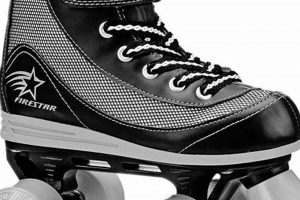
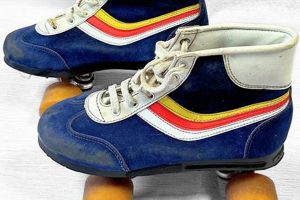
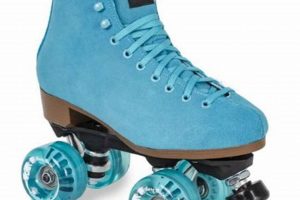
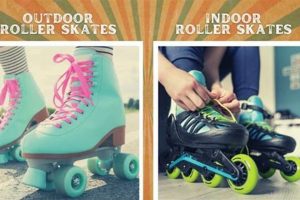
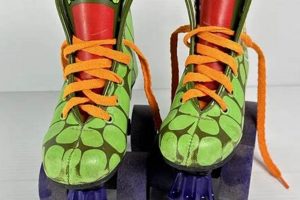
The act of modifying personal recreational footwear to suit individual preferences or performance requirements involves alterations to the original factory specifications. This encompasses a range of changes from aesthetic enhancements, such as color schemes and decorative elements, to functional upgrades involving the wheels, bearings, frames, and boots themselves. For instance, an individual might replace standard wheels with harder durometer wheels for increased speed on a smooth surface, or swap a stock frame for a more rigid one to enhance stability during jumps.
Modifying rolling footwear offers several advantages. It allows users to tailor their equipment to specific skating disciplines, optimize performance based on skating style, and express personal creativity. Historically, adaptations were driven by necessity to improve durability or function. Today, the motivations also include personal expression and achieving a unique aesthetic. This process ensures comfort, improves handling, and increases overall enjoyment of the skating experience.
The following sections will examine the various components that are commonly subject to these alterations, discuss the tools and techniques involved, and provide guidance on selecting appropriate modifications for different skill levels and skating styles. Attention will also be given to safety considerations and the importance of proper maintenance after undertaking such modifications.
Guidance on Personalizing Rolling Footwear
This section provides important considerations for individuals seeking to personalize their rolling footwear, ensuring both performance enhancement and safety during the modification process.
Tip 1: Prioritize Boot Fit. The foundation of any modification starts with a properly fitting boot. Ill-fitting boots can lead to discomfort, blisters, and reduced control. Before undertaking any alterations, ensure the boot provides adequate support and comfort.
Tip 2: Select Wheels Based on Surface. Wheel durometer impacts grip and speed. Softer wheels offer better grip on rough surfaces, while harder wheels are more efficient on smooth surfaces. Evaluate the primary skating environment before choosing replacement wheels.
Tip 3: Inspect Bearings Regularly. Bearings directly affect rolling efficiency. Periodically clean and lubricate bearings to maintain optimal performance. Replace worn or damaged bearings promptly to prevent performance degradation.
Tip 4: Frame Material Influences Performance. Frame material, such as aluminum or nylon, affects responsiveness and durability. Aluminum frames generally offer greater stiffness and power transfer but may be heavier. Nylon frames provide more flex, which can be advantageous for beginners or certain skating styles.
Tip 5: Ensure Secure Hardware. Regularly check all bolts and screws for tightness. Loose hardware can compromise safety and performance. Use appropriate tools and torque settings to tighten components without over-tightening.
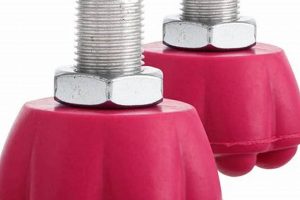
Tip 6: Consider Toe Stops and Plugs: Toe stops are essential for balance and braking. Plugs offer a different feel to stops and typically are preferred by jam skaters or roller dancers. Understand the impact of each component to choose the appropriate addition.
Tip 7: Understand the Importance of Safety Gear: While personalizing rolling footwear is vital, safety always comes first. Ensure to use pads, wrist guard and helmet. Inspect this safety gear before each use.
By focusing on fit, surface compatibility, component maintenance, and secure hardware, individuals can achieve a high degree of personalization while upholding safety standards. The subsequent segments will provide advanced customization options and discuss expert consultation for complex alterations.
1. Boot selection

Boot selection forms a foundational component of rolling footwear personalization, directly influencing comfort, performance, and safety. The impact of boot choice is significant, functioning as the primary interface between the skater and the equipment. Incorrect boot selection negates the benefits of subsequent modifications, potentially leading to discomfort, impaired control, and increased risk of injury. An ill-fitting boot, regardless of high-quality wheels or bearings, compromises the skating experience. For example, a boot too large provides insufficient ankle support, hindering stability and power transfer during maneuvers. Conversely, a boot too small causes discomfort and restricts blood flow, affecting endurance and potentially leading to foot problems.
Proper boot selection necessitates considering foot morphology, skating style, and intended use. Individuals with wide feet require boots offering ample width to prevent pinching and discomfort. Skaters engaging in aggressive disciplines, such as park skating or roller derby, benefit from boots with enhanced ankle support and reinforced construction to withstand impacts. Recreational skaters may prioritize comfort and flexibility over rigidity. The boot’s material composition, closure system, and internal padding all contribute to overall fit and performance. Modifying elements such as heat molding and custom insoles can further refine the fit of a selected boot, enhancing comfort and performance.
In summary, the choice of boot is a critical determinant in the rolling footwear personalization process. Accurate assessment of individual needs and preferences, coupled with careful consideration of boot characteristics, leads to optimized comfort, performance, and safety. Prioritizing correct boot selection establishes a solid foundation upon which to build a personalized skating experience, ensuring the benefits of further modifications are realized and the potential for discomfort or injury is minimized.
2. Frame Replacement
Frame replacement constitutes a significant element within rolling footwear personalization. It directly influences the handling characteristics, stability, and overall performance of the equipment. The frame, serving as the structural link between the boot and the wheels, transmits force and determines the skater’s responsiveness.
- Material Properties and Performance
Frame material dictates its stiffness and weight, directly affecting power transfer and maneuverability. Aluminum frames, prevalent among advanced skaters, provide superior rigidity and efficient energy transmission, suitable for high-impact maneuvers. Conversely, nylon or composite frames offer greater flexibility, absorbing vibrations and providing a smoother ride, often preferred by beginners or recreational users. Choosing the appropriate material depends on skating style and skill level.
- Wheelbase and Maneuverability
The frame’s wheelbase, defined as the distance between the front and rear axles, affects turning radius and stability. Shorter wheelbases enhance agility, facilitating quicker turns and maneuvers, beneficial for artistic or slalom skating. Longer wheelbases provide increased stability at higher speeds, advantageous for speed skating or long-distance skating. The selection must align with the intended purpose and skating environment.
- Frame Mounting Systems and Compatibility
Frame mounting systems determine compatibility between the frame and the boot. Universal Mounting Standard (UMS) facilitates interchangeability among different boot and frame brands. Inline frames typically use standardized mounting patterns, simplifying the replacement process. However, certain roller derby or aggressive skating boots may feature proprietary mounting systems, restricting frame options. Understanding mounting compatibility is critical to avoid compatibility issues.
- Frame Height and Center of Gravity
Frame height impacts the skater’s center of gravity, influencing stability and control. Lower frame profiles lower the center of gravity, enhancing stability and responsiveness, preferred by skaters seeking enhanced control. Higher frame profiles elevate the center of gravity, potentially improving power transfer but decreasing stability. The choice between high and low frames depends on personal preference and skating technique.
These facets collectively demonstrate that frame replacement is a critical personalization aspect. Selecting the appropriate frame material, wheelbase, mounting system, and height significantly impacts performance. Such decisions are crucial in tailoring rolling footwear to specific skating styles and optimizing the skating experience.
3. Wheel durometer
Wheel durometer, a measure of a rolling footwear wheel’s hardness, is a critical consideration within rolling footwear personalization. This measurement, typically expressed on the A scale (e.g., 78A, 88A, 101A), dictates a wheel’s grip, roll speed, and wear characteristics, substantially impacting performance and skating experience. The selection of an appropriate durometer is directly tied to the intended skating surface and style. Softer wheels (lower durometer values) exhibit increased grip on rough surfaces, facilitating better control and maneuverability. Conversely, harder wheels (higher durometer values) minimize rolling resistance on smooth surfaces, enabling faster speeds and greater efficiency.
The influence of wheel durometer on skating performance can be observed across various disciplines. For instance, roller derby skaters frequently employ wheels within the 88A to 93A range to achieve a balance between grip for quick stops and acceleration, and roll speed for sustained momentum. Speed skaters, conversely, typically opt for wheels exceeding 95A to maximize velocity on smooth, track-like surfaces. In outdoor recreational skating, a range of 78A to 85A is common, providing a comfortable and controlled ride on varied terrain. Personalization can also manifest in a skater’s choice to mix wheel durometersplacing softer wheels in the front for grip and harder wheels in the rear for speed. This approach allows for customized performance balancing.
Understanding wheel durometer and its relationship to surface conditions and skating style is paramount for effective rolling footwear personalization. Selecting an inappropriate durometer can lead to compromised performance, increased fatigue, or even safety hazards. This component, therefore, represents a crucial element in customizing equipment to meet individual needs and optimize the skating experience. Furthermore, wheel durometer, is a critical element to be inspected regularly for maintenance. A worn wheel will change its durometer, and depending on the skill level, and style, it can lead to safety issue.
4. Bearing precision

Bearing precision is a critical, yet often overlooked, factor in the rolling footwear personalization process. It directly influences the efficiency and smoothness of the roll, which in turn affects speed, energy expenditure, and overall skating performance. Bearings with higher precision ratings contribute significantly to an enhanced skating experience.
- ABEC Rating and Performance
The Annular Bearing Engineering Committee (ABEC) rating system is the industry standard for measuring bearing tolerances. Higher ABEC ratings (e.g., ABEC-7, ABEC-9) denote tighter tolerances and greater precision in the bearing’s construction. This results in reduced friction, improved roll speed, and increased durability. For example, a speed skater aiming for peak performance would opt for high ABEC-rated bearings to minimize energy loss and maximize velocity.
- Material Composition and Longevity
Bearing materials play a crucial role in their performance and lifespan. Steel bearings are standard due to their durability and cost-effectiveness. Ceramic bearings, while more expensive, offer superior hardness, reduced friction, and increased resistance to heat and corrosion. An aggressive skater might choose ceramic bearings to withstand the impacts and stresses associated with jumps and tricks, extending the bearing’s usable life.
- Lubrication and Maintenance
Proper lubrication is essential for maintaining bearing precision and performance. Lubricants reduce friction, dissipate heat, and prevent corrosion. Regular cleaning and lubrication are necessary to remove contaminants and maintain optimal performance. A recreational skater who neglects bearing maintenance may experience decreased roll speed and premature bearing failure.
- Impact on Skating Style and Skill Level
The impact of bearing precision varies depending on the skating style and skill level. Beginners may not immediately perceive the benefits of high-precision bearings, as technique and balance are more significant factors. However, as skaters progress and develop more advanced skills, the advantages of high-precision bearings become more apparent. Artistic skaters, for example, rely on smooth, consistent roll to execute complex maneuvers and routines.
In conclusion, bearing precision is an indispensable aspect of rolling footwear modification. Selecting bearings with appropriate ABEC ratings, materials, and implementing a consistent maintenance routine can significantly improve the skating experience and increase performance. These factors allow the skater to take full advantage of personalization and safety.
5. Toe stop choice
Toe stop selection significantly influences rolling footwear personalization, affecting braking efficiency, maneuverability, and stability. The choice directly corresponds to skating style, skill level, and intended use. The selected component serves as a primary braking mechanism and a pivotal point for specific maneuvers, thereby impacting overall control. An inappropriately chosen stop may compromise safety and hinder performance. As an example, a derby skater requires a responsive, durable toe stop for rapid stops and positional adjustments, while a jam skater might favor a smaller, less obtrusive option to facilitate footwork. Customizing the stop’s material, size, and angle optimizes responsiveness. These modifications ensure equipment aligns with performance requisites.
Furthermore, the toe stop material impacts grip and wear characteristics. Natural rubber compounds offer superior grip on various surfaces, while harder synthetic compounds provide enhanced durability for high-impact activities. The dimensions of the stop, including its diameter and stem length, influence the contact area with the skating surface and the lever effect during braking. Adjusting the angle of the stop allows skaters to fine-tune its responsiveness and reduce fatigue during extended skating sessions. Some skaters even opt for aftermarket stops crafted from specialized materials or featuring unique designs to further enhance performance and reflect personal preferences. The integration of adjustable toe stops is a personalization avenue allowing precise calibration in line with individual biomechanics.
In summary, the selection and adjustment of toe stops are critical considerations within rolling footwear personalization. Aligning toe stop characteristics with skating style, surface conditions, and personal preferences optimizes control, safety, and performance. The ramifications of a mismatched or poorly adjusted stop extend beyond performance, potentially increasing risk of injury. As a result, considering all facets of toe stop characteristics and customization options is paramount.
6. Artistic expression

Artistic expression, when integrated with rolling footwear personalization, transforms a functional tool into a reflection of individual identity and creativity. This integration extends beyond mere aesthetics, influencing the skater’s relationship with their equipment and enhancing their overall experience. Customization that prioritizes artistic elements enriches the performance and becomes a means of communication.
- Color Palettes and Visual Harmony
The selection of color palettes plays a fundamental role in artistic expression. Coordinated color schemes applied to the boots, wheels, and frames create visual harmony, aligning the equipment with the skater’s personal style. For instance, a skater drawn to vintage aesthetics might opt for pastel hues and retro-inspired graphics, transforming the footwear into a wearable art piece. Conversely, a skater with a modern sensibility might choose bold, contrasting colors and geometric patterns to convey a sense of energy and dynamism. The deliberate use of color amplifies the skater’s visual impact and reinforces their unique identity.
- Decals, Graphics, and Personal Emblems
The application of decals, graphics, and personal emblems provides a direct means of expressing individuality. Skaters often adorn their boots with stickers representing their favorite brands, bands, or causes. Hand-painted designs and custom-printed graphics offer a more personalized approach. These visual elements communicate the skater’s affiliations, values, and interests, turning the equipment into a mobile canvas. The strategic placement of these emblems can also enhance the visual flow of the footwear, creating a cohesive and meaningful design.
- Material Textures and Surface Treatments
The exploration of different material textures and surface treatments introduces another dimension to artistic expression. Experimenting with finishes such as glitter, metallic paint, or textured wraps allows skaters to manipulate the visual and tactile qualities of their equipment. These treatments can create subtle shifts in light and shadow, adding depth and complexity to the overall design. Combining contrasting textures, such as smooth leather with rough suede, adds visual interest and highlights the skater’s attention to detail.
- Functional Art and Performance Enhancement
Artistic expression need not be limited to purely aesthetic considerations. Integrating functional elements into the design can enhance both the visual appeal and the performance of the rolling footwear. For example, custom-designed laces with unique patterns or colors can improve grip and adjustability while adding a personal touch. Similarly, hand-stitched boot covers can provide additional support and protection while showcasing the skater’s craftsmanship. This synthesis of form and function transforms the equipment into a unique and practical tool.
These facets highlight the diverse avenues through which artistic expression enriches rolling footwear personalization. The integration of color palettes, decals, material textures, and functional art transforms a functional tool into a canvas for self-expression. This personalization elevates the skating experience, making it a more meaningful and fulfilling pursuit.
Frequently Asked Questions
The following addresses common inquiries concerning the modification and personalization of rolling footwear, clarifying key aspects and considerations related to the process.
Question 1: What constitutes appropriate expertise for performing rolling footwear modifications?
Executing modifications requires a comprehensive understanding of the equipment’s mechanics, material properties, and safety standards. Individuals lacking this knowledge risk compromising structural integrity and increasing injury potential. Consulting with experienced technicians or certified skate professionals is advisable for complex modifications.
Question 2: How does wheel durometer influence skating performance across different surfaces?
Wheel durometer, or hardness, directly impacts grip and roll speed. Softer wheels (lower durometer) provide enhanced grip on rough surfaces but exhibit greater rolling resistance. Harder wheels (higher durometer) offer reduced rolling resistance on smooth surfaces but may lack adequate grip on uneven terrain. The selection should align with the predominant skating environment.
Question 3: What are the potential consequences of improper bearing maintenance?
Neglecting bearing maintenance leads to reduced efficiency, increased friction, and accelerated wear. Contaminants such as dirt and moisture compromise the bearings’ internal mechanisms, hindering their ability to roll smoothly. This results in decreased speed, increased energy expenditure, and potential bearing failure.
Question 4: How does frame material impact the handling characteristics of rolling footwear?
Frame material influences stiffness, weight, and vibration absorption. Aluminum frames provide superior rigidity and power transfer, suitable for high-performance skating. Nylon or composite frames offer greater flexibility and vibration dampening, often preferred for recreational use. The choice dictates responsiveness and comfort levels.
Question 5: What safety considerations should guide the selection of toe stops or plugs?
Toe stop or plug selection must prioritize safety based on skating style and proficiency. Larger toe stops offer greater braking power and stability for beginners or roller derby skaters. Smaller plugs provide increased maneuverability for jam skating or dance. Proper adjustment and secure attachment are essential for preventing accidents.
Question 6: How does artistic customization affect the functional aspects of rolling footwear?
Artistic customization, while primarily aesthetic, should not compromise functionality. Modifications such as paint, decals, or fabric additions must not interfere with the boot’s closure system, frame mounting, or wheel rotation. Prioritizing safety and performance alongside aesthetics is crucial for maintaining equipment integrity.
These questions provide an overview of essential considerations when engaging in rolling footwear customization. Adhering to these guidelines promotes safety, optimizes performance, and maximizes enjoyment.
The following section explores case studies exemplifying diverse approaches to rolling footwear modification and their impact on skater performance.
Roller Skate Custom
This exploration of rolling footwear personalization reveals a multifaceted domain extending beyond mere equipment modification. The informed selection of components, from boots and frames to wheels and bearings, coupled with a nuanced understanding of their interplay, directly impacts performance, safety, and individual expression. Attentive consideration to each customizable element enables users to tailor equipment to specific disciplines, skating environments, and personal biomechanics.
Ultimately, thoughtful customization represents an investment in a superior skating experience. It demands a commitment to both technical expertise and creative vision. As the pursuit of personalized rolling footwear continues to evolve, adherence to safety standards and a willingness to embrace innovation will remain paramount. Skaters are encouraged to approach modifications with diligence, consulting professionals when necessary, to unlock the full potential of their equipment and elevate their performance to new heights.