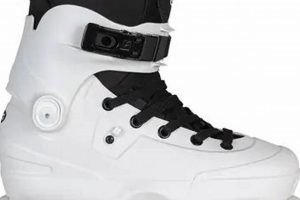
These specialized skates are designed to function effectively on surfaces beyond smooth pavement. Featuring pneumatic tires and robust frames, they provide users with the ability to traverse grass, dirt paths, and uneven terrains. These skates offer an alternative to traditional rollerblades, expanding skating environments to include off-road experiences.
The development of skates capable of handling varied surfaces has broadened the accessibility of the sport and fitness activity. The durability and stability offered by this type of skate promote confidence in less-than-ideal conditions. Their origin lies in the desire to replicate the feeling of ice skating on alternative ground surfaces, fostering year-round enjoyment for enthusiasts.
The subsequent sections will delve into the technical specifications, ideal use cases, maintenance requirements, and selection criteria for these versatile skating products. Further discussion will highlight the differences between specific models and address frequently asked questions related to their operation and safety.
Guidance for Optimized Usage
The following recommendations aim to enhance the experience with specialized skates designed for varied surfaces, focusing on safety and performance.
Tip 1: Tire Pressure Management: Maintaining optimal tire pressure is crucial. Consult the manufacturer’s specifications to ensure proper inflation, contributing to stability and reducing the risk of flats on uneven ground.
Tip 2: Pre-Skate Inspection: Before each use, meticulously inspect all components, including the frame, wheel bearings, and braking system. Addressing any issues proactively prevents potential accidents.
Tip 3: Gradual Terrain Progression: New users should begin on relatively smooth, flat surfaces and gradually progress to more challenging terrains. This allows for the development of necessary skills and familiarity with the equipment’s handling characteristics.
Tip 4: Protective Gear Utilization: Consistent use of comprehensive protective gear, including a helmet, knee pads, elbow pads, and wrist guards, is non-negotiable. These mitigate the severity of potential injuries during falls.
Tip 5: Braking Technique Proficiency: Develop proficiency in braking techniques specific to this type of skate. Understanding the limitations of the braking system on different surfaces is vital for controlled deceleration.
Tip 6: Surface Awareness: Remain vigilant of surface conditions. Obstacles such as rocks, roots, and potholes can pose significant hazards. Scan the path ahead and adjust speed accordingly.
Tip 7: Routine Maintenance Schedule: Adhere to a routine maintenance schedule, including cleaning bearings, inspecting tire tread, and tightening bolts. Regular upkeep extends the lifespan of the skates and ensures consistent performance.
Tip 8: Weight Distribution Practice: Practice proper weight distribution techniques to maintain balance and control, especially on uneven or sloped terrain. A lower center of gravity can improve stability.
Adherence to these guidelines will contribute to a safer and more enjoyable experience with this specialized skating equipment.
The following sections will provide more detailed information on specific aspects of skate selection, maintenance, and advanced techniques.
1. Tire Size

Tire size is a defining characteristic of off-road skates, directly influencing their capacity to navigate diverse and challenging terrains. The dimensions of the tires dictate several performance aspects, impacting the overall experience.
- Obstacle Negotiation
Larger tire diameters exhibit an improved ability to roll over obstacles such as rocks, roots, and uneven surfaces. Increased tire height provides a greater angle of attack, enabling the skate to surmount obstructions without significant impediment. This capability is paramount in environments where consistent surface smoothness is not guaranteed.
- Surface Contact Area
Tire size impacts the contact patch the area where the tire meets the ground. A larger contact patch can provide enhanced grip and stability, particularly on loose or slippery surfaces like gravel or dirt. However, an excessively large contact patch may increase rolling resistance on smoother surfaces, potentially reducing speed and efficiency.
- Rolling Resistance
The diameter of the tire influences rolling resistance. Larger tires generally exhibit lower rolling resistance compared to smaller tires, given similar tire construction and pressure. This translates to greater efficiency and reduced energy expenditure during forward motion, especially on relatively smooth off-road surfaces.
- Maneuverability and Weight
Increased tire size often corresponds to increased weight, which can impact maneuverability and agility. Skates with larger tires may feel less responsive during quick turns and require more effort to accelerate. Therefore, the selection of tire size involves balancing obstacle negotiation capabilities with desired handling characteristics.
The interplay of these factors demonstrates that tire size is a critical design consideration, directly influencing the trade-offs between terrain versatility, rolling efficiency, and handling responsiveness. Selection of an appropriate tire size depends significantly on the intended skating environment and the user’s preferences regarding speed, stability, and maneuverability.
2. Frame Material
The frame material in skates fundamentally determines durability, weight, and responsiveness, which are critical for performance on varied terrains. A robust frame withstands impacts from rocks, roots, and uneven ground, preventing deformation or failure. The material directly impacts the skate’s ability to transmit energy efficiently from the skater’s movements to the wheels, affecting acceleration and control. Aluminum alloys are frequently employed due to their high strength-to-weight ratio. They provide a balance between durability and maneuverability, allowing for responsive handling without excessive bulk. An alternative example is composite materials, offering vibration dampening qualities. This is beneficial on rough surfaces, reducing fatigue. However, they may lack the rigidity of aluminum, potentially sacrificing some energy transfer efficiency.
Consider a scenario where a skater uses all-terrain inline skates with a low-grade plastic frame on a rocky trail. The frame is prone to flexing and deformation upon impact with obstacles. This results in energy loss, making it difficult to maintain speed and control. The skater may also experience discomfort and instability due to the lack of rigidity. Conversely, a skater utilizing skates with a high-quality aluminum frame can confidently navigate the same trail. The frame absorbs impacts without significant deformation, ensuring efficient energy transfer and stable handling. The material directly translates to improved performance and a reduced risk of equipment failure. Moreover, proper selection of materials affects the maintenance of skates which also reduces the risk of injuries.
Understanding the properties and trade-offs associated with various frame materials is paramount when selecting all-terrain inline skates. The material choice affects the skate’s longevity, performance characteristics, and suitability for specific terrains. While lightweight materials enhance agility, they must also provide sufficient strength to withstand the rigors of off-road skating. Careful consideration of these factors ensures a safe, efficient, and enjoyable experience. The material is also one of several factors that will ensure an optimal use of all terrain inline skates.
3. Bearing Quality
Bearing quality constitutes a critical factor in the performance and longevity of all terrain inline skates. The bearings facilitate the rotation of the wheels, directly influencing the skater’s speed, efficiency, and overall experience. Low-quality bearings introduce friction, impeding the wheels’ free rotation and demanding greater physical exertion from the skater to maintain momentum. Conversely, high-quality bearings minimize friction, allowing for smoother and faster gliding with less effort. The impact is magnified on varied terrains, where the skates encounter increased resistance from uneven surfaces. For example, a skater using skates equipped with substandard bearings on a dirt path will expend considerably more energy than a skater using skates with precision bearings. The latter will experience a more effortless and enjoyable ride.
The environment in which these skates operate further underscores the significance of bearing quality. Exposure to dirt, dust, and moisture is inherent in off-road skating. Low-quality bearings are more susceptible to contamination, leading to premature wear and degradation. Contaminants compromise the bearing’s internal lubrication and increase friction, accelerating performance decline and ultimately necessitating replacement. High-quality bearings, often featuring robust seals, offer enhanced protection against environmental contaminants. For instance, sealed bearings maintain their performance characteristics longer in muddy conditions compared to unsealed alternatives. This contributes to reduced maintenance requirements and extended bearing lifespan, leading to cost savings and consistent skating performance.
Therefore, bearing quality is a non-negligible component in all-terrain inline skate design and selection. High-quality bearings enhance skating efficiency, reduce skater fatigue, and improve durability in challenging environments. Selecting skates with superior bearings represents a worthwhile investment. This ensures optimal performance, extended lifespan, and a more enjoyable and sustainable skating experience. This also reduces the likelihood of on-site maintainence and reduces injuries from equipment damage.
4. Braking System

The braking system in all-terrain inline skates is a critical safety component, enabling controlled deceleration and stopping on varied and often unpredictable surfaces. Unlike traditional inline skates designed for smooth pavement, skates intended for off-road use require braking mechanisms that can effectively function on dirt, grass, and gravel.
- Heel Brake Design and Limitations
The traditional heel brake, common on recreational inline skates, is often ineffective on uneven or loose terrains. The contact surface of the brake pad is typically small and designed for asphalt, making it prone to skidding or failing to engage properly on dirt or grass. Furthermore, the rearward lean required to engage the heel brake can destabilize the skater, particularly on slopes or rough surfaces. This makes it unsuitable for many off-road situations.
- Disc Brake Systems
Disc brake systems, similar to those used on bicycles, provide enhanced stopping power and control in off-road conditions. These systems typically involve a rotor mounted to one of the wheels and a caliper with brake pads that can be activated by a hand-operated lever. Disc brakes offer greater modulation, allowing the skater to apply varying degrees of braking force depending on the terrain and speed. They are less susceptible to the limitations of surface conditions compared to heel brakes.
- Brake Lever Ergonomics and Accessibility
The ergonomics and accessibility of the brake lever are important considerations. The lever should be easily reachable and operable with minimal hand fatigue, even when wearing gloves. The lever’s placement and adjustability should accommodate different hand sizes and skating styles. In an emergency situation, a well-designed lever allows for quick and intuitive activation of the braking system.
- Maintenance and Reliability
All-terrain environments introduce greater levels of dirt, moisture, and debris, potentially impacting the reliability of the braking system. Disc brake systems require periodic maintenance, including cleaning the rotor and replacing worn brake pads. The braking system should be constructed from durable materials that resist corrosion and wear, ensuring consistent performance over time.
The braking system is an integral aspect of all-terrain inline skate design, influencing safety, control, and overall usability. The selection of an appropriate braking system should consider the intended terrain, the skater’s skill level, and the maintenance requirements. An inadequate braking system can compromise safety and diminish the skating experience, underscoring the importance of this component.
5. Boot Support
Boot support is a paramount design consideration in all-terrain inline skates, directly influencing stability, control, and injury prevention. The demands of off-road skating necessitate a robust boot structure capable of withstanding the forces generated by uneven surfaces and variable terrain conditions.
- Ankle Stability and Injury Mitigation
Adequate ankle support minimizes the risk of sprains and other lower extremity injuries. The boot must provide sufficient lateral and medial stability to prevent excessive ankle movement during turns and impacts. High-cut boot designs and reinforced ankle cuffs enhance this protection, particularly on unpredictable terrain. For instance, a skater traversing a root-laden trail requires a boot that prevents ankle roll, maintaining proper alignment and reducing strain on ligaments.
- Energy Transfer and Control
A stiff and supportive boot facilitates efficient energy transfer from the skater’s leg muscles to the frame and wheels. This translates to improved power and control, especially during acceleration and maneuvering. A boot that flexes excessively dissipates energy, requiring greater effort to maintain speed and direction. Example, a skater navigating a steep incline benefits from a rigid boot structure, allowing for maximum force transmission and preventing energy loss through unwanted boot deformation.
- Customization and Fit
Optimal boot support is contingent upon a proper fit. Adjustable buckles, laces, and heat-moldable liners allow for customization, ensuring a secure and comfortable fit that conforms to the individual skater’s foot anatomy. A poorly fitted boot can lead to pressure points, blisters, and compromised support, increasing the risk of discomfort and injury. Example: A skater with narrow feet requires a boot with adjustable features to eliminate excess space, preventing foot slippage and maintaining adequate support.
- Material Durability and Longevity
The materials used in boot construction must be durable and resistant to abrasion and impact. Off-road skating exposes the boots to harsher conditions compared to traditional inline skating, necessitating robust materials that can withstand wear and tear. Reinforced stitching, abrasion-resistant panels, and durable closures contribute to the boot’s longevity. For example, a skater regularly skating in rocky environments requires a boot constructed from materials capable of resisting cuts and abrasions, preserving the boot’s structural integrity over time.
The interplay of these facets underscores the critical role of boot support in all-terrain inline skates. A well-designed and properly fitted boot enhances stability, control, and energy transfer while minimizing the risk of injury, ultimately contributing to a safer and more enjoyable off-road skating experience.
6. Terrain Adaptability

Terrain adaptability represents a crucial performance metric for specialized inline skates designed to operate beyond conventional paved surfaces. It defines the equipment’s capacity to maintain stability, control, and momentum across a spectrum of ground conditions, directly influencing the user experience and safety.
- Wheel Configuration and Size Influence
The wheel configuration, including wheel diameter and durometer, significantly impacts the skate’s ability to traverse various terrains. Larger diameter wheels enhance roll-over capability on uneven surfaces such as gravel and dirt paths, whereas softer durometer wheels provide increased grip and shock absorption. An skate with smaller, harder wheels would struggle on a grassy surface due to increased rolling resistance and reduced traction.
- Frame Design and Ground Clearance
The frame design, particularly ground clearance, determines the skate’s ability to avoid obstacles and maintain stability on rough terrain. A frame with adequate ground clearance prevents scraping and snagging on rocks, roots, and other impediments. Skates with low-profile frames are more suitable for smooth surfaces but are severely limited in their off-road capabilities. Frame materials like aluminum or reinforced polymers also play an important role. A low frame will experience difficulty avoiding obstacles.
- Suspension Systems and Shock Absorption
The incorporation of suspension systems, such as spring-loaded mechanisms or pneumatic tires, contributes to enhanced shock absorption and vibration dampening. These features improve rider comfort and control on bumpy or uneven surfaces by mitigating the impact of terrain irregularities. Skates lacking suspension systems transmit vibrations directly to the rider’s feet and ankles, leading to fatigue and potential injury. These suspensions help prevent injury when using these skates and gives them a wider array of functions.
- Braking System Effectiveness Across Surfaces
The braking system’s ability to function reliably on varied surfaces is a critical aspect of terrain adaptability. Traditional heel brakes may prove ineffective on loose gravel or wet grass, necessitating alternative braking mechanisms such as disc brakes or specialized rubber compounds that provide consistent stopping power regardless of surface conditions. A braking system designed solely for asphalt would pose a significant safety risk on off-road terrains.
These interrelated factors underscore that terrain adaptability is a holistic characteristic of all-terrain inline skates, encompassing wheel design, frame geometry, suspension technology, and braking system functionality. The optimal balance of these elements determines the skate’s performance envelope and its suitability for specific off-road environments. Careful consideration of terrain adaptability ensures a safer, more comfortable, and more enjoyable skating experience.
7. User Skill

Proficiency in operating all terrain inline skates significantly influences user safety, control, and enjoyment. The specialized nature of these skates, designed for varied and often unpredictable surfaces, necessitates a distinct skill set beyond that required for traditional inline skating. Lack of adequate skill can lead to accidents, equipment damage, and a diminished experience. A higher user skill will ensure a more safe and enjoyable journey using these skates.
- Balance and Coordination
Maintaining balance and coordination on uneven terrain is paramount. Skillful skaters exhibit the ability to adjust their center of gravity dynamically in response to surface irregularities, preventing falls and maintaining momentum. For example, navigating a rocky trail requires constant micro-adjustments to weight distribution and posture, skills honed through practice and experience. Balance and coordination ensures the safety of user with the added benefit of user confidence.
- Braking Technique Mastery
Effective braking techniques are crucial for controlling speed and stopping safely on diverse surfaces. All terrain inline skates may employ specialized braking systems, such as disc brakes, requiring precise modulation and control. A skilled skater understands the limitations of the braking system on different terrains and adjusts their braking force accordingly. An experienced skater would be more proficient in managing descent speed on a steep, grassy slope compared to a novice.
- Terrain Assessment and Adaptability
The ability to assess terrain conditions and adapt skating techniques is essential for safe and efficient navigation. Skilled skaters can identify potential hazards, such as loose gravel or hidden obstacles, and adjust their speed, trajectory, and body position to mitigate risks. For instance, recognizing a patch of wet leaves requires a skater to reduce speed and maintain a wider turning radius to avoid losing traction. With experience, the skater may develop a better understanding of what terrain that the skates may be able to manage.
- Equipment Maintenance and Adjustment
Proficiency in maintaining and adjusting all terrain inline skates contributes to optimal performance and longevity. Skilled skaters understand the importance of inspecting their equipment regularly, tightening loose bolts, and lubricating bearings. They can also make minor adjustments to the boot, frame, and braking system to optimize fit and function. A knowledgeable skater can diagnose and address issues such as wheel wobble or brake pad wear, preventing further damage and ensuring safe operation. By having an understanding of equipment, the skater can prevent injuries.
These facets highlight the integral role of user skill in the context of all terrain inline skates. Proficiency in balance, braking, terrain assessment, and equipment maintenance collectively determines the skater’s ability to navigate diverse environments safely and effectively. Acquiring and refining these skills through practice and instruction enhances the overall skating experience and reduces the risk of injury.
Frequently Asked Questions
The following section addresses common inquiries regarding specialized skates designed for off-road use, providing clarity on their functionality, maintenance, and suitability.
Question 1: Are all terrain inline skates suitable for beginners?
While not exclusively for experienced skaters, a foundation in traditional inline skating is advisable. The unpredictable nature of off-road surfaces demands a degree of balance and control that may be challenging for those completely new to skating. Beginners should start on relatively smooth, flat surfaces before progressing to more challenging terrains.
Question 2: What type of maintenance is required for all terrain inline skates?
Regular maintenance is essential to ensure optimal performance and longevity. This includes cleaning bearings, inspecting tire pressure (for pneumatic tires), checking and tightening bolts, and inspecting the braking system. Periodic replacement of worn components, such as brake pads and tires, is also necessary.
Question 3: Can all terrain inline skates be used on paved surfaces?
Yes, but performance may differ compared to traditional inline skates designed specifically for pavement. The larger tires and different frame geometry can result in reduced speed and maneuverability on smooth surfaces. Use on pavement may also accelerate tire wear.
Question 4: What is the maximum weight capacity for all terrain inline skates?
Weight capacity varies depending on the specific model and manufacturer. Consult the product specifications for the recommended weight limit. Exceeding the weight limit can compromise safety and potentially damage the skates.
Question 5: How do all terrain inline skates perform in wet conditions?
Performance in wet conditions can be compromised. Reduced traction on wet surfaces increases the risk of slipping. Disc brakes may offer better stopping power compared to traditional heel brakes in wet conditions, but caution is still advised. Some tires may have patterns designed to improve traction in wet conditions. Consider this factor when selecting these type of skates.
Question 6: Are specialized protective gear required for all terrain inline skating?
The use of comprehensive protective gear is strongly recommended. This includes a helmet, knee pads, elbow pads, and wrist guards. The unpredictable nature of off-road terrain increases the risk of falls and impacts. Selecting gear specifically designed for inline skating ensures adequate protection.
These answers provide a foundational understanding of all terrain inline skates. Proper usage, maintenance, and adherence to safety guidelines contribute to a positive and secure skating experience.
The subsequent sections will delve into specific product recommendations and considerations for advanced skating techniques.
Conclusion
This article has explored the critical features and considerations surrounding all terrain inline skates. It has analyzed factors influencing performance, safety, and user experience, including tire size, frame material, bearing quality, braking systems, boot support, terrain adaptability, and user skill. The discussion emphasized the importance of informed decision-making in selecting and maintaining equipment suitable for the intended environment.
The information provided aims to equip potential users with the knowledge necessary to navigate the complexities of this specialized skating discipline. As technology advances, further innovations in materials and design will undoubtedly enhance the capabilities and accessibility of all terrain inline skates, expanding the boundaries of the sport and recreation possibilities for interested individuals. Continued adherence to safety protocols and informed equipment selection remain paramount for a safe and rewarding experience.