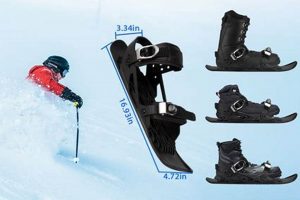
Skate cruisers represent a specific category of skateboards designed primarily for efficient transportation and comfortable riding over various urban surfaces. These boards typically feature softer wheels and a more forgiving deck construction than those intended for trick-based skating. A key characteristic is their maneuverability and ease of use for navigating sidewalks and streets.
The utility of such boards lies in their ability to provide a convenient and enjoyable means of short-distance travel. They offer a blend of exercise, recreation, and practicality, appealing to a wide range of users from students commuting to class to individuals seeking a leisurely way to explore their surroundings. Their roots trace back to the early days of skateboarding, evolving from simple transportation tools to refined recreational equipment.
The following sections will delve into the various factors that contribute to the suitability of a board for cruising, including deck materials, wheel characteristics, truck design, and overall board dimensions. These elements collectively determine the ride quality and overall user experience.
Guidance on Selecting a Suitable Board
Choosing an appropriate board requires careful consideration of several factors to ensure optimal riding experience and safety.
Tip 1: Deck Material Selection: Opt for decks constructed from durable materials such as maple or bamboo. These materials offer a balance of flexibility and strength, contributing to a smooth and stable ride.
Tip 2: Wheel Durometer Consideration: Select wheels with a lower durometer rating (78A-85A) for enhanced grip and shock absorption. Softer wheels provide a more comfortable ride on rough surfaces.
Tip 3: Truck Size and Geometry: Match truck width to the deck width to maintain stability and control. Consider reverse kingpin trucks for increased turning responsiveness.
Tip 4: Bearing Quality Assessment: Invest in high-quality bearings (ABEC 5 or higher) for smoother and faster rolling. Proper lubrication and maintenance of bearings are essential.
Tip 5: Deck Shape and Size: Choose a deck shape and size that aligns with individual preferences and riding style. Longer decks offer increased stability, while shorter decks provide greater maneuverability.
Tip 6: Bushing Selection: Select bushings with appropriate hardness to match rider weight and desired turning responsiveness. Softer bushings allow for easier turning, while harder bushings provide greater stability at higher speeds.
Tip 7: Hardware Inspection: Ensure all hardware (nuts, bolts, screws) is securely fastened before each ride. Regular inspection and replacement of worn hardware is crucial for safety.
By prioritizing quality components and proper setup, individuals can significantly enhance the performance and enjoyment derived from their board.
The subsequent sections will provide further information on specific models and brands available on the market.
1. Deck Material Quality

Deck material quality is a critical determinant of the suitability of a board for cruising. The deck, as the foundation of the board, directly influences ride comfort, stability, and overall durability. Materials possessing inherent flexibility absorb vibrations from uneven surfaces, contributing to a smoother ride. Conversely, rigid materials provide enhanced responsiveness and control, allowing for precise navigation. A compromised deck material, such as low-grade wood, may lead to premature cracking or warping, jeopardizing rider safety and diminishing the cruising experience. For instance, a deck constructed from multiple plies of high-quality maple offers a balance of flex and strength, effectively dampening road vibrations while maintaining structural integrity.
The choice of deck material also impacts the board’s weight and responsiveness. Lighter materials facilitate easier carrying and maneuverability, advantageous in urban environments. Furthermore, sustainable materials, such as bamboo, offer an environmentally conscious alternative without sacrificing performance. An example is the use of bamboo layers combined with maple in deck construction; this provides both eco-friendliness and functional strength. The selection of appropriate adhesives and manufacturing processes is also vital. Strong adhesives prevent delamination of the deck layers, while precise molding ensures consistent shape and concave, enhancing foot comfort and board control. Boards with enhanced concave provide improved foot lock-in and responsiveness during turns.
In conclusion, the selection of superior deck materials is fundamental to constructing effective boards. High-quality maple, bamboo composites, and meticulous manufacturing techniques contribute significantly to rider safety, comfort, and overall enjoyment. Neglecting deck material quality can lead to reduced board lifespan and an inferior cruising experience, highlighting the importance of this factor in the design and selection process. The investment in quality ensures a reliable and comfortable ride for a longer period.
2. Wheel Durometer Rating

Wheel durometer rating represents a crucial specification influencing the performance and suitability of boards for cruising. This rating, typically measured on the A scale, indicates the hardness of the wheel’s material and directly impacts ride comfort, grip, and roll speed.
- Grip and Traction Dynamics
Softer wheels, characterized by lower durometer ratings (e.g., 78A-85A), provide superior grip and traction, particularly on rough or uneven surfaces. This increased grip enhances stability and control, allowing for more confident navigation of urban environments. Reduced wheel slippage translates to more efficient energy transfer and improved acceleration. For a cruising board, this means easier pushing and maintenance of momentum.
- Vibration Absorption and Ride Comfort
Softer wheels excel at absorbing vibrations and road imperfections, resulting in a smoother and more comfortable riding experience. This characteristic is particularly beneficial for long-distance cruising or riding on less-than-perfect pavement. Minimizing vibrations reduces rider fatigue and enhances overall enjoyment. Boards designed for cruising commonly prioritize comfort, making softer wheels a prevalent choice.
- Roll Speed and Efficiency Considerations
While softer wheels offer enhanced grip and comfort, harder wheels (e.g., 86A and above) generally exhibit higher roll speeds on smooth surfaces. Harder compounds minimize rolling resistance, allowing for faster acceleration and greater efficiency in maintaining speed. However, this increased speed comes at the cost of reduced grip and increased vibration transmission. For cruising, a balance must be struck between roll speed and ride comfort, often leaning towards the softer end of the durometer spectrum.
- Durability and Wear Characteristics
Wheel durometer also influences wear characteristics and longevity. Softer wheels tend to wear down more quickly than harder wheels, especially on abrasive surfaces. Conversely, harder wheels are more resistant to wear but may offer a harsher ride. Regular inspection and timely replacement of worn wheels are essential to maintain optimal performance and safety. Selecting a wheel with an appropriate balance of durometer and wear resistance is crucial for maximizing the lifespan of boards used for frequent cruising.
In summary, wheel durometer rating is a pivotal factor in determining the suitability of a board for cruising. The selection of an appropriate durometer involves carefully balancing grip, comfort, roll speed, and durability to optimize the overall riding experience. Boards designed for cruising typically benefit from softer wheels that prioritize comfort and control, enhancing their practicality for urban transportation and recreational use.
3. Truck Geometry Precision
Truck geometry precision significantly influences the maneuverability, stability, and overall performance characteristics of boards designed for cruising. Variations in truck geometry, including kingpin angle, baseplate angle, and hanger width, directly affect turning response, lean angle, and stability at varying speeds. Precision-engineered trucks optimize the rider’s ability to navigate urban environments, providing responsive control and reducing the likelihood of instability.
The importance of accurate truck geometry becomes apparent when considering the practical applications of cruising boards. A well-designed truck allows for effortless carving and smooth transitions, essential for navigating crowded sidewalks and streets. In contrast, trucks with imprecise geometry may exhibit inconsistent turning behavior, leading to difficulty in maintaining balance and control. For instance, a truck with an excessively high kingpin angle might offer a tighter turning radius but compromise stability at higher speeds. The selection of a truck with geometry tailored to the intended cruising style is therefore critical. Real-world examples include trucks designed with a reverse kingpin configuration, commonly found on longboards and cruiser boards, which facilitate smooth, predictable turns and enhance stability at moderate speeds. These trucks provide a more forgiving ride compared to traditional skateboard trucks, making them well-suited for cruising applications.
In conclusion, the role of accurate truck geometry cannot be overstated in the context of cruising boards. It is a key determinant of ride quality, stability, and overall user experience. By carefully considering factors such as kingpin angle, baseplate angle, and hanger width, manufacturers can optimize truck designs to meet the specific demands of cruising applications. A thorough understanding of truck geometry principles enables riders to make informed decisions when selecting a board that aligns with their riding style and preferences. The investment in trucks with precise geometry translates to enhanced control, improved safety, and a more enjoyable cruising experience.
4. Bearing Performance Consistency

Bearing performance consistency is a pivotal factor in determining the overall quality and suitability of skate cruisers. Bearings facilitate wheel rotation, and consistent performance directly translates to smooth, predictable rides, a hallmark of effective cruising. Inconsistent bearing performance, conversely, leads to jerky movements, reduced speed, and increased rider fatigue. The efficiency of energy transfer from pushing directly correlates with bearing quality; high-quality, consistently performing bearings minimize friction, allowing riders to maintain momentum with less effort. A tangible example lies in comparing a cruiser board equipped with ABEC 7 bearings, known for their precision and tight tolerances, to one with generic, unrated bearings. The former provides a noticeably smoother and faster ride, especially over extended distances.
The practical significance of understanding bearing performance extends to board maintenance and longevity. Consistently performing bearings are less prone to premature wear and failure. They require less frequent cleaning and lubrication, reducing overall maintenance costs. Furthermore, the type of bearing seal significantly impacts performance consistency. Sealed bearings protect the internal components from dirt and debris, preserving their efficiency over time. Open bearings, while potentially faster initially, are more susceptible to contamination, leading to performance degradation and requiring more diligent maintenance. Regular inspection of bearings for signs of wear, such as excessive noise or vibration, is crucial for maintaining optimal performance and ensuring rider safety.
In summary, bearing performance consistency is an indispensable component of an effective skate cruiser. It directly impacts ride quality, energy efficiency, and board longevity. Understanding the connection between bearing quality and performance enables riders to make informed purchasing decisions and maintain their boards effectively. While often overlooked, consistent bearing performance is a fundamental aspect of a pleasurable and efficient cruising experience, distinguishing high-quality boards from their inferior counterparts. Investing in quality bearings is thus a worthwhile endeavor for any serious cruiser enthusiast.
5. Overall board dimensions

The overall dimensions of a board profoundly impact its suitability as a skate cruiser. Length, width, and wheelbase directly influence stability, maneuverability, and rider comfort. These characteristics, in turn, dictate the board’s effectiveness for navigating urban environments and its overall riding experience. A board designed for optimal cruising balances these dimensions to provide a stable platform for longer rides while maintaining the agility necessary for maneuvering through obstacles. For instance, a longer wheelbase generally increases stability at higher speeds, making it advantageous for straight-line cruising on open roads. However, an excessively long wheelbase can hinder maneuverability in congested areas. The interaction between these dimensions forms a critical aspect of what defines the board’s cruising capabilities.
Width, similarly, plays a significant role. A wider deck provides a more stable platform, enhancing balance and control, especially for riders with larger feet. However, excessive width can make the board feel less responsive and reduce its agility in tight turns. The optimal width for a skate cruiser often falls within a range that accommodates a comfortable stance while preserving the board’s ability to carve and maneuver effectively. Real-world examples include boards with a moderate concave and a width of 8.5 to 9 inches, which strike a balance between stability and responsiveness, making them well-suited for both beginners and experienced riders. Understanding these dimensional relationships allows riders to select a board that aligns with their physical build and riding style, maximizing their comfort and control. Furthermore, dimensional considerations extend to the board’s weight, which influences its portability and ease of carrying when not in use.
In summary, the overall dimensions are fundamental in defining what constitutes an effective board. The interplay of length, width, and wheelbase dictates a board’s stability, maneuverability, and comfort, ultimately influencing its suitability for cruising. Riders must carefully consider these dimensions in relation to their personal preferences and intended riding conditions to select a board that delivers an optimal cruising experience. Boards that neglect these dimensional considerations often fail to provide the necessary balance and control, hindering rider enjoyment and potentially compromising safety. Therefore, a thorough understanding of overall dimensions is essential for both manufacturers designing boards and riders selecting them.
Frequently Asked Questions About Skate Cruisers
This section addresses common inquiries and misconceptions surrounding boards designed for cruising, offering clarity on their features, benefits, and applications.
Question 1: What distinguishes a board from a standard skateboard?
Boards generally feature a longer wheelbase, softer wheels, and a focus on stability and comfort rather than trick performance. Standard skateboards prioritize maneuverability for tricks, often with harder wheels and a shorter deck.
Question 2: What is the ideal wheel durometer for cruising comfort?
A wheel durometer rating between 78A and 85A typically provides a balance of grip and shock absorption, enhancing ride comfort on varied surfaces. Lower durometer ratings offer increased cushioning but may sacrifice some roll speed.
Question 3: How does deck length influence the cruising experience?
Longer decks provide greater stability, especially at higher speeds, making them suitable for longer distances. Shorter decks offer increased maneuverability, facilitating tighter turns and navigation in crowded areas.
Question 4: Are boards suitable for beginners?
Boards are generally considered more beginner-friendly than standard skateboards due to their increased stability and ease of use. The softer wheels and wider decks contribute to a more forgiving and comfortable riding experience.
Question 5: What maintenance is required to preserve the lifespan of a board?
Regular cleaning of bearings, inspection of hardware (nuts, bolts), and periodic deck maintenance (e.g., applying sealant) are essential. Timely replacement of worn wheels and bearings will also extend the board’s lifespan.
Question 6: Can boards be used for commuting?
Boards are well-suited for short-to-medium distance commuting, offering a convenient and enjoyable alternative to walking or public transportation. Their compact size and maneuverability make them ideal for navigating urban environments.
In summary, understanding the specific design features and maintenance requirements of boards is crucial for optimizing their performance and ensuring a safe and enjoyable cruising experience. Selecting a board that aligns with individual needs and preferences will maximize its utility and longevity.
The subsequent section will provide insights into prominent brands and models available in the market.
Conclusion
This exploration has illuminated the defining characteristics and critical considerations for optimal skate cruisers. From deck materials and wheel durometer to truck geometry and bearing performance, each element contributes significantly to the overall cruising experience. Understanding these factors allows for informed decisions that enhance rider comfort, safety, and performance.
The selection and maintenance of appropriate boards represent an investment in both transportation and recreation. As urban environments continue to evolve, the utility of well-designed boards for efficient and enjoyable navigation remains a significant consideration. Prioritizing quality and informed selection ensures a reliable and fulfilling riding experience.