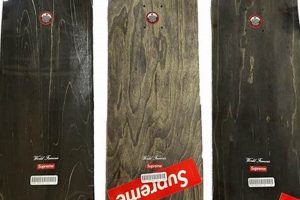
Skateboarding equipment relies heavily on the deck, the foundational platform upon which a rider stands. These platforms are typically constructed from multiple layers of pressed maple wood, shaped to provide both structural integrity and functional curvature. The quality of materials and construction directly impacts performance and durability.
The selection of a suitable platform is paramount for skateboarders. A well-crafted platform can enhance control, facilitate trick execution, and prolong the overall lifespan of the equipment. Historical advancements in manufacturing techniques have led to variations in materials, construction methods, and design aesthetics, contributing to a diverse market.
The following sections will delve into specific aspects of platform design, material composition, and performance characteristics relevant to discerning skateboarders. This exploration aims to provide a comprehensive understanding of the factors that contribute to a high-quality skateboarding experience.
Platform Selection Guidance
Optimal skateboarding performance is intrinsically linked to the selection of appropriate equipment. Attention to detail during the selection process can significantly impact a rider’s experience and skill progression.
Tip 1: Assess Material Quality: The composition of the wood layers directly influences the platform’s strength and responsiveness. Examine the grain and ensure uniform layering for optimal structural integrity.
Tip 2: Evaluate Concavity and Shape: Different concave profiles cater to various riding styles. Steeper concaves enhance foot lock-in, while mellower concaves offer greater freedom of movement. Choose a shape that aligns with intended use.
Tip 3: Consider Size and Dimensions: Width and length impact stability and maneuverability. Wider platforms provide greater stability, while narrower platforms facilitate quicker turns. Select dimensions based on foot size and preferred riding style.
Tip 4: Inspect Construction Integrity: Thoroughly examine the edges and ply layers for any signs of delamination or imperfections. A well-constructed platform will exhibit clean lines and consistent thickness throughout.
Tip 5: Research Brand Reputation: Established manufacturers often adhere to rigorous quality control standards. Research brands known for producing durable and high-performing skateboarding equipment.
Tip 6: Evaluate Graphic Application: While aesthetics are subjective, the application of graphics can indicate the overall quality of the manufacturing process. Look for clean, durable graphics that resist chipping or fading.
Tip 7: Prioritize Intended Use: The selection process should align with the rider’s intended use. Street skating may require a more durable platform than park skating, for instance.
Adherence to these guidelines ensures the selection of a suitable platform that optimizes performance, durability, and the overall skateboarding experience.
The concluding section will summarize key considerations and provide a final perspective on platform selection within the broader context of skateboarding equipment.
1. Wood Composition

The selection and arrangement of wood within skateboard decks directly influence their structural integrity, performance characteristics, and overall durability. Specifically, the wood composition of the deck is paramount in determining its response to stress, its ability to maintain shape, and its susceptibility to damage.
- Maple Ply Grade
Hard rock maple is the industry standard due to its high density and tensile strength. The grade of maple used affects deck resilience; higher grades exhibit fewer imperfections and greater uniformity, leading to improved pop and longevity. The presence of knots or inconsistent grain patterns in lower grades compromises structural integrity, increasing the risk of breakage under stress.
- Grain Orientation
The orientation of the wood grain within each ply layer significantly impacts deck strength. Alternating grain directions in successive layers creates a composite structure that resists warping and enhances overall rigidity. Improper grain orientation introduces weak points, predisposing the deck to premature failure along the grain lines.
- Ply Lamination Process
The adhesives and pressing techniques used to laminate the maple plies are critical. High-quality adhesives ensure a strong, durable bond between layers, preventing delamination under stress. The pressing process must apply uniform pressure across the entire deck surface to prevent internal voids and ensure consistent density throughout. Inadequate lamination compromises the deck’s structural integrity and reduces its lifespan.
- Wood Seasoning and Moisture Content
Proper wood seasoning and moisture control during the manufacturing process are essential. Wood that is not adequately seasoned is prone to warping and cracking as it acclimates to environmental conditions. Maintaining consistent moisture content throughout the plies prevents differential expansion and contraction, which can lead to internal stresses and premature deck failure.
The interplay of maple grade, grain orientation, ply lamination, and moisture control defines the quality and performance of a skateboard deck. Decks exhibiting careful attention to these factors offer superior strength, responsiveness, and durability, ultimately enhancing the skater’s experience and extending the product’s usable lifespan.
2. Shape Concavity

The curvature present on the surface of a skateboard deck, commonly referred to as concavity, exerts a substantial influence on the rider’s control and board feel. This element, while often subtle, fundamentally alters the rider’s interaction with the equipment and facilitates various maneuvers.
- Foot Placement and Lock-In
Deeper concavity creates a more pronounced pocket for the rider’s feet, enhancing lock-in and improving grip during maneuvers. This secure foot placement provides increased leverage and control, particularly beneficial during technical tricks that require precise foot positioning. Shallower concavity, conversely, offers greater freedom of movement, accommodating a wider range of riding styles.
- Edge Control and Responsiveness
The concavity profile dictates the responsiveness of the deck’s edges. Steeper concavity allows for quicker and more direct engagement with the riding surface, enabling faster turns and sharper edge control. This is particularly advantageous in street skating, where rapid changes in direction are frequently necessary. Milder concavity provides a more forgiving ride, suitable for cruising or learning fundamental maneuvers.
- Flicking and Board Feel
Concavity affects the ability to “flick” the board for ollies and other flip tricks. A well-defined concave provides a consistent and predictable surface for the foot to contact, facilitating precise and controlled flicks. Furthermore, the concavity contributes to the overall board feel, influencing the rider’s perception of the deck’s responsiveness and stability. Each variation of concavity offers a different sensory experience.
- Deck Stiffness and Pop
The shape and depth of the concavity can influence the overall stiffness and “pop” of a skateboard deck. Deeper concaves may increase torsional rigidity, resulting in a snappier and more responsive deck. However, excessive concavity can also compromise the deck’s durability by concentrating stress in certain areas. A balanced concavity profile optimizes both performance and longevity.
The interplay between concavity and riding style underscores the importance of selecting a deck with a profile that complements the rider’s preferences and skill level. The shape of the deck influences overall riding experience and performance potential. It is essential to consider these effects when selecting equipment.
3. Graphic Durability

The application of graphics on skateboarding decks is more than mere aesthetic embellishment; it serves as an indicator of the manufacturing standards employed in the creation of the deck itself. The durability of the graphic layer provides insight into the quality of materials used, the precision of the application process, and the overall resistance of the deck to wear and tear. Premature degradation of the graphic layer, such as chipping, peeling, or fading, suggests potential deficiencies in the construction and materials of the entire platform. For instance, a deck featuring a graphic applied with low-quality inks or inadequate sealing is likely to exhibit similar shortcomings in its structural components, resulting in diminished performance and a reduced lifespan.
The connection between graphic resilience and deck quality is further reinforced by the techniques utilized in applying the artwork. High-end skateboard manufacturing processes typically employ heat transfer or screen-printing methods, which create a robust bond between the graphic layer and the underlying wood. These methods ensure the graphic layer withstands the rigors of skateboarding, including impacts, abrasions, and exposure to environmental elements. Conversely, less sophisticated printing techniques or inadequate surface preparation can result in a graphic layer that is vulnerable to damage. Therefore, the robustness of the graphic serves as a tangible marker of the overall build quality.
Ultimately, the graphic durability serves as a readily observable characteristic that is indicative of the deck’s potential longevity and performance. While aesthetic appeal is subjective, the graphic’s resistance to wear provides a reliable assessment of the manufacturer’s commitment to quality and the deck’s capacity to endure the demands of skateboarding. A deck featuring a durable graphic signifies a higher likelihood of sound construction and prolonged utility. This principle is especially important for professional skateboarders.
4. Construction Quality

Construction quality is a critical determinant of a skateboard deck’s performance and longevity. The method of assembly, materials used, and adherence to specific manufacturing standards directly influence the deck’s ability to withstand the stresses of skateboarding. Deficient construction quality invariably leads to premature failure, impacting the rider’s experience and potentially causing injury. The connection to equipment lifespan is undeniable; superior construction translates to increased durability and resistance to common skateboarding stresses.
Specifically, within the context of skateboarding decks, construction quality manifests in several key areas. These encompass the lamination process, the selection of wood plies, and the consistency of the deck’s shape and concave. Delamination, or the separation of wood plies, is a common consequence of substandard construction. This separation compromises the deck’s structural integrity, rendering it prone to breakage under pressure. Similarly, inconsistent shape and concave affect the rider’s control and stability, increasing the likelihood of accidents. These are all symptoms of poor Construction Quality.
The practical significance of understanding the relationship between construction quality and skateboard decks lies in informed consumer choices and enhanced safety. By scrutinizing manufacturing practices, material specifications, and quality control measures, consumers can make more informed decisions when purchasing decks. This, in turn, promotes a safer and more enjoyable skateboarding experience, minimizing the risk of equipment failure and maximizing performance potential. It also holds manufacturers accountable for delivering products that meet established safety and performance standards.
5. Brand Reputation
Brand reputation within the skateboarding industry, and specifically concerning skateboard decks, functions as a crucial indicator of product quality, durability, and overall performance. A brand’s established reputation provides consumers with a level of assurance and influences purchasing decisions. In the context of decks, reputation often reflects consistent manufacturing practices, material selection, and design innovation.
- Historical Performance and Reliability
A brand’s history directly shapes its reputation. A track record of producing reliable, high-performing decks builds trust among consumers. For example, brands known for decks that resist delamination and maintain pop over extended periods typically enjoy a stronger reputation. This historical performance acts as a guarantee of future quality.
- Professional Endorsements and Sponsorships
Endorsements from professional skateboarders significantly impact brand perception. When professionals choose to ride decks from a particular brand, it signals confidence in the product’s performance capabilities. Sponsorships act as endorsements, driving brand preference and sales among aspiring skateboarders who emulate their idols.
- Community Engagement and Ethics
Brand reputation extends beyond product quality to encompass ethical considerations and community involvement. Brands that support local skate scenes, contribute to skateboarding infrastructure, or promote environmentally sustainable practices often cultivate a more positive image. This ethical stance resonates with consumers who prioritize social responsibility alongside product performance.
- Customer Feedback and Online Reviews
Modern brand reputation is heavily influenced by online reviews and customer feedback. Skateboarders frequently share their experiences with different deck brands on forums, social media, and retail websites. Positive reviews amplify a brand’s reputation, while negative feedback can quickly erode consumer confidence. Monitoring and responding to customer feedback is essential for maintaining a favorable brand image.
The interplay of these facetshistorical performance, professional endorsements, community engagement, and customer feedbackcollectively shape the brand reputation that precedes a skateboard deck. Brands that cultivate a positive reputation by consistently delivering high-quality products and engaging with the skateboarding community gain a distinct advantage in a competitive market. This reputation then acts as a key differentiator, influencing consumer choice and driving long-term brand loyalty.
Frequently Asked Questions About the Platforms
The following section addresses common inquiries regarding these platforms, aiming to provide clarity and informed perspectives on skateboard equipment.
Question 1: What factors contribute to the price variation?
The cost of skateboard decks is influenced by material quality, manufacturing processes, brand reputation, and graphic complexity. High-grade maple, advanced lamination techniques, and established brands command higher prices.
Question 2: How does deck size affect skateboarding performance?
Deck width impacts stability and responsiveness. Wider decks offer greater stability, while narrower decks facilitate quicker turns. Selection depends on foot size, riding style, and personal preference.
Question 3: What are the signs of a failing skateboarding deck?
Indicators of a failing deck include delamination of wood plies, cracks, loss of pop, and warping. These issues compromise structural integrity and warrant replacement.
Question 4: How can the lifespan of a deck be extended?
Deck lifespan can be prolonged by avoiding excessive impact, storing the deck in a dry environment, and using rail guards. Regular maintenance and careful handling are also beneficial.
Question 5: What role does the concave play in skateboarding?
Concave influences foot placement, control, and responsiveness. Deeper concaves provide enhanced lock-in, while shallower concaves offer greater freedom of movement. The ideal concave is subjective and riding-style-dependent.
Question 6: Are there environmentally friendly deck options?
Some manufacturers offer decks made from sustainable materials, such as bamboo or recycled wood. These options reduce environmental impact without necessarily sacrificing performance.
The information provided aims to address prevalent questions regarding these platforms, empowering consumers to make well-informed decisions. Understanding these nuances improves the skateboarder experience and promotes equipment longevity.
The subsequent section will provide a comprehensive conclusion, summarizing key insights and offering recommendations for prospective buyers.
Concerning Platform Selection
This exploration of skateboarding platforms has underscored the criticality of informed decision-making. Elements such as material composition, construction quality, and brand reputation have been identified as central to platform performance and longevity. While aesthetic considerations hold subjective value, the objective attributes of the deck structure directly influence the skateboarding experience. Disregarding these factors can lead to compromised performance, equipment failure, and potential injury. Therefore, thorough assessment is paramount.
Ultimately, the selection of a skateboarding platform represents an investment in both skill progression and personal safety. Prioritizing quality over cost, researching manufacturer practices, and understanding the interplay between design and performance are essential steps. This proactive approach will yield a platform that not only withstands the rigors of skateboarding but also facilitates the rider’s advancement. A well-chosen platform extends beyond mere equipment; it becomes an extension of the rider, enabling them to push boundaries and realize their full potential within the sport. The responsibility for informed selection rests with the individual, ensuring a safe and fulfilling engagement with skateboarding.


![Buy the Best Toy Machine Skate Decks | [Year] Guide | How to Skateboard: A Beginner's Guide to Your First Board & Tricks](https://cruzskateshop.com/wp-content/uploads/2026/03/th-366-300x200.jpg "Buy the Best Toy Machine Skate Decks | [Year] Guide How to Skateboard: A Beginner's Guide to Your First Board & Tricks")