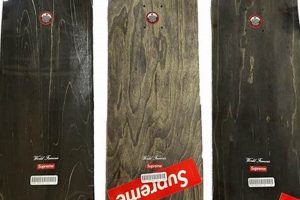
A decorative arrangement of repurposed skateboard platforms mounted on a vertical surface. This artistic display transforms discarded sporting equipment into an eye-catching visual element. For example, a collection of boards with vibrant graphics and varying wear patterns can become a focal point in a room.
Such a design offers a sustainable method of recycling materials, preventing them from ending up in landfills. Furthermore, it provides a unique aesthetic that reflects an appreciation for skateboarding culture. Historically, individuals within the skateboarding community have sought creative outlets for expressing their identity, and this is one such avenue.
The following sections will delve into specific techniques for constructing and maintaining these installations, explore diverse design approaches, and offer considerations for ensuring structural integrity and long-term preservation.
Essential Guidance for a Skateboard Platform Display
The construction of a visually appealing and structurally sound skateboard platform display requires careful planning and execution. The following guidance ensures both aesthetic success and long-term durability.
Tip 1: Selection of Platforms: Carefully assess each platform for structural integrity. Avoid using boards with significant cracks or delamination, as these compromise the overall stability of the installation. Consider the aesthetic appeal, ensuring a cohesive theme through color, graphics, or wear patterns.
Tip 2: Mounting Method Selection: Several mounting methods exist, each with varying degrees of permanence and ease of installation. Consider using discreet brackets for individual platforms or constructing a supporting frame for attaching multiple boards. Choose hardware appropriate for the wall material and the weight of the platforms.
Tip 3: Layout Planning: Before mounting, create a detailed layout. This can be achieved through digital design or physical mockups. Consider the spacing between platforms and the overall symmetry or asymmetry of the arrangement. Ensure the layout complements the existing architectural features of the room.
Tip 4: Secure Fastening: When using screws, pre-drill pilot holes to prevent splitting the wood. Employ appropriate anchors for drywall or masonry walls to ensure a secure hold. Regularly inspect the mounting hardware for any signs of loosening or wear.
Tip 5: Consistent Spacing: Precise and consistent spacing between the platforms contributes significantly to the overall visual appeal. Utilize spacers or templates during installation to maintain uniform gaps.
Tip 6: Consider a Sealer: Application of a clear sealant can protect the platform’s graphics and prevent further wear. Choose a sealant that is compatible with the existing finish of the platforms and apply it in a well-ventilated area.
Tip 7: Weight Distribution: If creating a large display, carefully consider the weight distribution. Distribute heavier platforms evenly across the installation to prevent undue stress on specific mounting points.
Adherence to these guidelines ensures the creation of a visually striking and structurally sound decorative skateboard platform arrangement. The result is a unique conversation piece and a lasting testament to the enduring appeal of skateboarding culture.
The subsequent sections will explore diverse design options and address advanced considerations for creating elaborate and customized installations.
1. Aesthetic Arrangement

Aesthetic arrangement plays a fundamental role in the visual impact and perceived value of any skateboard platform display. It transcends mere organization, encompassing the intentional manipulation of visual elements to create a cohesive and pleasing composition that resonates with the viewer.
- Color Palette Harmony
The selection and arrangement of platforms based on color is a critical aspect. The interplay of colors, whether complementary, analogous, or monochromatic, significantly influences the overall mood and visual appeal. For example, a collection of decks with a consistent color scheme, such as varying shades of blue and grey, creates a serene and sophisticated aesthetic. Conversely, a deliberate contrast of vibrant and muted colors can generate a dynamic and energetic display. The chosen palette should complement the surrounding environment and reflect the desired aesthetic.
- Graphic Composition and Flow
The design and placement of graphics contribute significantly to the visual narrative. Consider the flow of images and patterns across multiple platforms. A deliberate arrangement might create a larger composite image or a series of related motifs. Conversely, a random assortment of graphics can generate a sense of organized chaos. The key is to establish a visual rhythm that guides the eye and maintains interest.
- Spatial Relationships and Balance
The spacing and positioning of individual platforms dictate the overall balance and proportion of the arrangement. Symmetrical layouts offer a sense of formality and order, while asymmetrical compositions can introduce dynamism and visual intrigue. Careful consideration of negative spacethe empty areas surrounding the platformsis essential for achieving visual equilibrium. Overcrowding or excessive spacing can detract from the overall aesthetic.
- Platform Condition and Texture
The physical condition of the platforms, including wear patterns and surface texture, contributes to the overall aesthetic. Worn and weathered decks possess a certain patina that conveys authenticity and history. Conversely, pristine and unblemished platforms offer a cleaner, more modern aesthetic. The juxtaposition of different textures, such as smooth graphics and rough grip tape, can add depth and visual interest.
The aesthetic arrangement of a skateboard platform wall is not merely a matter of chance; it is a deliberate and considered process that transforms repurposed materials into a cohesive work of art. By carefully manipulating color, graphics, spatial relationships, and platform condition, individuals can create visually stunning and meaningful displays that reflect their personal style and appreciation for skateboarding culture. The result is a compelling visual narrative which reflects a respect for skating culture, but also the creativity behind it.
2. Structural Integrity

The long-term success and safety of any repurposed skateboard platform installation hinges upon its structural integrity. This factor dictates the installation’s ability to withstand gravitational forces, resist environmental stressors, and maintain its aesthetic appeal over time. The correlation between structural integrity and the longevity of the display is direct: compromised integrity inevitably leads to instability, potential collapse, and a degraded visual presentation. For example, using water-damaged platforms or inadequate mounting hardware can result in the entire display detaching from the wall, posing a safety hazard and rendering the artistic effort futile. The selection of sound platforms, proper mounting hardware, and secure attachment methods are essential components to ensuring the display will last a long time and have visual appeal.
Several real-world scenarios underscore the practical significance of this understanding. In commercial spaces, where larger installations are often employed as decorative elements, the consequences of structural failure can be severe, potentially leading to property damage or personal injury. Careful consideration must be given to weight distribution, load-bearing capacity, and the type of wall material used for mounting. Regular inspections and maintenance are crucial for identifying and addressing any signs of weakening or deterioration. Moreover, in areas prone to seismic activity, adherence to stringent building codes and the implementation of specialized anchoring systems are paramount for preventing catastrophic failure. The material the platform is made from is also important when ensuring structural integrity. Hardwood platforms will hold up better than platforms manufactured from softwood materials.
In summary, structural integrity is not merely a technical consideration but a fundamental prerequisite for the successful creation and maintenance of a decorative skateboard platform display. Neglecting this aspect compromises the installation’s safety, longevity, and aesthetic value. Prioritizing sound construction practices, utilizing appropriate materials and hardware, and implementing regular inspection protocols are essential for ensuring the enduring integrity and visual appeal of the decorative piece.
3. Mounting Techniques

Mounting techniques are integral to the successful creation and display of repurposed skateboard platform arrangements. The choice of method directly impacts the aesthetic outcome, structural stability, and long-term durability of the installation.
- Direct Wall Mounting
This involves directly attaching platforms to the wall using screws, nails, or adhesives. While seemingly straightforward, it necessitates precise measurements and pilot drilling to avoid splitting the wood. This is a simple solution but lacks the option to easily reposition or remove the platforms without damage. Considerations must be made for wall type, such as drywall, plaster, or concrete, which would influence the type of anchor used and the amount of weight the mounting can handle.
- Bracket Systems
The implementation of brackets allows for a more flexible and secure mounting solution. Brackets can be attached to the wall first, and platforms then secured to the brackets. This distributes the weight more evenly and allows for easier repositioning or removal of individual platforms. The aesthetic of the brackets themselves becomes a consideration; concealed brackets offer a cleaner look, while exposed brackets can contribute to an industrial aesthetic. The materials chosen for the brackets must be suitable for the weight they’re expected to bear. The brackets need to not be flimsy, and the weight they can bear must be clearly stated.
- Rail Systems
Rail systems provide a continuous support structure to which platforms can be attached. This method is particularly suitable for larger displays as it distributes the weight across multiple points. Rail systems also offer a high degree of adjustability, allowing for changes in platform placement without requiring new holes in the wall. It allows a gallery feel and the ability to rearrange the mounted displays. The material of the rail matters as some materials are prone to bend and buckle and should be avoided.
- Floating Mounts
Achieving a floating effect involves concealing the mounting hardware entirely, giving the illusion that the platforms are suspended on the wall. This technique typically involves specialized hardware and precise installation. Floating mounts prioritize aesthetics but may compromise structural integrity if not executed correctly. They also may not be as durable as the other options provided.
The selection of an appropriate mounting technique depends on the specific requirements of the display, including the size, weight, aesthetic goals, and the type of wall surface. Each method presents a trade-off between ease of installation, structural stability, adjustability, and visual impact. Careful consideration of these factors ensures a successful and enduring installation.
4. Platform Selection

The selection of skateboard platforms directly influences the visual appeal, structural integrity, and overall narrative conveyed by a “skate deck wall.” The condition of the platforms, ranging from pristine to heavily worn, dictates the aesthetic character of the display. For example, a collection of boards with vibrant, intact graphics may project a modern and energetic feel, while a selection of weathered and scarred decks evokes a sense of history and authenticity. The choice to prioritize specific brands, graphic styles, or production eras further refines the aesthetic message. The cause-and-effect relationship is evident: the intentional curation of platform characteristics shapes the viewer’s perception and experience of the completed “skate deck wall.” The absence of careful platform selection diminishes the intended artistic expression and may compromise structural soundness.
The structural properties of the platforms are equally critical. Delamination, cracks, or warping can compromise the integrity of the entire installation, particularly in larger or more complex arrangements. Using damaged decks may lead to instability and potential collapse, posing a safety hazard. Therefore, a practical application of platform selection involves rigorous inspection for structural flaws before incorporating a deck into the “skate deck wall.” Furthermore, the material composition of the platformstypically maple woodaffects their weight and durability, factors that must be considered when determining appropriate mounting techniques. A mix of different platform materials will result in differences in visual aesthetic and/or durability depending on the conditions of the environment the deck is in.
In summary, platform selection is a foundational component of a successful “skate deck wall.” The careful consideration of aesthetic qualities, structural integrity, and material properties determines the installation’s visual impact, longevity, and safety. Neglecting platform selection introduces challenges in both design and execution, potentially undermining the intended artistic expression and creating structural vulnerabilities. The process reflects the curator’s vision and understanding of both skateboarding culture and the principles of visual art.
5. Sustainability

The repurposing of skateboard platforms into decorative “skate deck walls” directly addresses principles of sustainability by mitigating waste and promoting resource conservation. This practice offers a tangible alternative to discarding used skateboards, preventing their accumulation in landfills and reducing the demand for virgin materials in new product manufacturing.
- Waste Reduction
The core sustainability benefit lies in diverting used skateboards from waste streams. Skateboards, often constructed from multiple layers of hardwood maple, represent a significant consumption of natural resources. By extending the lifespan of these materials through creative repurposing, the volume of waste requiring disposal is directly diminished. This is an example of “reduce, reuse, recycle” in action, focusing on reuse as a preferred method of waste management.
- Resource Conservation
Manufacturing new skateboards necessitates the harvesting of trees, processing of wood, and transportation of materials. Creating a “skate deck wall” from discarded boards reduces the need for these resource-intensive processes. The energy consumption and environmental impact associated with manufacturing and distribution are thereby lessened. This contributes to the conservation of forests and reduces the carbon footprint associated with the production of consumer goods.
- Upcycling and Creative Reuse
The transformation of used skateboards into decorative art represents upcycling, a process that converts waste materials into products of higher value or quality. This not only prevents waste but also encourages creative problem-solving and innovative design. “Skate deck walls” exemplify how discarded items can be reimagined and repurposed, contributing to a circular economy that minimizes resource depletion.
- Promotion of Environmental Awareness
The aesthetic appeal and unique character of “skate deck walls” can serve as a visual reminder of the importance of sustainability and responsible consumption. By showcasing the potential for repurposing materials, these installations can inspire others to adopt more environmentally conscious practices. They act as a tangible representation of sustainable principles, fostering a greater awareness of environmental issues and promoting a culture of resourcefulness.
These facets underscore the symbiotic relationship between “skate deck walls” and sustainability. The practice of transforming used skateboards into decorative elements not only provides an aesthetically pleasing outcome but also actively contributes to waste reduction, resource conservation, and a heightened awareness of environmental responsibility. The “skate deck wall,” therefore, stands as a testament to the potential for creative reuse in promoting a more sustainable future.
6. Artistic Expression

The creation of a “skate deck wall” intrinsically embodies artistic expression, extending beyond mere functional repurposing of materials. The selection, arrangement, and presentation of skateboard platforms transforms them into a visual narrative reflecting individual or collective identity, values, and aesthetic preferences. The discarded skate deck becomes a medium, akin to canvas or clay, for conveying personal narratives and cultural influences. For example, a “skate deck wall” comprised of decks featuring DIY graphics and worn surfaces communicates a raw, unfiltered artistic statement rooted in the subculture of skateboarding. In contrast, a curated collection of commercially produced decks showcasing iconic pop-art imagery signals an engagement with broader artistic trends. Thus, the artistic expression is not incidental, but rather a defining element of the “skate deck wall,” shaping its meaning and impact.
The importance of artistic expression as a component of a “skate deck wall” is evident in its ability to transcend purely decorative function. The arrangement becomes a deliberate act of communication, conveying messages related to skateboarding culture, personal identity, or artistic appreciation. Consider a “skate deck wall” designed as a tribute to a local skate park, incorporating decks bearing the names of local skaters or imagery referencing the park’s architecture. This project transforms a collection of objects into a commemorative artwork that strengthens community bonds. Furthermore, the aesthetic choices involved in creating a “skate deck wall” reflect the creator’s understanding of design principles, such as color theory, composition, and spatial relationships. These principles are deliberately applied to achieve a desired visual effect and enhance the overall artistic impact.
In summary, the “skate deck wall” serves as a potent medium for artistic expression, enabling individuals to transform repurposed materials into meaningful visual statements. The careful selection and arrangement of skate decks allows for the communication of personal narratives, cultural values, and aesthetic preferences. Recognizing the artistic potential inherent in “skate deck walls” enhances their value beyond simple decoration, elevating them to the level of compelling and thought-provoking artworks. A challenge, however, lies in striking a balance between individual expression and maintaining structural integrity, ensuring that artistic choices do not compromise the stability and longevity of the wall.
Frequently Asked Questions
The following addresses common inquiries concerning the creation, maintenance, and structural considerations associated with decorative skateboard platform installations.
Question 1: What factors determine the longevity of a skateboard platform arrangement?
The lifespan of such an arrangement is contingent upon several elements: the quality of the skateboards selected, the mounting hardware employed, and the environmental conditions to which the installation is exposed. Boards exhibiting delamination or significant damage will compromise overall structural integrity. Similarly, inadequate mounting hardware can result in instability and eventual collapse. Exposure to excessive moisture or extreme temperature fluctuations may accelerate deterioration.
Question 2: How does one mitigate the risk of structural failure in larger skateboard platform arrangements?
Mitigation strategies involve meticulous planning and execution. A robust support structure, often constructed from wood or metal, is essential for distributing weight evenly across the wall. Mounting hardware must be appropriate for the wall type and capable of withstanding the cumulative weight of the boards. Regular inspections should be conducted to identify and address any signs of loosening or stress.
Question 3: What are the optimal cleaning methods for maintaining a skateboard platform arrangement?
Cleaning protocols depend on the finish and materials of the skateboard platforms. Generally, a soft cloth dampened with a mild detergent solution is sufficient for removing dust and surface dirt. Abrasive cleaners and harsh chemicals should be avoided, as they may damage the graphics or finish. For boards with grip tape, a specialized grip tape cleaner can be used to remove debris.
Question 4: How does the selection of skateboard platforms influence the aesthetic impact of the arrangement?
The aesthetic character is directly shaped by the boards themselves. The presence of vibrant graphics or muted tones sets the mood. Identical color themes or styles can lead to a cohesive, harmonious display, and varied and unique colors can create a more eclectic and diverse arrangement. The presence of damage from skateboarding on the decks might influence the theme or style of the arrangement as well. The skateboard platforms used should reflect the artist’s intended theme and tone of the piece.
Question 5: Can a skateboard platform arrangement be adapted for outdoor display?
Outdoor installations present unique challenges. Exposure to the elements necessitates the use of weather-resistant materials and protective coatings. Skateboards should be sealed with a UV-resistant finish to prevent fading and deterioration. Mounting hardware must be corrosion-resistant. Furthermore, the arrangement should be positioned in a location sheltered from direct sunlight and excessive moisture.
Question 6: What are the considerations for integrating a skateboard platform arrangement into a specific architectural style?
Successful integration requires careful consideration of the existing architectural elements. In minimalist spaces, a clean and uncluttered arrangement with a limited color palette may be most effective. In more ornate environments, a bolder and more elaborate display might be appropriate. The scale of the arrangement should be proportional to the size of the room, and the style should complement the overall aesthetic.
These FAQs provide essential insights into the multifaceted aspects of skateboard platform arrangements, offering guidance for creating visually appealing and structurally sound installations.
The following section will delve into case studies of successful skateboard platform arrangements, highlighting diverse design approaches and innovative implementation strategies.
Skate Deck Wall
The preceding exploration has illuminated the multifaceted nature of the skate deck wall. From its structural underpinnings and aesthetic potential to its implications for sustainability and artistic expression, the analysis reveals a complex interplay of factors. The construction of a durable and visually compelling skate deck wall requires a synthesis of practical skills, design sensibilities, and an understanding of material properties. The successful implementation transcends mere assembly, representing a conscious engagement with resourcefulness and creative problem-solving.
As interest in sustainable design and alternative art forms continues to grow, the skate deck wall stands as a testament to the transformative power of repurposing. Its enduring appeal lies not only in its visual dynamism but also in its ability to embody a narrative of cultural relevance and environmental consciousness. Further exploration of innovative construction techniques and design strategies will undoubtedly expand the potential of the skate deck wall as both a functional element and a compelling artistic statement. Its continued evolution promises to push the boundaries of creative reuse and contribute to a more sustainable and aesthetically engaging built environment.



![Buy the Best Toy Machine Skate Decks | [Year] Guide | How to Skateboard: A Beginner's Guide to Your First Board & Tricks](https://cruzskateshop.com/wp-content/uploads/2026/03/th-366-300x200.jpg "Buy the Best Toy Machine Skate Decks | [Year] Guide How to Skateboard: A Beginner's Guide to Your First Board & Tricks")