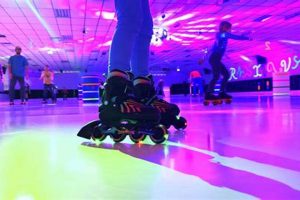
Inline skates designed for extended outdoor use are often referred to as models suited for distance activities. These skates prioritize comfort, stability, and efficiency over high-performance tricks or aggressive maneuvers. A typical example would be a skate with larger wheels (90mm or larger), a comfortable boot with ample padding, and a frame designed to dampen vibrations and maximize energy transfer.
The significance of these skates lies in their ability to facilitate long-distance skating with reduced fatigue and increased enjoyment. The larger wheels provide a smoother roll over varied surfaces, improving speed and efficiency. Historically, these types of skates evolved from recreational models as skaters sought to cover longer distances for fitness, commuting, or exploration.
The following sections will delve into the specific components that define a skate optimized for long-distance activities, discussing features such as wheel size and hardness, boot construction, frame materials, and bearing types. Each of these elements contributes to the overall performance and suitability of the skate for covering significant distances.
Skating for Distance
Selecting appropriate skates and maintaining proper technique are paramount for successful long-distance skating. Attention to detail enhances comfort, efficiency, and safety, ultimately contributing to a more rewarding experience.
Tip 1: Prioritize Comfort. The boot should fit snugly but not restrictively. Pressure points can lead to blisters and discomfort over long distances. Heat-moldable boots offer a customizable fit, often resolving common fit issues.
Tip 2: Optimize Wheel Size and Hardness. Larger diameter wheels (90mm-110mm) generally provide a smoother and faster roll. Wheel hardness, measured in durometer (A), should be chosen based on skating surface; softer wheels offer better grip on rough surfaces, while harder wheels are more efficient on smooth pavement.
Tip 3: Ensure Proper Bearing Maintenance. Clean and lubricate bearings regularly to reduce friction and maintain speed. Dirty or dry bearings can significantly increase effort and reduce overall performance.
Tip 4: Focus on Efficient Stride Technique. A long, smooth stride, emphasizing a full extension of the leg and a controlled push-off, maximizes efficiency and reduces fatigue. Avoid short, choppy strides that waste energy.
Tip 5: Implement a Consistent Training Regimen. Gradually increase skating distance and frequency to build endurance and strengthen relevant muscle groups. Incorporate cross-training activities such as cycling or swimming to enhance overall fitness.
Tip 6: Hydrate and Fuel Properly. Maintain adequate hydration and consume energy-rich foods before, during, and after extended skating sessions. Dehydration and insufficient energy intake can lead to fatigue and decreased performance.
By adhering to these guidelines, skaters can maximize their enjoyment and minimize potential issues associated with covering significant distances. Proper preparation and technique are crucial for a safe and efficient experience.
The subsequent section will examine the specific equipment choices that further enhance comfort and performance for long-distance skating, focusing on protective gear and accessories.
1. Wheel Diameter and Tour Inline Skates
Wheel diameter is a critical parameter in the design and selection of skates intended for distance activities. It directly impacts speed, roll efficiency, and the ability to navigate varied terrains. Understanding the implications of wheel size is crucial for optimizing the skating experience.
- Speed and Efficiency
Larger diameter wheels inherently possess a higher rolling speed. This is due to a reduced rolling resistance for a given rotational velocity. For example, a 100mm wheel will cover more ground per rotation than an 80mm wheel, requiring less effort to maintain a given speed. In the context of tour inline skates, this translates to greater efficiency and reduced fatigue over long distances.
- Roll Over Obstacles
The ability to roll over cracks, pebbles, and other surface irregularities is significantly enhanced with larger wheels. A larger wheel encounters obstacles at a shallower angle, reducing the impact and maintaining momentum. This feature is particularly important for tour inline skates, as outdoor environments often present uneven surfaces.
- Energy Expenditure
While larger wheels provide efficiency at higher speeds, they can also require more initial energy to accelerate. However, once at cruising speed, the reduced rolling resistance translates into lower energy expenditure over time. For tour inline skates, the benefits of sustained efficiency outweigh the initial acceleration cost.
- Maneuverability Considerations
Larger wheels, while beneficial for speed and efficiency, can slightly reduce maneuverability compared to smaller wheels. The longer wheelbase can make quick turns and sharp maneuvers more challenging. Designers of tour inline skates often strike a balance between speed and maneuverability by selecting wheel sizes that optimize long-distance performance without sacrificing control.
The selection of appropriate wheel diameter for long-distance skating involves considering the trade-offs between speed, roll-over capability, energy expenditure, and maneuverability. Skates optimized for this purpose typically feature wheels in the 90mm to 110mm range, depending on the skater’s preference and the typical skating environment. Proper wheel diameter selection contributes significantly to the overall comfort and efficiency during extended skating sessions.
2. Boot Comfort

Boot comfort is a paramount consideration in the design and selection of skates specifically intended for extended outdoor skating. Unlike skates designed for short bursts of activity or specialized maneuvers, those used for distance activities necessitate a higher degree of ergonomic design to mitigate fatigue and prevent injury.
- Anatomical Fit and Support
The boot’s internal structure must conform closely to the anatomical contours of the foot, providing consistent support without creating localized pressure points. This involves careful consideration of the ankle, arch, and metatarsal regions. For tour inline skates, a well-fitted boot reduces the likelihood of blisters, chafing, and other discomforts that can arise during prolonged use.
- Ventilation and Moisture Management
Extended physical exertion generates significant heat and perspiration. Adequate ventilation is essential to dissipate heat and prevent moisture buildup within the boot. Materials with moisture-wicking properties, coupled with strategically placed ventilation ports, contribute to a drier and more comfortable internal environment. This is particularly important for tour inline skates, where prolonged use in varying weather conditions is common.
- Cushioning and Impact Absorption
The boot’s sole and internal padding must provide sufficient cushioning to absorb impact forces generated during skating. This not only enhances comfort but also reduces stress on joints and ligaments. For tour inline skates, impact absorption is crucial for mitigating the effects of uneven surfaces and prolonged vibration, thereby minimizing fatigue and the risk of injury.
- Adjustability and Customization
The ability to fine-tune the boot’s fit through adjustable straps, buckles, or heat-moldable liners allows skaters to achieve a customized level of comfort and support. This is particularly beneficial for individuals with unique foot shapes or those seeking to optimize performance. Tour inline skates often incorporate features that allow for precise adjustments to accommodate individual preferences and anatomical variations.
The aggregate effect of these features is a skating experience that minimizes discomfort and maximizes endurance. A well-designed boot, optimized for comfort, directly enhances the ability to undertake long-distance skating activities with reduced risk of injury and increased overall enjoyment. Skates intended for covering significant distances must prioritize boot construction as a fundamental aspect of their design.
3. Frame Stiffness

Frame stiffness, as it relates to inline skates designed for distance, is a crucial parameter dictating the efficiency of energy transfer from the skater to the wheels. A stiffer frame minimizes energy loss due to flex during the push-off phase of the skating stride. This direct correlation between frame stiffness and energy transfer translates to improved speed and reduced fatigue over extended distances. Conversely, a frame with excessive flex dissipates energy, requiring the skater to exert more effort to maintain a given speed. Consider, for instance, two skaters using identical boots and wheels, but one employing a frame constructed from a high-modulus carbon fiber composite (high stiffness) and the other a frame of extruded aluminum (moderate stiffness). Over a 20-mile course, the skater with the stiffer frame would likely experience less fatigue and achieve a faster overall time, assuming equivalent fitness levels and technique.
The selection of appropriate frame stiffness is not without nuance. While maximizing stiffness is generally desirable for efficiency, excessively rigid frames can transmit more road vibration to the skater’s feet and ankles, potentially leading to discomfort or fatigue over very long distances. Frame material and design elements such as bracing and cross-sectional shape significantly influence stiffness. Manufacturers often employ computational analysis and real-world testing to optimize frame designs, striking a balance between stiffness, weight, and vibration damping characteristics. For example, some frames incorporate strategically placed cutouts or dampening materials to mitigate vibration without compromising overall stiffness.
In summary, frame stiffness plays a vital role in the performance of distance inline skates. Understanding the relationship between frame stiffness, energy transfer, and vibration damping allows skaters to make informed equipment choices. While increased stiffness generally equates to improved efficiency, consideration must be given to potential trade-offs in comfort, especially for ultra-distance skating. The ideal frame balances stiffness with acceptable vibration damping to optimize both performance and comfort over extended periods of use.
4. Bearing Quality

Bearing quality is a pivotal factor influencing the performance and longevity of tour inline skates. It directly affects rolling resistance, speed, and the overall efficiency of the skating experience, particularly over extended distances. The selection of appropriate bearings is therefore a critical consideration for skaters seeking to maximize their performance and minimize fatigue during prolonged use.
- Precision and Tolerances
The precision with which bearings are manufactured dictates their rolling efficiency. Tighter tolerances and higher-grade materials reduce friction and improve the smoothness of the rolling motion. For tour inline skates, this translates to less energy expenditure to maintain a given speed. For example, bearings with an ABEC (Annular Bearing Engineers’ Committee) rating of 7 or higher are often preferred for their superior precision and reduced rolling resistance compared to lower-rated bearings.
- Material Composition
The materials used in bearing construction significantly impact their durability and resistance to corrosion. High-carbon chromium steel is a common material choice due to its hardness and ability to withstand high loads. Ceramic bearings, while more expensive, offer even lower friction and greater resistance to heat and corrosion, making them suitable for demanding long-distance applications. In the context of tour inline skates, the choice of material should balance performance requirements with considerations of cost and environmental conditions.
- Sealing and Lubrication
Effective sealing is crucial to prevent contaminants such as dirt, dust, and moisture from entering the bearing and degrading its performance. Sealed bearings offer enhanced protection compared to open bearings. Lubrication further reduces friction and dissipates heat. Regular cleaning and lubrication with appropriate lubricants are essential to maintain bearing performance and extend their lifespan. For tour inline skates, which are often used in varied and potentially harsh outdoor environments, robust sealing and lubrication are paramount.
- Load Capacity and Durability
The load capacity of a bearing refers to its ability to withstand the forces applied during skating without deformation or failure. Bearings used in tour inline skates must be able to handle the sustained loads associated with long-distance skating, including the skater’s weight, impact forces, and lateral loads. Selecting bearings with an appropriate load capacity ensures longevity and prevents premature wear or failure. Bearings designed for heavier loads typically incorporate larger ball bearings and thicker races to enhance their structural integrity.
In conclusion, bearing quality is an integral component of tour inline skate performance. The precision, material composition, sealing, lubrication, and load capacity of bearings collectively determine their efficiency and durability. Skaters investing in high-quality bearings can expect improved speed, reduced fatigue, and a longer lifespan for their skates, ultimately enhancing the overall skating experience. Regular maintenance, including cleaning and lubrication, is also crucial to maximize bearing performance and longevity.
5. Braking System

The braking system on skates designed for extended outdoor use is a critical safety component, directly impacting the skater’s ability to control speed and avoid hazards encountered during distance activities. Its effectiveness is paramount due to the higher speeds and varied terrains often associated with such skating. A reliable system mitigates risk and enhances the overall skating experience.
- Heel Brake Mechanism
The heel brake is a common configuration, employing a brake pad affixed to the rear of one skate. Activation occurs by plantar flexing the ankle, causing the pad to contact the ground. Its simplicity and ease of use make it suitable for novice skaters and controlled environments. For long distance skating, some skaters find it disruptive to their stride, preferring alternative methods.
- Inline Frame Brake Systems
Some frame designs incorporate braking mechanisms directly into the frame structure. These systems may utilize a lever or cable to activate a brake pad located near the wheels. This configuration provides a more integrated braking experience and can offer improved control compared to traditional heel brakes. However, frame brake systems are often more complex and require more maintenance.
- Alternative Braking Techniques
Advanced skaters may rely on techniques such as T-stops, plow stops, or controlled slides to manage speed and stop. These techniques require considerable skill and practice but offer greater control and responsiveness compared to mechanical braking systems. The reliance on alternative techniques is often observed among experienced skaters who prioritize efficiency and control over the convenience of a mechanical brake.
- Brake Pad Materials and Durability
The material composition of the brake pad significantly affects its stopping power and lifespan. Rubber compounds are commonly used, with varying levels of hardness and abrasion resistance. For tour inline skates, durable brake pads are essential to withstand the frequent use associated with long-distance skating. Regular inspection and replacement of worn brake pads are crucial for maintaining optimal braking performance.
The selection and maintenance of the braking system for skates designed for extended outdoor use involves considering the skater’s skill level, the intended skating environment, and personal preferences. Mechanical braking systems offer convenience and ease of use, while alternative techniques provide greater control and responsiveness. Regardless of the method chosen, a reliable braking system is indispensable for ensuring safety and confidence during distance skating activities.
Frequently Asked Questions
The following questions address common concerns and considerations related to inline skates designed for extended outdoor use. Understanding these aspects is crucial for making informed purchasing decisions and ensuring a safe and enjoyable skating experience.
Question 1: What wheel size is optimal for tour inline skates?
Wheel size is a significant factor. Larger wheels (90mm-110mm) generally provide smoother roll and greater speed, advantageous for covering long distances. However, smaller wheels offer increased maneuverability. The ideal size balances speed and control based on individual skill and typical skating terrain.
Question 2: How important is boot comfort for long-distance skating?
Boot comfort is paramount. Extended skating sessions necessitate a well-fitting boot that minimizes pressure points and prevents blisters. Heat-moldable boots or those with ample padding and ventilation are recommended to ensure sustained comfort.
Question 3: What role does frame material play in the performance of tour inline skates?
Frame material influences stiffness and vibration absorption. Stiffer frames enhance energy transfer and improve efficiency. However, overly rigid frames can transmit excessive road vibration. Composite or aluminum frames, designed for balanced stiffness and vibration dampening, are often preferred.
Question 4: Why is bearing quality important for distance skating?
Bearing quality directly impacts rolling resistance and speed. High-precision bearings minimize friction, allowing for smoother and more efficient skating. Investing in quality bearings reduces energy expenditure and enhances overall performance over long distances.
Question 5: What type of braking system is recommended for tour inline skates?
The preferred braking system depends on individual skill and comfort level. Heel brakes are common and easy to use, while some skaters prefer alternative braking techniques like T-stops for increased control. A reliable and well-maintained braking system is essential for safety, regardless of type.
Question 6: How frequently should tour inline skates be maintained?
Maintenance frequency depends on usage intensity and environmental conditions. Regular cleaning of bearings and wheels is crucial. Brake pads should be inspected and replaced as needed. Routine maintenance ensures optimal performance and prolongs the lifespan of the skates.
These answers provide a foundational understanding of key considerations related to skates designed for extended outdoor use. Careful attention to these factors contributes to a safer and more efficient skating experience.
The next section will address essential safety equipment and accessories for long-distance skating, further emphasizing the importance of preparation and precaution.
Conclusion
This exploration of tour inline skates has highlighted the critical features that contribute to performance, comfort, and safety. Factors such as wheel diameter, boot construction, frame stiffness, bearing quality, and braking systems have been examined in detail. Selecting the appropriate skate involves considering the trade-offs between these elements and aligning them with the intended use and skill level of the skater.
The information presented serves as a foundation for informed decision-making, promoting responsible skating practices. Prioritizing equipment selection and maintenance enhances both the enjoyment and safety of long-distance skating. The pursuit of optimal skating experiences relies on a thorough understanding of the technical aspects inherent in the design and function of skates for extended outdoor use.