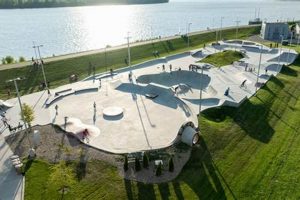
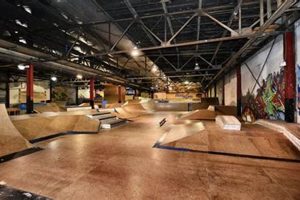
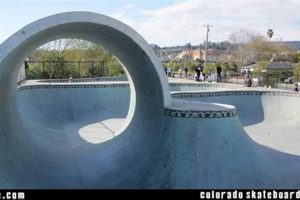
An undisclosed location featuring a skateboarding facility, typically built and maintained without official sanction, offers a unique recreational outlet. These sites often emerge in abandoned spaces, under bridges, or on privately owned land, providing skateboarders with a place to practice and develop their skills outside of established skateparks. The construction is frequently a collaborative effort among skaters, utilizing repurposed materials and community resources.
The allure of these unsanctioned skateboarding environments stems from several factors. They provide a sense of ownership and creative freedom for the skateboarding community. Often, these locations offer challenges and features not found in conventional parks, fostering innovation and skill progression. Historically, such environments have served as breeding grounds for skateboarding culture, influencing trick development and community bonds. The absence of formal regulation can lead to increased risk, but also allows for a different kind of skateboarding experience.
Considerations surrounding safety, legality, and environmental impact are paramount when discussing these locales. Understanding the motivations behind their creation, along with the potential consequences, is essential for a comprehensive examination of this unique aspect of skateboarding culture. The following will delve into the specific challenges and advantages inherent in these alternative recreational spaces.
The following provides critical advice for individuals choosing to engage with skateboarding facilities built and maintained outside of official channels. Safety and awareness are paramount in these unregulated environments.
Tip 1: Conduct Thorough Reconnaissance: Prior to engagement, assess the structural integrity of ramps and obstacles. Look for signs of damage, wear, or instability that may present hazards. Consider the location’s accessibility in case of emergency.
Tip 2: Prioritize Personal Protective Equipment: Helmets, knee pads, elbow pads, and wrist guards are non-negotiable. The absence of professional oversight necessitates a heightened emphasis on self-preservation. Full coverage is recommended.
Tip 3: Assess Environmental Hazards: Be mindful of the surrounding environment. Look for broken glass, exposed nails, uneven surfaces, or other debris that could cause injury. Consider the potential for weather-related hazards, such as slippery surfaces after rain.
Tip 4: Skate Within Skill Level: Avoid attempting maneuvers beyond one’s established capabilities. Unfamiliar terrain and potentially compromised infrastructure increase the risk of falls. Progressive skill development is crucial.
Tip 5: Respect the Location: If the location is on private property, understand the potential legal ramifications of trespassing. Adhere to a “leave no trace” policy, removing all trash and minimizing environmental impact.
Tip 6: Understand Emergency Procedures: Familiarize oneself with the location’s surroundings and potential escape routes. Know how to contact emergency services and provide accurate location information if necessary. Prepare for self-reliance.
Tip 7: Acknowledge the Risks: Acceptance of inherent risks is fundamental. These unsupervised areas lack the safety measures and oversight of sanctioned skateparks. Exercise extreme caution and informed decision-making.
Adherence to these guidelines promotes a safer and more responsible approach to skateboarding in unofficial locations. Mitigation of potential risks is paramount in the absence of external oversight.
The subsequent sections will address the ethical considerations and long-term sustainability of these alternative skateboarding environments.
1. Accessibility

Accessibility, in the context of unofficial skateboarding locations, represents a multifaceted challenge that significantly influences community participation and the overall character of these spaces. The ease with which individuals can reach and utilize these facilities dictates their prevalence and the demographics of their users.
- Geographic Location and Proximity
The physical location of a skate spot exerts a primary influence on its accessibility. Locations distant from residential areas or lacking adequate public transportation options inherently limit access, often favoring individuals with private vehicles or significant travel time. The presence of geographic barriers, such as highways or rivers, further compounds these limitations. In contrast, spots situated within walking or cycling distance of urban centers tend to exhibit higher usage rates and broader community involvement.
- Knowledge and Awareness of Existence
Information dissemination plays a crucial role in determining who has access to a given skate park. These are kept secret for a reason. Word-of-mouth communication, online forums, and skateboarding communities act as primary channels for spreading awareness. However, individuals outside of established skateboarding circles may remain unaware of the location’s existence, creating an informational barrier to entry. Exclusive communication networks can unintentionally restrict accessibility to specific demographic groups.
- Physical Barriers and Terrain
The physical characteristics of the location itself can present substantial access challenges. Steep inclines, uneven terrain, and the absence of paved pathways can impede access for individuals with mobility limitations or those using assistive devices. The very nature of these environments, often found in derelict or abandoned spaces, may introduce hazards that disproportionately affect certain populations. The lack of accessibility features, such as ramps or smooth surfaces, underscores the inherently exclusive nature of some sites.
- Time and Resource Constraints
Even when a location is geographically accessible and widely known, time and resource constraints can significantly limit participation. Individuals with demanding work schedules, familial responsibilities, or limited financial resources may find it difficult to dedicate the necessary time and effort to reach and utilize the facility. The costs associated with transportation, equipment maintenance, and potential entry fees (if applicable) can create further barriers, particularly for low-income individuals or families.
The interplay of geographic location, awareness, physical barriers, and resource limitations collectively shapes the accessibility landscape of alternative skateboarding areas. Overcoming these challenges necessitates a concerted effort to promote inclusivity, disseminate information widely, and address the underlying social and economic factors that restrict participation. Failure to do so perpetuates a system of unequal access, limiting the potential benefits and community enrichment that these spaces can provide.
2. Construction

The construction phase is fundamentally intertwined with the existence of any clandestine skateboarding environment. The act of building or modifying a space dictates its functionality and, ultimately, its appeal to the skateboarding community. The cause-and-effect relationship is direct: without construction, there is no facility. The quality and design of the structures directly influence the types of tricks and maneuvers possible, shaping the skateboarding experience. For example, a location featuring meticulously crafted quarter pipes and smooth transitions will attract a higher caliber of skateboarder and enable more advanced techniques than a site with hastily assembled ramps. Construction, therefore, is not merely a preliminary step; it is a continuously evolving component that dictates the park’s utility and significance.
The materials utilized in construction often reflect the resourcefulness and ingenuity of the skateboarding community. Discarded lumber, concrete debris, and salvaged metal are frequently repurposed to create ramps, rails, and other obstacles. This reliance on readily available materials underscores the DIY (Do It Yourself) ethos prevalent within skateboarding culture. For instance, many undisclosed skateboarding locations have been built using concrete culverts discarded from construction sites, transforming them into unique and challenging skating features. The methods employed in construction range from rudimentary, relying on simple tools and manual labor, to sophisticated, incorporating advanced carpentry and concrete pouring techniques. Regardless of the method, the construction process fosters a sense of ownership and collaboration among the individuals involved, solidifying the community bond.
The challenges associated with construction at these unsanctioned sites are considerable. Securing materials without attracting attention, ensuring structural integrity without professional expertise, and mitigating the risk of injury during the building process all demand careful planning and execution. Despite these hurdles, the dedication to construction reflects the skateboarding community’s commitment to creating spaces tailored to their specific needs and preferences. A comprehensive understanding of this construction phase is essential for appreciating the complexities and significance of these alternative skateboarding environments. Furthermore, an awareness of construction methods can aid in assessing the safety and sustainability of these locations, informing responsible engagement and promoting community stewardship.
3. Legality
The relationship between the law and undisclosed skateboarding locations is typically defined by noncompliance. These sites, by virtue of their unauthorized construction and operation, frequently violate property laws, building codes, and municipal ordinances. The act of constructing ramps and obstacles on private or public land without obtaining the necessary permits constitutes trespassing and property damage, resulting in potential legal consequences for those involved. Furthermore, the absence of safety inspections and adherence to building standards poses liability risks for landowners, whether aware of the location’s existence or not. The impact of legality is paramount; it dictates the very existence and sustainability of these spaces.
Consider, for example, a group of skateboarders who construct a skate park beneath an abandoned overpass. While the location may provide an ideal setting for skateboarding, the absence of legal authorization exposes them to the risk of eviction, fines, and even criminal charges. Similarly, a landowner who tacitly allows a skate park to operate on their property without proper insurance coverage assumes significant liability in the event of an accident or injury. The importance of this aspect cannot be overstated, as legal challenges can lead to the destruction of the park and the dissolution of the community that relies on it. The legality of these environments must be understood to appreciate the complex interplay of law, risk, and community action.
Ultimately, the legal status of undocumented skateboarding locations remains a precarious balancing act. While the community may derive significant recreational and social benefits from these spaces, their existence is constantly threatened by the potential for legal intervention. Recognizing and addressing the legal challenges is essential for finding sustainable solutions that allow skateboarding to thrive while respecting the rights of property owners and ensuring public safety. The future of these locations may depend on the ability of skateboarders and policymakers to engage in constructive dialogue and find mutually agreeable solutions.
4. Community

The relationship between skateboarding communities and these locations is symbiotic. The act of building and maintaining a skateboarding facility fosters a sense of shared ownership and collective responsibility. This collaborative effort strengthens social bonds among participants, creating a community united by a common passion. The absence of official oversight necessitates self-regulation and mutual support, further reinforcing community cohesion. For example, a group of skaters constructing ramps in an abandoned lot may develop shared skills in carpentry and concrete work, while also establishing a social network that extends beyond the skateboarding environment.
This community aspect provides a platform for mentorship and skill-sharing, where experienced skateboarders guide newcomers. This intergenerational exchange helps transmit skateboarding culture and values, ensuring the continuity of the sport. Furthermore, the location acts as a social hub, providing a safe and inclusive space for individuals from diverse backgrounds to connect and express themselves. Instances of skateboarders organizing clean-up efforts, fundraising events, and skill workshops at these spaces demonstrate the community’s commitment to maintaining and improving their shared resource. The sense of belonging derived from participation in these communities contributes significantly to the well-being and personal development of its members.
In summary, community is an integral element, influencing its creation, maintenance, and overall character. Understanding the dynamics is essential for appreciating the social impact and cultural significance of these environments. Addressing the challenges faced by these communities, such as potential legal issues or resource limitations, requires a collaborative approach that respects the values and aspirations of the skateboarders involved. The preservation and support of these communities ensures the continued vitality of skateboarding as a form of creative expression and social interaction.
5. Risks

The inherent nature of clandestine skateboarding locations elevates the potential for various hazards. The absence of official oversight, coupled with the often-makeshift construction of ramps and obstacles, introduces a spectrum of risks that participants must acknowledge and mitigate.
- Structural Integrity and Construction Flaws
The undocumented nature of the ramps and structures at these sites frequently means they are built without adherence to engineering standards or safety regulations. Ramps may be constructed with inadequate support, using substandard materials, or exhibiting poor joinery. These deficiencies can lead to structural collapse, resulting in serious injuries such as fractures, concussions, or lacerations. The likelihood of encountering construction flaws is substantially higher in environments lacking professional inspection and maintenance.
- Environmental Hazards and Terrain Irregularities
These often occupy abandoned or neglected spaces, exposing skateboarders to a range of environmental hazards. Broken glass, exposed nails, discarded debris, and uneven surfaces pose significant risks of cuts, punctures, and falls. The lack of landscaping and maintenance can create overgrown vegetation, obscuring obstacles and reducing visibility. Furthermore, the presence of contaminants or hazardous materials may pose a threat to health. Evaluating and mitigating environmental risks is crucial for safe participation.
- Legal Liabilities and Uninsured Injuries
Engaging in skateboarding activity at unsanctioned locations carries legal implications. Trespassing on private property can result in fines or legal action. The absence of insurance coverage exposes participants to potential financial burdens in the event of injury. Medical expenses, lost wages, and long-term rehabilitation costs can become the sole responsibility of the injured party. Understanding the legal ramifications and potential financial liabilities is essential for responsible decision-making.
- Lack of Emergency Services and First Aid
Unlike sanctioned skateparks, undocumented locations lack designated personnel trained in first aid or emergency response. In the event of a serious injury, timely access to medical assistance may be compromised. The absence of readily available first aid supplies and communication equipment can delay treatment and exacerbate the severity of injuries. Skateboarders must be prepared to administer basic first aid and contact emergency services independently.
The constellation of structural, environmental, legal, and medical risks underscores the need for heightened awareness and responsible behavior at any location. A comprehensive assessment of potential hazards, coupled with adherence to safety precautions, is paramount in minimizing the likelihood of injury or legal entanglement. The acceptance of these risks is an implicit component of engaging in activity at locations.
6. Location

The selection of a location is inextricably linked to the very existence of such environment. The physical attributes of the site, including its size, topography, and proximity to residential areas, directly influence its suitability for skateboarding activity. The cause-and-effect relationship is evident: an unsuitable location will preclude the creation of a viable skateboarding space. The importance of location cannot be overstated; it serves as the foundation upon which all other aspects of the location, such as construction and community, are built. For instance, an abandoned warehouse with smooth concrete floors and high ceilings provides an ideal setting for building ramps and obstacles, while a heavily trafficked public park would be entirely unsuitable.
The clandestine nature necessitates locations that offer seclusion and concealment. Examples include spots beneath bridges, within abandoned industrial complexes, and on undeveloped parcels of land on the outskirts of urban areas. These locations are often chosen for their relative inaccessibility and limited visibility, reducing the likelihood of detection by authorities or property owners. The location influences the type of skateboarding that takes place; locations with natural features, such as hills and embankments, may foster a different style of skating than locations with primarily constructed obstacles. Further, these choices create access challenges that are crucial to be known.
Understanding the significance of location is essential for appreciating the complexities and challenges associated with unofficial skateboarding. The choice of location not only dictates the feasibility of creating a skateboarding space but also influences its character, accessibility, and legal standing. The challenges that are associated can directly impact the safety, construction, or community in these environments. A strategic selection of a location and risk assessment allows community to operate safely for longer periods of time.
Frequently Asked Questions Regarding Undocumented Skateboarding Locations
The following addresses common inquiries and misconceptions pertaining to skateboarding facilities constructed and maintained without official sanction. The information presented aims to provide clarity and promote responsible engagement with this unique aspect of skateboarding culture.
Question 1: What is the primary distinction between a sanctioned skatepark and a location?
The key difference lies in authorization and oversight. Sanctioned skateparks are constructed and operated with the explicit approval of a governing body, adhering to safety standards and building codes. Locations lack this formal authorization, often existing in a legal gray area or outright violation of property laws.
Question 2: What are the potential legal ramifications of skateboarding at an location?
Legal risks include trespassing, property damage, and liability for injuries sustained on the premises. Law enforcement may issue citations or pursue legal action against individuals skateboarding at these sites. Landowners may also face legal repercussions if injuries occur and they are found to be aware of the unauthorized use of their property.
Question 3: How are these typically constructed and maintained?
Construction is typically a collaborative effort among skateboarders, often utilizing salvaged materials and repurposed resources. Maintenance is generally performed on a volunteer basis, relying on the community to address repairs and upkeep. The lack of professional expertise and funding can lead to inconsistencies in construction quality and ongoing maintenance.
Question 4: What safety precautions should individuals take when skateboarding in these areas?
Prioritize personal protective equipment, including helmets, knee pads, and elbow pads. Conduct a thorough assessment of the structures and surrounding environment for potential hazards. Skate within skill level and avoid attempting maneuvers beyond one’s capabilities. Be aware of emergency procedures and ensure access to communication devices.
Question 5: How does the community influence the existence and character of these alternative locations?
The community plays a vital role in constructing, maintaining, and regulating these sites. Shared ownership and collective responsibility foster a sense of unity and purpose. The community also establishes informal rules and expectations for behavior, promoting safety and respect among participants.
Question 6: What are the ethical considerations surrounding the construction and use of locations?
Ethical considerations include respecting property rights, minimizing environmental impact, and ensuring the safety of all participants. Communication with landowners and local authorities may be necessary to mitigate potential conflicts and explore options for legitimizing the facility. Responsible stewardship of the location is essential for its long-term sustainability.
Understanding the legal, safety, and ethical implications of participating in undocumented skateboarding activities is crucial for responsible engagement. Prioritizing personal safety and respecting the rights of property owners is paramount.
The subsequent section will explore the potential for integrating these spaces into the broader skateboarding landscape through dialogue and collaboration.
Secret Skate Park
This exploration of the term “secret skate park” has illuminated the multifaceted nature of these undocumented recreational spaces. The discussion has encompassed the inherent risks, the influence of community, and the pervasive legal ambiguities that define these environments. Furthermore, an analysis of construction methodologies and the significance of location underscored the complex interplay of factors shaping the existence and sustainability of these alternative skateboarding arenas.
The continued existence of such unauthorized venues necessitates a pragmatic approach, prioritizing safety and responsible engagement. Further research into community-driven initiatives and potential avenues for formal recognition is warranted. The future of these spaces hinges on fostering dialogue between skateboarders, property owners, and policymakers, aiming towards solutions that balance the recreational needs of the skateboarding community with the rights and responsibilities of all stakeholders. An informed and considered approach is essential to ensure the continued viability and safety of these unconventional skate spots.