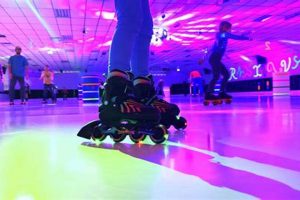
These wheeled boots are designed for leisurely skating activities, typically on paved surfaces such as sidewalks, bike paths, and parks. They are distinguished from other types of skating equipment by their focus on comfort, ease of use, and maneuverability at moderate speeds. For example, a person might use them for a casual workout, a leisurely stroll through a park, or simply as a fun way to get around.
The popularity of this type of skating equipment stems from its accessibility as a form of exercise and recreation for a wide range of ages and skill levels. It provides a low-impact cardiovascular workout that strengthens lower body muscles and improves balance and coordination. Historically, the rise of this particular skating style provided an accessible and engaging outdoor activity option, evolving from earlier roller skate designs.
This article will delve into the various components of the equipment, explore factors to consider when selecting the appropriate model, and discuss best practices for maintenance and safety to ensure an enjoyable skating experience. Detailed exploration of each aspect ensures potential users gain comprehensive understanding.
Recreational Inline Skates
To ensure a safe and enjoyable experience with recreational inline skates, consider the following guidelines for selection, maintenance, and proper usage.
Tip 1: Proper Fit is Crucial: Ensure the skates fit snugly but comfortably. Ill-fitting skates can lead to blisters, instability, and potential ankle injuries. Professional fitting assistance at a reputable sporting goods store is advisable.
Tip 2: Protective Gear is Mandatory: Helmets, wrist guards, elbow pads, and knee pads are essential for preventing serious injuries. Always wear complete protective gear, regardless of experience level.
Tip 3: Regular Wheel Maintenance: Rotate the wheels regularly to ensure even wear. Wheels wear unevenly, and rotation extends their lifespan and maintains consistent performance. Clean wheels periodically to remove dirt and debris.
Tip 4: Brake Inspection and Replacement: Regularly inspect the brake pad for wear. Replace the brake pad when it becomes thin or loses effectiveness. Practicing braking techniques in a controlled environment is recommended.
Tip 5: Surface Selection Matters: Skate on smooth, paved surfaces free from cracks, gravel, and other hazards. Uneven surfaces increase the risk of falls and equipment damage.
Tip 6: Start with Fundamentals: Begin with basic skills such as balancing, gliding, and stopping. Gradually progress to more advanced maneuvers as proficiency increases. Consider taking lessons from a certified instructor.
Tip 7: Proper Storage Prevents Damage: Store skates in a cool, dry place away from direct sunlight to prevent damage to the materials. Loosen the laces or straps slightly to allow for ventilation.
Adhering to these tips will not only prolong the life of the recreational inline skates but also significantly reduce the risk of injuries, contributing to a safer and more rewarding recreational activity.
These tips serve as a foundation for safely engaging in this recreational activity. Further considerations for specific environmental conditions or individual skill levels may also be necessary.
1. Comfortable Boot Design

The boot’s design directly influences the user experience. An improperly designed boot can lead to discomfort, blisters, and reduced control, significantly detracting from the recreational activity. Materials, padding, and ventilation features play crucial roles. For instance, a boot constructed with breathable mesh can reduce moisture buildup, minimizing the risk of skin irritation. A well-padded inner lining provides cushioning, reducing pressure points and enhancing overall comfort. A rigid outer shell offers structural support, preventing ankle strain and improving stability. Poor design can cause foot fatigue, making longer skating sessions untenable.
The ergonomics of the boot’s shape contribute to performance. A boot that conforms closely to the natural contours of the foot provides a more secure and responsive fit. This allows for more precise movements and better power transfer, enabling skaters to maintain control and efficiently execute turns. Consider the example of custom-molded boots, often used by serious skaters, which precisely match the foot’s shape. While custom options might not be necessary for recreational use, the principle highlights the importance of a form-fitting design. This can greatly impact the enjoyment factor, turning a potentially painful activity into a pleasurable one. Skates with adjustable features allow wearers to further customize the fit to individual needs.
In conclusion, comfortable boot design is a crucial component of recreational inline skates that directly impacts user experience. Proper design considerations, including materials, padding, ventilation, and ergonomic shape, contribute to comfort, control, and overall enjoyment. Neglecting the design results in discomfort, reduced performance, and decreased engagement in this activity. Selection based on boot design should be a primary consideration for anyone purchasing recreational inline skates.
2. Durable Frame Construction

The frame of recreational inline skates is a critical structural component that significantly impacts performance, safety, and longevity. Frame construction determines the skate’s ability to withstand stress, maintain stability, and provide a responsive skating experience. Durable construction is essential for recreational users who subject their equipment to varied conditions and terrain.
- Material Composition and Strength
The materials used in frame construction directly influence durability. Aluminum alloys are commonly employed due to their high strength-to-weight ratio, providing a rigid platform that can withstand impacts and resist deformation. Composite materials, such as reinforced polymers, offer a balance of durability and flexibility. Less durable materials, like certain plastics, may be used in entry-level models, but they are more susceptible to cracking or breakage. A robust material ensures the frame retains its integrity over time, even with frequent use.
- Frame Design and Rigidity
Frame design affects the transfer of energy from the skater to the wheels. A more rigid frame maximizes power transfer, resulting in increased efficiency and responsiveness. Frame designs that incorporate bridges or reinforcements enhance overall stiffness, reducing flex during push-offs and turns. Conversely, a frame that is too flexible can feel unstable and reduce control, particularly at higher speeds or when navigating uneven surfaces. Optimal frame rigidity enhances both performance and safety during recreational skating.
- Impact Resistance and Load Capacity
Recreational inline skates are often subjected to impacts from curbs, debris, or accidental falls. A durable frame construction is crucial for absorbing these impacts without sustaining permanent damage. Load capacity refers to the maximum weight the frame can safely support. Exceeding the load capacity can lead to frame failure and potential injury. High-quality frames are designed to distribute weight evenly, minimizing stress concentrations and increasing overall impact resistance. This ensures the skates can withstand the rigors of recreational use without compromising safety.
- Wheel Mounting and Alignment Precision
The precision of wheel mounting and alignment is directly linked to frame construction. A durable frame maintains accurate wheel alignment, ensuring smooth rolling and even wear. Misaligned wheels can cause increased friction, reduced speed, and premature tire wear. Precision-engineered frames feature tight tolerances that prevent wheel wobble and maintain consistent performance. This contributes to a more enjoyable and efficient skating experience, minimizing the need for frequent adjustments or repairs.
The interplay between material composition, frame design, impact resistance, and wheel mounting precision underscores the importance of durable frame construction in recreational inline skates. A robust frame not only enhances performance and longevity but also contributes significantly to user safety and overall satisfaction. Selection criteria should prioritize frames constructed from high-quality materials with designs optimized for rigidity, impact resistance, and precise wheel alignment. This will allow for years of enjoyable and safe skating.
3. Smooth Wheel Performance
The characteristic of smooth wheel performance is essential for optimal operation of recreational inline skates, directly influencing speed, maneuverability, and overall skating enjoyment. Factors such as wheel material, size, hardness, bearing quality, and surface conditions significantly affect rolling efficiency and stability.
- Wheel Material and Rolling Resistance
Polyurethane (PU) is the predominant material for recreational inline skate wheels, offering a balance of durability, grip, and rolling efficiency. Variations in PU formulation affect rolling resistance, with higher-quality formulations exhibiting lower resistance and consequently smoother performance. The material’s ability to deform and recover efficiently under load influences energy loss during each rotation, directly impacting the skater’s effort and speed. For example, a lower-grade PU wheel may exhibit higher rolling resistance, requiring more energy to maintain a given speed compared to a higher-grade alternative.
- Wheel Size and Surface Contact
Wheel diameter influences speed and maneuverability. Larger diameter wheels (e.g., 80mm – 90mm) generally provide higher top speeds and enhanced roll-over capability on uneven surfaces, but can reduce maneuverability. Smaller diameter wheels (e.g., 72mm – 78mm) offer improved acceleration and agility, beneficial for skaters prioritizing control and responsiveness. The contact patch between the wheel and skating surface also affects grip and rolling resistance, with larger wheels having a larger contact patch. Selecting appropriate wheel size depends on the intended skating environment and desired balance between speed and maneuverability.
- Wheel Hardness and Surface Adaptation
Durometer, measured on the A scale, indicates wheel hardness. Softer wheels (e.g., 78A – 82A) offer greater grip and shock absorption, suitable for rougher surfaces or skaters prioritizing comfort. Harder wheels (e.g., 84A – 88A) provide increased speed and durability but reduced grip, ideal for smoother surfaces or skaters seeking maximum speed. Softer wheels conform more readily to surface imperfections, enhancing grip but increasing rolling resistance. Conversely, harder wheels maintain their shape better, minimizing rolling resistance but reducing grip. Choosing the appropriate durometer rating depends on the skating surface and individual preferences for grip versus speed.
- Bearing Quality and Rotational Efficiency
Bearings facilitate wheel rotation, with bearing quality significantly influencing rolling efficiency. ABEC ratings (Annular Bearing Engineering Committee) indicate manufacturing tolerances, with higher ABEC ratings (e.g., ABEC 5, ABEC 7) generally implying tighter tolerances and smoother rotation. High-quality bearings minimize friction and energy loss, allowing wheels to spin more freely and for longer durations. Bearing maintenance, including regular cleaning and lubrication, is essential for preserving rotational efficiency and preventing premature wear. Well-maintained, high-quality bearings contribute significantly to the smoothness and efficiency of the skating experience.
Smooth wheel performance is a multifaceted attribute of recreational inline skates, determined by the interplay of wheel material, size, hardness, and bearing quality. Optimization of these factors is essential for achieving desired levels of speed, maneuverability, and overall skating enjoyment. Careful consideration of these variables, based on individual skating style and environmental conditions, enables skaters to select and maintain equipment that provides consistent and predictable performance.
4. Reliable Braking System
A reliable braking system represents a fundamental safety component in recreational inline skates. Its primary function is to enable controlled deceleration and complete stops, thereby mitigating the risk of collisions and injuries. The effectiveness of the braking system directly correlates with the skater’s ability to react to unexpected obstacles, maintain balance during emergency stops, and navigate varied terrain with confidence. For instance, a skater encountering a pedestrian unexpectedly crossing a path requires an immediate and reliable braking response to avert a potential accident. The absence of a functioning braking system compromises safety and limits the usability of inline skates for recreational purposes.
The most common braking mechanism in recreational inline skates involves a heel brake: a rubber or composite pad attached to the rear of one skate. Actuation of the brake involves lifting the toe of the braking foot, applying pressure to the pad against the ground. Factors affecting braking performance include the condition of the brake pad (wear), the skater’s technique, and the surface characteristics of the skating area. Proper technique involves a smooth, controlled motion rather than a sudden, jerky movement, which can lead to loss of balance. Regular inspection and timely replacement of the brake pad are essential to maintain optimal braking efficiency. Another example is a skater riding down a slope; a reliable braking system allows controlled speed reduction, preventing uncontrolled acceleration that could lead to a fall.
In conclusion, a reliable braking system is an indispensable element of recreational inline skates, directly impacting safety and user confidence. The system’s effectiveness depends on the integrity of its components, proper technique, and consistent maintenance. The understanding and implementation of best practices for braking contributes to safer and more enjoyable skating experience. It serves as a crucial safety measure, ensuring that recreational inline skating remains a safe and accessible activity for a broad spectrum of users.
5. Secure Closure Mechanism
The secure closure mechanism on recreational inline skates is a critical element affecting safety, performance, and overall user experience. It ensures the skate remains firmly attached to the foot, providing necessary support and control during skating activities. Inadequate closure systems can lead to instability, reduced power transfer, and an increased risk of injury.
- Ankle Support and Stability
The closure system significantly contributes to ankle support, preventing excessive pronation or supination. A well-designed system secures the ankle joint, minimizing the risk of sprains or strains. Skates used for fitness benefit from higher ankle support. Conversely, poorly secured ankles may result in instability and reduced control, increasing the likelihood of falls. Stiff shells for ankle support are a common design element.
- Power Transfer Efficiency
A secure closure enables more efficient power transfer from the skater’s leg to the wheels. When the foot is firmly held within the skate, energy is effectively translated into forward motion. Loose or ill-fitting closures can result in energy loss, reducing skating speed and increasing fatigue. Racers depend on direct power transfer for optimal performance. Firmly fastened closure systems ensure minimal energy wasted on movement inside the boot.
- Customization and Adjustment
Adjustable closure systems allow skaters to fine-tune the fit of their skates, accommodating variations in foot size and shape. Buckles, laces, and power straps enable personalized adjustments for optimal comfort and performance. Individuals with wide feet may require adjustable systems for accommodating their individual foot shape. Closure systems provide a tailored and secure fit. Such adjustability ensures proper heel lock, preventing slippage during use.
- Safety and Injury Prevention
A reliable closure system reduces the risk of injuries. Skates that unexpectedly detach from the foot during use can cause falls and collisions. A secure system keeps the skate firmly in place, even during sudden stops or maneuvers. For example, quick-release buckles enable rapid removal in emergency situations. Closure systems are designed to enhance safety and minimize the potential for accidents.
The secure closure mechanism is not merely a fastening device; it is an integral component affecting numerous aspects of recreational inline skating. From providing essential ankle support to enabling efficient power transfer and customization, a well-designed closure system significantly enhances the overall skating experience and ensures a safer recreational activity.
Frequently Asked Questions
The following questions address common concerns and misconceptions surrounding recreational inline skates, offering guidance for informed selection and responsible use.
Question 1: What differentiates recreational inline skates from other skate types?
Recreational models are designed for general fitness, casual skating, and light commuting on paved surfaces. They prioritize comfort, ease of use, and stability, differing from aggressive skates (durability for tricks), speed skates (low cut and lightweight for races), and fitness skates (mix of comfort and speed) in terms of features and performance characteristics.
Question 2: What safety equipment is considered essential for recreational inline skating?
A helmet is non-negotiable for head protection. Wrist guards protect against fractures during falls. Elbow and knee pads mitigate abrasions and impact injuries. Additional equipment, such as padded shorts, can provide added protection, particularly for beginners.
Question 3: How frequently should recreational inline skate wheels be rotated?
Wheel rotation frequency depends on usage intensity and skating surface. Regular rotation, typically every 10-15 hours of skating, promotes even wear, extending wheel lifespan and maintaining consistent performance. Wheels on the braking foot often wear faster, necessitating more frequent adjustments.
Question 4: What factors determine the appropriate wheel hardness for recreational inline skates?
Wheel hardness (durometer) should be selected based on skating surface and personal preference. Softer wheels (78A-82A) offer better grip on rough surfaces, while harder wheels (84A-88A) provide greater speed and durability on smooth surfaces. Experimentation is advised to determine the optimal balance for individual needs.
Question 5: How can the lifespan of recreational inline skate bearings be extended?
Regular cleaning and lubrication are crucial. Remove bearings periodically, clean with a solvent, and re-lubricate with a suitable bearing oil or grease. Avoid skating through water or sand, as these contaminants accelerate bearing degradation. Proper maintenance ensures smooth rolling and prolongs bearing life.
Question 6: What are the key indicators that recreational inline skates require replacement?
Excessive wear on wheels, brake pads, or liners, along with structural damage to the frame or boot, indicate the need for replacement. Continued use of damaged skates compromises safety and performance. Periodic assessment of skate condition is essential for preventing injuries and ensuring a positive skating experience.
Adherence to these guidelines ensures informed decision-making and promotes safe, enjoyable participation in this recreational activity.
The subsequent section will focus on advanced techniques and considerations for experienced recreational inline skaters.
Conclusion
The preceding discussion has explored key aspects of recreational inline skates, including boot design, frame construction, wheel performance, braking systems, and closure mechanisms. Careful consideration of these elements is essential for selecting suitable equipment, ensuring user safety, and maximizing enjoyment of this activity. Prioritizing quality, maintenance, and adherence to safety guidelines are critical for a positive skating experience.
Continued advancements in materials science and design principles promise further improvements in recreational inline skates. Whether utilized for fitness, transportation, or leisure, these skates represent a versatile and accessible means of engaging in physical activity. Responsible usage and ongoing research will contribute to the continued evolution and enhanced safety of this enduring recreational pursuit.